Crysknife
DuneThe crysknife is the sacred knife of the Fremen, the native people of Arrakis. It is a double-edged blade, about twenty centimeters long, ground from the tooth of a sandworm, the giant creature that dominates the desert. The knife is not merely a weapon but a deeply symbolic object, central to Fremen ritual, law, and identity. Its name, meaning "maker's tooth," reflects its origin, and it is treated with reverence, often referred to as the "sacred knife." The crysknife appears throughout the novel as a marker of Fremen culture, a tool of combat, and a token of allegiance, with strict rules governing its use and display.
Origin and Manufacture
The crysknife is manufactured from the teeth of dead sandworms, the colossal creatures that roam the Arrakis desert. The Fremen, who live in the harsh conditions of the desert, have learned to harvest these teeth and shape them into blades. The knife is double-edged, similar to a kindjal, and is typically about twenty centimeters long. There are two forms of the crysknife: "fixed" and "unfixed." An unfixed knife requires proximity to a human body's electrical field to prevent disintegration, while fixed knives are treated for storage. This distinction is crucial, as it affects how the knife is carried and used. The crysknife is a unique weapon, known only by rumor and wild gossip outside of Arrakis, and it is said that no crysknife has ever been taken off the planet.
Sacred and Ritual Significance
The crysknife holds profound religious and cultural significance for the Fremen. It is considered sacred, and its use is governed by strict rules. When a crysknife is unsheathed, it must be seen only by those who are "cleansed" or who have earned the right to see it. The knife is often kept sheathed, and unsheathing it without proper cause is a serious offense. In the novel, when Duncan Idaho brings a crysknife taken from a dead Fremen to a meeting with Duke Leto Atreides, the Fremen leader Stilgar intervenes, insisting that the blade must not be unsheathed in the presence of those who have not earned the right. Stilgar explains that "a certain responsibility falls on those who have seen a crysknife," and that they are "ours" and "may never leave Arrakis without our consent." This underscores the knife's role as a symbol of Fremen identity and a marker of allegiance.
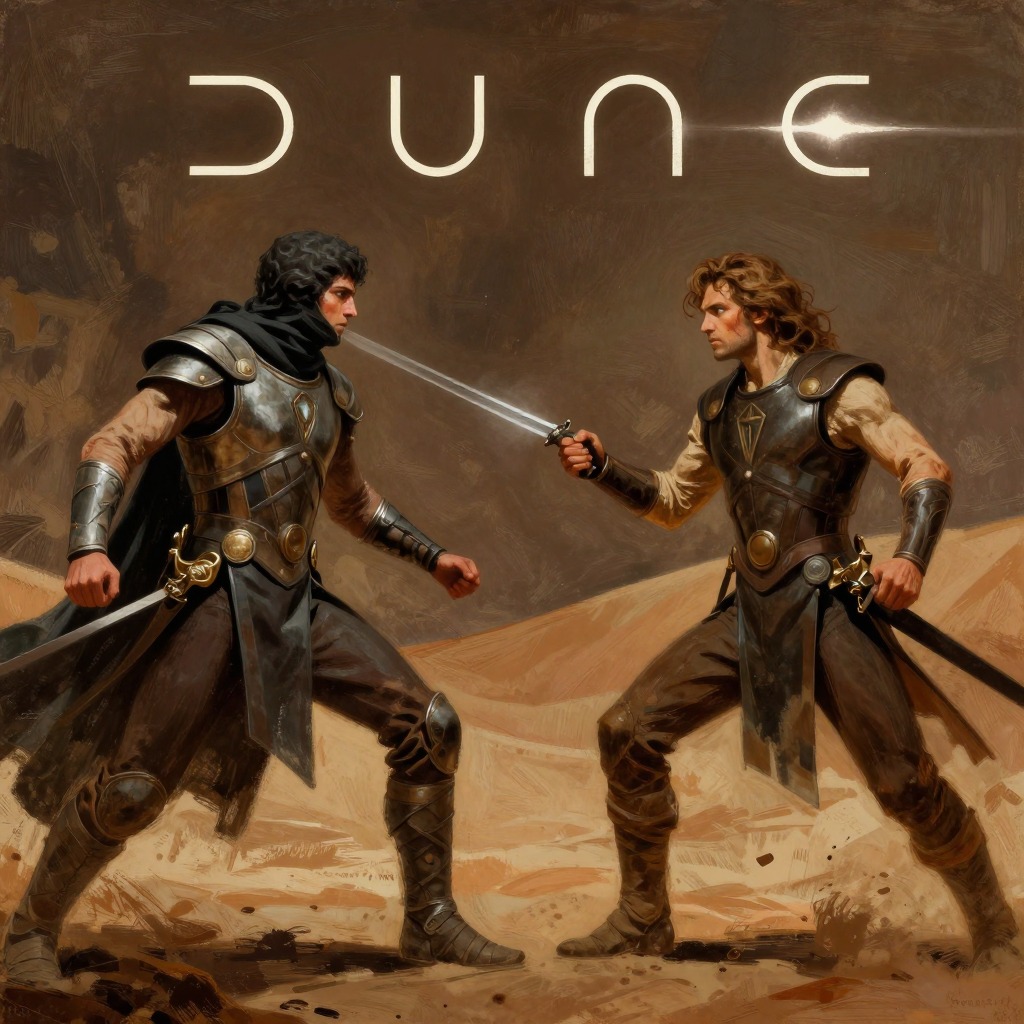
The crysknife is also central to Fremen combat and ritual. In the duel between Paul Atreides and Jamis, the Fremen warrior, both combatants use crysknives. The fight is a test of skill and courage, and the crysknife is the weapon of choice. After the duel, the Fremen perform a funeral ceremony for Jamis, and his crysknife is treated with respect, its handle being given to Paul as a mark of his victory. The knife is also used in the Water of Life ceremony, where it is used to draw blood, and in the ritual of the "tahaddi challenge," where it is the instrument of mortal combat.
Use in Combat and Dueling
The crysknife is a formidable weapon in close combat. Its double-edged blade is designed for slashing and thrusting, and its sharpness is legendary. In the duel between Paul and Jamis, the crysknife is used with deadly precision. Paul, trained in the Bene Gesserit way and by the swordmasters Duncan Idaho and Gurney Halleck, uses the crysknife with skill, ultimately killing Jamis. The crysknife is also used in the final duel between Paul and Feyd-Rautha Harkonnen, where Paul uses a crysknife to defeat his opponent. The knife's effectiveness in combat is enhanced by its sacred nature, which gives the wielder a psychological advantage.
The crysknife is also used in the Fremen's guerrilla warfare against the Harkonnens and the Sardaukar. In the Battle of Arrakeen, the Fremen use crysknives in close combat, and the knives are a symbol of their resistance. The crysknife is also used in the ritual of "water recovery," where the dead are rendered for their water, and the knife is used to mark the bodies.
Symbolism and Thematic Significance
The crysknife is a powerful symbol in the novel, representing Fremen identity, resistance, and the harsh realities of life on Arrakis. It is a weapon that is both practical and sacred, reflecting the Fremen's ability to survive in a hostile environment. The knife is also a symbol of the Fremen's connection to the sandworms, the creatures that dominate the desert and are central to their mythology. The crysknife is a reminder of the Fremen's strength and their determination to resist oppression.
The crysknife also serves as a marker of allegiance and trust. When Stilgar gives Paul a crysknife, it is a sign of his acceptance into the Fremen tribe. The knife is a token of the bond between the Fremen and their leaders, and it is used in oaths of fealty. In the novel, Stilgar swears fealty to Paul, and the crysknife is central to the ceremony. The knife is also a symbol of the Fremen's dream of a better future, as they work to transform Arrakis into a paradise. The crysknife is a reminder of the sacrifices that must be made to achieve that dream.
Conclusion
The crysknife is more than a weapon; it is a symbol of Fremen culture, identity, and resistance. Its origin in the teeth of sandworms connects it to the very essence of Arrakis, and its sacred nature reflects the Fremen's deep spiritual beliefs. The crysknife is a tool of combat, a marker of allegiance, and a symbol of the Fremen's determination to survive and thrive in a harsh world. Throughout the novel, the crysknife serves as a reminder of the Fremen's strength and their unwavering commitment to their cause.