Eileen escapes X-ville
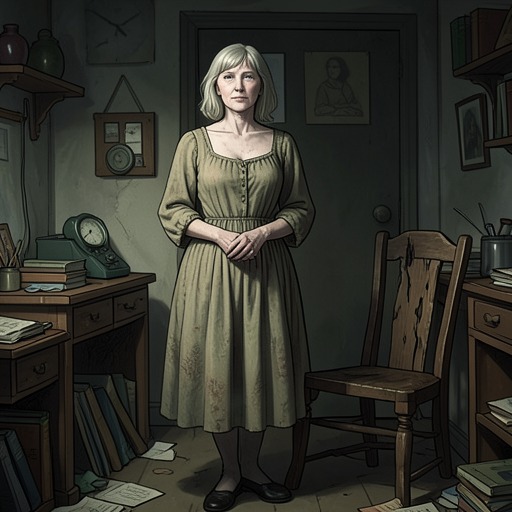
EileenEileen escapes X-ville on Christmas morning in a departure shaped as much by concealment as by movement. She leaves Rita Polk in the Dodge, says goodbye to Charlie Dunlop, and drives out with a gun, money, and a map. The escape does not deliver her to the destination she had planned: she never reaches Rutland. Instead, it becomes the beginning of a life in which the name Eileen belongs to the person she has left behind, while Lena is the name she gives the world afterward.
The practiced face
The departure follows years of learning to hide what she felt. At Moorehead, Eileen studied plaster casts of famous dead men in a library book and practiced a composed expression in the mirror. She called the result her death mask: a face of apparent resilience that kept others from seeing how sensitive and distressed she was. She used it at work, where the misery and shame around her had to be endured without openly breaking down.
Her job required more than a neutral expression. Before visiting hours, she drank sweet vermouth and ate mint chocolates, including chocolates she regularly stole from a drugstore in X-ville. She greeted the mothers of imprisoned boys, asked them to sign the ledger, and directed them to wait in the hallway. Because there were no female guards or officers, she also administered security checks to women visitors. The task was the most intimate part of her day, yet she felt nearly invisible within it: she imagined Randy in place of the women she touched, while believing that Randy, like them, barely noticed her.
The visitation room made composure difficult to sustain. Younger boys might first turn toward the wall and hold themselves apart, only to begin crying when they saw their mothers’ faces. Randy enforced the rule that a mother could not hand a boy a handkerchief. Eileen tried to keep such scenes at a distance; when she became upset, she withdrew to an empty room and used a private physical ritual to regain control. Against that history, the calm she describes at the moment of departure is not an absence of feeling but a break from the mask she had long used to contain it.
Preparing to leave
Eileen had repeatedly plotted a route from X-ville to Rutland. She had also imagined leaving on New Year’s Eve, when the holiday’s bustle might help conceal a disappearance, but Christmas proved just as convenient. The preparations she actually carried are spare: the gun and all the cash she had in her purse, with a map in her pocket. She did not pack a suitcase, empty Charlie’s bank account, or cash her final paycheck.
The contrast between planning and improvisation matters. Eileen had rehearsed the route, but she had not arranged a comprehensive departure from the house or secured every possible source of money. She says she knew these were her last moments there, yet left without collecting possessions or claiming funds that might have made the escape easier. Her decision was sufficiently settled to carry her out of town, but its materials were limited to what she had with her.
The last night at home
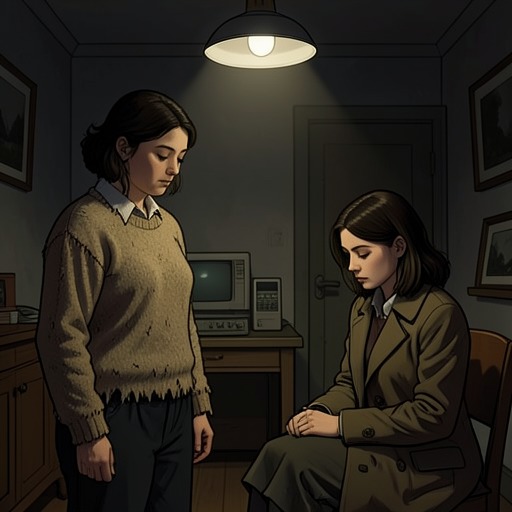
In the quiet darkness of Christmas morning, Eileen parked the Dodge in the driveway and left Rita slumped in the passenger seat. She went inside, where Charlie had awakened as she came down from the attic with the gun and her money. Their farewell was slight rather than explanatory. Eileen said, “Good night, Dad,” and watched him fumble with an empty bottle on the nightstand, then settle back to sleep. She closed the door without telling him where she was going.
Before leaving for good, Eileen went to the bathroom and ran hot water over her cold fingers. Looking in the mirror, she felt certain that her face had changed: she saw a new expression in her eyes and mouth, and described herself as seeing herself clearly for the first time. The house remained emotionally significant to her. She remembered its rooms and ordinary furnishings, and anticipated that she would cry over them in the weeks and months ahead. But at the sink she felt calm enough to say goodbye and continue.
Once she shut the front door, an icicle fell and left a scar across her face. Eileen later understood the mark not as an explanation of what had happened, but as a reminder that she had once been someone else: Eileen, the girl who got away. The scar acquired other people’s interpretations, but her own meaning is tied to the change of identity that the departure begins.
Driving out of X-ville
Eileen made a final drive through the town before sunrise. She passed the elementary school, X-ville High, town hall, and the police station, then continued along Main Street. The place appeared in fragments: the bakery window, the barber shop, the post office, and slush in the gutter. Rather than take in X-ville as a single whole, she remembered it in passing details. The town becomes both a concrete route she is leaving and a place she can recast as ordinary, one town among many.
Her plan had been to go from X-ville to Rutland, but she never arrived there. In retrospect, she considers that trains might not have been running on Christmas Day, though she cannot know because she did not make the trip. That uncertainty limits the apparent precision of her preparations: she had plotted a way out, but the account does not present a completed journey to the intended destination.
The final movement away is rendered as distance accumulating. Eileen watches the old world recede through a fogged-up window until it seems to disappear along with her. Nobody came looking for her, or, as she allows, she may have hidden well enough not to be found. She also imagines several possible reactions Charlie might have had if he had discovered Rebecca bound in the cellar, including helping her or calling the police; these remain fantasies, not events in the escape itself.
A new name and an unresolved destination
After leaving X-ville, Eileen told people to call her Lena. She changed her surname when she married that spring, describing marriage as one way a woman can become someone new. The account does not specify her new surname or identify a destination beyond the fact that Rutland was never reached. Nor does Eileen return to claim the family house: after years of wondering whether she might inherit it, she eventually decides that nothing there is worth going back for.
The escape therefore resolves one immediate choice while withholding conventional closure. Eileen gets out of X-ville, but not by completing the route she had imagined, and the people she leaves behind do not pursue her in any way she knows. Her later identity as Lena gives the departure a lasting consequence: escape is not simply travel away from a town, but a separation from the self associated with it. The calm mirror scene, the closed door, and the disappearing view through the car window mark successive stages of that separation.