Eileen’s childhood
The Dunlop Dinner Table
At the [Dunlop home](entity:location-recall-location-dunlop-df52ce60691c), meals were brief and tense. Her parents argued in front of the girls, while [Eileen](entity:character-recall-character-eileen-7f2a83f06e48) ate quickly and fled upstairs rather than draw attention to herself.
The household’s small rituals—her mother snapping a rag against the floor and her father eyeing his gun—made home feel less like shelter than a place where fear was ordinary.
Eileen’s childhood
A Rejection of God
After an argument involving Aunt Ruth, [Eileen](entity:character-recall-character-eileen-7f2a83f06e48)’s mother pulled her daughters aside and told them that God was invented and that there were no rewards for obedient girls. She urged them to decide for themselves what was right and to fight for what they wanted.
The lesson unsettled Eileen rather than freeing her. She continued to fear hell and to perform belief for her father, beginning a lifelong conflict between moral rules and private desire.
Eileen’s childhood and adolescence
The Sisters’ Divide
[Joanie](entity:character-recall-character-joanie-d63ab568f3ed) was lively and socially confident, while [Eileen](entity:character-recall-character-eileen-7f2a83f06e48) grew quiet, anxious, and convinced that she was ugly. Their mother called Joanie a whore, and Eileen privately envied her sister’s ease with men even as she disapproved of it.
At Joanie’s birthday party, she made Eileen stand and dance while their father photographed the humiliation. The episode fixed Eileen’s sense that her sister could command affection while she herself was an object of ridicule.
Eileen’s childhood
The Cellar Fall
As a child, [Eileen](entity:character-recall-character-eileen-7f2a83f06e48) fell down the cellar stairs while fleeing her mother, who had been chasing her with a wooden spoon. Bruised and frightened on the dark cellar floor, she looked up to see her mother shut the door without helping her.
The abandonment left the darkness less frightening than the knowledge that nobody came. Years later, the basement would remain a place where fear, bodily privacy, and unwanted memories converged.
Before Eileen’s mother became ill
A Father in Uniform
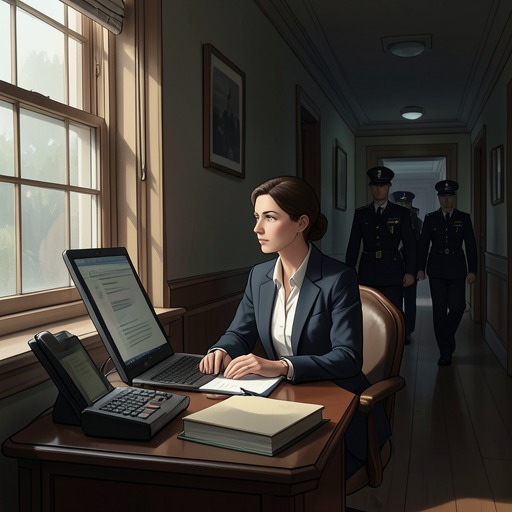
[Charlie Dunlop](entity:character-recall-character-charlie-dunlop-6ef6dceb0bc4) served as a Marine and then as a local police officer, taking pride in his uniform, his badge, and the authority they gave him. He kept his Smith & Wesson close, even at home, and taught [Eileen](entity:character-recall-character-eileen-7f2a83f06e48) that the weapon demanded careful handling.
His public image as a respected officer contrasted with the cold, domineering father Eileen knew. The gun became a permanent fixture in family life and later an instrument in her escape.
When Eileen is nineteen
College Interrupted
[Eileen](entity:character-recall-character-eileen-7f2a83f06e48) attended a small college but struggled with her studies and dreaded failing the classes her father paid for. Halfway through her sophomore year, she was pulled out of school and sent back to [X-ville](entity:location-recall-location-x-ville-f3da3cc6a9cb) when her mother became ill.
She later admitted that returning home also spared her the prospect of academic failure. She nursed her mother without warmth, terrified of her and unsure what care was supposed to mean.
Shortly before Eileen’s mother dies
Mona’s Death
[Eileen](entity:character-recall-character-eileen-7f2a83f06e48) found [Mona](entity:character-recall-character-mona-30944bcfdf16), the family’s Scottish terrier, dead in the backyard while she was hanging laundry. She covered the body with a wet pillowcase, then returned later and buried the dog with a trowel, unable to bring herself to touch it with her hands.
Her father dismissed the dog as a nuisance, so Eileen told no one. She remembered grieving Mona as intensely as she grieved her mother, a private loss that exposed how little tenderness the family could offer one another.
When Eileen is nineteen
Her Mother’s Death
After a long illness, [Eileen](entity:character-recall-character-eileen-7f2a83f06e48)’s mother died in bed. Eileen had stayed beside her through the night, sometimes taking the prescribed pills herself, and woke to find the body cold and still.
She called [Joanie](entity:character-recall-character-joanie-d63ab568f3ed) the next morning and told her that their mother had died. Charlie asked whether Eileen was sure, while Eileen went to the bathroom to cry alone, an early lesson in grief kept private.
After Eileen’s mother dies
Charlie’s Drinking Spiral
After his wife’s illness began, Charlie drank more, wandered at night, and grew increasingly unreliable. He totaled a police car and accidentally fired his gun at the station; instead of facing serious consequences, he was eased into retirement with a pension.
[Eileen](entity:character-recall-character-eileen-7f2a83f06e48) became his caretaker, managing the household and supplying his alcohol. His collapse transformed her daughterly duties into a daily, unpaid sentence.
The years before December 1964
The Hoodlum Delusion
In retirement, Charlie became convinced that hoodlums, the mob, and black ghosts were watching him and entering the house. He threw snowballs at children, wandered into the street, and accused [Eileen](entity:character-recall-character-eileen-7f2a83f06e48) of neglect while the police repeatedly brought him home.
After he once disappeared on a long bender and was found at a hospital two counties away, Eileen locked his shoes in the Dodge’s trunk. The arrangement gave her a measure of control, though she still feared the next knock at the door.
From age twenty-one to December 1964
Eileen at Moorehead
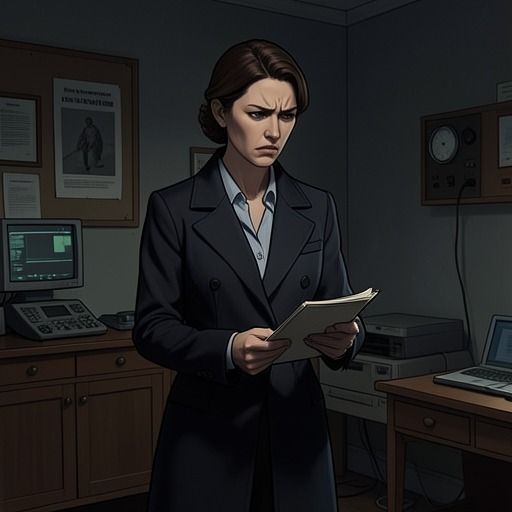
[Eileen](entity:character-recall-character-eileen-7f2a83f06e48) took a low-paid clerical job at [Moorehead](entity:location-recall-location-moorehead-67f393186c17), a private juvenile facility she understood to be a prison for children. She maintained inmate files, administered visits, and followed the institution’s rules while trying not to look affected by its punishments.
Her work brought her close to suffering without teaching her how to respond to it. She watched the boys and their families from behind a practiced, blank expression, largely absorbed in her own misery.
During Eileen’s years at Moorehead
The Prison’s Cruel Order
At [Moorehead](entity:location-recall-location-moorehead-67f393186c17), officers struck and humiliated boys, while the warden used religious language to justify punishment. Visits were tightly controlled, and mothers were made to wait while [Eileen](entity:character-recall-character-eileen-7f2a83f06e48) enforced restrictions on gifts and contact.
Eileen knew the rules were often cruel, but obeyed them and even invented questionnaires to occupy waiting mothers. The routine let her appear dutiful while keeping her from confronting the institution’s harm.
During Eileen’s years at Moorehead
A Crush on Randy
[Eileen](entity:character-recall-character-eileen-7f2a83f06e48) became infatuated with [Randy](entity:character-recall-character-randy-506bf2ddf89a), a handsome guard whose former residence at [Moorehead](entity:location-recall-location-moorehead-67f393186c17) as a teenager only deepened her fascination. She watched his gestures and imagined him rescuing her, loving her, or forcing his way past her prudishness.
In reality, Randy barely acknowledged her. Eileen’s private surveillance of his apartment and her fantasies of being chosen filled the emotional vacancy of her life.
Before the final week in X-ville
The New York Dream
[Eileen](entity:character-recall-character-eileen-7f2a83f06e48) began saving cash in the attic and imagining a new life in [New York City](entity:location-recall-location-new-york-city-65df0a129d4c). She planned to take a train south after abandoning the Dodge somewhere in Vermont, and privately hoped that her father would believe she had been abducted or killed.
Her plan was less a practical escape than a fantasy of becoming visible through her disappearance. She imagined that her absence might finally make Charlie grieve for her and recognize what he had failed to give.
Thursday evening, one week before Christmas 1964
The Opening Errand
The story opens with [Eileen](entity:character-recall-character-eileen-7f2a83f06e48) returning home to find Charlie on the stairs, barefoot and drinking sherry. He sarcastically called her poor and sent her across town to buy gin, a task she accepted without protest.
She drove the battered Dodge through the cold, stopping at [Lardner’s](entity:location-recall-location-lardner-s-d024c124af93) and taking the long way home. The errand captured the narrow routine she was about to leave: her father’s demands, the car that represented escape, and the nightly return to a house that felt both full and empty.
Friday, December 18, 1964
Friday at the Prison
[Eileen](entity:character-recall-character-eileen-7f2a83f06e48) arrived at [Moorehead](entity:location-recall-location-moorehead-67f393186c17) through the smell of fish from its basement cafeteria and secured her purse in the Dodge’s trunk, following her father’s warning that prison employees could be as dangerous as inmates. At her desk, she kept her eyes on the clock and watched [Randy](entity:character-recall-character-randy-506bf2ddf89a) from a distance.
The job’s banality sat beside routine violence. Eileen saw an officer force a boy to lick dirt from his boots, then turned away and continued her work, preserving her death-mask composure.
Friday morning, December 18, 1964
A Dead Face at Work
[Eileen](entity:character-recall-character-eileen-7f2a83f06e48) had practiced a calm expression by studying death masks and wore it at work to conceal her agitation. She felt invisible to the office women and the warden, while her thoughts moved through resentment, bodily shame, and fantasies about [Randy](entity:character-recall-character-randy-506bf2ddf89a).
When her pay arrived, she tucked it into her blouse and worried that anyone looking at her could see through her clothes. Her self-consciousness made even ordinary work feel like exposure.
Friday afternoon, December 18, 1964
The Forbidden Visitor
A young woman came to [Moorehead](entity:location-recall-location-moorehead-67f393186c17) demanding to visit a boy who was not her relative. [Eileen](entity:character-recall-character-eileen-7f2a83f06e48) coldly asked whether she meant to marry him, and the visitor erupted, throwing the ledger and cursing the waiting mothers.
After the woman left, Eileen read the boy’s file and saw a pimpled teenager charged with comparatively minor offenses. Her envy and curiosity over the visit revealed how deeply she equated intimacy with being wanted, even by force.
Friday afternoon, December 18, 1964
The Mothers’ Pat-Downs
During visiting hours, [Eileen](entity:character-recall-character-eileen-7f2a83f06e48) was responsible for searching women visitors because [Moorehead](entity:location-recall-location-moorehead-67f393186c17) had no female guards. Her perfunctory pat-downs became, in her imagination, a way to touch [Randy](entity:character-recall-character-randy-506bf2ddf89a) through the bodies of women who barely noticed her.
She also recalled reading Randy’s employee file and learning that he had once been an inmate. The discovery fed a fantasy that his troubled past made him emotionally deep and destined to understand her.
Friday afternoon, December 18, 1964
The Christmas Tree
After visiting hours, Mrs. Stephens ordered [Eileen](entity:character-recall-character-eileen-7f2a83f06e48) to decorate [Moorehead](entity:location-recall-location-moorehead-67f393186c17)’s [Christmas](entity:time-recall-time-christmas-a573265d0167) tree and assigned her the lighting at the coming pageant. Eileen carefully placed old ornaments and the boys’ paper snowflakes among the branches, taking comfort in methodical work.
She felt a private ache at the holiday’s promise of warmth and rescue, then returned to the office manager’s indifference. The tree offered her a brief, orderly refuge inside an institution built around shame.
Friday evening, December 18, 1964
The Warning at Home
On her walk to the [Dunlop home](entity:location-recall-location-dunlop-df52ce60691c), Officer Laffey stopped [Eileen](entity:character-recall-character-eileen-7f2a83f06e48) and handed her a warning: the school had complained that Charlie was throwing snowballs at children. The officer declined her offer to come inside and speak with him.
Eileen entered the dark, neglected house and found Charlie at the sink. The warning barely interrupted the routine; his delusions explained the incident to him, while Eileen continued to manage the consequences.
Friday night, December 18, 1964
Joanie’s Brief Visit
[Eileen](entity:character-recall-character-eileen-7f2a83f06e48) passed Charlie the police warning and listened as he dismissed it as part of his imagined conflict with the mob. Later, [Joanie](entity:character-recall-character-joanie-d63ab568f3ed) arrived dressed for the cold and teased Eileen about her appearance before taking Eileen’s sandwich and leaving.
Eileen never saw her sister again after that visit. Their casual parting, unnoticed by either of them as final, became one of the last ordinary moments of Eileen’s life in [X-ville](entity:location-recall-location-x-ville-f3da3cc6a9cb).
Saturday, December 19, 1964
A Snowbound Morning
Fresh snow buried [X-ville](entity:location-recall-location-x-ville-f3da3cc6a9cb), and [Eileen](entity:character-recall-character-eileen-7f2a83f06e48) remained in the cold attic until hunger and thirst drove her downstairs. She used a jar in her room rather than the shared bathroom, then poured its contents into the snow outside.
Her bodily routines reflected both shame and her wish to avoid contact with Charlie. She also relied on laxatives, seeking the fleeting blankness and relief that followed their violent effects.
Saturday morning, December 19, 1964
The Kitchen and the Oven
[Eileen](entity:character-recall-character-eileen-7f2a83f06e48) found Charlie curled in his chair before the open oven, which he used to warm himself. She shut it, made tea, and offered to boil eggs; he woke angry and insisted that she was trying to kill him in his own house.
His fear and neediness could turn instantly into accusation. Eileen remained in the role of caretaker, even as she imagined the icicles outside falling through him.
A previous winter, recalled on Saturday, December 19, 1964
Pauly Daly’s Visit
[Eileen](entity:character-recall-character-eileen-7f2a83f06e48) remembered she had once paid the local boys to shovel snow, especially Paul Daley. His pleasant face and careful, polite manner made her feel a clumsy tenderness. Once, she invited him in to drink hot chocolate and, in a moment of impulse, kissed his cheek
Saturday afternoon, December 19, 1964
Watching Randy’s House
After clearing the snow around the Dodge, [Eileen](entity:character-recall-character-eileen-7f2a83f06e48) drove to [Randy](entity:character-recall-character-randy-506bf2ddf89a)’s apartment and watched from across the street. She hoped to see him leave so she could follow him, but his motorcycle was gone and his windows were dark.
Her surveillance was sustained by the belief that keeping close watch could prevent him from choosing another woman. When he was absent, she redirected herself toward the cinema rather than go home.
Saturday afternoon, December 19, 1964
Charlie Bars the Door
Before [Eileen](entity:character-recall-character-eileen-7f2a83f06e48) left, Charlie mocked her sunglasses and demanded that she sit down. She lied about meeting a girlfriend and going to a movie, while he belittled her as a dependent and contrasted her with [Joanie](entity:character-recall-character-joanie-d63ab568f3ed).
Eileen knew his speech came from drunkenness and delusion, but it still wounded her. She left with the keys and the familiar wish to escape, carrying the car as her only practical route out.
Saturday afternoon, December 19, 1964
The Cinema and Despair
[Eileen](entity:character-recall-character-eileen-7f2a83f06e48) went to see Send Me No Flowers, slept through much of it, and left feeling more isolated than before. Outside, she considered how easily she might die, but fear of hell and the possibility of escape kept her from acting on her suicidal thoughts.
The dream of [New York City](entity:location-recall-location-new-york-city-65df0a129d4c) remained a fragile alternative to death. Her life seemed intolerable but not yet impossible to leave.
Saturday evening, December 19, 1964
The Stolen Dress
At Darla’s boutique, [Eileen](entity:character-recall-character-eileen-7f2a83f06e48) stole hosiery and tried on a gold party dress that did not fit her. Unable to afford it, she damaged the lining before returning it to the shopgirl and leaving with her stolen goods.
Stealing gave her a sharp sense of power and justice: she felt she had taken back something the world had denied her. The episode connected her hunger for transformation with the disguise of clothing.
Saturday night, December 19, 1964
The Lookout Above the Ocean
[Eileen](entity:character-recall-character-eileen-7f2a83f06e48) drove to the overlook where young couples parked, scanning the cars for [Randy](entity:character-recall-character-randy-506bf2ddf89a). She sat alone, imagined a future with him, and wondered whether her life would change if she did not drive off the cliff.
She returned to Randy’s dark apartment and then to the [Dunlop home](entity:location-recall-location-dunlop-df52ce60691c), still accustomed to loneliness. Her fantasies offered temporary company but no actual way forward.
Saturday night, December 19, 1964
A Night of Drinking
At home, [Eileen](entity:character-recall-character-eileen-7f2a83f06e48) took laxatives and drank with Charlie, who was in a comparatively gentle mood. They mocked the broken television and spoke about [Joanie](entity:character-recall-character-joanie-d63ab568f3ed), while he remembered her with tenderness he rarely showed Eileen.
Eileen wanted Charlie to change and apologize, though she also wished him dead. Their drinking together blurred the line between resentment and attachment without resolving either.
Late Saturday night, December 19, 1964
The Basement Ordeal
Drunk and weakened by laxatives, [Eileen](entity:character-recall-character-eileen-7f2a83f06e48) stumbled down to the cellar toilet. The darkness recalled a childhood fall and her mother shutting the door on her, but the basement also gave her privacy from Charlie.
After emptying her bowels, she lay on the cold floor in a dizzy, emptied state. She eventually climbed back to the attic and slept, exhausted and still miserable.
Sunday morning, December 20, 1964
Shaving Charlie for Mass
Hungover and sick, [Eileen](entity:character-recall-character-eileen-7f2a83f06e48) helped Charlie prepare for Mass by buttoning his shirt, holding a bottle to his mouth, and shaving him over the dirty kitchen sink. He insulted her smell as she worked.
She privately imagined killing him but kept her anger hidden. When Aunt Ruth arrived, Eileen found Charlie’s shoes in the trunk and sent him off to church, continuing the duties that had kept her bound to him.
Eileen’s childhood, recalled on Sunday, December 20, 1964
The Churchbound Family
As a child, [Eileen](entity:character-recall-character-eileen-7f2a83f06e48) accompanied Charlie and [Joanie](entity:character-recall-character-joanie-d63ab568f3ed) to Mass, where she struggled to behave normally under his watchful, disapproving gaze. Her mother stayed home, drinking and mocking religion, while Charlie insisted that Eileen pray as if she meant it.
Eileen learned to fear both her father’s judgment and the hell he described. The household offered no stable moral authority, only competing demands for obedience and self-determination.
Sunday morning, December 20, 1964
A Boston Road Test
After Charlie left for Mass, [Eileen](entity:character-recall-character-eileen-7f2a83f06e48) drove toward [Boston](entity:location-recall-location-boston-aded649f4602), hoping to test whether the Dodge could carry her toward a new life. On the highway, exhaust fumes and fatigue made her nearly fall asleep at the wheel; a police officer pulled her over.
She claimed that her sick father had kept her awake and began crying as she spoke. The officer let her go after she promised to stop for coffee, but the trip made clear that the car was not a reliable escape vehicle.
Sunday late morning, December 20, 1964
The Moody Street Stop
On Moody Street, [Eileen](entity:character-recall-character-eileen-7f2a83f06e48) ordered tea and chocolate ice cream in a decorated coffee shop. As she watched the waitress and judged her own clothes, she told herself that she was better than the people around her and that she would leave them behind.
The exhausted drive and the car’s exhaust had already undermined her escape plan. Her brief act of defiance could not repair the practical obstacle or the loneliness that drove her toward flight.
Sunday afternoon, December 20, 1964
The Couple in the Alley
Walking back to her car, [Eileen](entity:character-recall-character-eileen-7f2a83f06e48) saw a teenage couple kissing in an alley. Their boldness and ease with physical intimacy fascinated and distressed her, intensifying her sense that she could never act like the girl she had watched.
She pushed snow down the front of her trousers and drove with the windows open. The painful, compulsive gesture turned desire into punishment, a pattern that governed her private relationship with her own body.
Sunday afternoon, December 20, 1964
The Gun in the Bathroom
[Eileen](entity:character-recall-character-eileen-7f2a83f06e48) drove by [Randy](entity:character-recall-character-randy-506bf2ddf89a)’s apartment again, hoping to be rescued by a declaration of love, then vomited outside his building. Back at home, she changed out of her wet clothes and saw Charlie’s gun near the bathroom sink.
She imagined using it on herself or on her father, but feared the shame of anyone seeing her naked body after death. The weapon remained a possibility she feared rather than an active plan.
Monday morning, December 21, 1964
The Monday Escape Plan
After a shower, [Eileen](entity:character-recall-character-eileen-7f2a83f06e48) studied her thin, troubled body and dressed in her mother’s clothes. On the drive to [Moorehead](entity:location-recall-location-moorehead-67f393186c17), she refined her plan: reach [Rutland](entity:location-recall-location-rutland-c3e18c8d97e4), leave the Dodge, and take a train to [New York City](entity:location-recall-location-new-york-city-65df0a129d4c) with cash and borrowed library books.
She imagined investigators assuming she had been kidnapped and Charlie grieving over her absence. The scheme offered her a sense of control even as she remained unable to act on it.
Monday afternoon, December 21, 1964
The Sweater Vest
A navy vest with a crucifix arrived at [Eileen](entity:character-recall-character-eileen-7f2a83f06e48)’s desk as a supposed [Christmas](entity:time-recall-time-christmas-a573265d0167) gift from the warden. She wondered whether it meant he liked her, briefly imagining an embrace before shutting the garment in her drawer.
The small, ambiguous gesture exposed how hungry she was for recognition. Even a uniform-like present could become evidence, in her mind, that someone might see her as special.
Monday afternoon, December 21, 1964
Rebecca Arrives
The warden introduced [Rebecca Saint John](entity:character-recall-character-rebecca-saint-john-aa5f77ea798a) as [Moorehead](entity:location-recall-location-moorehead-67f393186c17)’s new director of education, alongside the new psychiatrist, Dr. Bradley Morris. [Eileen](entity:character-recall-character-eileen-7f2a83f06e48) immediately judged [Rebecca](entity:character-recall-character-rebecca-a2bff63b7d1a) beautiful and assumed that such beauty meant she lacked depth.
When Eileen showed Rebecca to her locker, Rebecca joked that her measurements were nearly the same as the combination and declared that flat-chested women were better off. Eileen felt unexpectedly understood and began to treat the exchange as the start of an alliance.
Monday afternoon, December 21, 1964
The Shared Secret
[Rebecca](entity:character-recall-character-rebecca-a2bff63b7d1a)’s casual remarks about women’s bodies and public opinion gave [Eileen](entity:character-recall-character-eileen-7f2a83f06e48) permission to voice agreement, briefly dropping her guarded manner. Eileen decided that they shared a hidden outlook and imagined Rebecca as a kindred spirit who could help her escape her life.
The bond was real to Eileen but built on projections as much as conversation. She mistook a quick moment of solidarity for proof that Rebecca understood and wanted her.
Monday afternoon, December 21, 1964
The Humiliating Pageant
[Eileen](entity:character-recall-character-eileen-7f2a83f06e48) operated the spotlight at [Moorehead](entity:location-recall-location-moorehead-67f393186c17)’s [Christmas](entity:time-recall-time-christmas-a573265d0167) pageant as boys performed a Nativity play before an audience that jeered and fought. The warden used the performance to preach about sin and threaten punishment for any disruption.
[Rebecca](entity:character-recall-character-rebecca-a2bff63b7d1a) watched a young actor begin to cry, then stood and left the chapel in visible disgust. Eileen followed her with her eyes and imagined that they were now united against the institution.
Monday afternoon, December 21, 1964
Lee in the Cave
After leaving the pageant, [Eileen](entity:character-recall-character-eileen-7f2a83f06e48) wandered through the facility and looked into solitary confinement, known as the cave. She saw [Leonard “Lee” Polk](entity:character-recall-character-leonard-lee-polk-1b2dd0065d66) lying on a cot, then watched him touch himself beneath his uniform before she hurried away.
The glimpse excited and embarrassed her, while Lee’s calm sadness made him seem unlike the other boys. His enforced isolation and the institution’s punishment of masturbation showed the cruelty of the system Eileen otherwise accepted.
Monday late afternoon, December 21, 1964
Rebecca Takes the File
After the office emptied, [Eileen](entity:character-recall-character-eileen-7f2a83f06e48) found Leonard’s file and read that he had killed his father and had been mute since the crime. [Rebecca](entity:character-recall-character-rebecca-a2bff63b7d1a) arrived, helped gather the scattered papers, and took the file with her, calling it bedtime reading.
Eileen feared she had failed to impress Rebecca, but the encounter drew the new educator toward the boy’s case. The file would become the basis for Rebecca’s intervention in the Polk family.
Tuesday morning, December 22, 1964
The Locker and the Cigarette
[Rebecca](entity:character-recall-character-rebecca-a2bff63b7d1a) arrived in a striking red coat, and [Eileen](entity:character-recall-character-eileen-7f2a83f06e48) followed her to the locker room. Rebecca asked for help with her combination, offered Eileen a cigarette, and praised her small figure, leaving Eileen elated that Rebecca remembered her name.
Rebecca’s easy intimacy and self-assured manner made Eileen feel she was entering a more glamorous life. Eileen’s emotional dependence began to grow from ordinary attention into the belief that Rebecca could transform her.
Tuesday morning, December 22, 1964
The Rules of Visitation
During visiting hours, [Eileen](entity:character-recall-character-eileen-7f2a83f06e48) enforced the ban on visitors giving boys even a handkerchief. A young arsonist cried when his mother reached toward him, and [Randy](entity:character-recall-character-randy-506bf2ddf89a) blocked her from handing him the tissue.
Eileen repeated the official claim that the rule protected the children, though she knew its purpose was to keep them desperate and pliable. The episode revealed her complicity in [Moorehead](entity:location-recall-location-moorehead-67f393186c17)’s system and its use of suffering as discipline.
Tuesday afternoon, December 22, 1964
Leonard’s Visit
Leonard was brought from the cave to visit his mother, [Rita Polk](entity:character-recall-character-rita-polk-34f47fbc7a1b). He appeared composed and smiled at her, while [Eileen](entity:character-recall-character-eileen-7f2a83f06e48) saw his tattooed knuckles and watched the two sit together in near silence.
[Rebecca](entity:character-recall-character-rebecca-a2bff63b7d1a) entered with a notebook, observed the visit, and then sat close to Leonard after Rita left. Eileen saw Rebecca touch his shoulder and knee, and felt both jealousy and alarm at the intimacy she had imagined was reserved for herself.
Tuesday afternoon, December 22, 1964
The Invitation to O’Hara’s
[Rebecca](entity:character-recall-character-rebecca-a2bff63b7d1a) stayed with Leonard after the visit and took him to her office for a drink, leaving [Eileen](entity:character-recall-character-eileen-7f2a83f06e48) angry and uncertain about their connection. Later, Eileen returned Rebecca’s notebook and was invited to share a cocktail after work.
Eileen accepted immediately and suggested [O’Hara’s](entity:location-recall-location-o-hara-s-a547b6fff197), thrilled that Rebecca wanted her company. She interpreted the invitation as proof of friendship and overlooked the possibility that Rebecca’s interest might have other purposes.
Tuesday evening, December 22, 1964
Preparing for the Evening
[Eileen](entity:character-recall-character-eileen-7f2a83f06e48) went home, showered, and chose a black dress, her mother’s brooch, and a cape, hoping to look right for [Rebecca](entity:character-recall-character-rebecca-a2bff63b7d1a). She worried that Rebecca might notice her menstruation or smell her body, then scrubbed herself before dressing.
Her fear of bodily exposure remained powerful even as her desire for Rebecca drew her into a night out. She left the house wearing snow boots and her mother’s clothes, trying to perform a more confident identity.
Tuesday night, December 22, 1964
Rebecca at the Bar
At [O’Hara’s](entity:location-recall-location-o-hara-s-a547b6fff197), [Eileen](entity:character-recall-character-eileen-7f2a83f06e48) found [Rebecca](entity:character-recall-character-rebecca-a2bff63b7d1a) entertaining a booth of local men. Rebecca welcomed her warmly, bought her drinks, took her frozen hand, and introduced her to the men as a friend.
Eileen felt celebrated for the first time, even though the attention was directed largely through Rebecca. Rebecca’s ease in the rough bar and her dismissal of the men helped Eileen trust her.
Tuesday night, December 22, 1964
The Polk Theory
Over drinks, [Rebecca](entity:character-recall-character-rebecca-a2bff63b7d1a) asked [Eileen](entity:character-recall-character-eileen-7f2a83f06e48) what she thought of Leonard’s silence and his mother’s visit. She suggested that his mutism might be a form of protest or a way of sparing his mother, and revealed that she had read his entire file.
Rebecca speculated that the family concealed something terrible and that someone might have to die for the truth to emerge. Eileen was intrigued but did not yet understand how seriously Rebecca intended to act.
Tuesday night, December 22, 1964
The Dance
[Rebecca](entity:character-recall-character-rebecca-a2bff63b7d1a) drew [Eileen](entity:character-recall-character-eileen-7f2a83f06e48) onto the small dance floor, and Eileen followed despite her lifelong aversion to dancing. They laughed through quick songs, then swayed together to slower music while the men watched from their booth.
Eileen drank Rebecca’s unfinished gin and whiskey and felt both intoxicated and newly alive. The dance became an image of the freedom and intimacy she believed Rebecca could offer.
Late Tuesday night, December 22, 1964
Rebecca’s Praise
Outside [O’Hara’s](entity:location-recall-location-o-hara-s-a547b6fff197), [Rebecca](entity:character-recall-character-rebecca-a2bff63b7d1a) told [Eileen](entity:character-recall-character-eileen-7f2a83f06e48) that her face was plain but fascinating, with hidden turbulence and brilliant dreams. She laughed, thanked Eileen, and drove away, while Eileen remained behind, wanting the night to continue.
Eileen returned to the bar and drank alone. She later woke slumped at the wheel of the Dodge, having lost her cape, purse, and keys, with vomit frozen beside her.
Wednesday morning, December 23, 1964
Locked Out
[Eileen](entity:character-recall-character-eileen-7f2a83f06e48) woke outside the [Dunlop home](entity:location-recall-location-dunlop-df52ce60691c), hungover and disheveled, and found the house locked. She saw Charlie asleep inside with shoes on, a sign that he might leave the house and cause trouble.
She tried the cellar door and the front door, then broke in through an unlocked living-room window. Her missing keys and the ruined car made the morning feel like the collapse of her carefully maintained routines.
Wednesday morning, December 23, 1964
The Fight for the Keys
Charlie emerged with a golf club and ordered [Eileen](entity:character-recall-character-eileen-7f2a83f06e48) to read Oliver Twist instead of going to work. She refused to play along, asked for the car keys, and told him she had gone out with a girl from work.
When he pressed her for the man’s name, she lied and said [Leonard Polk](entity:character-recall-character-leonard-polk-f5089f3763ce). Charlie eventually revealed that the keys were in his robe, but demanded that she change her clothes before anyone saw her.
Wednesday morning, December 23, 1964
Sandy’s Bottle
[Eileen](entity:character-recall-character-eileen-7f2a83f06e48) returned to [O’Hara’s](entity:location-recall-location-o-hara-s-a547b6fff197) to borrow gin for Charlie. Sandy gave her a bottle as a [Christmas](entity:time-recall-time-christmas-a573265d0167) gift on the condition that she drink a shot with him, then touched her face as she pulled away.
Years later, Eileen wondered whether she had been assaulted during the lost hours of the previous night. She never knew what had happened, but the uncertainty added another layer to her distrust of men and of her own memory.
Wednesday morning, December 23, 1964
Charlie Hands Over the Gun
After returning home, [Eileen](entity:character-recall-character-eileen-7f2a83f06e48) cleaned the frozen vomit from the Dodge. Officer Buck Brown arrived because neighbors had reported Charlie pointing his gun at children, and said Charlie had agreed to put the weapon in Eileen’s care.
Charlie handed the gun over through the officer, and Eileen received it in her open palms. She identified it later as a [Smith & Wesson Model 10](entity:object-recall-object-smith-wesson-model-10-5866bf1796a3); in the moment, its weight and coldness frightened her and made her feel newly capable.
Wednesday morning, December 23, 1964
The Gun on Her Desk
The gun calmed [Eileen](entity:character-recall-character-eileen-7f2a83f06e48) during the drive to [Moorehead](entity:location-recall-location-moorehead-67f393186c17). Instead of locking it in the Dodge, she carried it into the office and left her purse on her desk, where the weapon’s presence gave her a thrilling sense of power.
[Rebecca](entity:character-recall-character-rebecca-a2bff63b7d1a) did not appear, and Eileen spent the morning imagining that they might leave [X-ville](entity:location-recall-location-x-ville-f3da3cc6a9cb) together. The gun began to turn a long-held fantasy of escape into something that felt possible.
Wednesday midday, December 23, 1964
The New Inmate
[Eileen](entity:character-recall-character-eileen-7f2a83f06e48) went out to buy lunch and ate cheese crackers and milk in the Dodge with the gun on her lap. The hard weight of the weapon made her imagine commanding others, while the radio played a song she would once have found alienating.
Back at [Moorehead](entity:location-recall-location-moorehead-67f393186c17), she processed a new, tearful teenage inmate charged with drowning an infant. For a short time, intake procedures gave her a calm sense of purpose and separated her from her racing thoughts.
Wednesday afternoon, December 23, 1964
Randy Becomes Ordinary
As the workday went on, [Eileen](entity:character-recall-character-eileen-7f2a83f06e48) found that her fascination with [Randy](entity:character-recall-character-randy-506bf2ddf89a) had abruptly faded. His hair, muscles, and face seemed ordinary, and she regretted that she had never told him she loved him before her feelings shifted.
The change showed how swiftly her attachments could move from one imagined rescuer to another. [Rebecca](entity:character-recall-character-rebecca-a2bff63b7d1a) now occupied the place in Eileen’s hopes that Randy had once filled.
Wednesday afternoon, December 23, 1964
The Last Day at Moorehead
[Eileen](entity:character-recall-character-eileen-7f2a83f06e48) left [Moorehead](entity:location-recall-location-moorehead-67f393186c17) for what would be the last time, leaving behind her vermouth, chocolates, and a library book. She did not know that she would never return or what her coworkers would say when she failed to report after the holiday.
On the drive home, she was exhausted and in pain from her period. She had not stopped for Charlie’s alcohol and was beginning, at last, to treat his demands as his own problem.
Wednesday night, December 23, 1964
A Night in the Attic
At home, [Eileen](entity:character-recall-character-eileen-7f2a83f06e48) found the house unusually tidy and Charlie asleep in her mother’s bedroom. She ate a plain sandwich, took gin to the attic, and slipped the gun under her pillow before drinking and reading.
The gesture recalled the vulnerability she had felt as a child after waking to find a coin beneath her pillow. The house held the traces of her mother, her father, and every private fear she had not been able to escape.
Earlier Christmases, recalled on Thursday, December 24, 1964
Christmas Eve Memories
[Eileen](entity:character-recall-character-eileen-7f2a83f06e48) remembered the Dunlop family’s Christmases as a mixture of cocktails, arguments, a store-bought cake, and meager presents. Her mother sometimes seemed less cruel during the holiday, while [Joanie](entity:character-recall-character-joanie-d63ab568f3ed) danced and Charlie handed over wrinkled dollar bills.
After her mother’s death, Eileen and Charlie largely abandoned [Christmas](entity:time-recall-time-christmas-a573265d0167). The holiday’s promises of warmth made Eileen’s deprivation more visible, yet she still longed for the miracle of a different life.
Christmas Eve morning, December 24, 1964
The Savings and the Gun
[Eileen](entity:character-recall-character-eileen-7f2a83f06e48) woke with six hundred forty-seven dollars saved in her jewelry box and Charlie’s gun beneath her pillow. She imagined using it to clear a path toward freedom and even considered showing it to [Rebecca](entity:character-recall-character-rebecca-a2bff63b7d1a) during their planned evening together.
The weapon gave her a temporary confidence that neither her money nor her escape plans had ever provided. Her excitement depended on the hope that Rebecca would share her future.
Christmas Eve morning, December 24, 1964
Charlie’s Liquor Run
Charlie insisted on accompanying [Eileen](entity:character-recall-character-eileen-7f2a83f06e48) to [Lardner’s](entity:location-recall-location-lardner-s-d024c124af93), afraid the stores would close and suspicious that the town was full of thieves. He rode anxiously in the Dodge, convinced that hoodlums were following them, while Eileen drove with the windows down.
At the liquor store, he bought a case of gin and potato chips, and Eileen bought wine for [Rebecca](entity:character-recall-character-rebecca-a2bff63b7d1a). Charlie crawled through the snow to get home, still panicked by the imagined danger around them.
Christmas Eve afternoon, December 24, 1964
The Last Preparations
Back at the [Dunlop home](entity:location-recall-location-dunlop-df52ce60691c), [Eileen](entity:character-recall-character-eileen-7f2a83f06e48) collected her mother’s remaining pills but did not take them. She chose a gray suit and the clothes she would ultimately leave in, then waited for [Rebecca](entity:character-recall-character-rebecca-a2bff63b7d1a)’s promised call.
Charlie asked where she was going, and Eileen said she was attending a [Christmas](entity:time-recall-time-christmas-a573265d0167) party. His remark that she could scare children did not hurt her; she left feeling that Rebecca’s attention had finally made her invulnerable.
Christmas Eve late afternoon, December 24, 1964
Rebecca’s Call
[Rebecca](entity:character-recall-character-rebecca-a2bff63b7d1a) called and invited [Eileen](entity:character-recall-character-eileen-7f2a83f06e48) to come over whenever she liked, describing a quiet evening of conversation and records. Eileen held the phone close and felt the anticipation of someone who had never had a real friend.
She mistook the invitation for the beginning of a lasting intimacy. Her excitement was so intense that she felt she was standing on the brink of a new life.
Christmas Eve evening, December 24, 1964
The Nativity Scene
On the drive to [Rebecca](entity:character-recall-character-rebecca-a2bff63b7d1a)’s house, [Eileen](entity:character-recall-character-eileen-7f2a83f06e48) stopped at a church nativity scene and found the figure of the infant Jesus was actually an empty motor-oil canister wrapped in cloth. She removed the cloth and used it to wrap the wine she had brought.
The irreverent act suited Eileen’s complicated feelings about religion and the holiday. She carried the repurposed sacred covering toward what she imagined would be a redemptive evening.
Christmas Eve evening, December 24, 1964
The Polk House
[Eileen](entity:character-recall-character-eileen-7f2a83f06e48) found [Rebecca](entity:character-recall-character-rebecca-a2bff63b7d1a)’s address in a poor coastal neighborhood and arrived at a dark, cluttered house. Rebecca appeared in a bathrobe with a dirty cat, cigarettes, and a visibly nervous manner; the music, cold rooms, and mess unsettled Eileen.
The house was not the elegant home Eileen had imagined, but its disorder made it feel oddly familiar. She tried to explain away the mismatch because she still wanted Rebecca to be the friend she had invented.
Christmas Eve evening, December 24, 1964
A Failed Housewarming
[Rebecca](entity:character-recall-character-rebecca-a2bff63b7d1a) struggled to find a corkscrew and broke the neck of [Eileen](entity:character-recall-character-eileen-7f2a83f06e48)’s wine bottle against the counter, spilling wine onto the floor. The two sat in the cold kitchen while Eileen tried to make conversation and Rebecca seemed distracted.
Eileen sensed that the evening was going wrong and that Rebecca was withholding something. She concealed her disappointment behind politeness, as she had learned to do at home and at [Moorehead](entity:location-recall-location-moorehead-67f393186c17).
Christmas Eve evening, December 24, 1964
The Question of Badness
[Rebecca](entity:character-recall-character-rebecca-a2bff63b7d1a) asked whether the boys at [Moorehead](entity:location-recall-location-moorehead-67f393186c17) were bad people and whether [Eileen](entity:character-recall-character-eileen-7f2a83f06e48) had ever wanted to do something truly wrong. Eileen denied having such desires, unwilling to expose the secret anger and violence she carried.
Rebecca argued that people did what they wanted and that shame kept them from admitting it. Her ideas made Eileen feel tested, but she still hoped that honesty would bring them closer.
Christmas Eve evening, December 24, 1964
The Photograph
[Rebecca](entity:character-recall-character-rebecca-a2bff63b7d1a) told [Eileen](entity:character-recall-character-eileen-7f2a83f06e48) that Leonard had spoken to her and showed her a crime-scene photograph of his father. The image made Eileen vomit; she was disturbed by the dead man’s face but also fascinated by the secret the photograph seemed to hold.
Rebecca explained that Leonard had killed his father, Mitch, after years of sexual abuse. The revelation transformed the case from a story of simple patricide into a family crime concealed by silence.
Christmas Eve evening, December 24, 1964
The Abuse Revealed
[Rebecca](entity:character-recall-character-rebecca-a2bff63b7d1a) said that Mitch had sexually abused Leonard and that Leonard’s mother, Rita, had helped maintain the arrangement by giving the boy enemas. She believed Rita’s silence had protected her marriage and enabled the abuse to continue.
[Eileen](entity:character-recall-character-eileen-7f2a83f06e48) understood the accusation through her own experience of neglect and humiliation, even though she had not known the facts. Rebecca’s account turned her anger toward Rita and gave her a cause to join.
Christmas Eve evening, December 24, 1964
The Mother’s Complicity
[Rebecca](entity:character-recall-character-rebecca-a2bff63b7d1a) argued that Rita had to face responsibility before Leonard could move forward. She described Rita as having allowed Mitch’s abuse and said that, unlike Leonard and his father, Rita had not suffered consequences.
[Eileen](entity:character-recall-character-eileen-7f2a83f06e48) felt little concern for the Polks themselves, but was moved by Rebecca calling her an ally and partner in crime. She promised secrecy, tying her loyalty to Rebecca more than to any clear understanding of justice.
Christmas Eve evening, December 24, 1964
Rita Held Below
[Rebecca](entity:character-recall-character-rebecca-a2bff63b7d1a) revealed that the house belonged to the Polks and that she had Rita tied up in the basement. She had confronted Rita about Leonard’s abuse, but Rita denied the allegations and Rebecca detained her after a struggle.
[Eileen](entity:character-recall-character-eileen-7f2a83f06e48) first tried to leave, hurt by the realization that Rebecca’s friendship might have been a strategy. Rebecca pleaded that she needed help, and Eileen’s hunger to be needed overcame her fear and disappointment.
Christmas Eve evening, December 24, 1964
Eileen Joins the Scheme
[Rebecca](entity:character-recall-character-rebecca-a2bff63b7d1a) explained that Rita had attacked her and was now restrained in the basement. [Eileen](entity:character-recall-character-eileen-7f2a83f06e48) suggested leaving Rita there until she confessed, then rejected the idea of calling the police when Rebecca explained the risks.
Instead, Eileen insisted they needed a confession and a clear plan. Her practical, cold resolve pleased her because it gave her a role in Rebecca’s crisis and turned her own hidden aggression into apparent usefulness.
Christmas Eve evening, December 24, 1964
The Gun Becomes a Tool
When [Rebecca](entity:character-recall-character-rebecca-a2bff63b7d1a) asked whether [Eileen](entity:character-recall-character-eileen-7f2a83f06e48) had ever beaten anyone, Eileen admitted she had imagined it. She then took her father’s gun from her purse and placed it on the table, proposing that its presence might force Rita to speak.
Rebecca admired the weapon and accepted Eileen’s explanation that she carried it to keep her sick father from using it. Eileen wanted to be seen not as a caretaker but as a hero, and the gun gave her that identity.
Christmas Eve evening, December 24, 1964
The Interrogation Begins
[Rebecca](entity:character-recall-character-rebecca-a2bff63b7d1a) covered [Eileen](entity:character-recall-character-eileen-7f2a83f06e48)’s face with a scarf and led her downstairs to Rita, whose wrists were tied to a pipe. Rebecca demanded an explanation of why Rita had allowed Mitch to abuse Leonard.
Rita denied knowing what Rebecca meant, and Eileen raised the gun and threatened to kill her. Eileen’s years of exposure to Charlie’s threats and [Moorehead](entity:location-recall-location-moorehead-67f393186c17)’s punishments had taught her how to make helplessness sound like authority.
Christmas Eve evening, December 24, 1964
Eileen’s Threats
When Rita screamed for help, [Eileen](entity:character-recall-character-eileen-7f2a83f06e48) shouted her down and threatened to bury her in the cellar. She kicked at Rita and brought the gun close to her face, while [Rebecca](entity:character-recall-character-rebecca-a2bff63b7d1a) watched and encouraged her to continue.
Eileen felt exhilarated by the power and by Rebecca’s apparent admiration. Her performance became frighteningly real to her, although she later recognized how inexperienced and reckless she had been.
Christmas Eve evening, December 24, 1964
Rita Begins to Confess
Rita finally agreed to speak, and [Eileen](entity:character-recall-character-eileen-7f2a83f06e48) lowered the gun. Left alone with her, Eileen said she did not care what Rita had done and urged her to tell the truth so [Rebecca](entity:character-recall-character-rebecca-a2bff63b7d1a) would let her go.
Rita asked what would happen after the confession and said she had nowhere to run. She began describing the family’s life, less as a sudden surrender than as a woman confronting the consequences of years of silence.
Christmas Eve evening, December 24, 1964
Rita’s Account
Rita admitted that Mitch abused Leonard and that she gradually accepted what was happening. She said she had initially misread the nighttime visits, then convinced herself that the boy was unharmed and that the arrangement was simply how men behaved.
She described how Mitch became affectionate with her after abusing Leonard, making her feel wanted again. Her account exposed the selfish bargains and delusions through which she had participated in her son’s exploitation.
Christmas Eve evening, December 24, 1964
Eileen Offers Comfort
Rita said she had been lonely, blamed herself for her husband’s distance, and came to value the affection he showed after abusing their son. She insisted she had no one to tell and had simply done the best she could.
[Eileen](entity:character-recall-character-eileen-7f2a83f06e48) understood Rita’s longing for love, despite the horror of what she had enabled. For the first time, Eileen sincerely tried to comfort someone rather than use another person’s suffering to deepen her own.
Christmas Eve evening, December 24, 1964
Rebecca Demands a Contract
[Rebecca](entity:character-recall-character-rebecca-a2bff63b7d1a) returned with paper and demanded that Rita write and sign a confession. [Eileen](entity:character-recall-character-eileen-7f2a83f06e48) said Rita had told the truth, but Rebecca refused to accept an oral account and insisted on a written agreement that would prevent them from being reported.
Rebecca’s demand exposed the gap between her language of care and the control she exercised. Eileen handed her the gun rather than challenge her, fearful that Rebecca might reject or turn against her.
Christmas Eve evening, December 24, 1964
Rita Recognizes Eileen
Rita recognized [Eileen](entity:character-recall-character-eileen-7f2a83f06e48) as a worker from [Moorehead](entity:location-recall-location-moorehead-67f393186c17) and said she already knew her name. [Rebecca](entity:character-recall-character-rebecca-a2bff63b7d1a) turned on Eileen in shock, while Eileen tried to explain that the disguise had not concealed her identity.
The recognition broke the fantasy that their actions could remain anonymous. Rebecca fumbled with the gun, which fell and discharged, striking Rita in the arm.
Christmas Eve evening, December 24, 1964
The Accidental Shooting
The gunshot left Rita bleeding and screaming for medical help. [Rebecca](entity:character-recall-character-rebecca-a2bff63b7d1a) tried to cover her mouth and keep the neighbors from hearing, while [Eileen](entity:character-recall-character-eileen-7f2a83f06e48) picked up the weapon and assessed what had happened.
The accidental wound turned a coercive interrogation into an immediate crisis. Rather than seek help, Eileen began constructing a plan that would make the danger and consequences disappear with Rita.
Christmas Eve evening, December 24, 1964
A Plan to Frame Charlie
[Eileen](entity:character-recall-character-eileen-7f2a83f06e48) decided that Rita should be taken to the [Dunlop home](entity:location-recall-location-dunlop-df52ce60691c) and shot, leaving Charlie to appear responsible. She imagined that the police would recognize his mental illness, place him in care, and finally understand how much he needed help.
The plan also guaranteed Eileen’s departure from [X-ville](entity:location-recall-location-x-ville-f3da3cc6a9cb): with a killing behind her, she would have no choice but to flee. Her supposed concern for Charlie mixed with revenge, fantasy, and a desperate need to force herself into motion.
Christmas Eve evening, December 24, 1964
The Sedative Plan
Rita’s screaming made it impossible to move her unnoticed. [Eileen](entity:character-recall-character-eileen-7f2a83f06e48) found her mother’s remaining pills and offered them as pain medicine; [Rebecca](entity:character-recall-character-rebecca-a2bff63b7d1a) recognized them as tranquilizers and forced them into Rita’s mouth.
As the pills took effect, Rita’s resistance faded. Eileen and Rebecca agreed to move her, though Rebecca asked whether Eileen would actually shoot her and Eileen insisted that she would.
Christmas Eve late evening, December 24, 1964
Carrying Rita Outside
Once Rita was unconscious, [Eileen](entity:character-recall-character-eileen-7f2a83f06e48) and [Rebecca](entity:character-recall-character-rebecca-a2bff63b7d1a) untied her and carried her up the cellar stairs. The effort left Eileen exhausted, and they bumped Rita against the steps and dropped her legs into the snow as they moved her to the Dodge.
Rebecca said she would clean up the house and meet Eileen later. Eileen called after her that they could go anywhere together, but Rebecca hurried back inside without promising to come.
Christmas night, December 24, 1964
Charlie’s Last Gin
[Eileen](entity:character-recall-character-eileen-7f2a83f06e48) drove home with Rita slumped in the passenger seat and entered the house to collect her money and gun. Charlie was awake on the stairs, convinced that a wild animal was outside, and Eileen told him there were no wolves, only mice.
She gave him gin and helped him to bed, kissing his swollen hand before saying good night. It was their final farewell, though Charlie did not understand that Eileen was leaving for good.
Before dawn on Christmas Day, December 25, 1964
Rebecca Does Not Come
[Eileen](entity:character-recall-character-eileen-7f2a83f06e48) waited briefly for [Rebecca](entity:character-recall-character-rebecca-a2bff63b7d1a) but knew she would not arrive. She judged Rebecca to be a coward whose idealism had not survived its consequences, yet admitted that she held no lasting grudge against her.
Eileen went to the bathroom, looked at herself in the mirror, and felt a new certainty about leaving. She kissed her reflection as she had as a child, then went downstairs for the last time.
Before dawn on Christmas Day, December 25, 1964
The Icicle Scar
As [Eileen](entity:character-recall-character-eileen-7f2a83f06e48) left the [Dunlop home](entity:location-recall-location-dunlop-df52ce60691c), an icicle broke and cut her cheek from eye to jaw. The wound stung but did not stop her; she understood the scar as a mark of the person she had been and the person who was getting away.
She drove the Dodge through [X-ville](entity:location-recall-location-x-ville-f3da3cc6a9cb) with the gun, her savings, and a map, following the route she had planned toward [Rutland](entity:location-recall-location-rutland-c3e18c8d97e4). She did not know whether trains would be running and would never reach the station.
Christmas Day dawn, December 25, 1964
Leaving Rita by the Road
On a quiet stretch of highway, [Eileen](entity:character-recall-character-eileen-7f2a83f06e48) stopped the Dodge and left Rita asleep inside with the engine running and enough fuel to last for hours. She did not kill her or take her to Charlie, abandoning the plan that had driven her out of the [Polk house](entity:location-recall-location-polk-7f191390051f).
A deer stood in the road, and Eileen approached it before it fled into the woods. She cried, wiped the blood from her face with her tears, and continued walking through the snow.
Christmas Day morning, December 25, 1964
A Ride Toward the South
At a crossroads, [Eileen](entity:character-recall-character-eileen-7f2a83f06e48) accepted a ride from a man heading south and told him she had fought with her mother. He offered her whiskey, and she drank it while crying in the passenger seat.
Her invented explanation concealed the truth of her flight, the sleeping Rita, and the father she had left behind. [X-ville](entity:location-recall-location-x-ville-f3da3cc6a9cb) receded until the old world seemed to vanish with her.
After Christmas Day 1964
The New Life as Lena
[Eileen](entity:character-recall-character-eileen-7f2a83f06e48) reached [New York City](entity:location-recall-location-new-york-city-65df0a129d4c) later on [Christmas Day](entity:time-recall-time-christmas-day-08a71908c479), hungry, frightened, and too nervous to check into a hotel. She walked around Times Square and went into a dirty movie theater to escape the cold, where she met the man who became her first husband.
The escape did not lead directly to happiness, but it gave her the chance to begin again. She later changed her name to Lena, built a life she valued, and came to regard solitude as a form of safety rather than proof of failure.