Eileen abandons Rita Polk by the roadside
EileenEileen Dunlop’s abandonment of Rita Polk by the roadside marks a decisive break in her escape from X-ville: Eileen leaves Rita asleep in a running car, then walks away from it and accepts a ride south. The scene moves from a private act of abandonment to an encounter with a deer and, finally, a journey in which the town recedes until Eileen describes the old world as disappearing with her.
The Abandoned Car
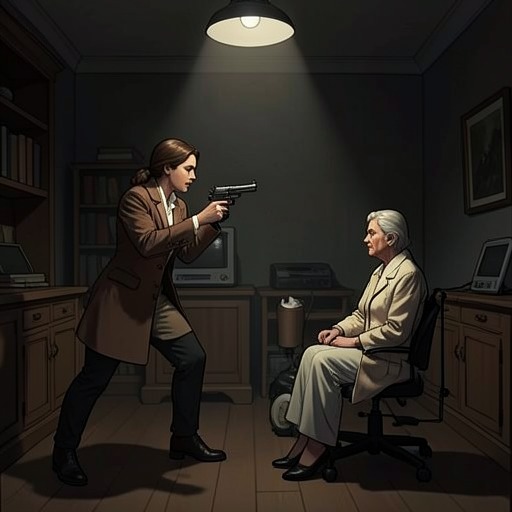
Eileen has been driving north through the winter landscape when she pulls over. Rita is asleep in the car, which Eileen leaves running at the roadside. There is enough fuel for the engine to keep running for hours, a concrete measure of how much time may pass before the car stops. Eileen does not stay to see Rita wake. Instead, she leaves her there and walks away from the Dodge.
The circumstances make the abandonment both deliberate and unresolved. Eileen knows Rita is asleep and that the car is still running, but the account does not say what happens when Rita wakes or how long she remains there. Eileen hopes that Rita will open her eyes and appreciate the place where she has been left. That thought places the scene’s stark setting beside the act itself: the road is remote, and the forest is described as white and blue in the near dawn. Eileen’s reflection that, if she had to die, this would be a suitable place does not establish an attempt to die; it registers the bleakness of the moment and the precariousness of her own passage away.
The Deer and the Break in Eileen’s Flight
On the highway, Eileen had briefly found peace in the passing forests and snow-covered pastures. A bend in the road brings a deer into view, standing ahead of the car. Eileen slows and watches it face her, then pulls over and raises a hand as if to greet it. The encounter interrupts the forward movement of her escape: instead of continuing behind the wheel, she leaves the car and approaches the animal.
The deer remains still before moving down the embankment and into the woods. Eileen’s account lingers on its gaze and on her own response. She breaks down and cries; afterward, she keeps walking through the frozen snow. The animal does not guide or rescue her, and Eileen does not explain what it means. Its brief presence instead gives the scene a pause in which her composure fails. The shift is physical as well as emotional: she leaves the car behind and proceeds on foot.
A Ride South
A few miles farther on, at a crossroads, Eileen catches a ride heading south. To the driver, she says that she has had a fight with her mother. This brief explanation is the account she gives a stranger; the passage does not establish it as a full description of why she is on the road. The driver offers her whiskey from a thermos. Eileen drinks and cries again, then sinks into the passenger seat and looks through a fogged window as the road carries her away.
The change in direction is notable but unexplained: Eileen’s drive had been northbound, while the ride she accepts is southbound. The account does not provide a destination or say where the driver takes her. What it does record is her growing distance from the world she has left. The passing landscape becomes a measure of separation, and Eileen watches the old world recede until it seems to vanish along with her.
Departure and Disappearance
The episode is narrated retrospectively by Eileen, who recalls the deer and the roadside abandonment as part of her departure. Its sequence is spare but consequential: Rita is left in the car; Eileen walks away; the deer encounter breaks into her flight; and a stranger’s ride takes her farther from X-ville. The account offers no resolution for Rita’s immediate fate and no account of the driver’s identity or destination, leaving those details outside the scene.
The abandonment is therefore not presented as a completed escape with a secure destination. Eileen has separated herself from Rita and from the car, but she continues on through a ride whose endpoint remains unstated. Her final image is not arrival but disappearance: the old world passes out of view, and Eileen becomes part of that vanishing. The roadside scene gives this transition its material form, moving her from the vehicle she has used to flee toward an uncertain life beyond the town.