Father's gun
EileenFather's gun is a recurring object in Eileen Dunlop’s account of childhood and family life. It matters not because the narrative shows it being fired, but because it gathers together her father’s authority, his imagined conflicts, and Eileen’s fear of both the weapon and the life surrounding it.
Introduction and Childhood
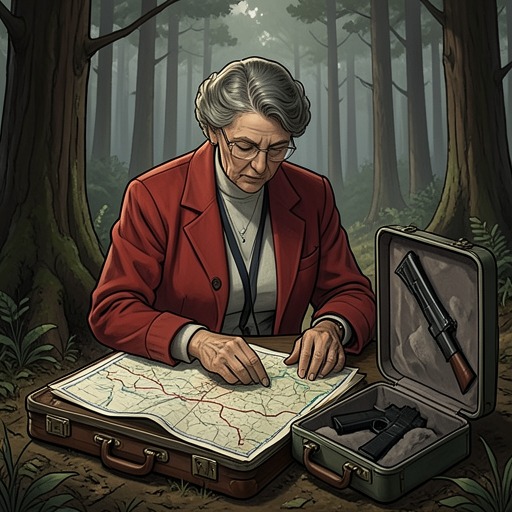
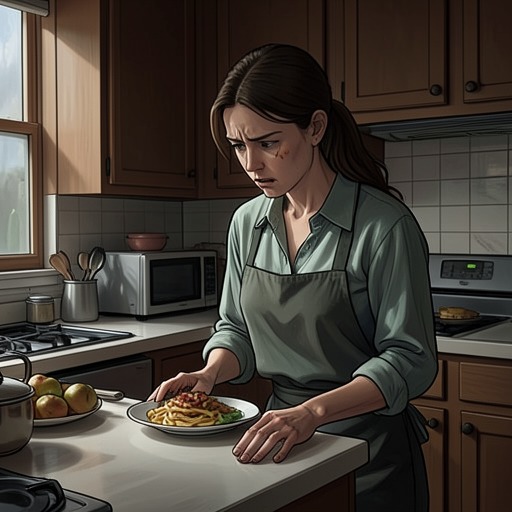
After dinner, Eileen’s father would sit at the kitchen table to clean the gun and explain its mechanics and upkeep. Eileen remembers the lesson less as an invitation to share his work than as a warning: the gun was important, dangerous, and not to be touched. Its presence made an ordinary household object into a boundary around her father’s authority. She says it frightened her much as a butcher knife would, and that it remained part of the scenery from her childhood onward.
A Weapon in His Imagined Conflicts
The gun also appears in the account of her father’s delusions. Eileen describes his loyalty as belonging to gin and to a war against enemies who existed in his imagination; he waved the weapon while denouncing them. Its role therefore extends beyond maintenance at the kitchen table: it was part of how his suspicions took physical form. The narrative connects the gun to his frightening conduct without suggesting that it was fired in these episodes.
Eileen’s Encounter with the Gun
One afternoon, after Eileen returned home and gave her father a bottle of gin, she saw the gun resting on the bathroom sink. The sight recalled thoughts she had previously entertained about using it to die. Those thoughts were bound up with her shame about her body and her fear of being examined after death; the possibility of that exposure had helped keep her alive. The gun’s appearance thus brings an already existing danger into the immediate domestic scene, while revealing how Eileen’s despair is entangled with self-consciousness and invisibility.
Narrative Significance
Across these memories, the gun shifts from an object explained by a parent to a prop in his imagined war and, finally, to something Eileen encounters while considering her own mortality. It remains materially present, but its significance changes with the surrounding circumstances: it marks the distance between father and daughter, gives form to his delusions, and makes Eileen’s private thoughts about death newly immediate. The account does not describe the weapon being used to injure anyone; its force in these passages comes from what it represents and what Eileen imagines it could do.