La belleza es el ala del mundo
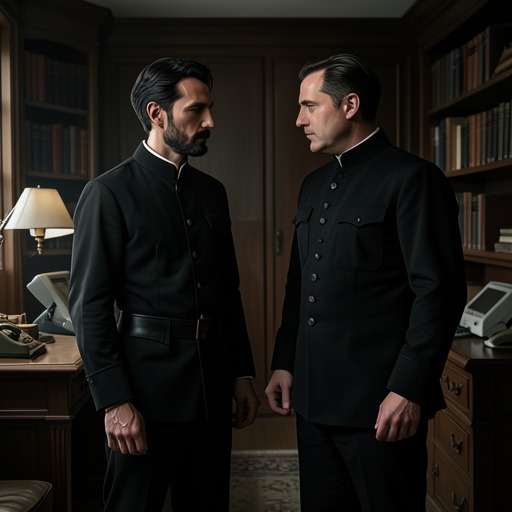
Emmanuelle“La belleza es el ala del mundo” is a philosophical expression spoken by Mario to Emmanuelle, defining beauty as the force that allows humanity to transcend fear, mortality, and the limits of earthly existence. Its decisive significance lies in the way it joins aesthetic judgment to knowledge, ethics, and historical progress: beauty is beautiful because it is true, justified, and capable of overcoming death, while the love of beauty distinguishes human beings from animals and gives the spirit a means of ascent.
Definition and Philosophical Claim
The expression appears within Mario’s rejection of what he calls passions of illusion: the fury of possessing or belonging exclusively, the will to power or servitude, the pleasure of causing suffering and death, the fascination with suffering and mortality, and the appetite for eternity. When Emmanuelle asks what should tempt her instead, Mario proposes that the supreme virtue should be passion for beauty. Beauty therefore enters the conversation not as an ornament added to life but as an alternative to domination, submission, cruelty, death-worship, and the desire for an absolute permanence.
Mario’s claim is deliberately comprehensive. He says that beauty contains everything because what is beautiful is also true, justified, and victorious over death. The expression makes beauty into a standard by which both experience and human aspiration can be measured. It is not presented as a private preference or a fleeting sensation; it is a principle with the power to validate existence and to place human consciousness in relation to a realm beyond ordinary mortality.
Beauty and Human Distinction
The phrase gives beauty an anthropological function. Mario argues that love of beauty is what makes human beings different from animals; without it, humanity would resemble the animal world. The distinction is not based on physical superiority or abstract intelligence alone. It arises from the capacity to recognize and pursue a value that exceeds immediate instinct, a capacity connected to curiosity, pride, and the desire to exceed the conditions into which human beings were born.
The expression also describes a fall and a possible recovery. The first terrors of thought, intensified by the forces of the earth, made human beings collapse face-first against that same earth, leaving them to drag their weak limbs through the humble regions assigned to them by their gods. This image links consciousness to vulnerability: thought initially produces terror rather than mastery. Beauty becomes the answer to that terror, not by denying the earth but by transforming rebellious curiosity and pride into the possibility of departure.
The Wing as Metaphor
The wing is the expression’s central metaphor. Beauty is imagined as an actual means of lifting the world and the spirit above the ground. Without it, Mario says, the spirit would be condemned to remain on the soil. The metaphor turns an abstract aesthetic principle into a physical image of motion, elevation, and release. Beauty does not merely describe transcendence; it supplies the instrument through which transcendence becomes possible.
The image also carries a collective implication. Mario does not speak only of an individual escaping personal limitation. Beauty creates “our possibility of takeoff,” making ascent a human and civilizational capacity. The wing belongs to the world as a whole, and the spirit’s elevation depends on a shared inheritance of curiosity, pride, knowledge, and imagination. Beauty thus connects personal liberation with humanity’s broader attempt to rise beyond fear and confinement.
Science, Reason, and the End of Illusion
Mario extends the same argument from beauty in general to the beauty of science and reason. Human genius, described as more watchful than an angel, covers humanity with the wing of beauty. The beauty of science protects the world from the disasters of magic, while the beauty of reason produces horror at the mask of myths. These formulations establish a contrast between forms of understanding: science and reason are not defended merely for their utility, but because their intellectual structure possesses an aesthetic power capable of displacing superstition and myth.
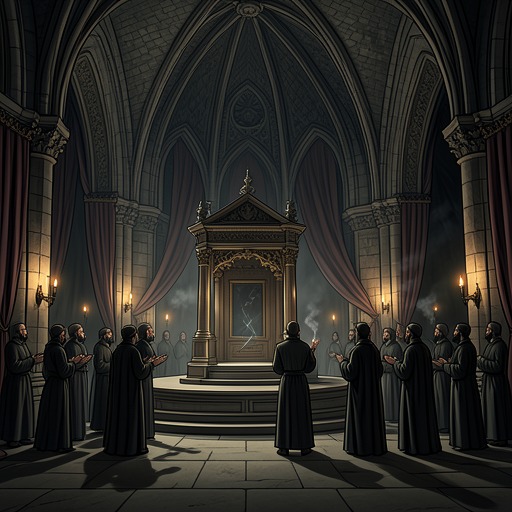
The expression consequently becomes part of a historical vision. Out of love for beauty, Mario says, the world will eventually refuse to sit in the theater of illusion, where political and revealed masks perform a shadow play with real slowness. The image of the theater suggests that politics and revelation can become staged systems of appearances, repeating their gestures while claiming immobility and authority. Against them stands a moving universe that will laugh at their fixed pretensions. Beauty therefore has a critical force: it exposes the artificiality of masks, resists ideological stagnation, and sides with motion rather than immobility.
Ethical and Narrative Significance
The expression culminates in a promise of healing. Humanity will heal its soul through character, discovering in the continuous advance of intelligence a remedy for nightmares and chimeras. Beauty is thus linked to ethical formation rather than detached contemplation. It does not erase suffering or mortality, but gives intelligence and character a direction in which fear can be answered and delusion overcome.
As a piece of rhetoric, the expression moves from condemnation to invitation, from the destructive passions of possession and death to the affirmative discipline of beauty. Its wing imagery provides the emotional center, while its appeals to science, reason, intelligence, and character give the vision a logical and ethical structure. Beauty is simultaneously the truth of the world, the justification of human aspiration, the protection offered by knowledge, and the image of an ascent that would otherwise be impossible. In that synthesis, “La belleza es el ala del mundo” becomes a compact statement of faith in beauty as the condition of human emancipation.