El arte de gozar
Emmanuelle“El arte de gozar” is the formulation Emmanuelle and Mario arrive at while refining a theory of erotic pleasure. Its decisive significance lies in the shift from treating pleasure as the primary value to treating the art of pleasure as the governing principle: enjoyment matters, but it becomes meaningful through cultivation, form, and an enlarging field of human relations.
From Pleasure to Art
The expression emerges when Emmanuelle and Mario reconsider how their maxim should describe erotic life. Mario says that, although he knows Emmanuelle’s preference for the idea, he would not place the principal emphasis on enjoyment itself, but rather on art. His intervention does not reject pleasure; it changes the term’s hierarchy. Pleasure remains the material of the experience, while art supplies its method, discipline, and standard of quality.
Emmanuelle accepts the correction conciliatorily and proposes “el arte de gozar” in place of “gozar con arte.” The contrast is small in wording but important in concept. “Gozar con arte” would describe a manner of enjoying, as though art were an accessory or technique applied to an already established act. “El arte de gozar” gives the practice a substantive identity of its own. Art is no longer merely an adverbial refinement of pleasure; it is the name of the field in which pleasure is learned and shaped.
The Maxim’s Full Form
The expression is embedded in a larger sentence: “Todo el tiempo pasado en otra cosa que no sea el arte de gozar, entre brazos cada vez más numerosos, es tiempo perdido.” The maxim therefore defines wasted time negatively. Time is lost when it is spent on anything other than the art of pleasure, and the phrase “entre brazos cada vez más numerosos” gives the principle a social and erotic extension rather than limiting it to solitary sensation.
The sentence combines an absolute temporal claim with an image of multiplication. “Todo el tiempo” makes the proposition sweeping, while “cada vez más numerosos” introduces movement and growth. The imagined erotic world is not organized by replacing one partner with another, but by an increasing number of embraces. In this formulation, the art of pleasure is connected to expansion: experience gains value as its field becomes more numerous, varied, and relational.
Collaborative Composition
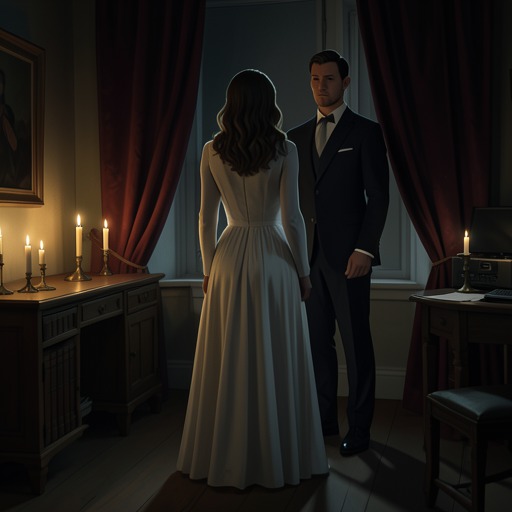
The maxim is not presented as a finished doctrine delivered by a single authoritative speaker. It is composed through dialogue. Emmanuelle’s concentrated revision is part of the process: she frowns, bites her thumb as an image of concentration, and thinks about how to improve the wording. The exercise of style delights her, and Mario notices that pleasure. The scene thus makes the making of the expression itself an instance of the principle it names: enjoyment and art operate together.
Mario recognizes Emmanuelle’s ability to formulate and condense ideas, telling her that she possesses a sense of formulas and a gift for synthesis, and suggesting that she should exercise it by preparing a list of maxims. His response confirms that the sentence has rhetorical force as well as thematic content. It is concise enough to be memorable, balanced enough to sound authoritative, and broad enough to function as a general rule rather than merely a description of one conversation.
Rhetorical and Thematic Force
“El arte de gozar” works through reclassification. It takes an activity commonly treated as instinctive or private and names it as an art, thereby implying that pleasure requires attention, learning, judgment, and composition. The expression also resists a purely acquisitive model of erotic experience. Because its complete form joins art with “brazos cada vez más numerosos,” it imagines fulfillment through multiplication and widening contact rather than through a closed, final possession.
At the same time, the sentence’s severity gives the ideal an almost programmatic character. By calling all other time “tiempo perdido,” it converts an aesthetic preference into a law of conduct. The phrase is playful in its polished, aphoristic form, but its logic is uncompromising: life should be measured by the quality and extent of its pleasurable practice. The expression consequently stands between invitation and doctrine, offering a language of sensual freedom while imposing a demanding standard on how that freedom should be lived.