Brom's death
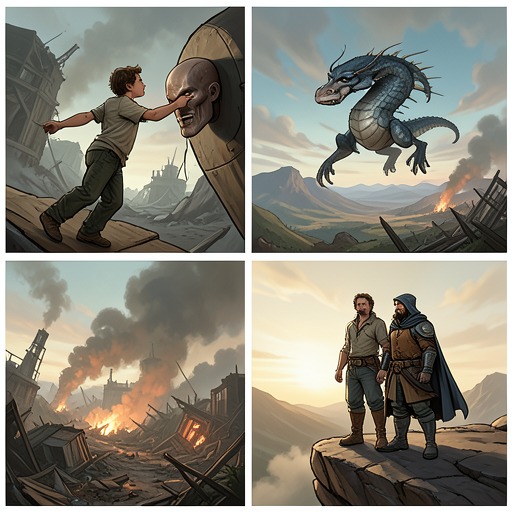
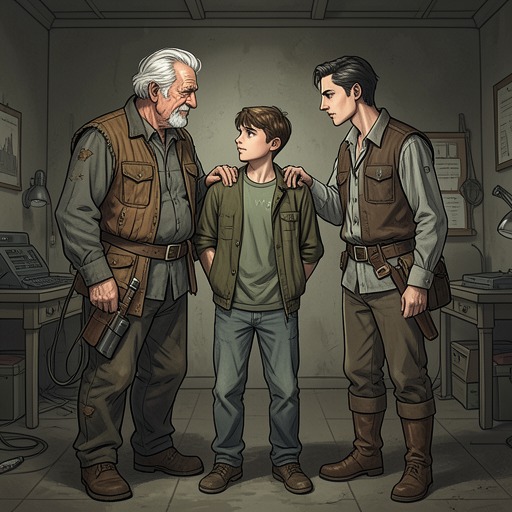
EragonBrom's death is the emotional and structural hinge of Eragon's early journey: the old storyteller's fatal wound closes one generation of Dragon Rider history while compelling Eragon to inherit its burdens. In his final hours, Brom reveals his identity as a former Rider, blesses Eragon in the ancient language, and dies from the wound inflicted by the Ra’zac. Eragon's grief then becomes an act of memory and responsibility when he builds Brom's tomb with Magic and marks it with the simple inscription “HERE LIES BROM.”
The Wound and the Final Vigil
Brom's death follows the ambush in which the Ra’zac wounded him grievously. He awakens in the cave feverish and disoriented, asking for wine rather than accepting ordinary comfort. At first, Eragon treats the request as a sick man's impulse, but Brom orders him to wash his right hand. When the wine removes a brown dye from the palm, the gedwëy ignasia appears: the mark of a Dragon Rider. This small physical revelation turns the sickbed into a scene of recognition, exposing that Brom's apparent identity as a wandering storyteller has concealed an extraordinary past.
Brom's body makes the danger unmistakable. His fever is intense, his breathing labored, and the wound has sapped the strength he needs to resist it. Eragon and Murtagh can cool him and watch over him, but they cannot reverse the injury. Eragon remains beside him without food or drink, holding his hand as the old man's pallor deepens, his eyes dim, and his hands grow cold. The vigil gives the death its moral shape: Eragon cannot save Brom, but he can refuse to let him die unattended.
Brom's Buried Past
Once the mark is exposed, Brom explains that he was chosen by the Riders when he was younger than Eragon. During his training he befriended Morzan, who later became one of the Forsworn and betrayed the Riders to Galbatorix. Brom's history therefore links Eragon's immediate struggle to the older catastrophe that destroyed the Rider order. His account is not merely a biographical confession; it supplies Eragon with a living connection to the lost age and reveals the personal cost of Galbatorix's victory.
Brom also discloses that his dragon was killed during the fighting at Dorú Areaba, the city of Vroengard, and that her name was Saphira. The revelation gives particular weight to his relationship with the young Saphira who now accompanies Eragon. Brom has spent more than a century carrying grief for his dead dragon, and he admits that he still hates Galbatorix for what was taken from him. His warning to Eragon is thus grounded in experience rather than abstract instruction: Eragon must guard Saphira with his life because Brom knows the devastation of surviving the loss of a bonded dragon.
Blessing and Death
Knowing that he cannot last much longer, Brom asks Eragon to accept his blessing. Eragon initially tries to deny the approaching death, but Brom insists that it is “the way of things.” He places a trembling hand on Eragon's brow, speaks seven words from the ancient language, and quietly explains their meaning, telling Eragon to use them only in great need. The blessing is both intimate farewell and practical inheritance. Brom cannot continue as Eragon's guide, so he leaves him a final piece of knowledge intended for a future crisis.
Brom's last words turn toward the unknown, which he calls the greatest adventure of all. Soon afterward, he stiffens, meets Eragon's eyes, and dies as contentment spreads across his face. The narration identifies him in death as Brom the storyteller, preserving the public role by which Eragon first knew him even after the hidden Rider identity has been revealed. This creates a deliberate doubleness: Brom dies as an old man remembered through stories, yet the meaning of his life reaches back to the Riders, Morzan, the fall of the order, and the continuing war against Galbatorix.
Burial and Immediate Consequences
Eragon closes Brom's eyes and asks that he be buried, while Saphira raises her head and roars mournfully at the sky. Murtagh worries that a burial may expose them, but Eragon chooses to perform it. He uses the ancient-language command “Moi stenr!” to make the sandstone ripple and form a body-length depression. He then raises walls around Brom, places Brom's staff and sword in the vault, and seals the grave beneath a tall faceted spire. The tomb is therefore not an ordinary resting place: it is Eragon's first major act of Magic carried out as a deliberate tribute to his dead mentor.
Eragon marks the stone with the inscription “HERE LIES BROM,” converting private grief into a durable memorial. The burial also changes the traveling group. Brom, who had provided knowledge, protection, and direction, is gone; Eragon must continue with Murtagh and Saphira while carrying the information Brom revealed. His later recovery from the Ra’zac wound does not restore the earlier order of his life. When his ribs finally heal, he can move and train again, but his joy has been diminished by Brom's absence.
Narrative Significance
The death combines reversal, recognition, and inheritance. What appears to be the collapse of a wounded old companion becomes the revelation of a former Dragon Rider, and that revelation arrives precisely when Brom is no longer able to guide Eragon through its consequences. The scene therefore makes knowledge inseparable from loss: Eragon learns who Brom was at the moment he must live without him.
Brom's death also establishes a recurring pattern in the story's treatment of the body. Garrow's burns, the scars left by the Ra’zac, the tortured injuries suffered by Arya, and the lasting scar Eragon later receives from Durza all show that resistance leaves material traces. Brom's wound is not an abstract symbol that disappears when the plot moves on; it is the direct cause of his death, the source of Eragon's helpless vigil, and the force that transfers responsibility to the next Rider. His final lesson is consequently embodied in absence. Eragon inherits not only Brom's blessing and knowledge, but also the obligation to protect Saphira and continue a struggle whose previous generation failed to complete.