prologue
Arya's Ambush and Teleportation
[Arya](entity:character-recall-character-arya-1fd7d4dbbb0e) travels through the forest with two elven guards when the [Ra’zac](entity:character-recall-character-ra-zac-793bf075be53) and Urgals ambush them. The guards are killed, Arya is wounded and cornered, and the [Shade](entity:concept-recall-concept-shade-feca60c344c1) tries to seize the blue dragon egg she carries.
With her last strength, Arya uses magic to send the egg away before the Shade’s attack knocks her unconscious. The egg’s disappearance begins the chain of events that will bring [Eragon](entity:character-recall-character-eragon-cb438219a7b4) into the war against [Galbatorix’s Empire](entity:organization-recall-organization-galbatorix-s-emp-7ef222874da6).
early in the story
Eragon Discovers the Egg
While hunting a crippled doe in [The Spine](entity:location-recall-location-the-spine-21c274fae67c), [Eragon](entity:character-recall-character-eragon-cb438219a7b4) witnesses a magical explosion and finds a polished blue stone in the scorched clearing. He takes it home, hoping it might be valuable, though he senses that it is dangerous and connected with magic.
The stone proves hollow and inexplicable, resisting every attempt to damage it. Its discovery quietly marks Eragon as the person chosen to receive a dragon and pulls the isolated farm boy into the history of the Dragon Riders.
several weeks later
The Traders Reach Carvahall
After winter delays, the traders arrive at [Carvahall](entity:location-recall-location-carvahall-bc43cd25da61). [Eragon](entity:character-recall-character-eragon-cb438219a7b4) and [Garrow](entity:character-recall-character-garrow-c6a8034f54c0) show the blue stone to Merlock, who determines that it is hollow, extraordinarily hard, and made by unknown tools or magic, but cannot establish its value.
The traders also bring disturbing reports of Urgal migrations, attacks, political unrest, and a possible [Shade](entity:concept-recall-concept-shade-feca60c344c1). These rumors reveal that the Empire’s apparent stability is collapsing beyond [Palancar Valley](entity:location-recall-location-palancar-valley-6faa096b1344).
during the traders' visit
The Riders' History
[Brom](entity:character-recall-character-brom-bda2142ac1b9) recounts the history of the Dragon Riders, describing their long peacekeeping role, their alliance with elves and dwarves, and the golden age that ended with [Galbatorix](entity:character-recall-character-galbatorix-388550fe628a)’s rebellion. He explains how Galbatorix lost his first dragon, turned against the Riders, recruited [Morzan](entity:character-recall-character-morzan-24e935de0db7) and the Forsworn, and eventually seized the crown.
The tale gives [Eragon](entity:character-recall-character-eragon-cb438219a7b4) his first sustained understanding of the legacy he may inherit. It also establishes the scale of the catastrophe that followed the Fall of the Riders and the danger posed by Galbatorix’s rule.
about one month after Eragon finds the egg
Saphira Hatches
The stone begins squeaking and rocking in [Eragon](entity:character-recall-character-eragon-cb438219a7b4)’s room before cracking open. A small sapphire dragon emerges, explores the room, and accepts food from Eragon.
When Eragon touches her, a surge of energy links their minds and leaves the [Gedwëy Ignasia](entity:concept-recall-concept-gedw-y-ignasia-fab536e16a22) on his palm. The hatching makes him a [Dragon Rider](entity:state-recall-state-dragon-rider-7d397a4df087) and creates a bond that cannot be separated without destroying both of them.
the following weeks
Saphira Learns to Hunt
[Eragon](entity:character-recall-character-eragon-cb438219a7b4) hides [Saphira](entity:character-recall-character-saphira-ed60c2eb7974) in the forest and builds shelters while she grows at extraordinary speed. Their mental contact strengthens, allowing them to communicate through images, emotions, and eventually words.
Saphira becomes increasingly intelligent and independent, while Eragon struggles to conceal her existence from [Garrow](entity:character-recall-character-garrow-c6a8034f54c0) and [Roran](entity:character-recall-character-roran-5476723a2027). Their secret life transforms Eragon’s ordinary farm routine into the beginning of Rider training.
shortly before Roran leaves
Saphira Receives Her Name
After rejecting a long list of dragon names, [Saphira](entity:character-recall-character-saphira-ed60c2eb7974) accepts the name Saphira, which [Eragon](entity:character-recall-character-eragon-cb438219a7b4) remembers from [Brom](entity:character-recall-character-brom-bda2142ac1b9)’s list of legendary dragons. The choice gives their relationship a formal identity and confirms Saphira’s distinct will.
At the same time, [Roran](entity:character-recall-character-roran-5476723a2027) announces that he intends to work at a mill in [Therinsford](entity:location-recall-location-therinsford-d5e0598d3944) so he can earn money to marry Katrina. His planned departure begins the separation that will leave Eragon and [Garrow](entity:character-recall-character-garrow-c6a8034f54c0) vulnerable to the [Ra’zac](entity:character-recall-character-ra-zac-793bf075be53).
the next morning
Roran Leaves Home
[Roran](entity:character-recall-character-roran-5476723a2027) leaves the farm for [Therinsford](entity:location-recall-location-therinsford-d5e0598d3944) with Dempton, despite [Eragon](entity:character-recall-character-eragon-cb438219a7b4)’s anxiety about the separation. [Garrow](entity:character-recall-character-garrow-c6a8034f54c0) accepts the decision and gives Roran a blessing, along with advice about freedom, money, authority, and love.
Eragon remains behind with Garrow, unaware that this is the last time the family will be together. The departure removes the strongest additional defender from the farm just as the Empire’s hunters close in.
the day Roran departs
The Ra’zac Search Carvahall
Horst warns [Eragon](entity:character-recall-character-eragon-cb438219a7b4) that two strange black-cloaked men have been asking whether anyone found the blue stone. Eragon overhears Sloan telling them that Eragon possessed it, confirming that the [Ra’zac](entity:character-recall-character-ra-zac-793bf075be53) have traced the egg to [Carvahall](entity:location-recall-location-carvahall-bc43cd25da61).
The Ra’zac nearly capture Eragon, but [Brom](entity:character-recall-character-brom-bda2142ac1b9) interrupts and drives them away. Brom notices the mark on Eragon’s palm, recognizes that he has touched a dragon, and realizes that the Riders have returned.
the following morning
The Ra’zac Attack the Farm
[Eragon](entity:character-recall-character-eragon-cb438219a7b4) retrieves [Saphira](entity:character-recall-character-saphira-ed60c2eb7974) and tells her that the [Ra’zac](entity:character-recall-character-ra-zac-793bf075be53) are coming. Fear overwhelms her, and she carries him into [The Spine](entity:location-recall-location-the-spine-21c274fae67c) instead of returning to warn [Garrow](entity:character-recall-character-garrow-c6a8034f54c0).
When they fly back the next day, the farm is destroyed and the barn is burning. Garrow lies buried in the wreckage, badly burned by [Seithr oil](entity:object-recall-object-seithr-oil-ebe3aa158366), while the Ra’zac have vanished after taking the egg’s trail and leaving the family’s home in ruins.
the day after the farm attack
Garrow Is Rescued
[Eragon](entity:character-recall-character-eragon-cb438219a7b4) finds [Garrow](entity:character-recall-character-garrow-c6a8034f54c0) alive beneath the collapsed house and uses [Saphira](entity:character-recall-character-saphira-ed60c2eb7974)’s strength to free him. He constructs a crude litter and tries to transport Garrow to [Carvahall](entity:location-recall-location-carvahall-bc43cd25da61), but Saphira cannot carry the full load for long.
Eragon eventually drags Garrow toward the village, where [Brom](entity:character-recall-character-brom-bda2142ac1b9) finds him and brings him to Gertrude. The rescue preserves Garrow’s life temporarily but cannot reverse the [Ra’zac](entity:character-recall-character-ra-zac-793bf075be53)’s poison and burns.
two days after the rescue
Garrow Dies
[Garrow](entity:character-recall-character-garrow-c6a8034f54c0)’s wounds fail to heal despite Gertrude’s treatment. [Eragon](entity:character-recall-character-eragon-cb438219a7b4) visits him at Horst’s house, watching helplessly as the fever and burns consume the man who raised him.
Garrow dies before dawn, leaving Eragon without his uncle, farm, or home. His death turns Eragon’s fear and grief into a fixed determination to pursue and destroy the [Ra’zac](entity:character-recall-character-ra-zac-793bf075be53).
immediately after Garrow’s death
Brom Reveals the Ra’zac
[Eragon](entity:character-recall-character-eragon-cb438219a7b4) tries to leave [Carvahall](entity:location-recall-location-carvahall-bc43cd25da61) to hunt the [Ra’zac](entity:character-recall-character-ra-zac-793bf075be53), but [Brom](entity:character-recall-character-brom-bda2142ac1b9) intercepts him and reveals that he knows about [Saphira](entity:character-recall-character-saphira-ed60c2eb7974). Brom identifies the hunters as the Ra’zac, servants of [Galbatorix](entity:character-recall-character-galbatorix-388550fe628a) who cannot use magic but are stronger, cunning, and resistant to ordinary dangers.
Brom offers to accompany Eragon, giving him [Zar’roc](entity:object-recall-object-zar-roc-7e4c7450de9f), a former Rider’s sword, and promising to teach him the knowledge he needs. Eragon accepts despite Brom’s refusal to explain his own past.
shortly after Garrow’s burial preparations
The Journey Begins
[Eragon](entity:character-recall-character-eragon-cb438219a7b4) and [Brom](entity:character-recall-character-brom-bda2142ac1b9) leave [Carvahall](entity:location-recall-location-carvahall-bc43cd25da61) with [Saphira](entity:character-recall-character-saphira-ed60c2eb7974) flying overhead. Brom explains dragons, Rider history, magic, and the ancient language while they follow the [Ra’zac](entity:character-recall-character-ra-zac-793bf075be53)’s trail toward [Therinsford](entity:location-recall-location-therinsford-d5e0598d3944).
The journey shifts Eragon from grieving farm boy to apprentice Rider. He begins learning that power is governed by energy, distance, knowledge, and discipline, not merely by desire.
near Therinsford and the plains
Eragon Learns Magic
[Brom](entity:character-recall-character-brom-bda2142ac1b9) teaches [Eragon](entity:character-recall-character-eragon-cb438219a7b4) that the [Ancient Language](entity:concept-recall-concept-ancient-language-dcfd247c6741) names the true nature of things and can direct magical power. Eragon learns to lift a pebble with “stenr reisa” and begins memorizing words, while Brom warns him that magic can kill its user when the task exceeds available strength.
Eragon also learns that the language cannot express deliberate lies, that true names confer power, and that minds can be entered or defended. These lessons establish the rules that will govern every later magical confrontation.
several weeks after leaving Carvahall
The Massacre of Yazuac
[Eragon](entity:character-recall-character-eragon-cb438219a7b4) and [Brom](entity:character-recall-character-brom-bda2142ac1b9) enter [Yazuac](entity:location-recall-location-yazuac-d5510e5d6a6a) and find its entire population slaughtered, piled around a spear that impales a baby. The horror overwhelms Eragon, exposing the brutality spreading through the Empire.
Two Urgals attack them as they investigate. Brom is wounded, and Eragon is cornered in an alley, where his rage and terror unlock his first deliberate act of magic.
during the Yazuac attack
Eragon Uses Magic
Trapped by two Urgals, [Eragon](entity:character-recall-character-eragon-cb438219a7b4) invokes “[Brisingr](entity:expression-recall-expression-brisingr-ee5d3957860b)” and sends a blue magical bolt through the lead monster. The shock wave kills the second Urgal as well, leaving Eragon nearly exhausted.
The act proves that Eragon can wield magic without formal training, but it also exposes how little control he has over its scale and consequences. [Brom](entity:character-recall-character-brom-bda2142ac1b9) later warns him that magic must be used only when mundane means are insufficient.
immediately after the Yazuac attack
Brom Is Wounded
[Eragon](entity:character-recall-character-eragon-cb438219a7b4) binds [Brom](entity:character-recall-character-brom-bda2142ac1b9)’s arm and uses [Saphira](entity:character-recall-character-saphira-ed60c2eb7974) to carry him away from [Yazuac](entity:location-recall-location-yazuac-d5510e5d6a6a) while he follows on horseback. Brom explains that every Rider could use magic, but that Riders were trained for years before being trusted with it.
He begins formal instruction in magical control, mental defense, and the [Ancient Language](entity:concept-recall-concept-ancient-language-dcfd247c6741). Eragon learns that a wizard’s duel requires access to the opponent’s mind before either combatant can safely attack.
during the journey south from Yazuac
The Ra’zac Trail Is Traced
[Eragon](entity:character-recall-character-eragon-cb438219a7b4) finds a flask containing [Seithr oil](entity:object-recall-object-seithr-oil-ebe3aa158366), the corrosive substance that burned [Garrow](entity:character-recall-character-garrow-c6a8034f54c0). [Brom](entity:character-recall-character-brom-bda2142ac1b9) explains its rarity and its use by the [Ra’zac](entity:character-recall-character-ra-zac-793bf075be53) for torture and assassination.
By tracing shipments of the oil through [Teirm](entity:location-recall-location-teirm-b6dada226b60)’s trade records, they reason that the Ra’zac must be based at a major crossroads. Their investigation points toward [Dras-Leona](entity:location-recall-location-dras-leona-eeb9681596de) and the mountain [Helgrind](entity:location-recall-location-helgrind-05dcadb0fc6b).
after reaching Teirm
The Teirm Records Burglary
In [Teirm](entity:location-recall-location-teirm-b6dada226b60), [Brom](entity:character-recall-character-brom-bda2142ac1b9) reunites with his old friend [Jeod](entity:character-recall-character-jeod-c0cddd3681c9) and learns that merchants supporting the Varden are being attacked. Unable to obtain official access to the shipping records, Brom, Jeod, and [Eragon](entity:character-recall-character-eragon-cb438219a7b4) break into the castle’s records room at night.
They identify repeated shipments of [Seithr oil](entity:object-recall-object-seithr-oil-ebe3aa158366) to [Dras-Leona](entity:location-recall-location-dras-leona-eeb9681596de) and discover that the oil is transported from the palace to [Helgrind](entity:location-recall-location-helgrind-05dcadb0fc6b). The burglary gives them a likely location for the [Ra’zac](entity:character-recall-character-ra-zac-793bf075be53) but also exposes them to the Empire’s surveillance.
during Eragon’s stay in Teirm
Angela Reads Eragon’s Fate
[Eragon](entity:character-recall-character-eragon-cb438219a7b4) visits [Angela](entity:character-recall-character-angela-8ec06be0ea1a), meets the werecat [Solembum](entity:character-recall-character-solembum-5eb687ced3f8), and accepts a reading from dragon knucklebones. Angela foretells long life, many possible paths, great battles, an approaching death, an inevitable departure from [Alagaësia](entity:location-recall-location-alaga-sia-6d5efd21c70f), a powerful romance, and betrayal from within his family.
Solembum separately tells Eragon to seek a weapon beneath the roots of the Menoa tree and, when all seems lost, to find the Rock of Kuthian and speak his name. The prophecies deepen the sense that Eragon’s choices are bound to a larger [Wyrd](entity:concept-recall-concept-wyrd-4e33e9eb8562).
near the end of the Teirm stay
The Ra’zac Are Located
[Brom](entity:character-recall-character-brom-bda2142ac1b9) and [Eragon](entity:character-recall-character-eragon-cb438219a7b4) learn that slaves carrying provisions and [Seithr oil](entity:object-recall-object-seithr-oil-ebe3aa158366) are sent from [Dras-Leona](entity:location-recall-location-dras-leona-eeb9681596de)’s palace to the base of [Helgrind](entity:location-recall-location-helgrind-05dcadb0fc6b). The recurring shipments make Helgrind the most likely lair of the [Ra’zac](entity:character-recall-character-ra-zac-793bf075be53).
They plan to disguise themselves as the slaves during the next full moon, but the plan collapses when Eragon encounters the Ra’zac in Dras-Leona’s cathedral before they are ready.
during the Dras-Leona investigation
Eragon Escapes Dras-Leona
[Eragon](entity:character-recall-character-eragon-cb438219a7b4) enters the cathedral and finds the [Ra’zac](entity:character-recall-character-ra-zac-793bf075be53) waiting for him. He shoots at them, flees through the priory, blasts open a door with magic, and escapes over a wall while soldiers flood the city.
[Brom](entity:character-recall-character-brom-bda2142ac1b9) and Eragon force the city gates open with magic and flee with [Saphira](entity:character-recall-character-saphira-ed60c2eb7974). The encounter confirms that the Ra’zac know their location and that continued pursuit will make them increasingly vulnerable to soldiers and spies.
that night outside Dras-Leona
The Ra’zac Capture Eragon
While [Eragon](entity:character-recall-character-eragon-cb438219a7b4), [Brom](entity:character-recall-character-brom-bda2142ac1b9), and [Saphira](entity:character-recall-character-saphira-ed60c2eb7974) camp in the wilderness, the [Ra’zac](entity:character-recall-character-ra-zac-793bf075be53) ambush them using a drug that suppresses their victims’ abilities. Eragon wakes tied and sees Saphira chained and muzzled, while Brom is too drugged to resist.
The Ra’zac prepare to kill Brom despite orders to keep both captives alive, but unknown archers attack. Brom throws himself in front of a dagger meant for Eragon and is gravely wounded.
immediately after the Ra’zac ambush
Murtagh Rescues the Captives
[Murtagh](entity:character-recall-character-murtagh-33a28f31d1ea) reveals himself as the archer who attacked the [Ra’zac](entity:character-recall-character-ra-zac-793bf075be53). He frees [Eragon](entity:character-recall-character-eragon-cb438219a7b4), treats his broken ribs, and helps prepare a litter so [Saphira](entity:character-recall-character-saphira-ed60c2eb7974) can carry the wounded [Brom](entity:character-recall-character-brom-bda2142ac1b9).
Murtagh joins Eragon and Saphira because he is also hunting the Ra’zac. His skill, secrecy, and hostility toward the Empire make him a valuable but unsettling companion.
after reaching a hidden cave
Brom Reveals His Rider Past
[Brom](entity:character-recall-character-brom-bda2142ac1b9)’s wound worsens, and he asks [Eragon](entity:character-recall-character-eragon-cb438219a7b4) to wash his hand with wine, removing the dye that concealed his [Gedwëy Ignasia](entity:concept-recall-concept-gedw-y-ignasia-fab536e16a22). He reveals that he was once a Rider whose dragon was named [Saphira](entity:character-recall-character-saphira-ed60c2eb7974) and was killed during the Fall of the Riders.
Brom explains that he was trained alongside [Morzan](entity:character-recall-character-morzan-24e935de0db7), later fought him, and spent the rest of his life opposing [Galbatorix](entity:character-recall-character-galbatorix-388550fe628a). He blesses Eragon with seven secret words before dying from the [Ra’zac](entity:character-recall-character-ra-zac-793bf075be53)’s wound.
immediately after Brom’s death
Brom Is Buried
[Eragon](entity:character-recall-character-eragon-cb438219a7b4) and [Murtagh](entity:character-recall-character-murtagh-33a28f31d1ea) carry [Brom](entity:character-recall-character-brom-bda2142ac1b9)’s body to the top of the sandstone formation. Eragon uses magic to carve a tomb, places Brom’s sword and staff inside, and inscribes a memorial honoring him as a [Dragon Rider](entity:state-recall-state-dragon-rider-7d397a4df087) and a father figure.
[Saphira](entity:character-recall-character-saphira-ed60c2eb7974) transforms the sandstone tomb into a diamond vault, preserving Brom’s body from decay. The burial closes Brom’s role as Eragon’s mentor while leaving his legacy as the standard Eragon must inherit.
the day after Brom’s burial
Eragon Claims Zar’roc
After [Brom](entity:character-recall-character-brom-bda2142ac1b9)’s death, [Eragon](entity:character-recall-character-eragon-cb438219a7b4) takes [Zar’roc](entity:object-recall-object-zar-roc-7e4c7450de9f) from the travel bags and decides to wear it openly. [Murtagh](entity:character-recall-character-murtagh-33a28f31d1ea) identifies it as [Morzan](entity:character-recall-character-morzan-24e935de0db7)’s sword, a weapon associated with the slaughter of Riders and dragons.
Eragon accepts the burden of carrying the blade despite its history. The choice binds him more visibly to the legacy of the Forsworn while forcing him to decide what meaning the sword will have under a new owner.
during the journey toward Gil’ead
Murtagh’s True Identity
[Murtagh](entity:character-recall-character-murtagh-33a28f31d1ea) explains that he is [Morzan](entity:character-recall-character-morzan-24e935de0db7)’s son. He describes Morzan’s cruelty, the scar inflicted on him as a child, his mother’s disappearance and death, and his own escape from [Galbatorix](entity:character-recall-character-galbatorix-388550fe628a) after rejecting the king’s vision of empire.
The revelation explains Murtagh’s fear of the Varden and his refusal to submit his mind to examination. It also makes him politically dangerous: the son of the last Forsworn could be treated as either a potential ally or an inherited enemy.
nearly one month after leaving Brom’s tomb
Eragon Is Captured at Gil’ead
[Murtagh](entity:character-recall-character-murtagh-33a28f31d1ea) enters [Gil’ead](entity:location-recall-location-gil-ead-a5b19c2d5c9b) seeking Dormnad, but he is recognized and returns to camp in haste. Before they can reach the Varden, Urgals ambush [Eragon](entity:character-recall-character-eragon-cb438219a7b4) and Murtagh, knocking Eragon unconscious and carrying him into the city.
Drugged and imprisoned, Eragon sees the tortured elf [Arya](entity:character-recall-character-arya-1fd7d4dbbb0e) being carried through the prison and recognizes the [Shade](entity:concept-recall-concept-shade-feca60c344c1) [Durza](entity:character-recall-character-durza-6f1ebef4eddc) among her captors. His imprisonment turns his private search for the [Ra’zac](entity:character-recall-character-ra-zac-793bf075be53) into a rescue mission.
several days after capture
Eragon Escapes Gil’ead
As the drug wears off, [Eragon](entity:character-recall-character-eragon-cb438219a7b4) uses magic to open his cell and intimidates a surviving guard into revealing [Arya](entity:character-recall-character-arya-1fd7d4dbbb0e)’s location. [Murtagh](entity:character-recall-character-murtagh-33a28f31d1ea) arrives disguised as a ragged prisoner, and together they free Arya and recover [Zar’roc](entity:object-recall-object-zar-roc-7e4c7450de9f) and her weapons.
[Durza](entity:character-recall-character-durza-6f1ebef4eddc) confronts them in the banquet hall. Murtagh shoots the [Shade](entity:concept-recall-concept-shade-feca60c344c1) twice, but the attack only forces Durza to vanish temporarily. [Saphira](entity:character-recall-character-saphira-ed60c2eb7974) breaks through the roof and carries Eragon, Murtagh, and the unconscious Arya out of the fortress.
during the flight from Gil’ead
Eragon Heals Arya
After escaping, [Eragon](entity:character-recall-character-eragon-cb438219a7b4) discovers that [Arya](entity:character-recall-character-arya-1fd7d4dbbb0e)’s body is covered with torture wounds and branding. With [Saphira](entity:character-recall-character-saphira-ed60c2eb7974) lending her strength, he spends the night using magic to close the worst injuries and keep Arya alive.
The healing reveals both the limits of Eragon’s training and the depth of Arya’s suffering. It also creates a direct personal bond between them, while Arya remains unconscious and dependent on reaching the Varden.
after three days of flight
The Desert Decision
With Imperial soldiers pursuing them and [Arya](entity:character-recall-character-arya-1fd7d4dbbb0e) dying from poison, [Eragon](entity:character-recall-character-eragon-cb438219a7b4) and [Murtagh](entity:character-recall-character-murtagh-33a28f31d1ea) debate every possible route. They reject [Surda](entity:location-recall-location-surda-71d51073a564) and the northern roads as too exposed and choose the desperate path across the [Hadarac Desert](entity:location-recall-location-hadarac-desert-cb7fd76e82c9) toward the [Beor Mountains](entity:location-recall-location-beor-mountains-4fd6e0356fc6).
Eragon discovers that he can draw underground water to the surface, making the crossing possible. The decision abandons the Empire’s roads and commits the group to a hazardous journey with no guarantee of shelter beyond the desert.
the next five days
Crossing the Hadarac Desert
[Eragon](entity:character-recall-character-eragon-cb438219a7b4), [Murtagh](entity:character-recall-character-murtagh-33a28f31d1ea), [Saphira](entity:character-recall-character-saphira-ed60c2eb7974), and [Arya](entity:character-recall-character-arya-1fd7d4dbbb0e) cross the [Hadarac Desert](entity:location-recall-location-hadarac-desert-cb7fd76e82c9) at relentless speed, using magic to draw water from beneath the sand. They travel roughly sixty leagues in five days, exhausting themselves and the horses while avoiding Imperial patrols.
The desert’s harshness forces Eragon to use magic practically rather than dramatically. Reaching the [Beor Mountains](entity:location-recall-location-beor-mountains-4fd6e0356fc6) places them outside [Galbatorix](entity:character-recall-character-galbatorix-388550fe628a)’s direct control and confirms that the Varden may be their only path to survival.
at the foothills of the Beor Mountains
Arya Reveals the Varden’s Route
[Eragon](entity:character-recall-character-eragon-cb438219a7b4) enters [Arya](entity:character-recall-character-arya-1fd7d4dbbb0e)’s mind and learns why she has remained unconscious: the poison [Skilna Bragh](entity:object-recall-object-skilna-bragh-39ead293927e) will kill her within a few days without its antidote. Arya tells him that the Varden possess [Túnivor’s Nectar](entity:object-recall-object-t-nivor-s-nectar-aa4d01b656b5) and gives him the route to their hidden refuge.
She instructs him to follow the [Beartooth River](entity:location-recall-location-beartooth-river-ad6e950051c5) to [Kóstha-mérna](entity:location-recall-location-k-stha-m-rna-dfa99782da97), strike the cliff beside the waterfall, and speak the ancient pass phrase. The revelation gives Eragon a destination but leaves very little time to reach it.
the same evening
The Kull Pursue Them
A massive column of Urgals appears near the [Beor Mountains](entity:location-recall-location-beor-mountains-4fd6e0356fc6). [Murtagh](entity:character-recall-character-murtagh-33a28f31d1ea) recognizes them as [Kull](entity:creature-recall-creature-kull-c6cae4dc905a), elite Urgals capable of running for days without sleep, and realizes that their chieftain is driving them toward the Varden.
[Eragon](entity:character-recall-character-eragon-cb438219a7b4) chooses to continue with Murtagh rather than fly ahead alone. The decision preserves their alliance but forces them to race toward a valley that may be a dead end.
during the approach to the Beor Mountains
The Slavers Attack
A band of slavers surrounds [Eragon](entity:character-recall-character-eragon-cb438219a7b4) and [Murtagh](entity:character-recall-character-murtagh-33a28f31d1ea), intending to sell them. When they discover [Arya](entity:character-recall-character-arya-1fd7d4dbbb0e) and recognize her as an elf, they decide that the Empire will pay a fortune for her.
[Saphira](entity:character-recall-character-saphira-ed60c2eb7974) attacks from the air, and Eragon identifies himself as a [Dragon Rider](entity:state-recall-state-dragon-rider-7d397a4df087) to frighten the slavers into fleeing. Murtagh executes their leader, Torkenbrand, sparking a moral dispute between the companions over mercy, survival, and the limits of violence.
near the end of the mountain valley
The Waterfall Crossing
The [Kull](entity:creature-recall-creature-kull-c6cae4dc905a) catch up with the group at [Kóstha-mérna](entity:location-recall-location-k-stha-m-rna-dfa99782da97). [Saphira](entity:character-recall-character-saphira-ed60c2eb7974) holds one side of the Urgal force at bay while [Eragon](entity:character-recall-character-eragon-cb438219a7b4) and [Murtagh](entity:character-recall-character-murtagh-33a28f31d1ea) race toward the waterfall, only to discover that they are on the wrong side of the lake.
They lash [Arya](entity:character-recall-character-arya-1fd7d4dbbb0e) to Saphira and send the horses through the falls. Eragon is nearly drowned beneath the water, but a dwarf rescues him. Hidden gates open behind the waterfall, revealing the entrance to [Farthen Dûr](entity:location-recall-location-farthen-d-r-05fc72f34d16).
immediately after the waterfall crossing
Arrival at Farthen Dûr
The group enters [Farthen Dûr](entity:location-recall-location-farthen-d-r-05fc72f34d16) under armed guard. The bald spellcaster Egraz Carn demands that [Eragon](entity:character-recall-character-eragon-cb438219a7b4) submit to a mental examination before anyone will trust him, while [Orik](entity:character-recall-character-orik-9e5b0e32eaa1) intervenes when [Arya](entity:character-recall-character-arya-1fd7d4dbbb0e)’s condition makes delay dangerous.
Arya is taken to the healers and Eragon is examined by the Twins. Eragon protects his most dangerous memories with [Saphira](entity:character-recall-character-saphira-ed60c2eb7974)’s help, while [Murtagh](entity:character-recall-character-murtagh-33a28f31d1ea) refuses examination and is treated as a potential threat.
the following day
Eragon Meets Ajihad
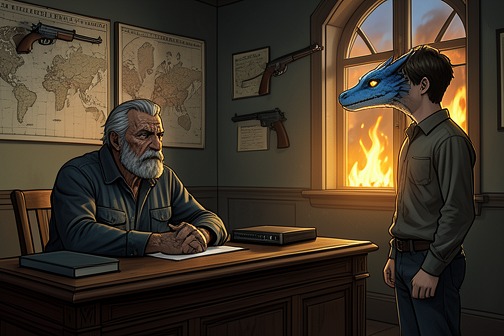
[Ajihad](entity:character-recall-character-ajihad-ac2b51130315) summons [Eragon](entity:character-recall-character-eragon-cb438219a7b4) and [Saphira](entity:character-recall-character-saphira-ed60c2eb7974) to his study and listens to the full account of their journey. He confirms that [Durza](entity:character-recall-character-durza-6f1ebef4eddc) is a powerful [Shade](entity:concept-recall-concept-shade-feca60c344c1) who survived the earlier attack and explains that the Urgals are allied with [Galbatorix](entity:character-recall-character-galbatorix-388550fe628a).
Ajihad also reveals that [Arya](entity:character-recall-character-arya-1fd7d4dbbb0e) sent [Saphira’s egg](entity:object-recall-object-saphira-s-egg-7a9e9628e78f) away during the ambush in [Du Weldenvarden](entity:location-recall-location-du-weldenvarden-432722577fdd), that the Varden had been trying to reach [Brom](entity:character-recall-character-brom-bda2142ac1b9), and that the Empire may have a traitor among its enemies. Eragon learns that his choices will be politically contested but insists on remaining independent.
during Ajihad’s account
Saphira’s Egg Is Explained
[Ajihad](entity:character-recall-character-ajihad-ac2b51130315) explains that [Saphira’s egg](entity:object-recall-object-saphira-s-egg-7a9e9628e78f) had been passed between the Varden and the elves so that a destined Rider might hatch it. [Arya](entity:character-recall-character-arya-1fd7d4dbbb0e) was transporting the egg when [Durza](entity:character-recall-character-durza-6f1ebef4eddc) and Urgals ambushed her.
Unable to return to either sanctuary, Arya sent the egg toward [Brom](entity:character-recall-character-brom-bda2142ac1b9) in [Carvahall](entity:location-recall-location-carvahall-bc43cd25da61), but the spell went astray and landed in [The Spine](entity:location-recall-location-the-spine-21c274fae67c). This revelation completes the mystery of [Eragon](entity:character-recall-character-eragon-cb438219a7b4)’s discovery and connects his personal fate to the political struggle between the Varden and the Empire.
the day after meeting Ajihad
Eragon Blesses the Child
After being recognized as [Argetlam](entity:expression-recall-expression-argetlam-1a7a0b8173c5), [Eragon](entity:character-recall-character-eragon-cb438219a7b4) is approached by an old woman carrying an orphaned baby. She begs him to bless the child, and he places his marked hand on the infant’s brow while speaking the [Ancient Language](entity:concept-recall-concept-ancient-language-dcfd247c6741).
[Saphira](entity:character-recall-character-saphira-ed60c2eb7974) touches the baby as well, leaving a silver star-shaped mark. The blessing transforms Eragon from a hidden fugitive into a public symbol of hope and creates expectations he does not yet feel prepared to bear.
the following morning
Eragon Meets Hrothgar
[Orik](entity:character-recall-character-orik-9e5b0e32eaa1) brings [Eragon](entity:character-recall-character-eragon-cb438219a7b4) and [Saphira](entity:character-recall-character-saphira-ed60c2eb7974) before [Hrothgar](entity:character-recall-character-hrothgar-f12d9dcaa2f7), king of the dwarves. Hrothgar acknowledges the ancient significance of the Riders but warns that the dwarves remember their past conflicts with dragons and will judge Eragon by deeds rather than words.
He allows Eragon to carry [Zar’roc](entity:object-recall-object-zar-roc-7e4c7450de9f) but makes clear that the sword’s history troubles him. The audience establishes Hrothgar as a necessary political ally whose support cannot be assumed.
during Eragon’s first days in Tronjheim
Angela Joins the Varden
[Solembum](entity:character-recall-character-solembum-5eb687ced3f8) leads [Eragon](entity:character-recall-character-eragon-cb438219a7b4) to [Angela](entity:character-recall-character-angela-8ec06be0ea1a)’s hidden rooms inside [Tronjheim](entity:location-recall-location-tronjheim-b8043ebb84f0). Angela explains that she came because rumors of a new Rider signaled a return of major events, and she confirms that [Brom](entity:character-recall-character-brom-bda2142ac1b9)’s fate was bound to repeated failure except for killing [Morzan](entity:character-recall-character-morzan-24e935de0db7).
She warns Eragon about [Durza](entity:character-recall-character-durza-6f1ebef4eddc) and the dangers of the Twins, while maintaining her own independence from the Varden’s magical hierarchy. Her presence adds an unpredictable source of knowledge to the political world Eragon has entered.
the third day in Tronjheim
The Twins Test Eragon
[The Twins](entity:character-recall-character-the-twins-217b1f739e75) conduct a prolonged magical examination designed not only to test [Eragon](entity:character-recall-character-eragon-cb438219a7b4) but to discover which [Ancient Language](entity:concept-recall-concept-ancient-language-dcfd247c6741) words [Brom](entity:character-recall-character-brom-bda2142ac1b9) taught him. Eragon uses [Saphira](entity:character-recall-character-saphira-ed60c2eb7974)’s strength to resist their interference and completes increasingly difficult tasks without revealing his vocabulary.
When the Twins demand that he summon the essence of silver, [Arya](entity:character-recall-character-arya-1fd7d4dbbb0e) interrupts and exposes the test as dishonest. She uses “Arget” to create a spectral image of the ring, proving the depth of her power and driving the Twins away.
immediately after the magical test
Arya Challenges Eragon
[Arya](entity:character-recall-character-arya-1fd7d4dbbb0e) invokes trial by arms and spars with [Eragon](entity:character-recall-character-eragon-cb438219a7b4) before the warriors of the training field. She effortlessly matches and defeats him, but the duel is an assessment rather than an attempt to injure him.
Arya declares that [Brom](entity:character-recall-character-brom-bda2142ac1b9) trained Eragon well enough to continue his education. She also explains that she will remain with the Varden for now and that Eragon must eventually complete his training with the elves.
several days later
The Urgals Attack Farthen Dûr
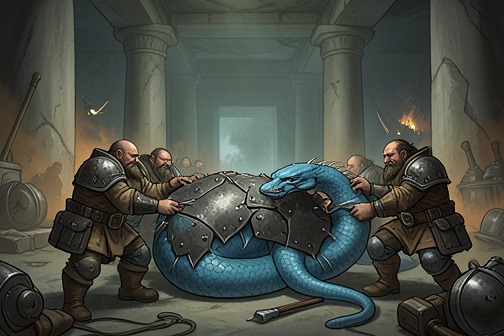
A wounded dwarf reports that an Urgal army is moving through abandoned tunnels beneath the [Beor Mountains](entity:location-recall-location-beor-mountains-4fd6e0356fc6) toward [Farthen Dûr](entity:location-recall-location-farthen-d-r-05fc72f34d16). [Ajihad](entity:character-recall-character-ajihad-ac2b51130315) and [Hrothgar](entity:character-recall-character-hrothgar-f12d9dcaa2f7) organize the defenders, evacuate women and children, and order [Eragon](entity:character-recall-character-eragon-cb438219a7b4) and [Arya](entity:character-recall-character-arya-1fd7d4dbbb0e) to collapse tunnels that could let the Urgals enter [Tronjheim](entity:location-recall-location-tronjheim-b8043ebb84f0).
Eragon uses magic to collapse multiple passages, then joins the army with [Saphira](entity:character-recall-character-saphira-ed60c2eb7974). Hrothgar gives Saphira [Dragon armor](entity:object-recall-object-dragon-armor-834c768e5ba7) and Eragon dwarf-forged battle armor, marking their transition from travelers into soldiers.
the following night
Battle of Farthen Dûr
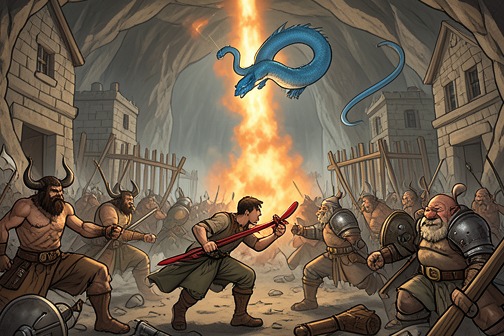
The Urgals erupt from the tunnels and clash with the Varden and dwarves across [Farthen Dûr](entity:location-recall-location-farthen-d-r-05fc72f34d16). [Eragon](entity:character-recall-character-eragon-cb438219a7b4), [Saphira](entity:character-recall-character-saphira-ed60c2eb7974), [Murtagh](entity:character-recall-character-murtagh-33a28f31d1ea), [Arya](entity:character-recall-character-arya-1fd7d4dbbb0e), [Orik](entity:character-recall-character-orik-9e5b0e32eaa1), [Hrothgar](entity:character-recall-character-hrothgar-f12d9dcaa2f7), [Angela](entity:character-recall-character-angela-8ec06be0ea1a), and [Solembum](entity:character-recall-character-solembum-5eb687ced3f8) fight in different parts of the battlefield as the Urgals’ overwhelming numbers push the defenders toward [Tronjheim](entity:location-recall-location-tronjheim-b8043ebb84f0).
Saphira uses aerial attacks while Eragon fights with [Zar’roc](entity:object-recall-object-zar-roc-7e4c7450de9f) and magic. Despite their efforts, the battle turns steadily against the Varden, and the defenders face imminent defeat unless the command structure of the Urgal army is broken.
during the height of the battle
Durza Enters Tronjheim
[The Twins](entity:character-recall-character-the-twins-217b1f739e75) warn [Eragon](entity:character-recall-character-eragon-cb438219a7b4) that Urgals are digging into [Tronjheim](entity:location-recall-location-tronjheim-b8043ebb84f0). When Eragon descends from the dragonhold, he finds the great chamber breached and [Durza](entity:character-recall-character-durza-6f1ebef4eddc) emerging from below with a force of Urgals.
Durza recognizes Eragon, boasts that he will capture him, and begins both a sword fight and a mental assault. Eragon discovers that the [Shade](entity:concept-recall-concept-shade-feca60c344c1)’s defenses are weakened by his own memories, but he is still badly outmatched.
the same battle
Saphira Breaks Isidar Mithrim
[Durza](entity:character-recall-character-durza-6f1ebef4eddc) wounds [Eragon](entity:character-recall-character-eragon-cb438219a7b4) and begins taking control of his mind. Above them, [Arya](entity:character-recall-character-arya-1fd7d4dbbb0e) and [Saphira](entity:character-recall-character-saphira-ed60c2eb7974) descend through the shattered dragonhold; Arya has broken [Isidar Mithrim](entity:location-recall-location-isidar-mithrim-e507f673035a), the great star sapphire, to distract the [Shade](entity:concept-recall-concept-shade-feca60c344c1) and gain access to the chamber.
Saphira breathes fire for the first time, destroying the remaining barriers and creating the opening Eragon needs. Arya’s magic holds the falling shards suspended, preventing the destruction of Eragon, Saphira, and the defenders below.
the climax of the battle
Eragon Slays Durza
Drawing on a hidden reserve of strength, [Eragon](entity:character-recall-character-eragon-cb438219a7b4) invokes “[Brisingr](entity:expression-recall-expression-brisingr-ee5d3957860b)” through [Zar’roc](entity:object-recall-object-zar-roc-7e4c7450de9f) and drives the blade into [Durza](entity:character-recall-character-durza-6f1ebef4eddc)’s heart. The [Shade](entity:concept-recall-concept-shade-feca60c344c1)’s body splits apart, releasing the dark spirits that possessed him.
Durza’s death fulfills the condition required to destroy a Shade and ends the most immediate magical threat to the Varden. The act also leaves Eragon with a terrible wound and a flood of Durza’s memories, forcing him to confront the nature of evil from within.
immediately after Durza’s death
The Urgals Collapse
When [Durza](entity:character-recall-character-durza-6f1ebef4eddc)’s spirits flee [Farthen Dûr](entity:location-recall-location-farthen-d-r-05fc72f34d16), the Urgals lose the force that unified them. Their clans turn against one another, and the Varden and dwarves rout the surviving army.
The battle is won, but at immense cost. The defenders suffer heavy casualties, [Tronjheim](entity:location-recall-location-tronjheim-b8043ebb84f0) is damaged, and the Urgal threat remains scattered through the tunnels rather than fully eliminated.
while Eragon lies unconscious after Durza’s death
The Mourning Sage Appears
[Durza](entity:character-recall-character-durza-6f1ebef4eddc)’s memories nearly overwhelm [Eragon](entity:character-recall-character-eragon-cb438219a7b4)’s identity, but an immense consciousness shields him from the [Shade](entity:concept-recall-concept-shade-feca60c344c1)’s influence. The being names himself Osthato Chetowä, the Mourning Sage, and Togira Ikonoka, the Cripple Who Is Whole.
The Sage tells Eragon to trust [Arya](entity:character-recall-character-arya-1fd7d4dbbb0e), travel to [Ellesméra](entity:location-recall-location-ellesm-ra-71c7adac3abc), and seek him there. He declares that Eragon has become more than a pawn by defeating Durza, then sends him into restorative sleep while warning that he must not reveal their meeting.
a day and a half after the battle
Eragon Awakens a Shadeslayer
[Eragon](entity:character-recall-character-eragon-cb438219a7b4) awakens under [Angela](entity:character-recall-character-angela-8ec06be0ea1a)’s care and learns that [Saphira](entity:character-recall-character-saphira-ed60c2eb7974) and [Arya](entity:character-recall-character-arya-1fd7d4dbbb0e) survived the collapse of [Isidar Mithrim](entity:location-recall-location-isidar-mithrim-e507f673035a). He discovers that [Durza](entity:character-recall-character-durza-6f1ebef4eddc)’s sword blow left a permanent scar across his back.
Arya names him [Shadeslayer](entity:expression-recall-expression-shadeslayer-583559453917), recognizing that he has accomplished what almost no one in history could do. The title marks Eragon’s public transformation from novice Rider into a figure of legend.
at the ending
The Choice of Ellesméra
After the battle, [Arya](entity:character-recall-character-arya-1fd7d4dbbb0e) confirms that [Eragon](entity:character-recall-character-eragon-cb438219a7b4) must travel to [Ellesméra](entity:location-recall-location-ellesm-ra-71c7adac3abc) to continue his Rider training. Eragon accepts that [Brom](entity:character-recall-character-brom-bda2142ac1b9)’s teachings are only the beginning and that the elves hold knowledge he needs to survive the coming war.
The novel closes with Eragon determined to follow Arya and seek the Mourning Sage, while [Saphira](entity:character-recall-character-saphira-ed60c2eb7974) remains at his side. His future is no longer defined solely by revenge: he now carries the legacy of the Riders and the responsibility to choose his own path.