Dragon Rider
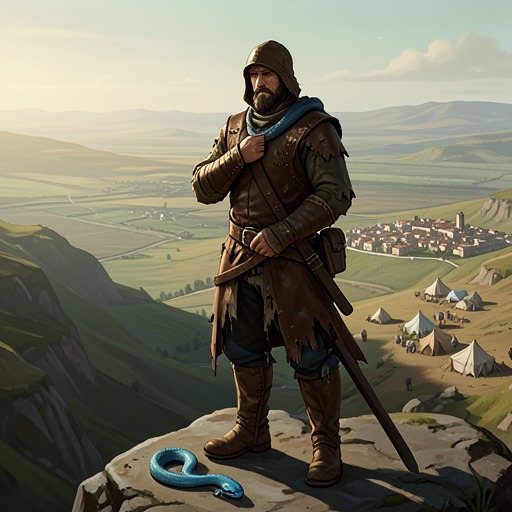
EragonDragon Rider is the name of the ancient identity held by those chosen by dragons and trained to serve as their partners, protectors, and intermediaries. Its decisive significance lies in the union it represents: a Rider is neither simply a human warrior nor merely a wielder of Magic, but part of a relationship that joins human and dragon, grants extraordinary powers, and places the future of Alagaësia in political peril. By the time Eragon learns what the title means, the Riders are officially gone, yet their return has already begun through his contact with Saphira.
Origins and Purpose
The Riders were formed after a long and bloody war between elves and Dragons. The conflict began when an elven youth killed a dragon, and the Dragons retaliated against the elves; five years of warfare followed before an elf named Eragon found a dragon egg. He secretly raised the hatchling, named him Bid’Daum in the Ancient Language, and eventually persuaded Dragons to live peacefully with the elves. Treaties between the two peoples led to the creation of the Riders, whose first purpose was communication and reconciliation rather than conquest. The institution gradually acquired wider authority. What began as a bridge between two races became a force entrusted with protecting the land and maintaining peace. The Riders took Vroengard as their home and built Dorú Areaba there. At the height of their power, they held sway over twice the Empire’s lands and possessed more authority than all the kings of Alagaësia. Their remembered age is therefore a political as well as a legendary golden age: while they kept peace, cities and towers were built from living stone, wealth moved through the cities, and elves, dwarves, and humans prospered in alliance.
Powers and Bond
The Dragon Rider’s condition is inseparable from the dragon bond. Brom explains that the gedwëy ignasia, the shining palm, marks someone who has touched a dragon hatchling. When he recognizes the mark on Eragon’s hand, he understands that the Riders have returned. The mark is consequently both bodily evidence and a public threat: it confirms a hidden relationship that the Empire would seek to control or destroy. Riders can use Magic, though their strength differs from one individual to another. They once kept this ability secret because it gave them an advantage over enemies and would have complicated their dealings with ordinary people if widely known. Their power is distinct from that of a Shade, who uses spirits, and from the practices attributed to magicians, witches, or wizards. The dragon bond also changes the Rider’s body and life. Dragons are said to live forever unless killed, provided that their Rider does not die, while their proximity extends the Rider’s life and makes the Rider stronger in body, keener in mind, and truer in sight. A human Rider may slowly acquire pointed ears as well. The relationship carries a severe reciprocal cost. The death of a dragon can leave the Rider alive but spiritually devastated, while the death of a Rider can also end the dragon’s life. This dependence makes the title more than a rank or military specialization. It is a shared condition whose gifts cannot be separated from vulnerability, grief, and responsibility.
Fall and Corruption
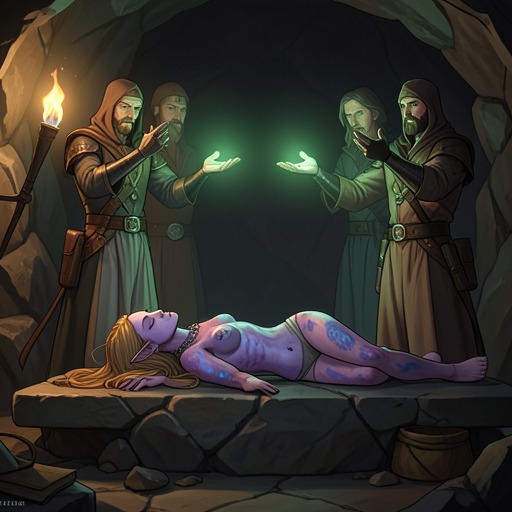
The Riders were not defeated by an external enemy alone. Their collapse began within their own order through Galbatorix, a gifted boy accepted by the Riders after testing revealed his great power. When his first dragon died, grief and madness hardened into resentment. He came to believe that the Riders were responsible, allied himself with another Rider, and used dark knowledge learned from a Shade to inflame that ally against the elders. Together they lured and killed an elder; Galbatorix then murdered his accomplice and fled. Galbatorix later found Morzan, a strong but mentally weak young Rider, and persuaded him to leave a gate unbolted at Ilirea, the city now called Urû’baen. Through that opening Galbatorix stole a dragon hatchling. After learning forbidden Magic and raising the black dragon Shruikan, he returned with Morzan and attacked the Riders. Twelve Riders joined him from motives of power or revenge, forming the Thirteen Forsworn with Morzan. The Riders were unprepared, the elves were overthrown and driven into hiding, and the order’s peacekeeping power became the instrument of its destruction. The historical memory of the Riders is therefore divided between their original mission and the catastrophe that followed. Their authority once protected Alagaësia, but the same concentration of power made their betrayal capable of overturning the political order. Vroengard and Dorú Areaba survive in Eragon’s awareness as the remains of that lost greatness: the ancestral home is a looted, empty shell haunted by strange beasts, not a functioning center of civilization.
Eragon and the Return of the Riders
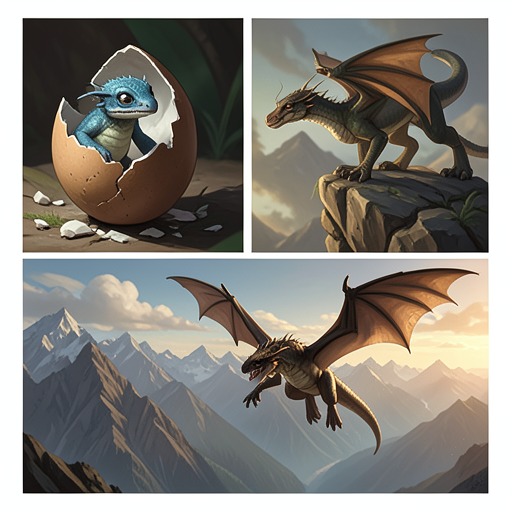
Eragon’s identity as a Dragon Rider begins when Saphira hatches and forms a bond with him. Brom identifies the shining palm and recognizes that Eragon’s questions about Dragons conceal the truth. Later, Brom reveals that the Empire and the Varden are engaged in a war whose real objective reaches beyond territory or ordinary military victory. Both sides seek control of the next generation of Riders, because whoever controls them could become the undisputed master of Alagaësia. Eragon and Saphira are therefore not incidental participants in the conflict; their existence is the focus of the struggle. The revelation also changes Eragon’s understanding of his own name. Brom tells him that an earlier elf named Eragon helped end the war between elves and Dragons and establish the Riders. Eragon had not known of this namesake, and the name no longer feels ordinary after he learns its history. His personal emergence thus repeats the institution’s founding pattern: a bond with a dragon may become a means of communication, reconciliation, and political transformation, even while surrounding powers attempt to turn it into an instrument of domination. The return remains incomplete and dangerous. Brom tells Eragon that Galbatorix once possessed three dragon eggs and that only two remain because Saphira has hatched. Brom himself was once a Rider, trained more than a century earlier, but his young dragon—also named Saphira—was killed during the fighting at Dorú Areaba after Morzan’s betrayal. His concealed past gives Eragon a living connection to the destroyed order, while his grief becomes a warning to protect Saphira at any cost.
Legacy and Future Authority
The Rider identity ultimately exceeds the control of kings and rebel leaders. After the defeat of a great evil, a mysterious figure who names himself Osthato Chetowä and Togira Ikonoka tells Eragon that he is greater than he knows and urges him to trust Arya and travel to Ellesméra. Eragon understands from this encounter that he is no longer merely a pawn in the contest between the Varden and the Empire. He has become an authority independent of any king or leader. That development restores an element of the Riders’ original political function while also revising it. The old order possessed more power than the kings, but its downfall shows the danger of authority detached from restraint. Eragon’s emerging independence carries the possibility of renewing the Riders as protectors rather than rulers, yet the narrative keeps that possibility under pressure from war, inherited betrayal, and the intimate mortality of the dragon bond. The Dragon Rider is therefore at once a memory of a lost golden age, the cause of Alagaësia’s greatest political crisis, and the unsettled promise of a different future.