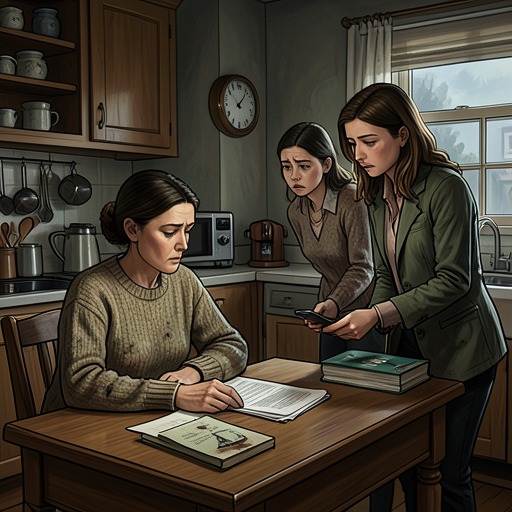
Lisa is shot and killed at the clinic
ErasureLisa Ellison is shot and killed at the clinic where she practices, turning the anti-abortion threats surrounding her work into lethal violence. The shooting is reported to the reader through her brother Thelonious Ellison’s phone calls rather than witnessed directly. Its consequences extend beyond the family’s sudden loss: Lisa’s death leaves Thelonious responsible for part of a clinic already strained by debt, political hostility, and fear among its staff.
Background and Escalating Threat
Lisa had described the anti-abortion protesters outside the clinic as a daily presence, carrying signs and frightening her. She also referred to a recent shooting in Maryland: a sniper had shot a nurse through a clinic window. Thelonious had read about that attack and recognized the danger her account implied, but the earlier shooting is presented as context, not as an event established to be connected to Lisa’s murder.
The protesters’ hostility is not confined to Lisa’s description. When Thelonious escorts her from his car to the clinic entrance, they recognize her and shout accusations at her. One demonstrator holds up a large poster and shakes a fist at Thelonious. He briefly thinks one man resembles someone who had watched them at a restaurant, but the figure is gone and the resemblance remains uncertain. The scene gives the threat a public, recurring form: Lisa faces the picketers as part of her ordinary workday, while her brother’s brief escort makes plain that he cannot be there every day and that she does not depend on him to walk into the clinic.
The Shooting and the News
The killing itself is not shown as a scene at the clinic. Instead, the account shifts to Thelonious, who is at home when the telephone rings again. Lorraine is upset, and he first asks whether something has happened to his mother. Lorraine clarifies that the call concerns Lisa. Her short announcement that Lisa has been shot is followed by the confirmation that she is dead. The abrupt correction from a question about one family member to news of another’s death gives the call its force without describing the violence graphically.
Thelonious puts down the phone because he does not know what to do. His body registers the shock before he can organize a response: his stomach feels cold and he notices his heart beating. He struggles to remember Bill Ellison’s telephone number, then calls him. Bill explains that someone fired into the clinic and killed Lisa with a rifle. He has spoken with police, who think the shooter was an anti-abortion zealot. The account therefore identifies the weapon and the police’s initial suspicion, but does not establish the shooter’s identity or present that suspicion as a proven conclusion.
The brothers’ exchange is marked by the gap between the practical questions that follow and the irreversibility of the news. Thelonious asks whether the police have caught anyone and whether they know why Lisa was killed. He recognizes these questions as nearly pointless against the fact of her death. He had expected Lisa to open the door when he arrived; Bill says he had expected the same. Their shared expectation makes the loss immediate and domestic, not merely a report about violence at a clinic.
The Clinic’s Work and Vulnerability
Lisa’s practice had depended on a fragile financial arrangement even before the shooting. Thelonious learns that young doctors carry substantial debt, and that Lisa’s clinic required funding for schooling, a new practice, and equipment. She relied on grants and worked part time at a hospital to help keep the clinic operating. Her life-insurance policy was largely committed to paying bills; Agnes Ellison had savings but was not wealthy. The family home was paid off, but the former office of Ben Ellison was a financial drain. These details make clear that Lisa’s work had not been supported by a large reserve that could absorb a crisis.
The clinic’s other two physicians are about as young as Lisa. They are frightened that they may be the next targets and unwilling to deepen their financial commitment by buying Thelonious out. As a result, one third of the Women’s Clinic Southeast belongs to him until he can sell Lisa’s share. The ownership question is not a separate business matter detached from the murder: it is one of the ways the consequences of the shooting enter his life, leaving him responsible for a portion of the institution while its future is unsettled.
The physicians’ discussion exposes the pressure behind that uncertainty. One is close to cutting losses and leaving, while acknowledging that the clinic has done good work. The same physician describes the social cost of openly saying that the practice provides abortions: at parties, people recast the physician as a villain. The physician distinguishes publicly acceptable support for choice from the stigma attached to saying one is for abortion, then admits to being terrified. The other doctor brings the patients into the discussion, asking what will happen to them; the answer is that they will divide among other clinics. The exchange records fear and possible withdrawal, not a settled decision to close the clinic.
Consequences and Significance
Lisa’s murder converts the threats surrounding reproductive care into a family bereavement and an institutional crisis. Before her death, she had told Thelonious that the protesters frightened her; later, he walks beside her through their shouting and sees the hostility directed at her. Afterward, the rifle attack gives that atmosphere a fatal outcome. The narrative does not identify the killer, but the police suspicion links the shooting to the anti-abortion hostility already present outside the clinic.
The aftermath also shows that the loss cannot be contained within a single category. Lisa is mourned as a sister, while her death alters the clinic’s ownership and leaves its remaining physicians weighing danger against the care their patients need. Thelonious’s share makes the consequences materially his, even as the clinic’s uncertain finances and his colleagues’ fear limit what that inheritance can resolve. The event thus joins intimate grief to the practical conditions of keeping a medical service available: the clinic’s work is valuable, its staff are exposed, and its survival is not guaranteed.