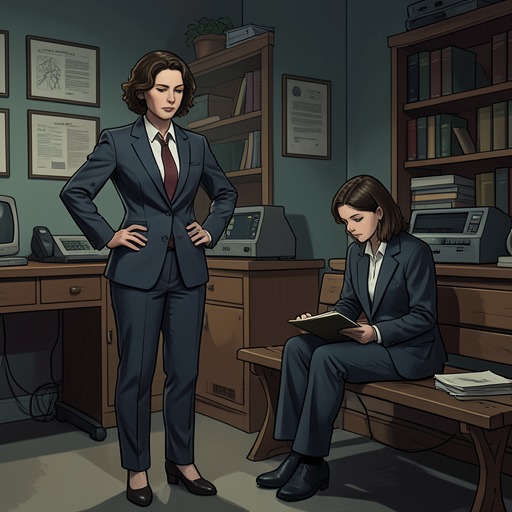
Event 1
Tully Hart’s abandonment at the 1970 antiwar protest

[Tully Hart’s abandonment at the 1970 antiwar protest](entity:event-recall-event-tully-hart-s-abandonmen-a82afa91de58) is the childhood rupture around which much of her later longing for dependable love takes shape. In a crowded [Seattle](entity:location-recall-location-seattle-ec620f372076) demonstration, her mother, Dorothy, slips away; Tully waits for her, but she never returns. The child interprets the loss not as her mother’s choice but as proof that she herself has done something wrong, a belief that reverberates through Tully’s later attachments and helps explain why being held, believed, and stayed with can matter more than reassurance alone.
## The protest and the separation
The episode begins on a busy downtown Seattle street filled with demonstrators chanting and yelling, their signs bearing slogans such as MAKE LOVE NOT WAR and HELL NO, WE WON’T GO. Tully has never seen so many people gathered in one place. The protest is not presented to her as an abstract political cause: it is a bewildering, overwhelming crowd through which she must keep hold of her mother’s hand. When the demonstrators swell around them, the physical closeness that had made the day manageable abruptly vanishes.
Tully finds herself holding on to nothing. She screams for her mother, pushes through the bodies, and keeps calling until her voice fails. No one turns or answers, though people are everywhere. She returns to the curb where she last saw Dorothy and waits, crying and trying to be brave, convinced that her mother will come back. The decisive fact is not simply that Tully becomes lost in a crowd: Dorothy does not return for her.
## Rescue and the child's explanation
The separation’s aftermath is fragmented in Tully’s memory. For years she cannot recall what happened between waiting in the crowd and waking on a dirty cement stoop on an otherwise empty street. What remains is the image of a policeman on horseback, high above her, asking whether she is alone. Tully can answer only that she is, without crying. He takes her back to the house on [Queen Anne Hill](entity:location-recall-location-queen-anne-hill-0bddeea85146), where her grandmother holds her, kisses her cheek, and tells her that what happened was not her fault.
The reassurance does not dislodge Tully’s own explanation. She decides that she must have done something wrong or been bad, and imagines that next time her mother comes back she will try harder. Her response converts abandonment into a test she believes she can pass: she promises herself that she will become president and never say she is sorry again. The child’s ambition and determination thus carry a private, impossible bargain—the hope that becoming worthy enough will make a missing parent return.
The consequences reach into ordinary life after the protest. Tully memorizes the names of every U.S. president in order and tells people for months that she will be the first woman president; she even quits ballet. On her eleventh birthday, while her grandmother lights the candles and sings, Tully repeatedly looks toward the door, expecting her mother to arrive. No one knocks and the phone does not ring. The empty scrapbook among her presents becomes another quiet detail of the day: a project meant to keep her occupied cannot fill the place of the parent whose return she is still waiting for.
## The wound in later relationships
The protest’s emotional pattern recurs when Tully is older, not as a repetition of the same event but as a renewed fear that closeness can disappear. After Tully begins to cry, Kate hugs her. The touch is foreign enough that Tully initially flinches and starts to pull away; then she cannot move and clings to Kate, afraid that without her she will drift away and be lost. The scene gives physical form to a need the protest first exposed: Tully wants connection, yet unexpected tenderness can feel unfamiliar, even as separation feels perilous.
When Tully tells Kate that [Pat Richmond](entity:character-recall-character-pat-richmond-e844be2058d7) raped her, she must force the truth into speech, describing it as a fire inside her that she cannot contain. Her shame makes her avoid looking at Kate while she waits for judgment. Instead, Kate asks quietly whether she is okay. The disclosure and response do not erase the earlier abandonment, but they create a different relational experience: Tully can reveal something painful and meet concern rather than rejection. Across these scenes, Kate’s presence becomes more than friendship in name; it offers Tully an experience of being witnessed and comforted without requiring her to earn care by becoming exceptional.
That support also appears when Tully tells Kate that her grandmother has died. She admits that she is angry at Dorothy, her grandmother, and God, then breaks into sobs. Kate holds her and lets her cry without trying to talk over the loss. The episode’s earlier image of the grandmother holding the child thus has a painful counterpoint: the caregiver who once brought Tully home is gone, but Kate remains beside her while she grieves. Tully’s fear of abandonment does not prevent her from accepting support; rather, the scenes show how deeply she needs the reliable presence that was missing at the protest.
## Echoes in illness and caregiving
The past’s force is clearest when Kate faces catastrophic illness. After Kate collapses and is taken to the hospital, Tully insists on staying in the ambulance beside her, repeating that she is right there. At the hospital, she is pushed aside as the staff hurry Kate inside, and she watches her best friend being taken away. The moment reverses the childhood scene’s central helplessness: Tully cannot control what happens to someone she loves, but she tries to make her presence unmistakable rather than disappear.
As Kate’s cancer affects her brain, Johnny warns Tully that Kate’s faculties have been impaired and that she may not recognize her. The warning sharpens the risk of their final encounter: the friend whose steadfastness has countered Tully’s old fear may no longer be able to respond to her. Tully nevertheless makes room for the possibility of presence without recognition, accepting that Kate’s condition may limit what their reunion can give her.
On Kate’s last night in the hospital, Tully persuades Johnny to take the children home and takes his place in the other bed. She pushes it across the linoleum until it nearly touches Kate’s, then brings a recording of her final television show. The two watch it together like schoolgirls at a sleepover. The bedside scene does not undo Dorothy’s disappearance or promise that love can prevent loss. Instead, it gives the old pattern a different ending: faced with a friend who is dying, Tully stays close, places her bed beside Kate’s, and shares something of herself. The protest is therefore both a source of Tully’s enduring vulnerability and a measure of the care she later learns to give and receive.
Event 2
Pat Richmond强暴Tully Hart

[Pat Richmond](entity:character-recall-character-pat-richmond-e844be2058d7)’s rape of [Tully Hart](entity:character-recall-character-tully-hart-de763f745491) is a defining violation that exposes the gulf between the romance she hopes for and the coercion Pat imposes. At a country bonfire party, Tully’s anticipation of love gives way to assault; afterward, she reaches home alone, then tells [Kate Mularkey](entity:character-recall-character-kate-mularkey-e650c2947fe3) what happened and is met not with blame but with an embrace. The event’s significance lies both in the violence itself and in the fragile beginning of Tully’s ability to speak about it to someone who stays beside her.
## The party and the promise of romance
In late May, Pat drives Tully in his green Dodge Charger to a party in a pasture. Dozens of cars form a circle with their headlights on, and Bachman-Turner Overdrive’s “Taking Care of Business” plays as teenagers gather by a bonfire and kegs. Pat leads Tully through the crowd and pours them drinks. The setting is noisy and social, but their later encounter takes place apart from the gathering, by trees and wet grass.
Tully approaches the evening through romantic expectations. She imagines Pat saying he loves her, pictures their relationship as a love story, and even envisions “Stairway to Heaven” as their song. She wants love, tenderness, and the feeling that she matters. That imagined future makes the change in the encounter especially stark: Pat’s initial kiss gives way to a forceful one that no longer feels right, and Tully tries to say stop but cannot make her voice heard.
## The assault
Pat ignores Tully’s resistance and moves from kissing her to pulling at her clothing. When she says no and tells him not to, he insists that she wants it, pushes her down, and pins both her hands with one of his. He then assaults her while she cries. Her experience is described through pain and physical helplessness, in direct contrast to the romance and affection she had imagined.
Afterward, Pat acts as though the assault were consensual intimacy. He smooths Tully’s hair, notices that she is crying, and asks what is wrong because he thought she wanted it. Tully is left disbelieving and unable to make his account fit what she has just experienced. Pat’s response compounds the violation: rather than acknowledging her refusal or distress, he treats her tears as a puzzling interruption and invites her to dance.
## The walk home and disclosure
Tully dresses slowly and tries to stand, only to become sick and vomit over her favorite shoes. She clutches her purse and makes her way back to the road alone. It is late enough that no cars pass, a fact she is glad of because she does not want to explain her disheveled hair and stained shoes. On the walk, she replays the contrast between the Pat who had smiled, offered a gentle first kiss, and spoken as if she mattered, and the Pat who forced himself on her.
When Kate asks whether she is okay, Tully initially stiffens and then begins to cry. Kate says nothing at first, but hugs her. The contact feels unfamiliar to Tully; she starts to pull away, then finds herself clinging to Kate, afraid of losing the comfort. Later, Tully looks out over the field, takes a steadying breath, and tells Kate, “He raped me.” She is ashamed and fears seeing judgment in Kate’s face. Instead, Kate quietly asks if she is okay and hugs her again. Tully allows herself to be comforted, then tries to lighten the moment by saying that she is drowning Kate.
Kate suggests telling someone. Tully refuses, fearing that others would say the assault was her fault, and asks Kate to keep it secret. The exchange establishes both the isolation surrounding her disclosure and the importance of Kate’s response: Tully can name what happened to one trusted friend, but she is not ready to make it public.
## Aftermath and lasting significance
The account connects the assault to Tully’s longing to be loved, without treating that longing as consent or responsibility for Pat’s actions. Her hopes for tenderness are not what causes the violence; Pat’s disregard of her refusal does. The scene’s movement from imagined declarations of love to physical coercion makes that distinction central to its meaning.
Kate’s embrace offers immediate care but does not erase the trauma or resolve Tully’s fear of blame. The importance of the disclosure is repeated in their friendship: after Kate has been away, Tully tells her that [Cloud](entity:character-recall-character-cloud-18ae32e774f3), [Gran](entity:character-recall-character-gran-09774ef3c44d), and God are all people she is angry with, then reveals that Gran died. Kate holds her while she sobs. The later moment echoes the earlier pattern of Tully entrusting painful truths to Kate and Kate answering with presence and comfort.
The assault also remains part of the friendship’s later history of care. When Kate is gravely ill, Tully insists on staying beside her in the ambulance, repeating that she is right there. During Kate’s final hospital stay, after leaving her television broadcast to be with her family, Tully takes the other bed in Kate’s room and watches a recording of her last show with her. These later scenes do not equate illness with assault; they show how the friendship formed through acts of listening and staying present continues to shape their lives. The event’s lasting narrative force is therefore twofold: it marks a profound breach of Tully’s bodily autonomy, and it becomes one of the painful truths she is able to share within a friendship that gives her a witness.
Event 3
Tully and Kate’s Friendship Begins
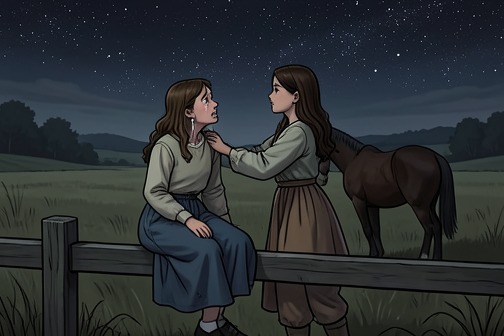
Tully and Kate’s friendship begins on the worst night of Tully’s life, when a quiet meeting by a field turns into the first experience of trust and comfort she can accept. Kate does not demand an explanation or recoil from Tully’s pain: she listens, embraces her, and stays. Their bond grows from that response into a promise to remain best friends forever, a commitment that will be tested by loss and renewed through years of care.
## The First Encounter
The relationship takes shape in an unlikely setting: beside a field where a horse has just sniffed the grass Tully offered and trotted away. Tully looks up to see Kate sitting on the fence rail. They are neighbors, but the encounter becomes more than a casual conversation when Tully, already crying, cannot sustain her claim that she is fine. Kate pauses, then hugs her without saying anything. Tully flinches at the unfamiliar contact before finding herself unable to pull away; she has little memory of anyone holding her that way. The scene’s decisive change is physical before it is verbal: an unexpected embrace makes staying with another person possible.
Kate tells Tully she is sure her mother will get better, but the comfort does not depend on solving the problem. Later, looking out over the field, Tully takes a deep breath and confesses that a boy raped her. Shame keeps her from turning to meet Kate’s gaze. Kate lets the silence stand, then asks whether Tully is okay. The question brings the memory back sharply enough to make Tully’s eyes fill, and Kate embraces her again. Tully accepts the comfort for the first time since she was little, then tries to ease the moment by saying she is drowning Kate.
Kate says they should tell someone. Tully refuses, afraid that adults would blame her, and insists that what happened remain their secret. Kate agrees, though she frowns. The exchange establishes both the intimacy and the limit of their first trust: Kate offers help beyond the two of them, while Tully is not ready to risk disclosure. The friendship starts not because the danger has been resolved, but because Kate stays present when Tully names it.
## From Disclosure to Friendship
After Tully finishes a cigarette, the two sit together for an hour, sometimes talking and sometimes silent. They are markedly different, yet Tully finds conversation with Kate unexpectedly easy. It is the worst night of her life, but she almost smiles. Neither girl needs to fill the quiet with another secret or a grand declaration; the simple fact that they can remain beside each other is already a change.
The next day, Kate searches for Tully through morning classes and finds her at lunch at the far end of the cafeteria, among the students who keep their heads down. Tully approaches in a striking outfit of miniskirt, go-go boots, shiny tights, tube top, and peace-symbol necklaces, with a large macramé purse at her side. Her first question is whether Kate has told anyone about the previous night. When Kate says she has not, Tully asks if they are friends. Kate answers yes. The vulnerability in Tully’s eyes surprises her; so does the directness of the question.
Tully turns that uncertain moment into the beginning of an ordinary shared day. She pulls Twinkies from her purse, sits beside Kate, asks for her milk, and offers advice about makeup and fashion. The abrupt shift from a guarded conversation about trauma to snack-sharing and talk of clothes does not erase what happened. It gives the two girls a way to continue together in the everyday world, with Tully proposing a visit to Kate’s house after school.
## A Promise of Permanence
The friendship’s early closeness is tested by honesty. When Tully finally looks at Kate, she admits that she lied because she wanted Kate to like her. Kate laughs at the admission, then asks for no more lies. Tully agrees. Kate promises that they will be best friends forever and says she will always be there, no matter what. Tully asks whether that means Kate will always stay; Kate answers that it does. Tully promises the same in return.
For Tully, the vow is more than a youthful flourish. The promise makes her feel safe with someone for the first time in her life. Its importance lies in the contrast between the fear of being left and the assurance of being accompanied: after a night in which she could hardly bear to show Kate her shame, she now has a friend who has explicitly pledged to remain. The vow gives a name and a future to the trust first expressed in silence and embraces.
Kate’s recollection of the summer after eighth grade reinforces how friendship becomes part of a shared routine. She hurries through chores and babysits her brother until her mother returns from errands and volunteer work with the 4-H council; after that, her time is free, especially on weekends. The friendship is not sustained only by declarations at moments of crisis. It also takes root in the ordinary hours the girls can spend together.
## The Bond Through Loss and Crisis
The care established in the field returns when Tully tells Kate that her grandmother has died while Kate was away. Tully names the people and forces she is angry with—[Cloud](entity:character-recall-character-cloud-18ae32e774f3), [Gran](entity:character-recall-character-gran-09774ef3c44d), and God—before disclosing the loss. Kate’s response is to hold her as she breaks into sobs. She does not hurry to explain the grief or make Tully stop crying; she lets the grief happen while remaining physically present. The scene recalls the first night’s embrace, but the circumstances have changed: Kate is now the friend to whom Tully can bring bereavement as well as trauma.
Much later, when Kate is taken to the hospital after a severe medical emergency, Tully insists on riding in the ambulance. Sitting beside her, she repeats that she is right there. At the hospital she is pushed aside as the staff hurry Kate inside, and she watches her best friend disappear through the open doorway. The moment makes the old promise painfully concrete: presence is what Tully can offer, even when she cannot control what is happening to Kate.
In Kate’s final hospitalization, care is reciprocal but constrained by illness. Johnny warns Tully that cancer in Kate’s brain has affected her faculties and that she may not recognize her. The warning makes the possibility of recognition uncertain, but Tully continues to seek closeness. On Kate’s last night in the hospital, she persuades Johnny to take the children home and takes his place in the other bed. She pushes her bed across the linoleum until it nearly touches Kate’s and brings a tape of her final show. The two watch it together like girls at a sleepover, an adult echo of the childhood friendship. Their beginning in an embrace beside a field has become a final bedside vigil: the circumstances have darkened, but the basic act of staying remains.
## Narrative Significance
The friendship’s beginning links disclosure to witness rather than to an easy cure. Tully’s account of rape is met first by Kate’s attention and touch, while Kate’s suggestion that they tell someone makes clear that private comfort is not the only form of help available. Tully’s fear of being blamed keeps her from accepting that wider support then. The scene therefore marks both the protection friendship can provide and the burden placed on two young friends when trauma is kept secret.
The narrative also makes the friendship legible through repeated gestures. Kate holds Tully after the assault and again after Gran’s death; Tully insists on accompanying Kate in the ambulance and later moves her bed close to Kate’s hospital bed. These are distinct moments, separated by years and by very different crises, but each turns the promise of permanence into action. The first night gives the friendship its emotional foundation; the later scenes show how that foundation endures when comfort cannot undo loss, injury, or illness.
Event 4
Ima Hart’s Death and Tully’s Loss of a Guardian
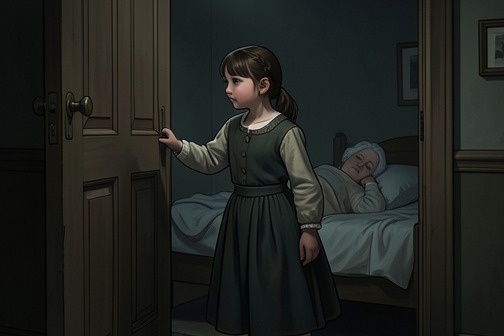
[Ima Hart](entity:character-recall-character-ima-hart-9dc8983a474c)’s death is both a bereavement and the end of [Tully Hart](entity:character-recall-character-tully-hart-de763f745491)’s childhood home: the grandmother who raised her leaves Tully her estate and a letter of love, but Tully’s mother, [Dorothy Hart](entity:character-recall-character-dorothy-hart-b50ae5975bb0), refuses custody, and social services sends Tully to live with a foster family. The sequence turns loss into displacement. Tully inherits the means to pursue a future Ima believed in, yet loses the person who had made home feel like a place she could return to.
## The Discovery and Ima’s Farewell
The loss becomes undeniable in an ordinary morning ritual. Tully wakes at six to dress for work; the household rule is that she must not leave without saying goodbye to her grandmother. She taps at Ima’s door, calls to her, and slowly pushes it open. In the dim room, she can make out the familiar coil of white hair and ruffle of the nightdress, but Ima’s chest is still. Tully touches her grandmother’s wrinkled cheek and finds the skin cold, with no breath coming from her slack lips. The precise, quiet details make the discovery a collision between routine and irreversibility: the goodbye Tully came to give cannot be answered.
Tully’s shock gives way to memories of the care Ima provided over the years. She remembers her grandmother braiding her hair for a seventh-birthday party and telling her that her mother might return if she prayed hard enough. Later, Ima acknowledged that prayer did not always bring the person a child wanted. That history gives the death more than the force of a sudden loss: the person who had explained absence and softened it is absent too.
Among inexpensive jewelry that Ima rarely wore, Tully finds a folded pink letter bearing her name. It apologizes for leaving her alone, recognizes how afraid she is of being left behind, and says that Ima would have stayed longer if she could. Ima promises that she and Tully’s grandfather will watch over her from Heaven and calls Tully the greatest joy of her life. The letter’s past-tense declaration of love catches on the single word Tully cannot accept: “Were.” The narration then makes the fact plain: [Gran](entity:character-recall-character-gran-09774ef3c44d) is gone. The message offers an enduring bond, but cannot undo the physical finality Tully has just encountered.
## Bereavement Becomes Displacement
Ima’s death is followed by another abandonment. At the funeral, Tully’s mother, Dorothy Hart, appears, but after a brief exchange she disappears into the crowd. Tully is left with the question she cannot bring herself to ask before the mourners stream into the parking lot. The funeral therefore does not restore the mother-daughter connection that Ima’s care had partly compensated for; Dorothy’s departure makes Tully’s fear of being left behind immediate again.
Social services soon arrives to arrange Tully’s future. The caseworker tries to say the right things but keeps glancing at her watch as she waits outside Tully’s bedroom. Tully protests that she is almost eighteen, has paid the household bills, and should be allowed to live alone. Her argument is practical, but it also registers what the proposed move means: the home she shared with Ima is about to be taken from her along with its occupant.
At a meeting with the officials, Tully corrects the caseworker’s use of her formal name, asking to be called Tully. She learns that Dorothy has refused custody. A foster placement has been found, and she will be one of several displaced teenagers in the family’s care. She is told that she can stay at her current school; the reassurance does not change the central fact that she must leave the home she has known.
## Inheritance Without a Home
The meeting also reveals the scale of Ima’s bequest. She leaves Tully both homes, the car, bank accounts, and stocks, along with instructions to continue monthly payments to Dorothy. Ima believed that money was the surest way to keep track of her daughter, who had proved reliable about staying in contact when payments were due. The inheritance thus carries a complicated record of care: Ima provides for Tully’s future while using financial support to maintain a thread of contact with the daughter who will not take responsibility for her granddaughter.
The officials propose selling the properties so Tully will not have to worry about finances. Tully objects that selling both would mean she had no home at all. The distinction is central to the scene: financial security can sustain her, but it cannot replace the place and person she has lost. Ima’s will specifies that Tully should be able to attend any college, and the caseworker repeats Ima’s confidence that Tully will someday win a Pulitzer Prize. Tully is moved close to tears, but the promise of education and achievement arrives alongside the immediate prospect of being sent away.
## Grief Held by Friendship
When Tully tells [Kate Mularkey](entity:character-recall-character-kate-mularkey-e650c2947fe3) that Ima died while Kate was away, her anger has accumulated across several losses. Asked whom she is angry with, she names [Cloud](entity:character-recall-character-cloud-18ae32e774f3), Gran, and God. Kate responds with sorrow rather than correction or advice, and Tully finally breaks into sobs. Kate holds her and lets her cry. This later disclosure recalls an earlier moment in which Tully, after crying in front of Kate, flinched at the unfamiliarity of being held and clung to her, afraid that without Kate she would float away and be lost. The repeated embrace gives their friendship a particular role in Tully’s life: it does not reverse abandonment, but offers bodily presence where absence has left her unsteady.
That pattern of care recurs in later crises. When Kate is bleeding and collapses, Tully steadies her, gets her toward a phone, and insists on riding in the ambulance, repeating that she is there. In the hospital, the friends later argue over [Johnny Ryan](entity:character-recall-character-johnny-ryan-3b31e7098833)’s condition and the demands of news reporting; their bond includes conflict as well as comfort. Much later, when Kate’s brain cancer has made her faculties unreliable and she warns Tully that she may not recognize her, Tully stays beside her. On Kate’s last hospital night, Tully sends Johnny home with the children, moves her bed close to Kate’s, and plays a tape of her final show so they can watch together. She asks Kate not to treat her as if she is dying, because being herself helps Kate remember who she is. In this later reversal, Tully can provide the companionship she once needed after Ima’s death.
## The Event’s Lasting Significance
Ima’s death reorganizes Tully’s life through two linked facts: the person who raised her is gone, and the mother who might have taken her in will not. The letter preserves Ima’s affection in words, and the estate gives Tully material resources and an educational possibility, but neither prevents foster placement or answers her immediate need for a home. The inheritance is therefore not a simple rescue; it separates the prospect of future independence from the present experience of being left behind.
The episode also establishes why chosen relationships matter so deeply to Tully. Kate’s embrace and willingness to listen answer a need that the officials’ arrangements cannot address, while Tully’s later acts of support show that care can move in both directions across a lifelong friendship. The contrast does not erase the difference between a guardian’s death and a friend’s presence. Instead, it makes the story’s central distinction legible: practical provision can help secure a future, but the experience of being accompanied must be made person to person.
Event 5
Tully Leaves Snohomish Because of Her Mother’s Protest
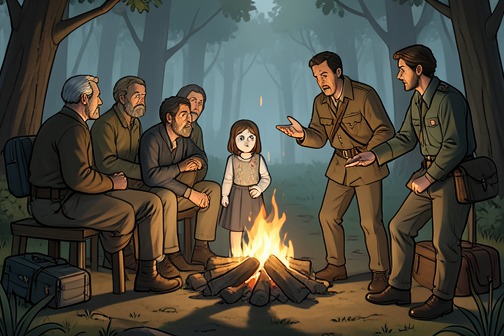
[Tully Leaves Snohomish Because of Her Mother’s Protest](entity:event-recall-event-tully-snohomish-fe60c225c561) is the abrupt end of Tully’s stay with the Mularkeys: [Cloud](entity:character-recall-character-cloud-18ae32e774f3)’s activism and drug addiction send Tully back to her grandmother’s house, while Kate’s helplessness gives their friendship a new gravity. The separation makes plain that Tully’s mother is not merely an eccentric source of stories, but an unreliable caregiver whose choices can undo the safety Tully has begun to find with Kate.
## The protest and its consequences
Officer Dan Myers explains that Cloud and several others staged a sit-in at a spotted owl protest near Lake Quinault. The action cost Weyerhaeuser a full day’s work; then someone dropped a cigarette in the woods, and firefighters had only just brought the resulting blaze under control. Tully’s immediate question is whether her mother is going to jail. The officer’s answer leaves the outcome uncertain: Cloud’s lawyer is seeking voluntary treatment for drug addiction, and she may spend time in hospital if the effort succeeds; otherwise, jail remains a possibility.
The protest is therefore not simply a political episode occurring in the background of Tully’s life. It brings together Cloud’s environmental activism, the physical danger of a fire, and the consequences of her addiction. The scene gives Tully no time to resolve those competing meanings. She is told that her grandmother is expecting her, and the practical decision has already been made: she must leave the Mularkey home and go back to [Gran](entity:character-recall-character-gran-09774ef3c44d).
## Tully’s departure from the Mularkeys
Kate does not understand what is happening until Tully turns to her with a terrible blankness in her brown eyes and says she has to return to her grandmother’s. She walks past Kate into the bedroom and pulls a suitcase from the closet, flipping it open to pack. Kate runs after her and protests that she cannot go. When Kate offers to make Cloud come back, Tully answers that she has no choice.
The suitcase makes the reversal tangible. Tully had been staying with the Mularkeys, but she cannot decide where she belongs or make her mother’s return happen. Her quiet explanation that Kate cannot fix this sounds, to Kate, grown-up, tired, and broken. Tully’s composure does not mean the loss is small; it shows how familiar she is with having to accept what other people’s choices leave her.
## Cloud’s absence and the girls’ understanding
The news forces Kate to reconsider the way she and Tully have talked about Cloud. They have laughed about her drug use, her fashion sense, and her various stories. Now Kate understands that the stories about Tully’s “loser mom” were not harmless jokes: Tully had known that this abandonment could happen. The shift is from treating Cloud as a funny, if embarrassing, character to recognizing that her absence has real consequences for her daughter.
That recognition deepens the scene beyond the immediate move. Tully cannot promise that Cloud will come back, and Kate cannot repair the situation by offering to intervene. The friendship is not a substitute for the choices and responsibilities that have failed Tully, but it is the relationship in which she can name the loss and ask not to be left alone in it.
## A promise made against separation
As Tully packs, she asks Kate to promise that they will always be best friends. Her voice cracks; Kate answers, “Always,” because there is little else she can offer against the departure. The promise does not prevent Tully from leaving [Snohomish](entity:location-recall-location-snohomish-ec0ef72e452a) or guarantee that the girls can control what happens next. Its force lies instead in the fact that they make it at the very moment their shared daily life is being interrupted.
The episode establishes a pattern in which Kate responds to Tully’s vulnerability through presence rather than solutions. Earlier, when Tully begins to cry, Kate hugs her; Tully initially flinches at the unfamiliar contact, then clings to her, afraid that without Kate she will float away and be lost at sea. After Tully tells Kate that she was raped, Kate asks whether she is okay rather than condemning her. These moments give the promise its emotional context: Kate has already become someone Tully can approach with pain she has struggled to speak aloud.
## The departure’s lasting pattern
The later story repeatedly returns to the limits and obligations of friendship. When Tully tells Kate that Gran has died while Kate was away, Kate holds her as she sobs. Years later, as Kate suffers a miscarriage, Tully insists on riding in the ambulance beside her and repeats that she is there. In the hospital, when Johnny warns that cancer affecting Kate’s brain may leave her unable to recognize visitors, the prospect tests the same bond from another direction: Tully’s presence matters even when Kate’s capacity to respond may be uncertain.
Tully’s departure from Snohomish is not equivalent to those later scenes, but it establishes the emotional question they revisit: what can a friend do when the person she loves cannot be protected from loss? Kate cannot stop Cloud’s choices, just as later care cannot erase illness or grief. The enduring answer is neither rescue nor control. It is to stay, to listen, and to keep faith with the friendship. At Kate’s last night in the hospital, Tully takes the other bed beside hers and plays the recording of her final show; Kate asks her not to treat her as if she is dying, but to be herself, because that is how Kate remembers who she is. The teenage promise of “Always” thus acquires its meaning through repeated acts of companionship, each made in circumstances neither girl can fix.
Event 6
Tully Moves in with the Mularkeys After Her Arrest at a Party
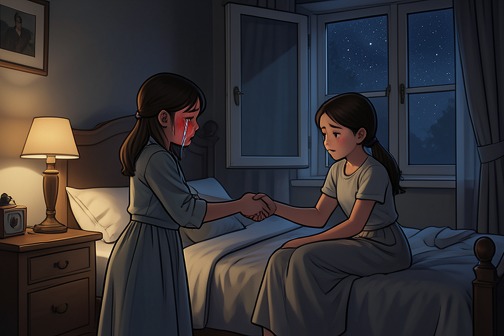
[Tully Moves in with the Mularkeys After Her Arrest at a Party](entity:event-recall-event-tully-mularkey-1b1e5f1c8ae9) is the turning point in which a chain of loss and reckless choices gives way to an unexpected home. After [Gran](entity:character-recall-character-gran-09774ef3c44d)’s death and [Cloud](entity:character-recall-character-cloud-18ae32e774f3)’s renewed abandonment, Tully is caught at a party with Kate; when [Mrs. Mularkey](entity:character-recall-character-mrs-mularkey-64db0033435b) offers to take her in, Tully’s precarious future changes into a chance to belong. The welcome that follows becomes, in Tully’s memory, the beginning of a new self and the defining experience of her senior year.
## Causes and Background
The party comes in the aftermath of Gran’s funeral and Cloud’s latest departure. Tully has been angry since the losses, and the anger seems to replace grief while also keeping fear at bay. She recognizes that going to the party is a bad idea, but cannot turn back: slowing down would let her fear catch up with her, and the plan is already in motion. The girls are getting ready in Cloud’s old bedroom, a setting that ties Tully’s impulsive night to the mother who has left her behind again.
That grief is not abstract. When Kate asks why Tully is angry, Tully names Cloud, Gran, and God, then tells Kate that Gran died while Kate was away. She has waited all week for someone to understand and feel sorry for her. Kate’s response is to hold her while she breaks down in gulping sobs. The comfort does not erase the abandonment or bereavement, but it makes the contrast between Tully’s losses and the support she finds in Kate unmistakable.
## The Arrest
At the party, Kate kisses Neal. The moment is interrupted by a warning that the police are coming, and Tully takes Kate’s hand as they flee through the house, up a hill, through scrub brush, and back down toward the trees. Kate is frightened and feels sick; Tully insists that they will not be caught and hurries her into the car. Their escape ends when Tully reverses into something hard. Kate hits her forehead on the dashboard, and Officer Dan appears at the driver’s-side window—the same officer who drove Tully away from [Snohomish](entity:location-recall-location-snohomish-ec0ef72e452a) three years earlier.
Officer Dan recognizes the girls as the [Firefly Lane](entity:location-recall-location-firefly-lane-26621f636d04) troublemakers and orders both Tully and Kate out of the car. At the station, they are separated before anyone speaks to them. Tully is taken into a room with a bare desk and two chairs, under a bright bulb and amid the stale smell of the station. The arrest therefore does more than end the party: it places Tully alone in an institutional setting just as her remaining sense of security is already strained by grief and Cloud’s refusal to care for her.
## The Offer of a Home
The stakes become explicit when Mrs. Mularkey tells Tully that the authorities want to send her to juvenile hall. Tully looks down at her hands, unable to face the disappointment she sees in Mrs. Mularkey, and worries that the foster family will no longer want her. Mrs. Mularkey also understands that Cloud has refused custody. Tully dismisses Kate’s hope that another family might be found, saying that Kate lives in a different world from hers.
Mrs. Mularkey answers by making a concrete offer: she wants Tully to live with the Mularkeys. Tully initially cannot believe it. The conditions—chores, rules, no mischief, and no smoking—make the invitation sound like an actual place in a household rather than an expression of sympathy. When Tully asks whether she can really stay, Mrs. Mularkey touches her jaw and explains that she cannot bear for Tully to return to the life she has endured. The gesture and the practical terms give the offer its force: she is not merely consoling Tully but taking responsibility for her.
Tully responds by handing over the crumpled, half-empty pack of cigarettes in her purse. The small surrender accompanies a much larger release. She cries for Gran, for the foster family, and for Cloud, but the feeling that overtakes her is relief. Mrs. Mularkey pulls her into her arms and welcomes her into the family. Where the police station had separated Tully from Kate, this embrace gives her a place among the Mularkeys.
## Consequences and Significance
Tully later remembers the welcome as the beginning of becoming someone new. While living with the loud, loving Mularkeys, she no longer has to keep secrets, lie, or pretend to be someone else; the family does not treat her as unwanted or inadequate. In retrospect, the party and arrest are not simply a route to punishment or foster placement. They precipitate a decision that gives Tully the stable belonging she has repeatedly lacked.
The event’s meaning persists well beyond the immediate rescue from juvenile hall. Tully remembers Mrs. Mularkey’s welcome and the senior year she spent inseparable from Kate as the single best year of her life. The night’s movement—from grief-driven recklessness, to capture and fear, to a home offered without rejection—establishes chosen family as a real answer to abandonment, even though it cannot undo the losses that brought Tully to the Mularkeys in the first place.
Event 7
Tully and Chad Begin a Romance

[Tully and Chad Begin a Romance](entity:event-recall-event-tully-chad-4e1ef1348879) marks a complicated turn in Tully's life: intimacy with Chad, her professor and mentor, becomes both a source of comfort and a relationship that Tully and Chad recognize as wrong. It gives her a new experience of safety, helps her speak about the rape she had kept inside, and brings her friendship with Kate into painful conflict.
## From Fear to Intimacy
Tully describes being frightened at first. Chad's kiss changes the moment: she says she had been thinking of the night with Pat and feared she might become sick or run, but then she melted into the kiss. She recounts that he had her clothes off before she was paying attention. The memory does not erase the earlier assault; instead, it shows how fear and desire meet as Tully begins a different kind of sexual relationship.
The affair develops beyond physical intimacy. Chad recognizes that Tully and Kate have fought about him and that Kate's opinion matters deeply to Tully. Tully is surprised that he has listened closely enough to understand this, because she has gradually shared pieces of herself with him after sex and while they drink. Though they are lovers who do not love each other, she feels safe in his bed and free from judgment. Being understood comforts her, even as that comfort frightens her.
## Kate's Objection and Tully's Promise
Kate believes the relationship is wrong, and Chad agrees that it is. Tully responds that Kate is her best friend and is supposed to support her no matter what. Her insistence draws on the promise the two friends made years earlier; the words falter as she invokes it. The disagreement makes clear that loyalty, for Tully, is not an abstract ideal: she wants the friendship to hold even when Kate condemns a choice Tully is making.
The conflict also reveals how difficult it is for Tully to separate comfort from consequence. Chad tells her she should listen to Kate, rather than encouraging her to dismiss the warning. His tenderness and moral candor coexist: he understands why Kate's judgment hurts, but does not pretend that the affair is right. The relationship therefore offers Tully a refuge without resolving the ethical and personal disagreement surrounding it.
## What the Affair Gives Tully
Tully later reflects that sleeping with her professor has become a full-blown affair, though she is no longer sure how it began or whether it started as a career move, as Kate had suspected. What she knows is that she feels content in Chad's arms, an unfamiliar emotion for her. Their time together is also a mentorship: he teaches her things she believes would otherwise have taken years to discover.
Most consequentially, Tully experiences a degree of sexual intimacy that lets her reconsider the rape by Pat. Chad's bed becomes a place of safety in her telling, and she says that the memory of her first time in the woods of [Snohomish](entity:location-recall-location-snohomish-ec0ef72e452a) fades little by little. She does not claim the experience disappears: it remains a scar on her soul, but one that changes from a bright, burning wound into a thin line that is only sometimes visible. The account presents healing as gradual and incomplete, not as the cancellation of what happened.
## Significance
The romance complicates the best-friends-forever promise by placing Kate's honest concern against Tully's demand for unconditional support. It also connects Tully's history of sexual violence to her later capacity for intimacy: Chad's attention and instruction matter not because they undo the assault, but because they help her experience safety and speak more freely. The relationship brings comfort, learning, and a measure of recovery, while leaving intact the conflict over whether the affair is right and what friendship requires when the friends disagree.
Event 8
Kate and Tully argue over Chad and reconcile

[Kate and Tully argue over Chad and reconcile](entity:event-recall-event-kate-tully-chad-83f71ea5055b) in a defining test of their friendship: Kate voices her doubts about Tully’s relationship with her older professor, Tully hears judgment rather than concern, and both friends must decide whether candor and loyalty can survive hurt. The quarrel ends not with a verdict on Chad but with an apology, a promise that no man will come between them, and a reciprocal pledge not to disappear without speaking.
## The warning Kate struggles to give
Kate’s misgivings are not simple dislike. She acknowledges Chad’s humor and believes he genuinely cares for Tully, yet meeting him has intensified her unease about the relationship. She knows that telling Tully may hurt or anger her, but regards honesty as part of being a friend; the dilemma is whether silence would protect Tully or merely avoid a difficult conversation.
When Tully presses her to say what is wrong, Kate advises against dating him. Her reasons are concrete: Chad is thirty-one, has an ex-wife and a four-year-old daughter he never sees, and cannot be seen publicly with Tully without risking his job. She also worries that Tully is missing her college years. Kate’s warning therefore joins practical concerns about secrecy and responsibility to a broader fear that the relationship is narrowing Tully’s life.
## When concern becomes accusation
Tully answers by mocking the conventional college experiences Kate seems to value, then rejects the idea that she is sacrificing anything important. The argument turns sharper when she asks whether Kate thinks she is with Chad for career advantage. Kate admits that she wonders whether this is partly true, then immediately recognizes the wound her answer has caused and reaches out to apologize.
Tully pulls free. She casts Kate as Miss Perfect, with the best family and flawless grades, and describes herself as a slut and career hound in Kate’s eyes. Her response makes the conflict larger than Chad: a warning meant as care becomes, to Tully, proof that her friend looks down on her and doubts the sincerity of her attachments. She runs down the dark street before Kate can stop her, leaving the disagreement unresolved for three days.
## Apology and the friendship’s terms
Kate later finds Tully hunched over a monitor, logging raw footage and interviews. Tully greets her with a sarcastic jab, but Kate apologizes directly. Tully says Kate was cruel; Kate accepts that she should not have said what she did, while explaining that they have never held back from each other. That history cuts both ways: their candor makes intimacy possible, but it also gives an unguarded judgment unusual force.
Tully concedes that their openness may itself have been the mistake, then tells Kate she would never hurt her for the world and calls her her best friend. She asks Kate to swear that no man will ever come between them. Kate swears she means it, placing their friendship above romantic relationships that may come and go. The promise repairs the immediate breach, but its absolute wording also shows how strongly the two want to protect their bond from the rivalries and choices that adult life can bring.
## A reciprocal promise, not a simple resolution
Tully does not let reconciliation rest on Kate’s assurance alone. She asks Kate to promise not to leave her again without talking; the last three days, she says, have been painful. Kate gives her word. Their repair therefore addresses two injuries: Tully’s sense of being judged and the fear that either friend might withdraw without explanation. The exchange restores closeness through explicit promises, rather than by settling whether Kate’s concerns about Chad are justified.
The episode’s force lies in that distinction. Kate can care about Tully and still distrust the conditions of her relationship; Tully can cherish Kate and still experience her concern as humiliation. Their reunion does not erase those competing perceptions. Instead, it establishes the friendship as a chosen commitment that must be renewed after conflict, while leaving the question of Chad and the costs of secrecy open.
Event 9
Tully Gets an Internship at KCPO

[Tully Gets an Internship at KCPO](entity:event-recall-event-tully-kcpo-29f37ce7c3e2) is the turning point at which [Tully Hart](entity:character-recall-character-tully-hart-de763f745491) makes an opening for herself in television news rather than waiting for an official program to admit her. At KCPO’s [Seattle](entity:location-recall-location-seattle-ec620f372076) operation, she offers unpaid work and accepts that the job may involve routine office tasks as well as reporting support. The internship begins her practical training in the field and gives concrete form to a dream first kindled in the Mularkeys’ home and shared with [Kate Mularkey](entity:character-recall-character-kate-mularkey-e650c2947fe3).
## Background and ambition
Tully’s ambition takes shape in a family setting she longs to belong to. While watching the news with the Mularkeys, she hears [Mrs. Mularkey](entity:character-recall-character-mrs-mularkey-64db0033435b) praise Jean Enersen as one of the first women to anchor a nightly news program. Tully suddenly declares that she is going to be a reporter. The moment connects a visible example of women’s progress in broadcasting with a personal goal, and Mr. Mularkey responds supportively.
The phrase “The next Jean Enersen” later becomes Tully’s private mantra. She understands the dream as a way to reach beyond the story of being a poor, motherless, abandoned girl and toward a future she can actively pursue. The ambition is not hers alone: she knows that Kate shares it, and imagines them tracking stories and writing them up as a team. That shared purpose makes a professional opportunity matter to their friendship as well as to Tully’s career.
## Preparation and obstacles
Tully approaches the [University of Washington](entity:location-recall-location-university-of-washin-31ec10f4910c) as preparation for network reporting. She studies communications, reads at least four newspapers a day, and watches as many newscasts as she can, determined to be ready when a break arrives. She repeatedly consults her School of Communications adviser to plan her studies, but her eagerness cannot overcome the university’s rules: because of her youth, she cannot yet take upper-level broadcasting or journalism courses. The delay frustrates someone who is poor at waiting, but it does not dislodge her goal.
By the end of her sophomore year, Tully has taken two of [Chad Wiley](entity:character-recall-character-chad-wiley-e65b0aca5664)’s courses, Broadcast Journalism I and II, and puts full effort into every assignment. Yet his repeated, matter-of-fact criticism leaves her waiting for the recognition she hopes will lead to a position at [KVTS](entity:organization-recall-organization-kvts-786b20963c94). Her experience establishes a contrast that carries into the KCPO episode: talent and preparation alone do not guarantee access, so she must find another way through professional gatekeeping.
## Making an opening at KCPO
Tully’s approach is built on persistence. She has sent tapes, resumes, and letters to the station; by the time she meets Mr. Rorbach, he has kept 112 of her letters in a thick manila folder. She arrives with a resume and samples of her work, including pieces on the Guatemalan earthquake, Karen Ann Quinlan, and Freddie Prinze. The scale of her effort is visible in the accumulated correspondence, while the interview gives her a chance to make the case for what she can contribute.
The advertised internship opportunity proves misleading. The posting outside room 214 lists summer positions in the News/Anchor department, but when Tully meets the station’s representative, he explains that KCPO’s Seattle team is based in [Tacoma](entity:location-recall-location-tacoma-959a51d0081e) and has no internship program. Tully already knows that the program does not exist; she has received the station’s letters stating as much. Instead of treating the refusal as the end of the conversation, she offers to work twenty to thirty hours a week for free, without requiring college credit, and volunteers for copywriting, fact-checking, research, and whatever else is needed.
The station representative tests the breadth of that offer by asking whether she will also make coffee, vacuum, and clean the bathroom. Tully asks who currently does those jobs, keeping the discussion practical rather than withdrawing her offer. He ultimately agrees to let her demonstrate what she can do. When he introduces her to [Mutt](entity:character-recall-character-mutt-aef10ac02bf1) as the new intern, the unofficial job becomes real. Tully clarifies that she goes by Tully, not Tallulah, as the station’s warning that the opportunity will last only if she takes it seriously underscores both its conditional nature and the work still ahead.
## Consequences and significance
Tully recognizes that she has made her own internship. The episode’s achievement is therefore more than the receipt of a position: she turns a closed institutional answer into a negotiated opportunity through preparation, persistence, and a willingness to undertake unpaid work. The opening is modest and provisional, but it places her inside a newsroom, where she can begin to show what she can do rather than merely argue for her potential.
Her first impulse is to share the news with Kate. Tully feels that the achievement will not be quite perfect until she tells her friend, and regards the internship as the beginning of their dream. That response keeps the career milestone tied to the relationship that helped give the ambition meaning. The story’s arc runs from Mrs. Mularkey’s recognition of Jean Enersen, through Tully’s private mantra and years of preparation, to the moment a station finally gives her a chance; the distance between aspiration and access is crossed not by a formal program, but by Tully’s insistence on making a place for herself.
Event 10
Kate Joins the KCPO News Office

[Kate Joins the KCPO News Office](entity:event-recall-event-kate-kcpo-52787d91610d) marks Kate’s move from uncertainty about broadcasting into the working life of a local newsroom. The job is not the reporting career Tully has pursued, but Kate accepts it after deciding that real stories may offer what her classes did not: a reason to care about the work. The choice places both friends at KCPO, though in different roles, and begins Kate’s own relationship with the news business.
## Background and Opportunity
Kate’s entry into the station grows out of a contrast between her ambitions and Tully’s. Tully has long imagined becoming a reporter, inspired by Jean Enersen, one of the first women to anchor a nightly news program. At the Mularkey home, hearing [Mrs. Mularkey](entity:character-recall-character-mrs-mularkey-64db0033435b) praise Enersen prompts Tully to declare her own intention to report. The goal becomes a shared dream: Tully and Kate picture themselves tracking down stories and writing them up as a team. But by the time the opportunity at KCPO arrives, Kate has acknowledged that she does not want to pursue broadcasting in the same way Tully does.
The event takes place when Tully brings Kate into [Johnny Ryan](entity:character-recall-character-johnny-ryan-3b31e7098833)’s office and introduces her as her friend. Johnny explains that the station needs an office worker because Carol Mansour, who had handled phones and filing, is expecting a baby. The station manager has finally approved help, but the position pays only minimum wage. Tully has chosen to remain an intern and says that her grandmother’s support means she does not need the money; Johnny adds that phone work is not Tully’s strength. His practical explanation makes the opening available to Kate at precisely the moment when she is reconsidering her direction.
## Kate’s Decision
The offer catches Kate off guard. Only an hour earlier, she had admitted to herself that broadcasting was not what she wanted, yet now she is being offered a job that students in her department at the [University of Washington](entity:location-recall-location-university-of-washin-31ec10f4910c) would eagerly take. She does not immediately look to Tully for reassurance. Kate fears that doing so would mean following her friend again, and for reasons that might not be her own. Her hesitation is therefore not simply about whether she can do the work; it is about choosing without allowing Tully’s ambitions to stand in for hers.
Kate begins to see the position as a way to test the difference between school and professional life. She wonders whether a real job might reveal a passion she has not found in class, reasoning that the news business might feel more compelling when its stories matter beyond the classroom. She eventually agrees to try the job and calls the station manager Johnny, as he invites her to do. Tully responds by clapping her hands, an outward sign of enthusiasm at the moment Kate makes a choice that is hers to test.
## First Day at KCPO
After Tully and Johnny leave, Kate remains alone in the now-quiet office, unsure what she is supposed to do. The phone rings beside her. She takes off her jacket, hangs it over the back of her chair, sits down, and answers: “KCPO news. This is Kathleen. How may I help you?” The simple exchange gives the decision its first concrete consequence: Kate is no longer considering a possible future in broadcasting but has begun a job inside a newsroom.
The first call comes from her parents, who have phoned to wish her a good first day and tell her they are proud of her. Kate is not surprised; her family’s support is a dependable presence in her life, and she loves them for it. Their call frames the new job not as a sudden break from home but as a step she can take with their encouragement behind her.
## Significance and Later Context
Kate’s hiring puts her near the career Tully has pursued while preserving a difference between their aims. Their early dream of reporting as a team gives way to distinct paths: Tully is driven toward on-air journalism, while Kate enters KCPO through office work after questioning whether broadcasting suits her. The event is meaningful because it leaves the question open rather than resolving it in advance; Kate accepts the chance to discover what a working newsroom means to her.
The wider professional contrast becomes clearer in Tully’s later career. Her training at the University of Washington is marked by an appetite for preparation and frustration with age-based restrictions on upper-level journalism and broadcasting classes. She eventually becomes a network journalist, while the novel describes her long workdays, early starts, added meetings, and expanding public commitments. [Edna Guber](entity:character-recall-character-edna-guber-e6232aa5a9f4)’s account of the barriers women faced in the news business further places the friends’ ambitions within an industry shaped by gendered exclusion. Against that history, Kate’s first day at KCPO is modest in title and pay, but consequential as an entry into the institution whose stories had once represented a shared dream.
The station also becomes part of the friends’ personal history, not only their professional hopes. When Kate later faces a medical emergency, Tully insists on accompanying her in the ambulance and repeats that she is there. Much later, as Kate nears death, Tully leaves her final broadcast to be with her, then brings a recording of the show to the hospital so they can watch it together. Those later moments do not change the nature of Kate’s first job, but they show how the world of television news remains interwoven with the friendship that brought her through KCPO’s office door.
Event 11
Tully’s First Field Report: The Yelm Protest

Tully’s first field report, covering a protest in [Yelm](entity:location-recall-location-yelm-29b68d3b8514) against a proposed development associated with J. Z. Knight, is the moment she discovers that journalism feels different from a classroom exercise: she can enter a volatile scene, listen closely, and draw people into speaking. The assignment gives her a first taste of professional confidence, but its most personal consequence is the visit it prompts to her mother, [Cloud](entity:character-recall-character-cloud-18ae32e774f3), where Tully announces that she has made it onto television.
## Background and Assignment
Yelm residents had tolerated the arrival of outsiders who came to see J. Z. Knight, an unusual local celebrity said to channel a thirty-five-thousand-year-old warrior from Atlantis. They looked past visitors arriving in expensive cars and designer clothes, and watched prime parcels of land acquire SOLD signs. The prospect that Knight would build a compound for a school for her followers, however, turned private unease into organized opposition. By the time Tully and her cameraman, [Mutt](entity:character-recall-character-mutt-aef10ac02bf1), arrived, townspeople were picketing the property.
The apparent scale of the protest changed when the news van appeared. Before the camera arrived, about ten people had been holding signs and talking together; with the crew present, they began marching and chanting. Mutt treated that shift as a lesson in television’s influence, then told Tully to move into the middle of the action, keep asking questions, and leave the shot only when he signaled. The instructions made the assignment both practical training and an immediate test of her nerve.
## In the Crowd
As Tully followed Mutt’s lead, the protesters surged toward the crew. People spoke over one another and jostled for space; Mutt shoved Tully forward, leaving her face-to-chest with a large, bearded protester holding a sign that read JUST SAY NO TO RAMTHA. She introduced herself as [Tallulah Hart](entity:character-recall-character-tallulah-hart-4221b6c32080) from KCPO and asked why he was there. Mutt’s demand that she get the man’s name unsettled her, but the encounter placed her directly inside the disorder rather than safely outside it.
For the next twenty minutes, Tully worked the crowd. After six or seven minutes, she found her rhythm: listening, asking follow-up questions, and speaking to people as she would on an ordinary day. She remained unsure whether her questions were right or whether she was always standing in the best place. Yet by her third interview, Mutt had stopped directing her and allowed her to lead. The protesters opened up, sharing their feelings, concerns, and fears; Tully discovered that conversation, rather than simply occupying the camera’s frame, was what she did best.
When Mutt called the report finished, the crowd dispersed as soon as the camera went off. The sudden separation between the scene while it was being filmed and the scene afterward made the presence of the camera unmistakable: the protest had performed differently under its attention. Tully whispered that she had done it and called the experience a rush. Mutt told her she had done well, giving her a smile she would never forget. The praise confirmed a change that had already begun in the field: she had moved from following instructions to carrying an interview herself.
## The Report’s Personal Consequence
Still riding the assignment’s adrenaline, Tully noticed a campground sign and asked Mutt to turn off there. Her decision brought professional achievement into the unresolved territory of her family life. She told Cloud that she was there on assignment for KCPO news and that this was her first on-air report: she had said she would be on television someday, and now she had done it. Although Tully knew it was foolish to expect a response from her mother, she could not conceal her pride or the remaining hope that Cloud might recognize and be proud of her—the hope of the child who had filled twelve memory books so her mother would someday know her.
Cloud looked visibly aged by drugs and answered that television was the opiate of the masses. Tully retorted that her mother would know about drugs. The exchange did not deliver the recognition Tully had wanted. Instead, the achievement sharpened the contrast between the public milestone she could announce and the private approval she still longed to receive. The visit makes the field report more than a career initiation: Tully’s first appearance on television becomes something she wants her absent, unreliable mother to witness.
## Career and Narrative Significance
The Yelm assignment anticipates the pattern that will define Tully’s work: she connects with people by talking to them, and the camera can transform the scale and character of an encounter. On this first report, that transformation is visible in the protesters’ shift from informal conversation to marching and chanting, and in their dispersal when filming ends. Tully’s accomplishment is not simply that she stands before a camera; she learns to listen under pressure and earns Mutt’s trust to lead.
Later developments echo the same interplay between reporting and public visibility. Tully is caught on a live broadcast when an armed man turns his gun toward her, and her later reporting on [Johnny Ryan](entity:character-recall-character-johnny-ryan-3b31e7098833)’s injuries becomes part of the public record of his family’s tragedy. Her documentary about her own abandonment then changes how audiences see her: viewers who had known the cool, professionally detached journalist respond to the woman whose disappointments they now recognize, and public fascination grows into celebrity and commercial power. Against that larger arc, the Yelm protest is an early, smaller turning point. It shows the beginning of her command of the medium while also revealing the private need for recognition that success alone cannot answer.
Event 12
Chad Proposes to Tully and Leaves Seattle

[Chad Wiley](entity:character-recall-character-chad-wiley-e65b0aca5664)’s proposal to Tully turns a declaration of love into a choice between intimacy and ambition. He asks her to marry him and leave [Seattle](entity:location-recall-location-seattle-ec620f372076) for a job in [Tennessee](entity:location-recall-location-tennessee-1dd376dc28fd), believing she loves him even if she cannot say so. Tully acknowledges that she needs him, yet immediately asks whether Tennessee is a top-forty market. The exchange exposes the gulf between their hopes: Chad wants a life together, while Tully cannot imagine accepting that life at the cost of the career she has pursued for years.
## The Career Behind the Choice
Tully’s ambition has roots in the Mularkey family home, where she watched the news with Kate and heard [Mrs. Mularkey](entity:character-recall-character-mrs-mularkey-64db0033435b) praise Jean Enersen as one of the first women to anchor a nightly news program. Tully suddenly announced that she would become a reporter. That ambition grew into the mantra of becoming the next Jean Enersen, a dream that gave direction to a girl who had felt motherless and abandoned. She imagined herself and Kate working as reporters together, tracking down stories and writing them up as a team.
At the [University of Washington](entity:location-recall-location-university-of-washin-31ec10f4910c), Tully prepared deliberately for a network reporting job. She took communications courses, read at least four newspapers a day, watched newscasts, and pressed her School of Communications adviser for answers about her academic path. Her youth kept her out of upper-level broadcasting and journalism classes, however, and she had to wait for her turn—a difficulty she admits she did not handle easily. By the end of her sophomore year, she was taking Chad’s Broadcast Journalism I and II classes and giving every assignment her full effort. She waited for him to recognize her ability and tell her she was ready for [KVTS](entity:organization-recall-organization-kvts-786b20963c94), but his routine response to her teleprompter readings was criticism followed by a call for the next student. The career she later weighs against Chad’s invitation is not a vague aspiration: it is the goal around which she has organized her education and sense of possibility.
## The Proposal and the Decision
Chad makes his proposal while Tully is in the hospital. He tells her he has spent the night thinking about what his life would be without her and does not like the prospect. When he asks her to marry him, she initially thinks he is joking, then recognizes his fear that he will lose her. He has been offered a job at Vanderbilt in Tennessee and wants her to come with him. He insists that she loves him, even if she does not know it.
Tully answers that she needs him, but her next question is whether Tennessee is a top-forty market. Her concern is professional rather than a rejection of their attachment: she has just acknowledged her need for Chad, yet cannot set aside the career measure by which she has judged her future. Chad’s expression falls. He repeats that he loves her, now without a kiss to reinforce the words. The scene leaves their desires plainly opposed, but does not make Tully’s feelings simple: she cannot tell him she loves him, even as the possibility of losing him hurts.
## The Letter and Its Aftermath
The consequences of the choice return in [Chad’s letter to Tully](entity:object-recall-object-chad-s-letter-to-tully-63b8e8346fea). He tells her that he recommended her to KLUE, knows about the job she has come to discuss, and is proud of her. He had hoped when he took the Vanderbilt job, but understood what the move meant for them. His letter holds affection and acceptance together: he says that he will always love her and urges her to light the world on fire. Signed simply C., it recognizes her success without pretending that their lives have converged.
When Kate hands the letter back, Tully says she thought Chad loved her and asks why he would leave if he did. Kate hears in the question an echo of Tully’s earlier abandonment by her mother and asks whether Tully ever told Chad she loved him. Tully admits that she could not. Kate suggests that perhaps she does not love him, but the exchange does not settle the matter; it sharpens the uncertainty between inability to name love and absence of love. The episode thus connects Tully’s difficulty with intimacy to a history of people leaving, while leaving her actual feelings for Chad unresolved rather than reducing the relationship to a simple career-versus-romance calculation.
## A Recurring Pattern of Attachment
The proposal belongs to a wider pattern in which Tully’s longing for dependable closeness meets repeated loss. When Kate draws near after Tully has been crying, Tully initially stiffens and flinches at the unexpected embrace, then clings to her, afraid that without Kate she will be lost. Later, after [Gran](entity:character-recall-character-gran-09774ef3c44d) dies while Kate is away, Tully names [Cloud](entity:character-recall-character-cloud-18ae32e774f3), Gran, and God as possible objects of her anger. Kate’s return brings the comfort she has been waiting for: she holds Tully while she sobs. These moments make the proposal’s emotional stakes legible without proving that Tully’s career choice is caused by her childhood or that she secretly wants a different decision.
Tully’s response to Chad also sits beside the larger costs of her relentless work. In New York, she has spent years waking at 3:30 a.m. for her job; success has lengthened her days, and the more recognition she receives, the more she wants and the more afraid she becomes of losing it. She takes opportunities ranging from documentary narration to television appearances and public events, determined not to be forgotten. The pattern gives the Tennessee question its force: ambition is both a hard-won direction and a life that keeps demanding more. Chad’s proposal offers a different future, but the evidence does not show that Tully accepts it; his later letter instead records the separation and her progress toward the work she chose.
## Love, Ambition, and the Limits of Reunion
The episode’s decisive turn is not a clean victory for either romance or career. Chad’s request gives Tully an opening to build a life with someone who loves her, while her question about the market reveals how firmly professional achievement governs her decisions. His departure does not erase his support: he recommended her for KLUE and takes pride in her success. Nor does Tully’s inability to say she loves him establish that the relationship meant little. The letter and Kate’s question preserve the tension between attachment, fear of abandonment, and the words Tully cannot offer.
That tension resonates with Tully’s later distinction between the television show that made her famous and the real life found with friends and family. When Kate is gravely ill, Tully leaves her broadcast to be with her; on Kate’s last hospital night, she takes the other bed in the room and watches a recording of her final show beside her. These later acts do not undo the choice around Chad or establish what their marriage might have been. They reveal, instead, how the novel continues to test Tully’s earlier equation of a life’s worth with professional success: the person she needs is not only the one who once asked her to leave, but also the friend whose presence finally takes precedence over the show.
Event 13
Kate与Johnny开始交往

Kate and Johnny’s move from friendship into romance begins when Kate finally names a love she has kept private for years. The relationship is marked from its first moments by the tension between what Kate has wanted and what she fears the choice might cost: Johnny’s closeness, but also the loyalty she owes Tully, who has her own history with him.
## Background and Longstanding Feelings
Kate’s confession is not a sudden attachment prompted only by one night together. She tells Tully that she has loved Johnny for years, and the admission makes explicit a feeling she has worked to contain. Before she speaks, she worries that her best friend could claim Johnny as her own, leaving Kate with no clear way to protect either the friendship or her chance at love.
The complication is bound up in the three friends’ shared history. Kate knows what Johnny feels about Tully, and that knowledge has helped keep Kate from acting on her own desire. Now, with Johnny nearby, the restraint she has maintained gives way. She asks him to kiss her, not because she is sure he will choose her, but because she wants him to show her that her longing is mistaken. Her request turns an old private feeling into a risk she can no longer take back.
## The First Turning Point
Johnny initially draws back, visibly surprised that Kate wants him. He says he does not want to hurt her and is not looking for a relationship; Kate nevertheless presses him to stop being afraid and kiss her. Just before they kiss, she thinks she hears him call it a bad idea. He then kisses her back, converting a friendship that had seemed safely familiar into a romantic relationship neither has fully planned.
The encounter is emotionally overwhelming for Kate. She cries during their first kiss, and later, while they are together, she keeps her love unspoken. The contrast between the years she has spent suppressing her feelings and the closeness she now shares with Johnny gives the moment its force: her desire is no longer hypothetical, but the future it might create remains uncertain.
## Confession and Caution
Afterward, Kate tells Tully that she is in love, then clarifies that this is not love born after a single night: she has loved Johnny for years. When she names him, Tully reacts with surprise, underscoring the difference between Kate’s long private attachment and what her friend had understood. Kate has crossed into a new relationship before she and Tully have resolved what Johnny means to each of them.
Johnny, for his part, asks Kate to take things slowly. Kate accepts his caution and stays close to him. His concern that he might hurt her has not disappeared simply because he returned her kiss; the new relationship begins with reciprocal desire, but not with certainty about what comes next. The couple’s first step is therefore both a fulfillment of Kate’s long-held hope and an acknowledgment that intimacy will have to proceed carefully.
## Friendship, Risk, and Significance
The romance places pressure on Kate’s closest friendship because Johnny is not a stranger outside their shared world. Before confessing to Tully, Kate imagines the possibility that Tully could say Johnny belongs to her, and she fears that a single word or look from her friend could undo what has begun. The conflict is not merely whether Johnny reciprocates Kate’s feelings; it is whether Kate can pursue him without losing Tully’s trust.
The relationship’s beginning thus brings an old emotional arrangement into the open. Kate’s feelings were real before she acted on them, but keeping them hidden had allowed her to preserve the appearance of an uncomplicated friendship. Once she tells Johnny she wants him, and then tells Tully she loves him, both the private longing and its consequences become part of their shared reality. The event begins Kate and Johnny’s romance while establishing its central complication: love between them cannot be separated from the friendship and history that preceded it.
Event 14
Kate与Johnny结婚

Kate and Johnny’s marriage begins when Kate tells him she is pregnant and becomes a decisive commitment made in the presence of uncertainty: Johnny says he loves her, proposes, and reassures her that he is sure. At the wedding, Kate recognizes him as her true love, while she and Tully explicitly promise that marriage, children, and changing lives will not end their friendship. The episode binds romantic partnership to the story’s other enduring bond, even as the novel later shows how much care and loss that promise must withstand.
## The decision to marry
Kate tells Johnny, firmly, that she is pregnant. His first response is bewilderment, and she answers his question about how it happened with dry humor. The disclosure changes the terms of their immediate future, but the marriage is not presented simply as an obligation imposed by the pregnancy. Johnny recalls his long-held wish to leave and pursue a major story, a wish associated with redeeming himself after his failure in [El Salvador](entity:location-recall-location-el-salvador-fd6307f6a1f5). Touching Kate’s stomach, he recognizes that he can no longer leave as he once imagined—not only because of the baby, but because he loves her.
Johnny gets down on one knee and asks Kate to marry him by her full name, Kathleen Scarlett Mularkey. Though she wants to accept at once, fear keeps her from answering with an unqualified yes; instead, she asks whether he is sure. His assurance resolves that hesitation in the moment. The proposal therefore carries two linked meanings: a future altered by the pregnancy and a direct declaration of love that Kate needs to hear before she can trust the commitment.
## A wedding and a friendship tested by change
On the wedding day, Kate’s appearance gives the ceremony the quality of a long-awaited transformation. Following Tully’s advice, she chooses an ivory silk gown with a beaded bodice and off-the-shoulder neckline; her lightened hair is arranged in a Grace Kelly twist. In the mirror, she sees herself as movie-star beautiful. Her mother is moved to tears, and after hugging and kissing Kate, she goes into the church, leaving Kate alone with Tully for a private interval amid the day’s preparations.
Tully, dressed as the bridesmaid in pale pink taffeta, seems unusually quiet. Kate jokes that she looks as though she is preparing for a funeral rather than a wedding. The humor gives way to the change both friends can feel: Kate is entering marriage and motherhood, while Tully fears that this new life may separate them. Kate reaches for her friend’s hand, notices that Tully’s skin is cold, and answers the fear directly. They will remain friends through jobs, children, and marriages; she even jokes that she will probably outlast several of Tully’s husbands. The exchange makes their friendship part of the wedding’s emotional stakes, rather than a bond set aside by the ceremony.
## The ceremony and its promise
Before the wedding, Kate’s anxiety about whether Johnny truly chooses her gives the proposal particular importance. At the altar, however, he takes her hand and smiles at her, and she feels certain that she is marrying the man she loves. The novel presents this confidence as a moment of good fortune, not as proof that their future will be free from difficulty.
When the music changes to “Here Comes the Bride,” Kate links arms with her father and walks with him toward the church’s double doors, proceeding down the aisle one halting step at a time. Johnny waits at the altar. After the vows and ceremony, the evening takes on a dreamlike quality as the newlyweds greet friends and relatives in the receiving line. The movement from Kate’s private question about Johnny’s certainty to the public wedding gives the event its clear emotional turn: apprehension yields to a chosen partnership.
## Consequences and narrative significance
The marriage establishes Kate and Johnny as a family and brings Kate’s friendship with Tully into a new phase. Kate does not treat the wedding as a choice between romantic love and friendship; she insists that both can endure. Her promise matters because Tully’s earlier experiences of abandonment make the prospect of being left especially painful. In an earlier moment, after Tully begins to cry, Kate hugs her; Tully initially flinches at the unfamiliar contact, then clings to Kate, afraid of losing the comfort she has found. The wedding-day pledge answers that vulnerability with an explicit assurance of continuity.
The promise is later tested by circumstances no wedding can prevent. When Kate loses a pregnancy, Tully insists on accompanying her in the ambulance and repeatedly tells her she is there. Much later, as Kate’s cancer affects her brain, Johnny warns Tully that Kate may not recognize her. Tully nonetheless remains beside Kate: on Kate’s last night in the hospital, she takes the other bed, moves it close to Kate’s, and watches the recording of her final broadcast with her. These later acts do not alter the wedding itself; they reveal what its promise of enduring friendship means across fear, illness, and changing forms of care. The marriage event thus begins one family commitment while also framing the lasting, non-marital bond Kate deliberately carries into it.
## Narrative frame
The wedding and proposal are recounted as part of the novel’s chronological story, with the marriage presented through Kate’s experience and emotional responses. Its significance reaches beyond the ceremony: the proposal turns a private fear into a spoken commitment, while the wedding-day conversation makes the friendship between Kate and Tully an acknowledged part of the future Kate is choosing.
Event 15
Kate流产
Kate’s miscarriage is a sudden medical crisis and a profound loss, but it also becomes a moment of shared grief that reshapes how Tully understands care, family, and Kate’s marriage. As Kate is taken from home to hospital, Tully stays at her side; afterward, the child’s death and Johnny’s reunion with Kate expose the depth of the family’s attachment and unsettle Tully’s long-held belief that Kate was second to her in his affections.
## The emergency
The crisis begins as Kate rises from the couch feeling light-headed and unsteady. Her confusion intensifies, and she collapses after seeing blood on the sofa cushion and the decking. Tully reacts immediately, steadying her and insisting on accompanying her in the ambulance. Beside Kate, who is conscious but barely responsive, she repeats that she is there. When the ambulance reaches the hospital, staff hurry Kate inside, leaving Tully outside the open doorway to absorb the danger of what is happening. The possibility that Kate could bleed to death turns a frightening episode into a fear of losing her closest friend.
## Loss and the limits of comfort
While Kate sleeps in a small hospital room, Tully sits with [Mrs. Mularkey](entity:character-recall-character-mrs-mularkey-64db0033435b). Nearly two hours have passed since Kate lost the baby, and Johnny has been called but remains away on assignment in Spokane, across the state. Tully tries to console Mrs. Mularkey by calling the loss early, but Kate’s mother gently challenges that reassurance: at four months, the miscarriage is not early, and she recalls that [Bud](entity:character-recall-character-bud-ae80498e1ba0) used the same kind of consolation after her own miscarriages. For her, it had never felt like a blessing; it felt like losing someone she loved. Tully accepts the correction and admits that she wishes she knew what would help. The exchange gives her a practical lesson in grief: support does not require explaining loss away, and listening may matter more than finding a comforting phrase.
## Johnny’s arrival and Tully’s realization
Johnny arrives exhausted, carrying flowers, and goes straight to his wife. He apologizes for taking so long; Kate breaks down and tells him that the baby was a boy. Johnny cries with her. Watching them, Tully recognizes that her memory of her own night with Johnny had distorted her view of their marriage. She had imagined Kate as his second choice, but his grief and tenderness make that belief untenable. Mrs. Mularkey gently draws Tully away so the couple can be alone. The miscarriage thus brings Tully into intimate proximity with Kate and Johnny’s loss while clarifying that their bond is not a consolation prize.
## Aftermath and significance
The scenes of crisis and mourning establish a pattern that recurs in the friends’ lives: when one is overwhelmed, the other offers presence rather than distance. Tully’s own first response to Kate’s approach is to stiffen and then begin crying; Kate hugs her, and Tully finds herself clinging to the unexpected comfort. Later, after Tully tells Kate that she was raped, Kate again responds by asking whether she is okay. These earlier moments frame the miscarriage’s hospital scenes as part of a durable friendship in which care is enacted through staying close, listening, and allowing grief to take its course.
The loss also resonates with Tully’s other experiences of abandonment and bereavement. When Kate asks whom she is angry with, Tully names [Cloud](entity:character-recall-character-cloud-18ae32e774f3), [Gran](entity:character-recall-character-gran-09774ef3c44d), and God, then reveals that Gran died while Kate was away. Kate’s embrace gives Tully the sympathy she had been waiting for. In the hospital, by contrast, Tully is the one trying to support a grieving family, and Mrs. Mularkey helps her understand the limits of easy reassurance. Across these losses, the novel distinguishes presence from solutions: Tully cannot undo the miscarriage or make grief smaller, but she can remain beside Kate, as Kate and her family have remained beside her.
Event 16
Kate与Tully初次相遇
Kate and Tully’s first meeting in [1974](entity:time-recall-time-1974-2b549e8dd222) is remembered as the moment two lonely girls reached toward each other and began a friendship that would shape both their lives. Recounted years later through Kate’s memories and her account to [Marah](entity:character-recall-character-marah-0bc7b0ff46c8), the encounter joins a childhood wound to the bond that grew from it: Kate had known the pain of being left out, and with Tully she found a friend who understood that loneliness.
## The loneliness before they met
Kate tells Marah that in fifth grade she had two best friends and that the three girls did everything together: they showed horses at the fair, held slumber parties, and spent summer days at the lake. Their grandmother called them the three horseketeers. Then, one summer when Kate was almost fourteen, the other girls stopped liking her. They began spending time with boys and going to parties, stopped calling, and left Kate to sit alone on the bus and eat lunch alone at school. She cried herself to sleep each night, still unable to explain why the friendship had ended.
The memory matters because Kate does not describe loneliness as an abstract childhood fear. She recalls its repeated daily shape: the solitary bus ride, lunch by herself, and tears at bedtime. When she tells Marah how much the rejection hurt, she makes clear that the experience remained vivid long after the girls who left her had disappeared from her life.
## Finding Tully
In Kate’s recollection, the day after that first heartbreak she got up and went to school. Tully was waiting at the bus stop. Kate thought Tully was the coolest-looking girl she had ever seen and assumed someone so striking would never want to be friends with her. The expectation of rejection makes the encounter a reversal: the girl Kate initially believes is beyond her reach proves to be lonely and frightened too.
Kate tells Marah that she discovered this kinship inside Tully, where it counted. They became best friends that year—friends who did not deliberately hurt each other’s feelings or suddenly stop liking one another without explanation. The friendship offered a sharp contrast with Kate’s earlier experience: instead of being left to wonder what she had done wrong, she found a companion whose vulnerability made genuine mutual understanding possible.
## A beginning recalled across generations
Years later, Tully looks back on the summer of 1974 while approaching Kate’s home. Flowers and scattered toys and bicycles bring the old [Firefly Lane](entity:location-recall-location-firefly-lane-26621f636d04) days to mind; their bikes had seemed like magic carpets carrying the girls into another world. Tully recognizes that meeting Kate changed her life because both girls had dared to reach out and say they wanted to be friends. The remembered beginning is therefore not simply a chance encounter: its significance lies in the risk of making the first approach and in the life-long consequences of that choice.
Kate’s story to Marah carries the memory forward into another mother-daughter conversation about friendship and rejection. By telling her daughter about the girls who abandoned her, and then about finding Tully, Kate gives Marah a personal account of how painful exclusion can be and how companionship can answer it. The first meeting is framed retrospectively, through the history it made possible: a friendship strong enough for both women to remember its beginning as a turning point in their lives.
Event 17
Tully Is Hired by NBC
[Tully Is Hired by NBC](entity:event-recall-event-tully-nbc-92c5ed146613) is the turning point at which Tully’s long pursuit of television journalism carries her from [Seattle](entity:location-recall-location-seattle-ec620f372076) to New York. A childhood declaration inspired by a pioneering woman anchor becomes a network job, fulfilling a dream built through study, persistence, and an appetite for work. The breakthrough opens a new professional world, but its early rewards come with punishing hours and a career that keeps expanding its demands.
## The Dream and Its Preparation
Tully’s ambition takes shape in the Mularkeys’ home. Watching the news, [Mrs. Mularkey](entity:character-recall-character-mrs-mularkey-64db0033435b) points to Jean Enersen as one of the first women to anchor a nightly news program. Tully responds by announcing that she will become a reporter. The moment joins a career aspiration to the experience of being welcomed into a family: Tully feels how different her life might have been had she grown up with such support, and Mr. Mularkey encourages her declaration. Journalism is not simply a job she wants; it becomes a way to imagine a future beyond abandonment.
The phrase “The next Jean Enersen” later becomes Tully’s private mantra. She understands her dream as a force that has changed her, giving direction to a life she had understood through loss. Her correspondence with Mrs. Mularkey assures her that the older woman is proud, while Kate shares the ambition. Tully imagines the two friends as a reporting team, pursuing stories and writing them up together. The dream is therefore both individual and relational: a route to professional recognition, and a future she pictures alongside her closest friend.
At the [University of Washington](entity:location-recall-location-university-of-washin-31ec10f4910c), Tully turns that aspiration into a deliberate course of preparation. She studies communications, reads at least four newspapers a day, and watches as many newscasts as she can, determined to be ready when a major opportunity arrives. She consults her School of Communications adviser repeatedly as she tries to plan her studies. Yet her youth limits her access to upper-level broadcasting and journalism classes; institutional rules leave her waiting, a situation she admits does not come naturally to her.
By the end of her sophomore year, Tully has taken [Chad Wiley](entity:character-recall-character-chad-wiley-e65b0aca5664)’s Broadcast Journalism I and II courses and committed herself completely to the work he assigns. She hopes that his judgment will bring the recognition she has been seeking, particularly an opportunity at [KVTS](entity:organization-recall-organization-kvts-786b20963c94). Instead, while she reads the news from a teleprompter, Chad offers brief criticism and moves on to the next student. The delay sharpens the contrast between her readiness to work and her lack of control over when established gatekeepers will give her a chance.
## The [NBC](entity:organization-recall-organization-nbc-cca15f5221f8) Opportunity
The opening arrives in 1988, after Tully has spent months trying to remain patient and has nearly lost hope by the end of May. She is working as a replacement anchor when, after a broadcast, she returns to her office and answers a call from Dick Emerson, NBC’s vice president of programming in New York. He understands that she wants to move up to the networks and tells her that an early-morning program needs a general-assignment reporter. He will be interviewing nearly fifty candidates, making clear that the offer is an invitation to compete rather than a guarantee.
Tully accepts the challenge without hesitation. Emerson arranges to have a ticket sent and his secretary organize accommodation and interview details; Tully responds that the arrangements are perfectly acceptable and promises not to disappoint him. His closing request that she pass along greetings to [Johnny Ryan](entity:character-recall-character-johnny-ryan-3b31e7098833) indicates that he already knows of her connection to the news producer. The call turns an abstract ambition into a concrete next step: a network interview, a journey to New York, and a place in a crowded field of candidates.
The account presents the eventual hiring as the culmination of that transition. Tully arrives in New York with new NBC business cards, carrying them as she explores a city whose scale and activity astonish her. During her first two weeks she chooses a neighborhood, finds an apartment, and learns to use the subways. The practical work of establishing a life there accompanies the emotional charge of reaching the place she had imagined. She is on her own, but her excitement about the job keeps solitude from defining the move.
## Learning the Network Trade
Tully’s first experience inside NBC confirms that she is drawn to the work itself, not only to the prestige of the network. She wakes at two-thirty in the morning to reach the studio by four, earlier than her duties require, because she wants to observe and help. She studies Jane Pauley’s movements and mannerisms, treating an established anchor’s performance as a lesson in a profession she still hopes to master.
Her title, general-assignment reporter, describes a junior position rather than immediate prominence. She contributes pieces to other people’s stories and expects to wait for a substantial assignment. The possible first stories she imagines are deliberately modest, even inconsequential ones; she sees them as dues to pay before she can take on work that matters more. Watching Pauley and Bryant Gumbel makes the distance between her position and theirs plain, but it also supplies a model for the advancement she wants. Tully’s confidence in her eventual performance coexists with an awareness that she still has much to learn.
That learning takes place amid upheaval on the morning show. The appearance of Deborah Norville in a publicity photograph with Pauley and Gumbel fuels claims that Norville is displacing Pauley, and the resulting controversy spreads beyond the network. Tully stays clear of the gossip, concentrating instead on the work and on the possibility of earning a replacement opportunity on NBC News at Sunrise. She imagines further advancement from there, toward the Today show and a larger career. Her response reveals a consistent strategy: when the institution around her is unsettled, she tries to make her own effort more dependable than the noise.
## Work, Distance, and the Cost of Success
The NBC job makes Tully’s ambition tangible while narrowing the time available for other parts of life. Eighteen-hour workdays leave little room for a personal life. She nevertheless sustains her bond with Kate across the distance, speaking with her at least twice a week, and calls Mrs. Mularkey every Sunday. In those conversations, she shares accounts of work pressure, celebrity encounters, and [Manhattan](entity:location-recall-location-5e470c74b89c) life; Kate and the Mularkays tell her about their new house, a planned spring trip, and Kate’s pregnancy, which is progressing well. The calls preserve a sense of shared life even as Tully’s working world moves east.
The pattern of demanding hours persists beyond her first NBC position. Years later, Tully recalls that she has been rising around three-thirty in the morning for work since almost her first day in New York. Moving to [CBS](entity:organization-recall-organization-cbs-e52486a582c7) adds afternoon meetings to the early broadcasts, and increased fame and income do not slow her pace. Instead, each new opportunity makes her want more and fear losing what she has gained, driving her to accept a wide range of appearances and assignments. This later career does not erase the significance of the NBC breakthrough; it shows how the pursuit of advancement can become self-reinforcing.
## Significance
Tully’s hiring at NBC fulfils the ambition planted when she first saw Jean Enersen represented as evidence that a woman could anchor the news. The path is not a single stroke of luck: it passes through self-directed study, restricted access to advanced classes, disappointment in Chad Wiley’s classroom, competition for a network opening, and a junior reporter’s willingness to arrive early and learn. The opportunity validates her persistence while establishing that entry into the network is only a beginning.
The event also binds career to belonging. Tully’s dream takes root in a home where the Mularkeys respond warmly to her declaration, and she continues to maintain those ties through regular calls after moving to New York. Yet the future she once pictured with Kate as a fellow reporter unfolds alongside a schedule that keeps Tully intensely occupied. NBC gives her the professional platform she sought, but the developing pattern of overwork foreshadows the tension between public achievement, personal connection, and the fear of losing success.
Event 18
Tully’s Reporting Trip to Nicaragua

Tully’s reporting trip to [Nicaragua](entity:location-recall-location-fdd3ef235620) is the field assignment that transforms her ambition into experience: working under [Edna Guber](entity:character-recall-character-edna-guber-e6232aa5a9f4), she moves from researching an unfamiliar political story to reporting amid the dangers of a guerrilla conflict. The five-day journey tests her preparation, reveals what the work demands, and confirms that she wants a life in journalism. Edna’s approval and invitation to travel together again make the trip both a professional proving ground and the start of a mentorship.
## Assignment and Preparation
Edna chooses Tully to help with a detailed report on Nicaragua’s upcoming election. The scope is deliberately broad: Tully is told to investigate the Sandinistas, the administration’s Nicaragua policy, the blockade, and the people living in the country. She has twelve days to prepare, and the assignment includes travel with Edna, not merely research from the newsroom.
Tully initially claims to know what is happening in Nicaragua, although she does not. She responds to the gap with an intense work schedule: for just under two weeks, she spends eighteen to twenty hours a day reading, writing, making calls, and arranging meetings. She also shops for equipment, buying pocketknives, netted safari hats, hiking boots, and other supplies in case the trip takes them into the jungle. Her preparations are earnest but overdone; at the airport, Edna laughs at Tully’s multipocketed khaki outfit, while Edna herself is dressed in pressed linen pants and a white blouse.
## Reporting in the Field
Their route takes them through Dallas and Mexico City before a small plane carries them to Managua. The landing strip looks to Tully like a backyard. Armed boys in camouflage stand around its perimeter, while children emerge from the jungle to play in the air stirred up by the propellers. The contrast stays with her, though the pace of the assignment gives her little time to dwell on it.
Edna keeps moving. The pair hike through jungles where guerrillas are present, swat mosquitoes, and travel along rivers; at times they are blindfolded. While Edna records an interview with the commander, Tully speaks with the troops. The trip lasts five days before they board a flight home. Its demanding conditions are part of the reporting itself: Tully has to keep working in a setting that is unfamiliar and potentially dangerous, rather than observing from a safe distance.
## A Professional Turning Point
The assignment changes Tully’s understanding of both the world and herself. She recognizes that she has encountered a world she had not known, but the more decisive discovery is how she responds to the work: fear, adrenaline, and the story combine to show her that reporting has a powerful hold on her. The trip gives concrete form to the career she had long imagined, moving her from preparation and aspiration into difficult work alongside an experienced journalist.
When the story is finished, Tully and Edna sit on a hotel balcony in Mexico City and drink straight tequila. It is the first time in days that they have not heard gunfire. Tully thanks Edna, telling her that she has learned more from her in a few weeks than in four years of college. Edna answers that Tully did well. The assessment matters because it follows a demanding assignment in which Tully had to research quickly, adapt to field conditions, and contribute to the reporting.
## Mentorship and What Follows
Edna’s response turns the completed trip into an opening rather than a one-time test. She asks whether Tully wants to accompany her on her next assignment, an interview with Nelson Mandela. Tully accepts without hesitation, saying she is willing to go anywhere, anytime. Edna’s invitation indicates that she sees promise in Tully’s work, while Tully’s answer shows how firmly the Nicaragua experience has committed her to the profession.
The trip therefore joins two developments: Tully discovers her aptitude for high-pressure reporting, and Edna begins to treat her as a potential continuing collaborator. The preparation, fieldwork, and affirmation form a compact apprenticeship, in which professional confidence is earned through action rather than granted by ambition alone.
Event 19
海湾战争(1990—1991)
The Gulf War (1990–1991) enters [Firefly Lane](entity:location-recall-location-firefly-lane-26621f636d04) through the lives it puts on opposite sides of a news story: [Johnny Ryan](entity:character-recall-character-johnny-ryan-3b31e7098833) goes to [Baghdad](entity:location-recall-location-e753c6fa5673) to report, while Kate waits at home with their young daughter, [Marah](entity:character-recall-character-marah-0bc7b0ff46c8). The conflict is more than a backdrop to a journalist’s deployment. It makes the risks of Johnny’s work immediate to his family, tests the limits of news reporting when a colleague is injured, and brings [Tully Hart](entity:character-recall-character-tully-hart-de763f745491) into public view through coverage of a private crisis.
## The war reaches the Ryan household
As preparations for war filled the news, Johnny told Kate that a war was coming. When he informed her he would leave for Baghdad the next day, her fear took shape around a familiar knowledge of his character: she believed that, even in a dangerous situation, he would end up close to the action, trying to tell a story no one else could tell. Tully tried to reassure her that many journalists were going and that he would be fine, but the reassurance could not remove the danger or the separation.
Johnny’s departure changed the rhythms of Kate’s household. She waited near the new fax and phone on the kitchen counter, caring for Marah while hoping for news that he was alive and well. He had told her that phone calls were possible only in dire need, whereas faxes were relatively easy. Two days after he left, the first message arrived at four in the morning. Kate began crying as soon as she recognized his handwriting, before she had read what it said. The war’s distance was therefore measured not only in geography but in the interval between messages.
## Reporting from Baghdad
In his first account, Johnny described the journalists gathered at the Al-Rashid Hotel in central Baghdad, where they had access to both sides of the conflict. He called the situation a waiting game and said the team would leave the city for the first time the following day. His message joined professional urgency to an assurance that he would be careful, a promise that could comfort Kate only briefly.
Later faxes conveyed the increasing intensity of the reporting. Johnny wrote that bombing had begun, describing the view from the hotel and an office tower exploding nearby. In a subsequent update, he reported that seventeen hours of bombing were still continuing. The messages then became less frequent as the team spent long periods on assignment. Johnny wrote that he was exhausted and that the capture of the first American female prisoner of war had affected the journalists deeply. He also mentioned reports that Iraqi forces might ignite oil wells in Kuwait and said the team was heading out to cover the story. The faxes gave Kate fragments of the conflict, but not the assurance of his return.
## Waiting and the approaching assault
By February 21, 1991, Kate’s latest fax from Johnny was almost a week old. She had spent six weeks waiting for a call announcing that he was coming home or for a report that the war had ended. With a ground assault expected to begin, she feared that Johnny would put himself in danger to report from the front. Her concern was rooted in her view of him: she expected him to seek out the story, even when the risk was grave.
The waiting had worn her down. Kate had lost fifteen pounds and had not slept well since their night at the hotel. She folded the latest fax and placed it with the others, but she returned to reread his words every day despite telling herself she would stop. The recurring act of reading made the messages both a connection to Johnny and a reminder of how little she knew about what was happening to him.
## Injury, reporting, and consequences
Johnny was seriously injured when a bomb exploded near the Al-Rashid Hotel. A reporter who was with him, Arthur Gulder, died; Johnny sustained serious head trauma and underwent lifesaving surgery at an army hospital near Baghdad. The war thus changed from a distant danger Kate followed through news reports into an immediate family emergency, with Johnny’s survival dependent on treatment far from home.
Tully reported on Johnny’s condition from outside the hospital, explaining that his family and the German hospital had not been available to journalists and that the family was facing a personal tragedy. Her report then showed Johnny lying motionless in his hospital bed. By placing the public account beside the family’s ordeal, the episode exposes the tension between journalistic access and private suffering. For Tully, the subject was not an abstract assignment: Johnny was Kate’s husband and her own close friend.
## Narrative significance
The war’s story is carried through separated forms of communication: Kate’s anxious attention to the fax machine, Johnny’s intermittent written dispatches, television coverage, and Tully’s report from the hospital. Each offers information while leaving something unresolved. Johnny can describe events in Baghdad, but his messages cannot tell Kate when he will return; the news can report his injuries, but it cannot remove the family’s uncertainty.
The conflict also binds professional ambition to personal consequence. Johnny’s commitment to reporting places him in danger, while Tully’s coverage brings a deeply personal crisis into the public sphere. The narrative’s emphasis remains on the people who wait, send messages, and report the news: through them, the war becomes a measure of separation, vulnerability, and the cost of trying to witness events firsthand.
Event 20
Johnny前往巴格达报道战争
[Johnny Ryan](entity:character-recall-character-johnny-ryan-3b31e7098833)’s departure for [Baghdad](entity:location-recall-location-e753c6fa5673) to report on the coming war is a decision made under the pressure of both professional conviction and family attachment. He tells Kate that he has to go, despite her fear for his safety and her need for him at home. Her eventual permission is shaped not only by love but by an insecurity that makes refusing him feel especially difficult; the departure therefore carries the strain of an unresolved old attachment into the present demands of marriage and parenthood.
## Background and Decision
As war in the Middle East approaches, the subject is already occupying the news and drawing journalists toward the region. Kate raises the subject with Johnny on the eve of his departure, after sensing that something is wrong and pressing him to explain. He tells her there is going to be a war, then states plainly that he has to go. The announcement shifts their conversation from private unease to a decision with immediate consequences for their family.
Johnny’s reason is tied to his earlier sense of failure. He tells Kate that she gave him back the nerve he thought he had lost, and that he needs to prove to himself that he can do the work this time. His decision is thus not presented simply as career advancement: he understands the assignment as a chance to test his own confidence and recover a professional identity he believes he failed to live up to. He also says that the journalists there need him and that he has experience, offering a practical justification alongside the personal one.
## Kate’s Response and the Family Stakes
Kate asks Johnny to tell her what is happening because his distance has frightened her. When she learns that he intends to leave, she names the danger directly and reminds him that she and [Marah](entity:character-recall-character-marah-0bc7b0ff46c8) need him. Johnny acknowledges that this matters, but asks whether she will allow him to go; he tells her that if she says no, he will stay. The decision is therefore framed as a genuine appeal for her consent, even as Kate suspects he will leave whatever she says.
Kate initially answers that he cannot go and tells him she loves him and fears he could die. She cannot sustain that refusal, however. Beneath her fear is the persistent worry that Johnny loved Tully first, a remnant of insecurity that makes Kate afraid to deny him anything. The scene makes her consent complicated: she is not free of her objections, but neither can she separate them from her fear of being the person who holds him back. She asks him instead to promise he will not die; Johnny promises, though the reassurance does not make the impending separation feel safe to her.
## The Decision’s Reverberations
The next day, Kate tells Tully that Johnny is going to Baghdad. Tully recognizes that the possibility has been building as the station and the wider world follow events in the Middle East. She reassures Kate that many journalists are going and says she believes he will be fine, but Kate admits she is scared. Their exchange establishes the departure as more than a decision within a marriage: it also becomes a source of anxiety shared with the friend who knows the couple’s history.
The later consequences deepen the meaning of Johnny’s choice. After he is injured in Baghdad and is unconscious, Kate and Tully face the uncertainty of his condition and the limits of what they can know. In the hospital, Johnny’s brain injury has affected Kate’s faculties, and he warns Tully that she may not recognize her. On Kate’s last night in the hospital, Tully takes Johnny’s place beside Kate and plays her a recording of her final show. These later scenes do not undo the decision to go; they reveal its human cost through the strain placed on the family and the care friends provide when Johnny cannot be the support Kate needs.
## Significance
The departure brings professional ambition into direct conflict with domestic obligation. Johnny’s wish to prove he can do the work is set against Kate’s concrete fear for him and her reminder that he is needed by both her and Marah. Neither side cancels the other: his experience and sense of purpose remain real, while the family’s vulnerability becomes increasingly clear in hindsight.
Kate’s consent also links the decision to her fear of being second in Johnny’s emotional history. She asks him to stay, then yields while asking for a promise that cannot control the danger. The sequence gives the departure its emotional tension: a promise offers a moment of comfort, but the narrative’s later hospital scenes show how little it can guarantee. Baghdad is both the destination of Johnny’s chosen assignment and the point from which his absence and injury reshape the lives of those at home.
Event 21
Johnny Is Caught in a Bombing in Baghdad

[Johnny Is Caught in a Bombing in Baghdad](entity:event-recall-event-johnny-bd5bad38015b) is a turning point that makes the dangers of war reporting immediate for the Ryan family and for [Tully Hart](entity:character-recall-character-tully-hart-de763f745491). The bombing kills Johnny’s fellow reporter, leaves Johnny critically injured, and forces Kate and Tully to face the collision between private loyalty and public news.
## News from [Baghdad](entity:location-recall-location-e753c6fa5673)
Kate is at home with her young daughter, [Marah Ryan](entity:character-recall-character-marah-ryan-9e51ea623f2e), when a scratchy long-distance call identifies her as Mrs. John Ryan. The caller, Lenny Golliher, says that he is a friend of her husband’s in Baghdad and tells her that a bombing occurred the day before. The news abruptly interrupts an ordinary moment of mothering and starts Kate’s wait for information.
The same crisis reaches Tully in New York during lunch with her mentor, [Edna Guber](entity:character-recall-character-edna-guber-e6232aa5a9f4). An urgent call reports that a [Seattle](entity:location-recall-location-seattle-ec620f372076) reporter has been killed and the producer, John Ryan, is in critical condition. When Edna confirms that the injured producer is Johnny, Tully is overwhelmed by memories of their friendship: his houseboat, their earlier dancing, and his first meeting with [Marah](entity:character-recall-character-marah-0bc7b0ff46c8). The distant report is no longer simply a story; it concerns people whose shared history gives the news a private force.
## Kate’s Journey and the Hospital
For sixteen hours, Kate swings between hope and despair. She clings to practical tasks—calling her parents, packing Marah’s things, and filling out paperwork—because keeping busy leaves less room for worry. On the flight, she takes sleeping pills for the first time in her life; the sleep is troubled, but still preferable to being awake with uncertainty. As she reaches the hospital, reporters gather at the entrance and press toward her, turning the family’s private crisis into a public one.
Inside Johnny’s room, Kate meets a reality she had not prepared herself to see. He is frail beneath white bandages, his face swollen and discolored, with machines, lines, and IVs around him. A nurse urges her to hold to the essential fact that he is alive. Dr. Carl Schmidt explains that Johnny has suffered a serious head injury and is heavily sedated, so the doctors cannot yet assess his brain function fully. In Baghdad, physicians had removed a section of his skull to allow his brain to swell; the emergency treatment had saved his life, but his recovery remained uncertain.
## Tully’s Report and Johnny’s Awakening
Tully’s professional obligations sharpen the conflict between witnessing and protecting. While Johnny remains in the hospital, she reports from outside it that he suffered serious head trauma in the bombing near the Al-Rashid Hotel. Her account also identifies the reporter who died, Arthur Gulder, and explains that emergency surgery near Baghdad was lifesaving. The broadcast acknowledges the Ryan family’s grief and lack of availability to journalists, yet brings Johnny’s condition and Kate’s ordeal before a public audience.
Kate watches the report after Tully’s image appears on the television. She thinks Tully has made the family look heroic, including Kate herself. Then Johnny opens his eyes. When Kate asks whether he can see her, he squeezes her hand; asked if he knows who she is, he slowly calls her “My … Katie.” The brief recognition offers a fragile point of connection amid the uncertainty of his injury. The following seventy-two hours bring consultations and tests with specialists, as Kate accompanies him through the medical decisions required before he can be moved to a rehabilitation center near home.
## Public Exposure and Private Crisis
The bombing’s aftermath makes the family’s predicament visible through the same news apparatus that brought Tully the first report. At the hospital, reporters press toward Kate for information about Johnny, while Tully stands before a camera and explains the seriousness of his head trauma and the emergency surgery performed near Baghdad. She identifies the dead reporter, Arthur Gulder, and acknowledges that the family and the German hospital have been unavailable to journalists, framing that silence as understandable in a moment of personal tragedy. Her report does not erase the boundary between public and private; it shows how difficult that boundary is to maintain when the story concerns her closest friend’s husband.
The event also exposes a tension in Tully’s work. She is both a journalist reporting Johnny’s condition and a friend whose memories make the news intimate: she recalls his houseboat, their dancing, and the moment he first saw Marah. The broadcast gives viewers a public account of the crisis, while Kate’s response reveals what that account cannot contain. Watching Tully on television, she feels that the family has been made to look heroic, even she herself. The report is therefore more than information: it becomes part of how the crisis is witnessed and represented, without making the underlying uncertainty disappear.
Johnny’s first response comes while Kate is still watching the coverage. He slowly opens his eyes and gives her hand a faint squeeze. When she asks whether he knows her, he calls her “My … Katie.” That recognition is limited but consequential: after the bombing, severe injury, and uncertain prognosis, he identifies his wife. It does not settle what recovery will mean. The next seventy-two hours are filled with consultations, procedures, tests, and medication adjustments, and Kate accompanies him through assessments by specialists before he can be moved to a rehabilitation center near home.
## Consequences and Significance
For Kate, the bombing replaces an imagined reunion with the difficult reality of caring for a gravely injured husband. Her practical preparations for the journey—contacting her parents, packing Marah’s belongings, and completing paperwork—had provided temporary shelter from worry; at the hospital, that activity gives way to direct attention to Johnny’s condition and the decisions ahead. The nurse’s insistence that he is alive offers a point of orientation, but not a promise of recovery.
For Tully, the crisis brings professional responsibility and personal loyalty into direct conflict. She has promised Edna an exclusive, yet Johnny’s injury makes the story inseparable from friendship. The novel follows the news from a long-distance call to a reporter’s hospital broadcast and then to the intimate moment of recognition between husband and wife. Across those settings, the bombing is at once a wartime event, a family emergency, and a media story: each account conveys something different, and none can make the danger or its aftermath private again.
Event 22
Tully Reports on Johnny’s Injuries Without Consent
Tully’s unauthorized report on Johnny’s injuries is a defining collision between her professional ambition and her loyalty to Kate and Johnny. Ordered to obtain news about Johnny’s condition or risk losing her position, Tully chooses to report from the hospital without the family’s consent. Her attempt to balance accuracy, public interest, and protection for her friends produces a polished broadcast—but first turns a private crisis into a direct conflict with Kate.
## Causes and Professional Pressure
Johnny has suffered a serious head injury in a bombing, and journalists have waited for days for an official update. Tully’s supervisor tells her that senior staff are angry, that she may be taken off the story, and that she has twenty-four hours to produce news. If she succeeds, he promises to move her into the news nook the following week. The deadline makes the report a test not only of her reporting but also of her prospects at work.
The pressure sharpens an existing conflict over what counts as responsible reporting. Kate argues that the news has already harmed Johnny and resists making his condition public. Tully answers that the story is news and offers the possibility of an exclusive, while insisting that she can protect Kate. She knows the report must satisfy her employer without disclosing everything the family fears: she decides to avoid mentioning possible brain damage or blindness and to frame the story carefully. Her plan is an attempted compromise, but it does not amount to Kate’s permission.
## Filming at the Hospital
Kate discovers a cameraman recording outside Johnny’s room and switches off his camera. She then sees Tully there in camera-ready clothes, holding a microphone. Tully pleads that her boss will fire her if she fails to get the story. She says she believed Kate would understand, recognizes that filming was a mistake, and argues that Johnny, as a newsman, would understand the importance of the story.
Kate rejects that professional claim as a justification for entering the family’s private crisis. She slaps Tully, calls Johnny her husband rather than Tully’s story, and orders Tully to leave. When Tully appeals to their promise to remain best friends and says Kate needs her, Kate tells her that she is not the friend she needs. Nurses then move Johnny from the room after an alarm sounds, and Kate leaves as well. In the immediate aftermath, the friendship’s familiar assurances cannot bridge the divide: the act Tully sees as necessary work is, to Kate, a breach of trust at a moment of acute vulnerability.
## The Broadcast and Its Framing
Tully’s report identifies Johnny as a television news producer injured in the bombing near the Al-Rashid Hotel. It notes that a colleague, reporter Arthur Gulder, has died, and that the Ryan family and the German hospital have not been available to journalists. Rather than treating that silence as an obstacle to overcome, Tully acknowledges the family’s personal tragedy. She reports that Johnny has undergone a complicated procedure at an army hospital near [Baghdad](entity:location-recall-location-e753c6fa5673) and that his prognosis remains uncertain while doctors wait to see whether swelling in his brain recedes.
The report distinguishes what is known from what remains unknown, and it presents Johnny’s work as a conscious choice. Tully calls the story one of heroes both in the war zone and at home: she describes Johnny’s reporting as important to him and recognizes the sacrifice made by his wife, Kate, and their one-year-old daughter. She identifies herself on air as [Tallulah Hart](entity:character-recall-character-tallulah-hart-4221b6c32080), reporting from [Germany](entity:location-recall-location-a3c24dd56e42), and closes by offering the family the program’s prayers. Kate watches the segment and recognizes that Tully has represented them sympathetically, even elevating their ordeal into a story of courage. That favorable framing does not erase the fact that Kate never agreed to be included.
## Reconciliation and Significance
After the broadcast, Tully remains with Kate and brings her Earl Grey tea prepared with the amount of sugar she prefers. The small, familiar gesture serves as an apology, though it does not explicitly settle the argument. Kate tells Tully that the story was good. The response marks a limited opening between them: Tully’s work has been effective, and Kate can acknowledge that, while the earlier demand that Tully leave shows how seriously the breach had wounded their friendship.
The episode makes visible the different claims attached to the story. Tully faces an employer’s deadline and the professional imperative to report; Kate sees a husband’s medical crisis and a family’s right to privacy. Tully’s restrained language gives the broadcast a compassionate public form, but the sequence also shows that careful presentation cannot substitute for consent. Her report preserves her place in the newsroom and demonstrates her ability to shape a difficult story, while its cost is borne first in the private relationship she had promised would endure.
Event 23
戴安娜王妃逝世
Princess Diana’s death reaches Kate through television news in 1997 and becomes a turning point in Kate’s own life. Watching the broadcast, she sees a sequence of images that gathers Diana’s public life into a rapid visual account; the abruptness of the news prompts Kate to reconsider the years she has spent postponing her writing. The event’s significance in the novel lies both in its public scale and in the private decision it helps bring into focus.
## The broadcast and Kate’s response
Kate is at home when the television carries a breaking-news report from France. The announcement that Diana is dead initially leaves her unable to comprehend what she is seeing. The broadcast then moves through photographs of Diana at different stages of life: as a young woman, while pregnant, dancing at the White House with John Travolta, with her sons at Disneyland, and holding a malnourished baby in a hospital far from home. The images give Kate a compressed view of a life that had seemed familiar through television and public photographs.
Kate reflects that the images contain the whole of a woman’s life, and that it can be over so quickly. Her response is not limited to grief for a public figure. Diana’s death makes the uncertainty of time newly immediate to Kate, who has been occupied with family life and unsure what to do with the portion of life that remains her own. The report does not supply Kate with a plan; it makes continued postponement harder to accept.
## A decision brought into focus
After the broadcast, Kate tells Tully that she thinks she will sign up for a writing class at the [University of Washington](entity:location-recall-location-university-of-washin-31ec10f4910c). The decision takes shape in the conversation rather than as a long-prepared announcement: Kate says the words slowly, as though they have been drawn out of her. Tully responds that Kate has always been a strong writer and encourages her.
Kate’s initial resolve encounters the practical and emotional weight of her routine. She can imagine reasons the class would be too much for her schedule, and she worries about not being good enough. But when her daughter, [Marah](entity:character-recall-character-marah-0bc7b0ff46c8), goes off to school, the empty hours left behind make clear that chores and obligations cannot occupy all of her time. Kate’s decision therefore connects the shock of Diana’s death to a quieter recognition of her own deferred ambitions.
## From intention to action
On a hot Indian summer day in mid-September, Kate drops Marah at school, takes the ferry into [Seattle](entity:location-recall-location-seattle-ec620f372076), and drives to the University of Washington. At ten-thirty she parks in the visitors’ lot, walks to the Registration Building, and signs up for one class: Introduction to Fiction Writing. The concrete steps matter: after voicing an intention, she makes a commitment that gives writing a place in her week.
The course does not instantly remove her doubts. During the following week Kate is nervous, and on the day of the first class she tells her husband that she cannot do it. The episode thus presents her return to writing not as a sudden transformation into confidence, but as a decision carried forward despite apprehension. Diana’s death is the occasion that breaks through Kate’s habitual postponement; Kate’s enrollment is the action that turns that moment into a change in her own life.
## Public loss and private time
The scene places a globally reported death beside an intimate domestic setting. Kate watches the news at home, where the ordinary demands of raising Marah remain present, while the broadcast turns Diana’s life into a succession of public images. That contrast allows Kate to see the passing of time not as an abstraction but as a reason to reconsider what she has left undone.
The death does not cause Kate to abandon her family or resolve every uncertainty about her future. Its immediate consequence is narrower and more definite: she chooses a writing class and attends to an ambition she had repeatedly deferred. The movement from television images to registration at the University of Washington makes the event a hinge in Kate’s personal narrative, linking public mourning and awareness of mortality to a practical act of self-renewal.
Event 24
Kate重返写作

Kate’s return to writing is a gradual recovery of a self she had set aside, not a sudden career change. After years in which family responsibilities filled her days, she signs up for a fiction-writing class at the [University of Washington](entity:location-recall-location-university-of-washin-31ec10f4910c). The classroom initially sharpens her doubts about age and belonging; the work of listening, revising, and accepting criticism gradually replaces those doubts with confidence. Writing becomes both a practical discipline and a way for Kate to find her voice again.
## Background and the choice to return
Kate’s renewed interest in writing emerges in a life shaped by caregiving and routine. When [Marah](entity:character-recall-character-marah-0bc7b0ff46c8) leaves for school, Kate is left with empty hours that chores and obligations cannot fully occupy. Although she has reasons to regard another commitment as burdensome, she can make excuses for only so long. The change in her day gives her room to consider a desire that had not disappeared, even while other responsibilities took precedence.
The possibility first becomes explicit when Kate says she will sign up for a writing class at the University of Washington. The decision follows a conversation about writing and arrives amid a wider awareness that life can change quickly. It is a tentative announcement, but it gives form to an intention Kate has not yet tested: to return to learning and writing as activities in their own right.
## Enrolling and confronting self-doubt
On a warm September day, Kate drops Marah at school, drives onto the midmorning ferry, and continues through downtown [Seattle](entity:location-recall-location-seattle-ec620f372076) to the University of Washington. At 10:30 she parks in the visitors’ lot, walks to the Registration Building, and signs up for one course: Introduction to Fiction Writing. The ordinary specificity of the errand marks a real threshold. Rather than waiting until her doubts disappear, she makes the commitment and then spends the following week anxious about attending.
On the day of the first class, Kate questions whether she can go back to college at thirty-seven. In the classroom, she is the only person over thirty, including the instructor. The age difference makes her uncertainty concrete, but it does not settle the question of whether she belongs. As the professor talks about writing and the gift of storytelling, Kate’s stomachache eases and she gradually relaxes. Her response changes through participation and attention: she begins to feel that the room has a place for her.
## Learning through revision
Kate’s return is tested not by an abstract ambition but by the exposure of her own work to criticism. After spending almost four weeks on six pages, she listens as the class examines the story for flaws. She does not treat the criticism as proof that she should stop. Instead, she considers what the draft can teach her: how to tighten the story, master viewpoint, and take greater care with dialogue. The class turns revision into a set of skills she can practice rather than a judgment on whether she is entitled to write.
By the end of the discussion, Kate feels empowered rather than wounded or dejected. The possibility of a new path lies in the fact that the story can be improved and tried again. As she packs her things, the professor tells her that she shows real promise. Kate leaves beaming, already imagining changes to the story as she crosses campus and walks through the student parking lot. Encouragement matters, but her eagerness to work again shows that the motivation has become her own.
## Writing as a renewed daily practice
After finding her footing in class, Kate builds writing into the structure of her mornings. She wakes at six and works in an office she has arranged in the spare bedroom, crafting and recrafting sentences and polishing paragraphs. Johnny kisses her goodbye during that first hour; afterward she works alone until Marah wakes and the demands of the day begin. The routine gives her a protected stretch of attention within family life rather than requiring her to abandon that life.
Writing also changes how Kate experiences her own competence. At the computer, with her fingers on the keyboard, she feels confident; outside that makeshift office, she is less sure of herself. The contrast does not mean every uncertainty has vanished. It shows that the return has given her a specific place and practice in which she can trust her judgment, and a means of developing that trust through sustained work.
## Significance
Kate’s return to writing reverses a pattern in which her time and identity have been organized chiefly around obligations to others. Marah’s departure for school creates the opening, but Kate’s decision to register, attend despite her age-related doubts, and revise after criticism makes the return her own. The movement from apprehension to sustained morning work gives the episode its shape: writing is not merely an old interest recalled but a capacity made active again.
The episode also places Kate’s personal decision beside the professional ambitions that have long mattered to Tully and Kate’s friendship. Earlier, Tully was inspired by the example of Jean Enersen and declared that she would become a reporter; Kate shared the dream of pursuing stories alongside her. Kate’s later return through fiction writing is distinct from Tully’s television career, but it renews their shared investment in writing and storytelling on Kate’s own terms. The class, the six-page draft, and the spare-bedroom office trace a quieter form of achievement: not public recognition, but the recovery of a voice through practice.
Event 25
Tully获聘担任CBS晨间节目联合主持人

[Tully Hart](entity:character-recall-character-tully-hart-de763f745491)’s appointment as a [CBS](entity:organization-recall-organization-cbs-e52486a582c7) morning-show cohost is the culmination of a dream that began in the Mularkey family’s living room and developed into a career pursued with unusual discipline. The offer recognizes her talent as an interviewer and her connection with viewers, but its promise of success also belongs to a pattern in which each achievement brings a more demanding schedule and a stronger fear of losing what she has gained.
## Origins of the Ambition
Tully’s ambition takes shape while she is visiting the Mularkey family. Watching the news, she hears [Mrs. Mularkey](entity:character-recall-character-mrs-mularkey-64db0033435b) describe Jean Enersen as one of the first women to anchor a nightly newscast. Tully responds suddenly that she is going to be a reporter. Mr. Mularkey welcomes the declaration, and the family’s ordinary attention to the news gives the idea a place to take root. For Tully, who longs for the security and belonging she sees in the household, Enersen also offers a model of a woman making a public life in a field that has not readily welcomed women.
The ambition becomes a private mantra: Tully imagines herself as “The next Jean Enersen.” The phrase gives direction to a life shaped by maternal absence and abandonment, turning the future into something she can work toward. It also connects her to [Kate Mularkey](entity:character-recall-character-kate-mularkey-e650c2947fe3), who shares the dream of becoming a reporter; the two imagine themselves as a team, tracking stories and writing them up. Tully’s later CBS offer is therefore not simply an impressive job. It realizes a goal first formed in the intimate setting of the Mularkeys’ home and once imagined as a shared future with Kate.
## Preparation and Professional Obstacles
Tully treats the dream as a practical objective long before the offer arrives. At the [University of Washington](entity:location-recall-location-university-of-washin-31ec10f4910c), she prepares for a network reporting job by taking communications courses, reading at least four newspapers a day, and watching as many newscasts as she can. She also seeks guidance from her School of Communications adviser so persistently that he sometimes avoids her in the hallway. Her urgency is not a lack of purpose but an insistence on finding out what the next step requires.
Institutional limits repeatedly slow that momentum. Because she is too young, Tully cannot enroll in the upper-level broadcasting and journalism courses she wants; persistence does not move the university bureaucracy, and she has to wait. Waiting is especially difficult for her. The same impatience marks her early pursuit of work: after taking [Chad Wiley](entity:character-recall-character-chad-wiley-e65b0aca5664)’s Broadcast Journalism I and II classes and completing every assignment, she keeps hoping that her performance will earn recognition and a path to [KVTS](entity:organization-recall-organization-kvts-786b20963c94). Instead, his feedback remains cursory, and she continues to wait for the opportunity she believes she is ready for.
The pattern does not end with education. When Tully applies for a reporting interview at an ABC affiliate, the celebrated network proves less imposing in person than in her imagination: its office occupies a small building in Denny Regrade, with an L-shaped reception desk and mustard-yellow plastic chairs. She steadies herself, gives her name, and waits without fidgeting. The contrast between the institution’s symbolic prestige and its modest lobby makes visible the distance between a dream’s aura and the ordinary steps required to pursue it.
## The CBS Offer
By the time the CBS president meets Tully, her professional standing rests on a body of visible work. At the Plaza, her agent, George Davison, is waiting when she arrives. He leads her into the restaurant, where she recognizes the president of CBS in a back corner. The setting makes the conversation a turning point in the career she has spent years building, but the offer itself is framed in concrete terms: the network’s morning program is losing ground to The Today Show, and CBS believes Tully can help restore its ratings.
The president identifies her interviewing skill as a particular strength, citing interviews with Amy Fisher and Joey Buttafuoco, survivors of the Oklahoma City bombing, O.J.’s defense team, and Lyle Menendez. He says viewers connect with her, like her, and trust her. The offer is to become a cohost beginning with the first show in 1998. CBS is not merely recognizing her ambition; it is recruiting her public credibility as a response to a ratings problem.
The contract negotiation makes the scale of the opportunity explicit. CBS offers one million dollars a year for five years. Davison immediately counters with two million a year, and the president agrees. Tully does not need to consult her agent before answering: they have been dreaming of an offer like this for years. She accepts with delight and asks whether she can start the next day. The exchange brings together a long private aspiration and the commercial calculations of network television—her personal breakthrough is also a strategic move by a broadcaster seeking viewers.
## Achievement and Its Demands
The subsequent career shows both what the appointment opens and what success costs Tully in time and attention. For years in New York, she wakes at 3:30 a.m. to work. After CBS recruits her, afternoon meetings are added to her morning broadcasts. Fame, money, and celebrity do not give her a reason to slow down: the more she achieves, the more she wants, the more afraid she becomes of losing it, and the harder she works. She accepts additional assignments, including narrating a breast-cancer documentary, guest-hosting a game show, judging the Miss Universe contest, appearing on late-night and daytime programs, and serving as a holiday-parade grand marshal.
Her later success also extends beyond the cohost role into ownership and the business of television. When her own show becomes a sensation, it reaches new markets so quickly that [Syndiworld](entity:organization-recall-organization-syndiworld-6d12cef4b4e6) struggles to keep up with demand. Tully shares ownership with Syndiworld, while the Ryans hold a smaller stake, but she is its driving force. This development gives the CBS offer a wider significance: the position is part of a trajectory from striving for access to exercising influence over a program and its public reach.
## Significance
The CBS offer fulfills the promise contained in Tully’s childhood mantra, but the novel does not present achievement as a simple cure for insecurity. Tully’s early preparation shows that her ascent is earned through sustained work against barriers of age, institutional delay, and limited recognition. The network’s offer then exposes another side of the industry: her interviewing ability and trusted public image are valued because they can help improve ratings. Her professional identity is at once a hard-won accomplishment and a commodity on which a broadcaster places a price.
That tension persists after the offer. Tully’s success makes her more visible and more powerful, yet it feeds an expanding schedule and a fear of losing her position. The appointment is thus both arrival and acceleration: the dream becomes real, but the life it creates is not stillness or security. Its decisive meaning lies in that double movement, from the girl who needed a dream to reach for, to a prominent broadcaster whose next achievement keeps demanding more.
Event 26
Kate发现自己怀上双胞胎

Kate’s discovery of a new pregnancy turns an ordinary lunch with her mother into a sudden reckoning with the life she thought she had left behind. She and Johnny had wanted another child, but after a long wait they had given up hope; now the possibility arrives just as Kate has begun to find her way back to writing. Two days after the first clues emerge, she learns she is carrying twins, a revelation that makes the prospect of another child both more demanding and more consequential.
## The First Signs
During lunch with her mother, Kate is overtaken by nausea. She leaves the table and becomes sick in the restroom, then returns feeling weak and visibly shaken. When she tries to explain the episode as an illness caught from children at [Marah](entity:character-recall-character-marah-0bc7b0ff46c8)’s playgroup, her mother identifies a more personal precedent: mayonnaise had made Kate sick during her pregnancy with Marah.
That reminder changes the meaning of the moment. Kate recognizes a cluster of signs she had not connected: tender breasts despite not having her period, difficulty sleeping, and exhaustion. The clues do not initially feel like welcome news. Their force comes from the sudden collapse of an assumption: another baby had been a shared hope for Kate and Johnny, but they had waited so long that they had stopped expecting it.
## Hope Meets a New Life
The possibility of pregnancy arrives while Kate is making progress with her writing. She imagines the demands of returning to sleepless nights and caring for a crying baby, and worries that the exhaustion of motherhood could leave her too depleted even to answer a question at dinner, let alone write a story. The moment therefore joins two desires rather than simply replacing one with another: the family had wanted another child, while Kate had begun to reclaim time and attention for creative work.
Her mother answers the fear that motherhood will foreclose publication by reassuring her that publication may take longer and that she can manage both. Kate repeats that she and Johnny wanted another baby and insists that she will continue writing. She nearly convinces herself that she can handle two children, speaking as if the practical problem can be solved even while the prospect remains daunting.
## The News and Its Consequences
On Thursday, two days after the lunch, Kate finds out that she is having twins. The discovery makes the pregnancy more than the return of a long-desired possibility: it means the household will soon include two new babies, not one. The earlier anxiety about sleepless nights and depleted energy consequently gains added weight, while her mother’s confidence that Kate can combine family life and writing becomes an important counterpoint to her doubts.
By 2000, the family’s shape reflects the scale of that change. Kate is raising three children: ten-year-old Marah, who is nearing puberty, and twin boys who are still under two. Their wide age gap feels almost like two families, and Kate recognizes that starting over has doubled her exhaustion. Her days are consumed by household details, with little time for reflection or for herself. The twin-pregnancy discovery thus stands at the beginning of a lasting change in the pace and structure of her life, while the writing ambition she had feared losing remains part of the tension the episode establishes.
Event 27
九一一袭击事件
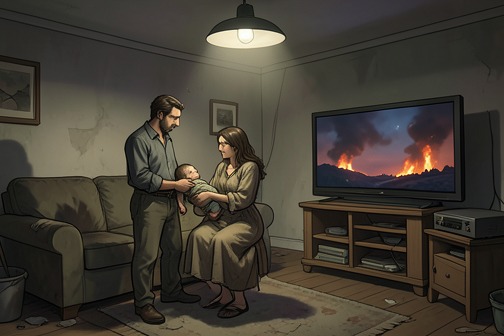
The [September 11 attacks](entity:event-recall-event-386102a65454) are a historical rupture whose consequences enter the novel not only through news of mass death and danger but through changes in ordinary family life. In Kate’s November 2002 reflections, the attacks and the unsettled period that follows make the world feel less safe; her response is to hold her husband and children more tightly while continuing the work of everyday life.
## Background and Immediate Aftermath
Kate’s calendar fixes the scene in November 2002, fourteen months after terrorists flew airplanes into the World Trade Center and the Pentagon, killing thousands. A further hijacked plane crashed with no survivors. The attacks are recalled within a wider atmosphere of continuing alarm: car and suicide bombings have become nightly news, and the search for weapons of mass destruction is underway. Al-Qaeda, the Taliban, and Pakistan recur in conversation and broadcasts, making international events part of the language of daily life.
## Fear in Ordinary Life
The narrative turns from public events to their intimate consequences. Politicians and military personnel search for bombs and terrorists, while the Justice Department confronts Enron; meanwhile, families continue their routines. Kate runs errands, raises her children, and loves her husband, but she keeps them closer to home because she understands the world to be less safe than before. The attacks therefore register not as a single completed disaster but as a lasting change in how ordinary life is managed: fear alters habits and attachments without stopping the passage of time.
## Place in the Novel
Kate’s reflection places the attacks within the novel’s larger attention to friendship, family, and care under pressure. The public crisis is not detached from private vulnerability: the story also follows Tully and Kate through personal losses and periods when one depends on the other for comfort. Set against the scale of national trauma, Kate’s effort to keep her family close gives the historical event a domestic measure, showing how a changed sense of safety settles into ordinary acts of protection and love.
Event 28
Tully与Chad在中央公园重逢

Tully and Chad’s reunion in Central Park brings an unfinished love back into view, but it does not restore the future they once imagined. Their meeting briefly joins recognition and intimacy to the evidence of years apart: Tully has risen to the top of television news, while Chad has a daughter and a partner. What begins as a startling encounter becomes a reckoning with the life Tully has made, the life she did not choose, and the loneliness that professional success has left untouched.
## The Unexpected Encounter
On a sunny day in [Manhattan](entity:location-recall-location-5e470c74b89c), Tully sees Chad on a paved path in Central Park, standing near two women on roller skates. She has not spoken his name aloud in years. The sight of him seems to strip away the intervening time, making her feel young again; the memory of their former closeness returns with an immediacy that unsettles her. She walks toward him, moving from shade into sunlight, while the years between them suddenly feel less like a settled past than an obstacle she must cross.
Their last meeting had ended with Chad asking her to marry him. Tully had never answered in person: he knew her well enough to leave rather than stay to hear her refuse. In retrospect, she understands that they loved each other, and that love did not simply disappear. It might lose its force, but it remained part of her emotional history. The reunion is therefore charged before either has said much. Tully is not merely seeing an old boyfriend; she is confronting a relationship that remained unfinished in memory even as both continued with their lives.
## Recognition and the Life Between Them
Chad sees Tully and calls her by name. He embraces her, and the familiarity of the gesture gives way to a conversation in which their present lives become visible. Tully begins to tell him that she is on [CBS](entity:organization-recall-organization-cbs-e52486a582c7), but Chad already knows about her success. He tells her he is proud of her and says he had always expected her to reach the top. His admiration recognizes the ambition she pursued, yet the exchange also underscores how little they have shared in the years since their separation.
When Chad asks about Kate, Tully says that Kate married Johnny and that she hardly sees them lately. Chad’s response suggests that this answers a question for him, though the passage does not spell out precisely what he had wondered. The small exchange places Tully’s distance from her closest friend beside her encounter with Chad: she has achieved an extraordinary public career, but her private relationships do not offer the closeness she wants.
The two women on skates are not teenagers, as Tully first assumes. One is Chad’s daughter, a young woman whose features resemble his; the other is Clarissa, the woman he lives with. Chad introduces his daughter as a graduate student at NYU. Their presence makes the passage of time concrete: while Tully was building her career, Chad became a father and formed a household that does not include her. His daughter’s resemblance to him gives their shared history a visible continuation, while Clarissa’s easy presence beside them marks the family life Tully encounters from the outside.
## The Unchosen Marriage and Its Cost
The reunion brings the proposal back into the open. Chad tells Tully that she did not want him and that he had been ready to love her forever. Tully asks him not to continue. His words name the choice she made, while her interruption shows that she cannot comfortably remain with the pain of what that choice cost. He touches her cheek in a fleeting, almost desperate gesture, and their tenderness persists without undoing the separation.
Tully had once wanted to be in love as Kate and Johnny were, and now admits that she wants not to feel so alone. The contrast sharpens the force of Chad’s appearance. Her career has exceeded her wildest dreams, but achievement has not answered her longing for a sustaining personal life. When she asks Chad for advice, he identifies the fracture plainly: success is not enough for her. Tully recognizes that she had failed to stop and notice the flowers around her; the image registers not a lack of accomplishment but the cost of moving through life without attending to what might make it meaningful.
## Family, Advice, and the Parting
Chad counters Tully’s fear of being alone by pointing toward family and the people in one’s life. Looking down at the park, he sees his daughter holding hands with Clarissa as Clarissa teaches her to skate backward. He tells Tully that he lost many years with his daughter, then decided that too much time had passed and went to find her. His account offers no guarantee that estrangement can be repaired, but it demonstrates that a belated attempt to reconnect can still matter. The scene with his daughter and Clarissa makes that possibility visible in action rather than abstract advice.
Chad recalls that Tully herself had once been an optimist. He kisses her cheek and urges her to keep lighting the world on fire, then walks away. The encouragement echoes words he had written to her years earlier, but Tully now recognizes their double edge: they affirm her drive even as they expose the loneliness of having pursued it alone. She sees that her old habit of shutting away painful memories has not erased them; they return in dreams and in moments when the past presses into the present.
## Significance
The encounter does not reunite Tully and Chad as a couple. It instead makes the difference between a remembered possibility and an established life impossible to ignore. Chad’s affection remains real, but so do the daughter and partner who belong to his present. Tully’s career remains an achievement, but it cannot substitute for the family and closeness she realizes she wants.
The reunion also turns Chad’s history with his daughter into a challenge to Tully’s isolation. His decision to seek her out shows that lost time need not forbid renewed contact, although it does not promise that every damaged relationship will be repaired. The advice he offers resonates beyond their former romance: Tully must reckon with the people she has kept at a distance and the life that success alone cannot provide. The meeting ends with Chad walking away, leaving Tully not with a restored past but with a sharper understanding of what she misses.
Event 29
Tully决定寻找母亲Cloud
Tully’s decision to search for her mother, [Cloud](entity:character-recall-character-cloud-18ae32e774f3), marks a turn from treating painful memories as sealed away to confronting the possibility that the relationship might still hold meaning. Prompted by her unexpected reunion with Chad, Tully reconsiders what she has understood as abandonment, acknowledges her loneliness, and sets out to find Cloud—not because their history has been repaired, but because she no longer wants to dismiss the significance of her mother’s returns.
## Background: The past that will not stay buried
For most of her life, Tully has managed hurt by putting bad memories and disappointments out of mind. They sometimes return in dreams or in the cold sweat of waking, but daylight lets her push them back into hiding. Seeing Chad again unsettles that method: for the first time, the experience cannot be boxed away. In the months after their encounter, she repeatedly examines its details, treating it as a marker of the life she gave up and the road not taken.
Chad’s reminder that Tully is not alone because she has a family turns her attention toward Cloud. Instead of recalling only the occasions when her mother left, Tully deliberately considers the times Cloud came back. She recognizes the danger of clinging to positive memories when so much pain lies alongside them, yet begins to wonder whether her insistence on hating Cloud and shelving disappointment has kept her from seeing what those returns might mean. The thought cannot be put back into darkness. Tully finally stops running from it and decides to test the hope, however uncertain, that her mother’s returns mattered.
## Naming the loneliness and the family she has
At Kate and Johnny’s home, Tully sees the couple sitting close, still laughing together and touching after years of marriage. Their ease makes her own loneliness newly plain. She tells them she is tired of being alone, then clarifies that the matter is connected to Chad but is not simply about him: he has made her think about the fact that she has a family. When Kate identifies Cloud as the person Tully means, Tully insists on naming her as her mother, despite the difficulty of their relationship.
The exchange gives Tully’s decision its emotional stakes. Kate points out that Cloud has hurt her each time they have met; Tully does not deny the hurt, but answers that Cloud also kept coming back. Kate gently counters that Cloud kept leaving too, and that each departure broke Tully’s heart. Tully replies that she is stronger now. Her resolve does not erase the history or establish that Cloud has changed. Instead, it comes from holding both parts of that history in view: the repeated pain and the repeated return.
## The search becomes a concrete plan
Tully has Cloud’s last known address and sends her money every month. She wants to go find her, and imagines that helping Cloud enter a treatment program could give them a chance. Kate reminds her that Cloud has been in treatment many times. Tully’s answer is that Cloud has never had support, and that support may be what was missing. The proposal is therefore more than a search for an address: Tully is willing to accompany her mother into a difficult process, though she cannot know whether it will succeed.
Tully is clear-eyed about the risk. She expects the attempt may fail and says she may end up sobbing, drinking, or both. She has no lover or children to count on, but does have a mother, flawed as that mother is. Believing she cannot make the search alone, Tully asks Kate to come help her, estimating that it should take only a few days. When Kate cannot leave immediately because she has to run the elementary-school carnival games and distribute prizes, Tully’s breath rushes out with disappointment; she asks whether Kate might come that weekend instead. The practical interruption exposes how much the plan depends on the friend she has chosen as her support.
## A journey toward uncertain reconciliation
The decision soon becomes action. Tully takes two weeks off work, calls it a vacation, packs a suitcase, and boards a plane heading west. Less than eight hours after leaving [Manhattan](entity:location-recall-location-5e470c74b89c), she arrives on [Bainbridge Island](entity:location-recall-location-bainbridge-island-f66cf1287a85) in a sleek black limousine and pulls up to the Ryan house. The journey’s speed and decisiveness contrast with the long period in which she kept painful memories hidden: once she accepts the question of what Cloud’s returns might mean, she acts on it.
Yet the search is not presented as a guaranteed reunion or a simple cure for loneliness. Tully goes because she is tired of being alone and wants to discover whether support might make a difference where treatment alone has not. The hope is real, but so are Kate’s warnings and Tully’s own expectation of heartbreak. The event’s significance lies in that unresolved choice: instead of treating Cloud’s departures as the only truth, Tully risks learning what her mother’s returns can mean, and asks her closest friend to face that uncertainty with her.
Event 30
Tully's Search for Cloud

[Tully's Search for Cloud](entity:event-recall-event-tully-s-search-for-clou-086d29c4efb7) is both a documentary expedition and a renewed encounter with the abandonment that has shaped [Tully Hart](entity:character-recall-character-tully-hart-de763f745491)’s life. Tully follows her estranged mother across Washington, finds her living in severe neglect, and offers her a way back; when [Cloud](entity:character-recall-character-cloud-18ae32e774f3) leaves again, the camera records not a reconciliation but the persistence of the wound. The documentary nevertheless makes Tully’s private history newly visible to the public, changing her career and the terms on which viewers understand her.
## The search begins
The search takes the form of a road journey undertaken by Tully, [Johnny Ryan](entity:character-recall-character-johnny-ryan-3b31e7098833), [Marah](entity:character-recall-character-marah-0bc7b0ff46c8), and a cameraman known as Fat Bob. Their first stop is a mobile-home park in Fall City, Cloud’s last known address. She has moved out, and the man they speak with believes she may be at a campground in Issaquah. For six hours the group follows leads through Issaquah, Cle Elum, and Ellensburg, filming Tully as she talks with people at campgrounds and communes. Some recognize Cloud, but none can say where she is. The search is at once practical reporting and a search for a mother who has repeatedly disappeared from Tully’s life.
A bank record supplies the next lead: Cloud’s last monthly check was cashed on [Vashon Island](entity:location-recall-location-vashon-island-9ad7cf4fd109). By then, the pursuit has stretched into a late night of travel and uncertainty. The documentary’s movement from place to place gives the search a public, investigative shape, but it cannot make its central question impersonal. Tully is not merely locating a subject; she is going toward someone whose love she still wants.
## Finding Cloud
At Cloud’s last known address, Tully admits on camera, “I guess I still want her to love me.” The confession comes as she prepares to approach an old beige mobile home on Mill Road, set in a grassy field among rusted cars. A refrigerator lies on its side in the yard, a broken recliner sits nearby, and three chained pit bulls bark and lunge as the van arrives. Fat Bob films Tully’s steps through the disordered property. The stark surroundings make the search’s emotional stakes visible without resolving them: Tully can find her mother, but she cannot know what kind of encounter waits inside.
Cloud is curled in a fetal position on an unmade bed, wrapped in a ragged blue blanket. Three empty half-gallon Monarch Gin bottles line the bedside table. Tully calls her mother’s name repeatedly before touching her shoulder, first gently and then more insistently, trying to wake her. The scene is an intimate confrontation with the consequences of Cloud’s absence and addiction, filmed as part of Tully’s effort to understand and locate her.
When Cloud asks why Tully came, Tully answers that Cloud is her mother. Cloud rejects the comfort of that answer, saying they both know better, then asks to leave: she wants a bath, something to eat, and perhaps a few days at Tully’s home. Tully feels the hope the request awakens, but also recognizes its danger. She agrees. Cloud’s disbelief at being welcomed reveals how little trust remains between them, even in this opening toward temporary care.
## A return that does not last
The fragile arrangement ends when Tully discovers the bedroom empty. The window is open; the bed is vacant, and the bathroom remains damp and clouded with steam. Dirty towels and washcloths have been left behind. Johnny tells Tully that Cloud left about half an hour earlier and that he tried to stop her. The immediate hope of bringing her mother home collapses into another departure.
Tully experiences the desertion as a return to childhood: she feels like the ten-year-old left alone on a [Seattle](entity:location-recall-location-seattle-ec620f372076) street, worthless and unwanted. Johnny takes her in his arms, and she clings to him before remembering the camera and the documentary. She then announces that the film is over and that she is done. The camera has witnessed both the search and its limit: Cloud can be found and briefly received, but Tully cannot make her stay. Tully’s refusal to let her mother break her again marks an effort at self-protection, not a resolution of the longing that sent her looking.
## From private history to public story
The documentary airs two weeks later and produces a media frenzy. Viewers have long known Tully as a cool, witty professional who reports with journalistic detachment; now they see her disappointments and abandonment. The response condenses into the recognition “just like me.” The change is a reversal in the public image: respect for the accomplished reporter becomes broad affection for the woman whose vulnerability the film has exposed. Tully appears on the covers of People and Us in the same week, while the documentary and excerpts from it circulate on entertainment programs.
The film’s reception also creates a new professional possibility. [Syndiworld](entity:organization-recall-organization-syndiworld-6d12cef4b4e6) offers Tully her own one-hour program, in which she will hold a majority ownership interest. She wants to be herself on camera and rejects the demands of the early-morning schedule; she stipulates that the show be made in Seattle and that John Ryan produce it. Those conditions link the new venture to her chosen home and close relationships. The search for Cloud has therefore produced a career-changing broadcast not by securing the reconciliation Tully wanted, but by allowing audiences to see the private history behind her public composure.
When the show begins, Tully’s ability to speak to people connects her not only with the camera but with guests and viewers. It becomes a sensation within its first two weeks, expanding rapidly into new markets. Crucially, Tully owns a substantial share of the enterprise alongside Syndiworld, while the Ryans hold a smaller piece. Her public exposure becomes not only recognition but professional power. Yet the success does not erase the cost of making intimate pain visible, or turn Cloud’s temporary return into a lasting bond.
## Significance and limits
The search binds Tully’s career as a journalist to her unresolved need for her mother. Filming provides a route to Cloud and a record of what happens, but it cannot guarantee truth in the deeper relational sense: the camera can document Cloud’s return and departure without repairing the history between them. The homecoming lasts only long enough for Tully to glimpse what she has wanted, making the renewed abandonment more painful rather than less.
The documentary’s public afterlife contrasts with the private outcome. Cloud does not remain with Tully, yet the film brings Tully closer to viewers, who recognize their own disappointments in hers. That recognition transforms her career and helps establish the television show she owns and hosts. The event’s central reversal is therefore not a recovered mother but a newly visible Tully: she cannot secure the love she seeks from Cloud, while her candid account of seeking it makes her newly beloved by an audience.
Event 31
The Girlfriend Hour Premieres

The premiere of The Girlfriend Hour marks [Tully Hart](entity:character-recall-character-tully-hart-de763f745491)’s transition from accomplished journalist and news anchor to the central figure of a show built around her own public persona. Offered by [Syndiworld](entity:organization-recall-organization-syndiworld-6d12cef4b4e6) after a documentary made her private history part of a national conversation, the [Seattle](entity:location-recall-location-seattle-ec620f372076) production gives her greater creative and commercial control—but does not resolve the tension between professional ambition and the friendships her success can sideline.
## From a childhood ambition to a new offer
Tully’s career begins with a dream of becoming a reporter. At the Mularkeys’ home, hearing [Mrs. Mularkey](entity:character-recall-character-mrs-mularkey-64db0033435b) admire Jean Enersen as one of the first women to anchor a nightly news program, Tully declares that she will become a reporter. The example gives her ambition a concrete form: she can imagine a future in a profession where women are establishing themselves on screen.
That ambition becomes a private mantra, “The next Jean Enersen.” At the [University of Washington](entity:location-recall-location-university-of-washin-31ec10f4910c), Tully prepares methodically for network work, reading at least four newspapers a day and watching newscasts. Her plans meet an institutional obstacle when her youth prevents her from enrolling in upper-level broadcasting and journalism classes. She responds by seeking out her communications adviser, determined to get answers even when the university requires her to wait.
Tully’s persistence also shapes her effort to enter the profession. She applies to an ABC affiliate with a portfolio of reporting work and a record of writing to its news director: Mr. Rorbach has kept 112 letters from her. Later, by the end of her sophomore year, she has taken two broadcast journalism classes with [Chad Wiley](entity:character-recall-character-chad-wiley-e65b0aca5664) and thrown herself into the work, but she is still waiting for the recognition and opportunity she wants. The eventual show is not an isolated break; it follows years of treating access, preparation, and visibility as things she must actively pursue.
## The documentary and the terms of opportunity
The immediate opening comes after Tully makes a documentary about her experiences of disappointment and abandonment. Until then, the public has chiefly seen her as a cool, witty professional who reports with journalistic detachment. The documentary changes that image: viewers encounter the woman behind the reporter, and the response becomes intense. Its segments are replayed on entertainment programs, and Tully appears on the covers of People and Us in the same week. Public respect turns into widespread affection, expressed in the response that she seems “just like me.”
Syndiworld, the world’s second-largest syndication company, sees the documentary and offers Tully her own one-hour program, with Tully holding a majority ownership interest. She sees the proposal as a chance to be herself on camera and to show viewers how she really feels. It also promises relief from the early-morning schedule she has kept for years. Yet she attaches two conditions before accepting: the show must be filmed in Seattle, and [Johnny Ryan](entity:character-recall-character-johnny-ryan-3b31e7098833) must produce it. She does not first clear either condition with her friends, making the offer consequential not only for her career but also for the people whose lives and work would be drawn into the plan.
## Building and launching the show
After finishing her contract, Tully leaves New York following an emotional, celebrity-filled final broadcast. She moves into a Seattle penthouse and spends a month in closed-door meetings planning the new program. She names it The Girlfriend Hour with Tully Hart, honoring the Mularkeys’ holiday tradition. Working with Johnny, she helps hire staff, design the set, and devise the show’s concepts, bringing their professional partnership into a new phase.
By August [2003](entity:time-recall-time-2003-42cb4a7fdb98), much of the advance work is complete. The demands of building the program have once again consumed Tully’s time: even with Kate across the bay, she has hardly seen her. She recognizes the recurrence of a pattern in which work fills her days at the expense of a life outside it, and reaches out to invite Kate and her goddaughter to spend a day with her. The invitation and Kate’s inability to come underscore that geographic proximity does not automatically restore the closeness that Tully’s schedule has eroded.
The show is a runaway success from its first day on air. It has been designed to make use of Tully’s strengths, especially her ability to talk to people. She connects with the camera and with guests and viewers, and within two weeks she becomes a sensation. Her photograph appears on the covers of People, Entertainment Weekly, Good Housekeeping, and In Style; Syndiworld struggles to meet demand as the show expands into new markets.
## Ownership, celebrity, and the limits of success
The program changes Tully’s standing. She is no longer only a journalist or morning anchor but a star, and the show’s rapid growth gives her a powerful position within it. She shares ownership with Syndiworld, while the Ryan family holds a smaller stake, but Tully is the driving force. The ownership matters: this is not simply another assignment in which she lends her face to an institution; she has a substantial stake in a program organized around her abilities and identity.
That success extends a longer pattern of work intensifying rather than easing as Tully advances. In New York, she has woken at 3:30 a.m. for years, and taking a position at [CBS](entity:organization-recall-organization-cbs-e52486a582c7) added afternoon meetings to her morning broadcasts. She accepts work ranging from narrating a breast-cancer documentary and guest-hosting a game show to judging Miss Universe, appearing on late-night programs, and serving as a holiday parade grand marshal. The more fame, money, and opportunity she acquires, the more she fears losing them and the harder she works. The new show offers a different schedule and greater control, but its launch also demands months of planning and renews the risk that professional achievement will crowd out her personal relationships.
## Public intimacy and private consequences
The documentary’s audience response helps explain the show’s premise: Tully’s public appeal now depends not only on her professional detachment but also on viewers’ sense that they know the person behind it. The movement from reporter to host is therefore also a movement in what television asks her to make visible. Her personal history becomes part of the route to celebrity, and audience identification becomes part of the program’s commercial reach.
The book also shows a darker form of television’s power in Tully’s conduct toward Kate and [Marah](entity:character-recall-character-marah-0bc7b0ff46c8). In a nationally televised intervention, Tully tells Kate that she needs help and that Johnny begged her to intervene; Kate realizes that her family is present as she is being portrayed as a bad mother on television. The scene is not the premiere of The Girlfriend Hour, but it sharpens the ethical stakes surrounding Tully’s later identity as a host: the ability to connect with viewers and frame private lives for a public audience can carry consequences for the people made visible. The show’s launch thus stands between two possibilities already present in Tully’s career—using television to make an intimate connection with an audience, and allowing the demands of public storytelling to overrun the boundaries of friendship.
## Significance
The Girlfriend Hour’s premiere fulfills the arc that began with Tully’s resolve to become a reporter, while changing the terms of that ambition. She reaches a position in which she is not merely reporting stories but shaping a program, sharing in its ownership, and building its appeal around her own presence. Her rapid success confirms her talent for communicating with people, yet neither recognition nor control guarantees balance. The show is both the culmination of a long professional pursuit and another test of whether Tully can make room for friendship and private life alongside work.
Event 32
The McAdamses’ On-Air Intervention

[The McAdamses’ On-Air Intervention](entity:event-recall-event-mcadams-641b5e526539) is a live television segment that makes [Tully Hart](entity:character-recall-character-tully-hart-de763f745491)’s new program both spectacle and attempted care. A family’s confrontation with Mrs. McAdams is carefully staged for an audience, but its consequences continue after the cameras stop: the couple later tells Tully that the broadcast helped Mrs. McAdams recognize the life she wanted to change and seek treatment for alcoholism.
## The setup and its stakes
Tully introduces psychiatrist Dr. Wesley Tillman, a specialist in addiction recovery and family counseling, before showing a filmed account of Mr. McAdams’s distress. He describes a twenty-year marriage and two children, then identifies alcohol as the problem: what had once been cocktail hour with friends has become something more destructive. The clip presents the family’s disintegration in images and sound, giving the audience an intimate view of a crisis that is not Tully’s own.
Tully explains the deception that will bring the family conflict onto the stage. Mrs. McAdams is backstage, believing she has won a trip to the Bahamas and has come to collect it. Instead, her family will confront her about her alcoholism with Dr. Tillman’s professional help. The stated hope is that she will face the truth and seek treatment. The structure gives the scene its dramatic tension: the audience knows what awaits Mrs. McAdams, while she does not, and the intervention’s purpose is inseparable from the program’s use of surprise as television.
## The live confrontation as television
After the film ends, Tully turns to an audience visibly moved by the family’s story. She frames Mr. McAdams as one of many people living in quiet desperation because of a loved one’s addiction, then presents the intervention as a radical effort to change that situation. A moment of silence follows. When the audience applauds, Tully sees that it is prepared to go with her into the next part of the show.
[Johnny Ryan](entity:character-recall-character-johnny-ryan-3b31e7098833) watches from the shadows beside Camera 1 and gives Tully a grin and thumbs-up. His support is one part of a larger apparatus: the cameras, the prepared film, the concealed guest, the expert’s participation, and the audience’s response all converge around Tully’s performance. Once she introduces the guests, the show moves with the momentum of a runaway train. Viewers clap, moan, cheer, and cry; Tully controls the room with the ease of an expert ringmaster, and the segment becomes one of her strongest performances on television.
That command gives Tully more than professional exhilaration. She believes the show can genuinely help the family and that America will love her for helping. The intervention therefore joins two aims that are not identical: changing a family’s life and building an absorbing broadcast. Tully’s conviction that the work matters does not remove its theatrical machinery; rather, the scene’s emotional force depends on that machinery making a private crisis public.
## Results beyond the broadcast
On an icy November morning, the McAdamses visit Tully in her office. They look markedly different from the distressed people shown on the program. Mr. McAdams has lost at least twenty pounds and no longer walks hunched, his head drawn into his shoulders. Mrs. McAdams has cut her hair, put on makeup, and is smiling. The visible change in the couple makes the intervention’s aftermath legible before they explain it.
Mr. McAdams holds his wife’s hand as they sit together on the black leather sofa. Mrs. McAdams acknowledges that she wanted to change and wanted to quit every day, but did not do so until Tully put a spotlight on her life and she could see it. Her account identifies the broadcast’s effect not as a simple cure or a change imposed from outside, but as a moment of recognition: public exposure helped her perceive the circumstances she had been unable to leave behind.
The couple thanks Tully for helping them. Moved, she explains that changing someone’s life was what she wanted the live show to do, and that knowing it worked means a great deal to her. Their visit supplies an outcome that the original broadcast could not establish by itself. The intervention’s success is shown later, in the couple’s return, their changed appearance, and Mrs. McAdams’s account of why she began to act.
## Tully’s public persona and private limits
The segment belongs to a period when Tully’s ability to connect with guests, viewers, and a studio audience has made her show a sensation. She shares ownership with [Syndiworld](entity:organization-recall-organization-syndiworld-6d12cef4b4e6), while the Ryans hold a small stake, but Tully is the program’s powerhouse. The McAdamses’ visit gives that success a personal measure: beyond audience response and expanding markets, Tully can point to a family that says the show helped alter its course.
The episode also clarifies the limits of translating private pain into television. Tully’s later live intervention involving Kate and [Marah](entity:character-recall-character-marah-0bc7b0ff46c8) exposes the danger in the same format: on national television, Kate realizes that she and her family are being presented as a case, and asks Tully what she is doing. That later rupture does not erase the McAdamses’ reported benefit, but it complicates any assumption that public confrontation is inherently helpful. The format can enable recognition and treatment, yet it can also violate trust when the person placed under the spotlight has not agreed to become the subject of a show.
In the McAdamses’ case, the follow-up offers a rare confirmation that the televised intervention’s intended change reached beyond the studio. Tully’s performance is at once a controlled piece of live entertainment and a sincere effort to help; the couple’s return allows the narrative to hold both facts together without making the camera itself a guarantee of care.
Event 33
Marah Runs Away from Home
[Marah Runs Away from Home](entity:event-recall-event-marah-a400f9dcf5f6) is a family crisis that exposes the competing meanings of care in the Ryan household: Kate sees protection as a mother’s duty, while Tully believes that taking risks can be part of growing up. [Marah](entity:character-recall-character-marah-0bc7b0ff46c8)’s escape ends when she appears at Tully’s apartment, but her return does not resolve the conflict. Instead, the episode makes visible how Tully’s generosity can comfort Marah while undermining Kate’s authority and trust.
## Background and Rising Conflict
The immediate dispute begins with Marah’s plan to attend a concert on a school night with a junior. Kate objects to the late hour and the prospect of Marah being out with an older student; Marah expects to be home by two in the morning. The disagreement is not merely about a concert. It brings into the open Kate’s anxiety about the dangers of the world her daughter wants to enter, and the gap between a parent’s responsibility to set limits and a teenager’s desire for independence.
Tully offers to drive Marah and her friends in a limousine, reasoning that a group outing with a driver and chaperone will address the concerns about transportation and safety. The offer is practical and warmly meant, but Tully makes it without first asking Kate and Johnny. When Marah presents it to her parents as a solution, Johnny dismisses the plan and tells her to gather her things; Kate also orders her to leave. Afterward, Kate asks Tully not to promise Marah things without consulting them, explaining that it only makes the situation harder. Tully’s attempt to help has thus sharpened the central conflict: she can offer Marah freedom and companionship, but she is not her parent, and her intervention risks making Kate appear unreasonable in front of her daughter.
## The Disappearance
The crisis becomes unmistakable when Kate searches the upstairs rooms, checking closets, the space under the bed, the bathroom, and even the boys’ room and her own. Her heart pounds as she reaches the top of the stairs and tells Johnny that Marah is gone. The open window leads Kate to suspect that Marah climbed out and used the trellis to get down, turning a domestic argument into a search for a missing child.
About an hour and fifteen minutes after Marah ran away, Johnny calls Tully to ask whether she has heard from their daughter. Tully has not. As Johnny is explaining the situation, the doorman interrupts with news that [Marah Ryan](entity:character-recall-character-marah-ryan-9e51ea623f2e) is downstairs. Tully immediately tells him to send her up, then lets Johnny know that Marah has arrived. Johnny’s relief is immediate: he says they will come over and tells Tully not to let Marah leave. The discovery that Marah is safe ends the uncertainty of her disappearance, but leaves the parents to confront why she ran and what should happen next.
## Reunion and Aftermath
When Kate and Johnny reach Tully’s apartment, Marah explains that Tully had offered to take the group to the concert in her limousine and chaperone them. Johnny reacts angrily, insults Tully, and insists that Marah go home. Kate does not reopen the argument about the concert; instead, she tells Tully not to make promises to Marah without consulting her and says that such promises make things harder. Her flat, exhausted response marks a quieter consequence than an explosive fight: the immediate emergency is over, but Tully’s well-meant decision has further complicated the relationship between the two friends.
The episode’s stakes are clarified by the contrast between Tully’s offer and Kate’s limits. Tully wants to accompany Marah rather than leave her to navigate a risky outing alone; Kate insists that decisions about her daughter’s safety belong to her and Johnny. Neither concern is simply erased by Marah’s return. The family has found her, but the disagreement over care, authority, and independence remains, making the disappearance a turning point in the conflict among Marah, her parents, and Tully.
Event 34
Tully Intervenes in Kate and Marah’s Relationship on Live TV

[Tully Intervenes in Kate and Marah’s Relationship on Live TV](entity:event-recall-event-tully-kate-marah-d3eeccc5a4a0) is a turning point in [Tully Hart](entity:character-recall-character-tully-hart-de763f745491) and [Kate Ryan](entity:character-recall-character-kate-ryan-f1bee58e9f90)’s friendship: an effort to help Kate reconnect with her daughter becomes a televised ambush that leaves Kate humiliated and ends the trust between the two women. Tully sees the show as a way to make a mother and daughter listen to one another; Kate experiences it as the public exposure of a private struggle, arranged without her consent and carried out in front of her family and a national audience.
## Background and Intended Intervention
Tully’s plan grows out of Kate’s admission that, if she could change one thing in her life, she would get [Marah](entity:character-recall-character-marah-0bc7b0ff46c8) to speak to her again. Tully recognizes that the proposed massages and drinks will not address the problem: Kate needs real help, and Tully believes she has found a way to reach her. She proposes a mother-daughter segment on her show, preferably live, reasoning that the absence of editing will make the encounter feel genuine. Because Marah wants to appear on television, Tully assumes she will participate and that the camera will keep her from making herself look bad. In Tully’s design, the show’s visibility is an instrument of honesty and reconciliation; she expects Kate to be able to express her love and Marah to hear it.
That plan also exposes its central flaw. Tully moves from recognizing Kate’s pain to deciding, on her behalf, how it should be addressed. The evidence of her hope is immediate: Kate’s face seems ten years younger when she asks whether the idea might work. But that hopeful response is not informed consent to the intervention that follows. Tully’s confidence in the format and her belief that she is helping do not prepare Kate for being presented as a problem before a television audience.
## The Live Segment
On the broadcast, Tully introduces her friend as Kathleen Ryan. The formal introduction places Kate, who has stumbled beneath the stage lights, inside a public performance before she has fully understood what is happening. Dr. Tillman then speaks about controlling mothers who damage their children’s psyches, comparing children to flowers that need room to grow and arguing that rigid rules cannot keep them safe. Kate recognizes that the discussion is about her: her family is present, and national television is casting her as a bad mother.
Tully tells Kate that she needs help, says that Johnny begged her to intervene, and claims that Marah wants to confront her but is afraid. Marah then walks onto the stage smiling at the audience. The arrangement makes Kate’s private family conflict into the segment’s spectacle: the host, expert, daughter, and audience are already in place, while Kate has been brought into the confrontation without knowing its terms. She begins to cry, and her vulnerability intensifies her anger rather than softening the scene. When Dr. Tillman presses the case that she is crushing her daughter’s spirit, Kate refuses the role the program has assigned her.
## Confrontation and Rupture
Kate turns on both the intervention and its organizer. She challenges Tully’s claim to be helping her, then tells the audience that Tully knows nothing about love, family, or the hard choices women face. Her accusation strikes directly at the gap between Tully’s public authority as a television host and Kate’s judgment of her private life. Tully warns her that they are live, but that reminder only sharpens the conflict: the broadcast’s continued visibility is part of what Kate is protesting, not a reason to comply.
Kate removes her microphone and power pack and throws them to the floor. She storms offstage, taking Marah by the arm. The gesture ends the segment on her terms, but it cannot undo the exposure or the humiliation. Backstage, Johnny holds her and apologizes, while Kate’s mother says that Tully must have thought she was helping. Yet the family’s attempts to make sense of Tully’s intention do not restore the trust the broadcast has broken.
## Aftermath and Significance
Johnny confronts Tully, telling her that Kate trusted her and that the family trusted her too. Tully insists she was trying to help, explaining that Johnny had said Kate was falling apart and that Dr. Tillman had encouraged drastic measures. Her account makes clear that the intervention came from concern and advice, but also that she acted on interpretations and assurances instead of ensuring that Kate understood and agreed to the plan. A beneficial intention does not erase the difference between supporting a friend and taking control of her most intimate relationships.
When Tully asks whether the friendship can really be over after thirty years, Johnny answers with a cold certainty that it ended that day. The scene’s consequence reaches beyond a failed television segment: a lifelong bond is broken at precisely the moment Tully believes she is proving her loyalty. The episode also echoes the friends’ earlier history of painful disclosure and care. When Tully cried after disclosing rape, Kate held her; when Tully told Kate that her grandmother had died, Kate again let her grieve in silence and in her arms. In those moments, Kate’s response began with presence rather than a plan for public repair. The live intervention reverses that pattern: Tully tries to turn care into action, but fails to make room for Kate’s choice. Its decisive wound is therefore not simply that the effort goes wrong; it is that help, imposed before it is accepted, makes trust itself the casualty.
Event 35
Cloud住院后再次离开
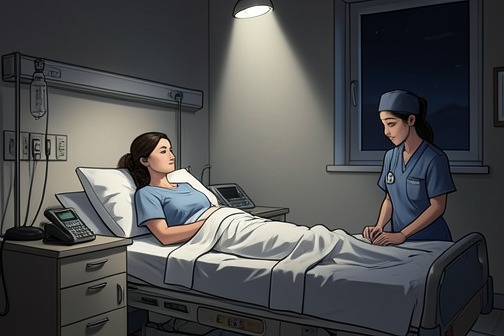
[Cloud](entity:character-recall-character-cloud-18ae32e774f3)’s departure from [Harborview Hospital](entity:location-recall-location-harborview-hospital-35d8f0742cbc) turns a tentative reunion into another abandonment for Tully. After a nurse calls in the middle of the night to report that Cloud has been hospitalized following an apparent overdose and assault, Tully sits with her unconscious mother, tries to speak honestly about their estrangement, and discovers that Cloud kept a handmade necklace from Tully’s childhood. The keepsake opens the possibility of hope, but it cannot hold Cloud in place: Tully wakes to find the bed empty and Cloud gone.
## The Call and the Reunion
At 2:01 a.m., Tully is awakened by a nurse at Harborview Hospital, who identifies the patient as her mother, [Dorothy Hart](entity:character-recall-character-dorothy-hart-b50ae5975bb0). The nurse says the circumstances are unclear, but that the incident appears to involve a drug overdose and that Cloud has also been badly beaten. Cloud is unconscious; hospital staff found Tully’s name and telephone number among her belongings. The call brings Tully back into contact with a mother whose absence has defined their relationship, but it offers no assurance that Cloud sought her out or will be able to speak with her.
When Tully reaches the hospital, she sees that Cloud is bruised and recognizes how much time has passed since their last physical contact. She gently touches her mother’s temple and remembers that the last time she held Cloud’s hand was in [1970](entity:time-recall-time-1970-ec3dd188a3c1), on a crowded [Seattle](entity:location-recall-location-seattle-ec620f372076) street. The years between those two gestures make the hospital encounter feel less like a simple reunion than a meeting between people who share a history but have had almost no present together.
## A Conversation Without Reassurance
Unable to begin with the question she most wants answered, Tully talks about her life and the success of her television show. She then tells Cloud about her fight with Kate and admits how alone she has felt after losing the closeness of the Ryans and Mularkeys. Speaking aloud makes the extent of that loneliness clearer to Tully: Cloud is the family member left to her, even though their relationship has not been a dependable source of care.
Tully presses for an explanation of why Cloud never loved her. Cloud tells her to forget about her, but Tully cannot detach herself from the fact that Cloud is her mother. Cloud says she wishes she could be what Tully needs, but cannot, and tells her that Tully must let her go. She insists that she was never truly Tully’s mother. The exchange gives Tully an answer about Cloud’s limitations, not the reassurance or repair she longs for; its emotional force comes from the distance between a child’s continuing claim on a parent and the parent’s refusal of that role.
## The Necklace and a Brief Opening
After covering Cloud with a blanket, Tully looks through the belongings left in the room. Among worn clothes, damaged shoes, toiletries, cigarettes, and a lighter, she finds a frayed string tied into a circle, with two pieces of dried macaroni and a blue bead. It is the necklace she made in Bible study and gave Cloud years earlier, when they left [Gran](entity:character-recall-character-gran-09774ef3c44d)’s house in the Volkswagen bus. Cloud has kept it.
Tully does not touch the necklace at first, afraid that it might not be real. When she tells Cloud that she kept it, the discovery changes what Tully can imagine about their shared past. It does not cancel Cloud’s rejection or establish that the two can build a reliable relationship. Instead, it offers a worn, qualified hope: despite the years of estrangement, the keepsake shows that something Tully gave her mother remained with her. Tully sits back down, intending to ask a further question, but falls asleep around four in the morning.
## The Second Departure
When Tully wakes, she first orients herself to the hospital, then realizes that Cloud’s bed is empty. The closet is empty too; Cloud’s bag has been left behind, crumpled into a ball. The evidence indicates that Cloud has left without Tully, repeating a pattern already familiar from their history. The necklace remains the scene’s counterweight to that disappearance: it suggests a private attachment, but not a promise to stay or an explanation for leaving.
The episode therefore ends without reconciliation. Tully has heard Cloud name her inability to be the mother Tully needs, and she has found an object that complicates the idea that their past meant nothing. Yet the physical facts of the ending—the vacant bed and abandoned bag—outweigh any immediate change in their circumstances. Cloud is gone again, leaving Tully with a fragile sign of connection but no restored relationship.
Event 36
Kate Is Diagnosed with and Treated for Breast Cancer

Kate’s diagnosis and treatment for breast cancer turn a small, long-standing change in her body into a crisis that reorganizes her family’s life and gives new weight to care, waiting, and friendship. The illness first becomes unmistakable during a routine examination; it then advances through surgery, chemotherapy, and radiation, none of which prevents its spread. The course of the disease is marked not only by clinical decisions but by the distance between what Kate’s body is experiencing and what those closest to her can know or bear to say.
## Discovery and Diagnosis
During a routine examination, Dr. Silver notices discoloration beneath Kate’s right nipple and asks how long it has been there. Kate describes a quarter-sized red patch, slightly puckered skin, and a problem that had seemed to come and go over roughly nine months to a year. It had begun like a bug bite; her family doctor had treated it as an infection with antibiotics, which appeared to help temporarily. Because her mammogram had been clear, Kate has continued to understand the recurring warmth as evidence of infection rather than cancer.
Dr. Silver does not treat the clean mammogram as a reason to dismiss the visible change. She calls to arrange an immediate breast ultrasound, then sends Kate across the hall for a biopsy. The sudden move from an ordinary appointment to urgent tests gives the diagnosis its force: a familiar symptom, repeatedly interpreted as temporary, now demands a different explanation. The scene locates the turning point in a careful clinical observation rather than in a dramatic discovery by Kate herself.
## Telling the Family and Beginning Treatment
After the test results arrive, Kate prepares to tell Johnny. She puts on a pink cashmere sweater that her children gave her for Christmas the previous year, along with worn Levi’s, ties her hair back, and applies makeup because she wants to look healthy for what comes next. Johnny has already learned the result during the agonizing wait for the doctor’s call. When Kate tells him she has cancer, his effort to remain strong—and the emotion visible in his eyes—helps steady her rather than undoing her resolve.
Kate also tells her family that she is sick, initially softening the news before the children. [Marah](entity:character-recall-character-marah-0bc7b0ff46c8) eventually asks whether it is cancer, and Kate answers yes. The exchange makes the diagnosis a shared fact, not merely a private medical disclosure between spouses. The family’s response unfolds against uncertainty: examples of people who recovered offer Marah a way to imagine a future, while Kate’s own treatment and subsequent deterioration show that reassurance cannot settle what will happen in her case.
## Treatment, Waiting, and Estrangement
The treatment is extensive. Six weeks after the diagnosis, Kate has had both breasts removed and undergone chemotherapy and radiation. The treatments leave her flesh raw and burned, yet she is still waiting for Tully to call. In the meantime, Kate’s family gathers around her for breakfast and packs its things into the car; amid these ordinary preparations, Kate keeps glancing at the phone, expecting contact from her closest friend.
The contrast between the family’s physical presence and Tully’s absence gives the treatment period a relational consequence beyond its medical cost. When Tully comes home on January 2, she finds an empty apartment. The delay has allowed time to pass while Kate is undergoing major treatment, and the missed connection becomes part of the friends’ painful estrangement. Illness here makes waiting a repeated condition: Kate waits for the phone to ring, while Tully later learns how much has happened in the interval.
## Metastasis and Kate’s Decision
The disease ultimately spreads to Kate’s brain. After a minor stroke, doctors operate, but once inside they find that there is nothing more they can do. Johnny explains the metastasis to Tully, and Kate’s mother confirms that the cancer is in her brain. The news changes the meaning of treatment: the earlier interventions have not stopped the disease, and the immediate question is no longer how to resume ordinary life but how to spend the time remaining.
Tully responds by trying to find another possibility. She recalls a breast-cancer program she hosted and proposes calling a doctor in Ontario who is working with a new drug. Kate says that she has had all the treatments and none has worked; she is done with treatment and asks Tully simply to be with her. Her decision draws a clear boundary between the public professional knowledge Tully can mobilize and the care Kate wants from her friend. At this point, presence matters more to Kate than another promise of a cure.
## The Body’s Decline and the Meaning of Care
As the weeks pass, Kate’s body weakens in several distinct ways: she struggles to find words and finish sentences, her fingers tremble, nausea becomes difficult to bear, and she is persistently cold. By late July, her pain has led to a near doubling of her morphine dose. Her doctor says addiction is no longer the relevant concern, marking how far the situation has moved from the ordinary measures by which treatment and medication might usually be judged.
The account makes the illness concrete through changes in speech, movement, temperature, nausea, and pain rather than reducing it to a diagnosis alone. At the same time, the presence Kate asks for becomes the central form of care available after treatment has failed. Her cancer narrative therefore turns on a shift from trying to reverse the disease to staying beside Kate within the limits it imposes: the decisive outcome is not recovery, but the recognition that companionship is what she wants and what her friends and family must now provide.
Event 37
Tully and Kate's Reconciliation

[Tully and Kate's Reconciliation](entity:event-recall-event-tully-and-kate-s-reconc-68ddcbc91027) brings two friends, separated by a long history and a recent rupture, back together at [Sacred Heart Hospital](entity:location-recall-location-sacred-heart-hospita-d76f716928a7) as Kate is dying. The reunion does more than restore their friendship: it makes Tully confront the years of closeness she has treated as secure, and turns their shared past into a commitment to face what remains side by side.
## The call that breaks the silence
Tully hears Kate’s name through the intercom in her office, just after a successful show and the familiar routine of meeting fans. Hope rises before Tully can stop it, and the strength of that hope angers her. When she takes the call, the two speak bluntly: Kate says Tully is the one who is angry and refuses to apologize; Tully counters that she is not apologizing either, then insists that the disagreement matters. Kate cuts across the argument with the essential news: she is in the hospital, on the fourth floor of [Sacred Heart](entity:organization-recall-organization-sacred-heart-af4790cee919). The call ends there, leaving Tully to move from resentment to alarm without the comfort of a settled explanation.
Tully urges her driver to hurry, then runs through the hospital’s glass doors. People gather around her, as they often do when they recognize her, but the attention she normally builds into her schedule cannot hold her now. She pushes through the crowd and asks to see Kathleen Ryan. The scene sharply reverses the usual balance of her public life: a famous television host accustomed to managing other people’s attention is suddenly concerned with reaching one person before it is too late.
## The approach to Kate’s room
Before Tully enters, Johnny warns her that Kate is fragile and that the cancer in her brain has affected her faculties. Kate has good moments and bad ones, he explains, and may not know who Tully is. The warning makes the walk to the room feel lonelier and longer to Tully than any journey in her life. Johnny leads her to the doorway; the people speaking quietly around them offer no relief from the possibility that the person waiting inside may not recognize her.
Kate lies angled against stark white sheets and piled pillows, bald and without eyebrows after her illness and treatment. Tully’s voice seems too loud and too alive in the quiet room when she says Kate’s name. Then Kate opens her eyes, and Tully sees the friend she has known since girlhood—the girl to whom she once swore to be best friends forever. The moment answers the fear Johnny has raised, but it does not erase the estrangement. Tully must speak to a friend who is present and recognizable while knowing how much time they have lost.
## An apology made through memory
Tully reaches toward Kate and lets her knuckles graze Kate’s cheek. She calls herself the former best friend who hurt Kate and says she is sorry for what she did, wishing she had said so earlier. Rather than make the apology abstract, she recalls the particular history that made them friends: Kate was the first person who truly wanted to know her, and she stood by Tully after Tully was raped. Tully also remembers their early, comic disagreements, including Kate’s bafflement over a word in Love Story and her youthful disgust at French-kissing. These memories place their intimacy in ordinary details as well as in the crisis that first tested it.
Tully recalls their letters after she first left [Snohomish](entity:location-recall-location-snohomish-ec0ef72e452a), signed with one of the phrases they used for their enduring friendship. Their past comes into the room as a shared record, not merely as Tully’s claim that she remembers. Tears gather in Kate’s eyes and run down her temples. Kate asks whether Tully really thought she could forget her. The question releases Tully from the fear that the illness has taken their history from Kate, even as it exposes how deeply the separation has made Tully doubt what once seemed certain.
## Mutual fault and a renewed promise
Kate’s response is not a simple absolution. Smiling tiredly, she calls Tully a bitch and says she has always known it; she also admits that she could have called back. More than thirty years of friendship, she observes, can include a few broken hearts. The exchange gives the reconciliation its mutuality: Tully accepts responsibility for not calling, but Kate acknowledges her own part in the silence. Neither woman pretends the estrangement did not hurt, and neither makes forgiveness depend on a perfect account of it.
Tully struggles to explain the darkness that has kept her from calling, but the conversation moves away from a full explanation and toward the time they still have. When the reality of Kate’s illness presses in, Tully says they will do what they have always done: face it side by side. The promise echoes the childhood friendship they have just remembered, now made under radically different circumstances. Their old vow is no longer a carefree assurance about a shared future; it becomes a practical declaration of companionship in the face of death.
## Reconciliation expressed through care
After leaving Kate’s room, Tully comes out shaken and covers her mouth as she tries to contain her response. Later, on Kate’s last night in the hospital, she persuades Johnny to take the children home and takes his place in the other bed in Kate’s room. She pushes the bed across the linoleum until it nearly touches Kate’s. The movement gives physical form to the promise made at the reunion: Tully closes the distance between them and stays.
Tully brings a recording of her last show and starts it. Kate dryly questions whether that is what a dying woman would want to watch; Tully answers with laughter, and they watch the broadcast together like girls at a sleepover. The scene joins the worlds that have long defined their friendship: Tully’s public career and the private, familiar ease they can still find with one another. Her choice to leave the stage and remain with Kate makes the reconciliation consequential beyond words. Their final closeness does not undo the missed calls or the years of hurt; it gives them a way to inhabit the time left together.
Event 38
Kate Ryan's Terminal Prognosis

[Kate Ryan](entity:character-recall-character-kate-ryan-f1bee58e9f90)'s terminal prognosis is the moment when a cancer diagnosis becomes an explicit announcement of imminent death: her inflammatory breast cancer has metastasized to her brain, and treatment has failed. The revelation forces [Tully Hart](entity:character-recall-character-tully-hart-de763f745491) to confront both the finality of Kate's illness and the months of estrangement that kept her from standing beside her friend during treatment. Kate, meanwhile, refuses to let the remaining time be organized around a last, futile attempt to save her; she asks Tully to be with her.
## Warning Signs and Diagnosis
The crisis is foreshadowed by a breast examination that breaks through the routine of ordinary medical conversation. During a checkup, Dr. Marcia Silver notices a quarter-sized red patch beneath Kate's right nipple, with skin puckered like an orange peel. Kate says it has been there for nine months, perhaps a year. What began, in her account, as something like a bug bite had been treated as an infection with antibiotics; it seemed to go away, then returned, sometimes feeling hot. She also points out that her mammogram had been clear.
Dr. Silver stops making small talk and immediately calls to arrange a breast ultrasound. Her urgency contrasts with Kate's prior understanding of the recurring patch as an infection and with the reassuring mammogram. The scene does not yet name the eventual prognosis, but it shows how a familiar explanation can fail to account for a persistent bodily change—and how the next step comes from a clinician recognizing that the symptom warrants further investigation.
When Kate later prepares to tell Johnny, she turns the disclosure into a deliberate act. She dresses in a pink cashmere V-neck sweater, a Christmas present from the children, and worn Levi's, brushes her hair into a ponytail, and puts on makeup because she wants to look healthy for what is coming. Johnny rises from the end of the bed, trying to be strong as his eyes fill. Rather than allowing his fear to make her falter, Kate draws strength from the visible evidence of his love and tells him she has cancer.
## The Prognosis Reaches Tully
Tully learns the full extent of Kate's illness from Johnny, not from Kate. When Johnny says the cancer is inflammatory breast cancer, Tully reaches for a familiar sequence of treatment—mastectomy, radiation, chemotherapy—and says she knows people who have fought it. Johnny answers that Kate has already had all of those treatments. The difference between Tully's imagined beginning of treatment and Kate's reality exposes how much has happened outside Tully's knowledge.
Johnny explains that Kate called Tully several months earlier because she wanted her at the hospital. Tully did not return the call. His voice takes on an edge as he reminds her of the unanswered request, and Tully is overwhelmed by guilt at the time lost. [Mrs. Mularkey](entity:character-recall-character-mrs-mularkey-64db0033435b) cuts through that self-reproach by saying none of it matters now. The exchange makes the estrangement part of the prognosis's emotional force: Tully is not simply hearing that Kate is dying, but discovering that she missed the period when Kate had hoped to have her beside her.
Johnny then describes the latest turn. The cancer has metastasized; after Kate suffered a minor stroke the previous night, doctors took her to the operating room quickly, but once inside they saw nothing could be done. His voice breaks. Mrs. Mularkey puts a hand on his and states that the cancer is in Kate's brain. She then says plainly that Kate is dying. The account moves from disease name, to treatment history, to failed intervention, and finally to the prognosis itself, leaving no room for Tully's assumption that another standard course of treatment is still ahead.
## A Different Meaning of Hope
When Tully faces Kate, she initially responds to the prognosis by proposing another intervention: she remembers a doctor in Ontario doing promising work with a new drug and offers to call him. Kate says she is finished with treatments. She has had them all, and none has worked; what she wants now is for Tully to be with her. The exchange turns on a conflict between Tully's impulse to act and Kate's knowledge of the course she has already endured.
Tully recoils from what she hears, naming the prospect as watching her friend die and refusing to accept it. Kate answers with a small smile that this is all there is. She reminds Tully that Johnny did not simply give up: for six months, she saw specialist after specialist and tried conventional, unconventional, and naturopathic remedies. The evidence of that sustained search changes what the choice to stop means. It is not presented as a refusal to fight from the outset, but as Kate's decision after extensive treatment has failed and after she has reached her limit.
The scene therefore shifts the meaning of hope from another cure to time spent together. Tully's instinct is to search for the exception, while Kate asks for presence rather than another plan. Her request sets a practical and emotional course for what remains: the prognosis cannot be reversed by Tully's determination, but friendship can still shape Kate's last days.
## The Body's Decline and the Work of Care
As the weeks pass, Kate's decline becomes concrete in small losses of capacity. She cannot find a word or finish a sentence; her fingers tremble, nausea becomes unbearable, and she is persistently cold. The progression is not confined to the stark declaration that the cancer is terminal. It reaches into speech, movement, comfort, and the ordinary experience of her body.
By late July, pain has led Kate to nearly double her morphine dosage. The narrative places that increase within hospice care rather than framing it as a moral failure: her doctor tells her that addiction is not her problem now. The contrast between a dosage once governed by concerns about dependence and the immediate reality of severe pain underscores how the priorities of care change as the illness advances. Kate's prognosis thus carries consequences not only for what treatment is no longer possible, but for what comfort requires.
The people around Kate respond through acts of practical presence. When Tully announces that she is leaving her television show to be with her family, she makes the choice visible by removing her microphone and walking offstage. On Kate's last night in the hospital, she persuades Johnny to take the children home and takes his place in the other bed. She pushes it across the linoleum until it nearly touches Kate's, then plays a tape of her final show. They watch together like eighth-grade girls at a sleepover. The gesture does not deny the prognosis; it gives their friendship an ordinary, shared shape inside it.
## Significance
The prognosis brings Tully's history of loss into sharp focus. Earlier, after Ima dies, Tully tells Kate that [Gran](entity:character-recall-character-gran-09774ef3c44d) has died and receives the compassion she has been waiting for; Kate holds her while she sobs. When Tully later faces Kate's terminal illness, she again encounters the fear of losing a person who has made herself a source of safety. Yet this time the loss is not retrospective: Kate is still present, able to tell Tully what she needs, and Tully can answer that need with companionship.
That distinction gives the event its emotional and narrative weight. Tully cannot repair the months in which she failed to return Kate's call, and she cannot turn treatment into a cure by will. She can, however, return to Kate's bedside. The prognosis marks the end of the story's expectation that effort might save Kate, but not the end of what the two friends can still do for one another: sit close, watch a tape, and meet the time left without disguising what it means.
Event 39
Tully Hart's Final Girlfriend Hour Broadcast

[Tully Hart](entity:character-recall-character-tully-hart-de763f745491)’s Final Girlfriend Hour Broadcast is both a public warning about inflammatory breast cancer and a private farewell to the career that has long defined Tully Hart. After learning that [Kate Ryan](entity:character-recall-character-kate-ryan-f1bee58e9f90)’s cancer has spread to her brain and that treatment can no longer help, Tully turns her live program into an act of education and love. She names the illness, explains how it may first appear, and then announces that she is leaving the show for an extended period to be with Kate. The decisive change is not simply that Tully stops broadcasting: she publicly sets the scale of her success below the demands of real life and friendship.
## Causes and Preparation
The broadcast follows the news that Kate’s cancer has metastasized to her brain. After a minor stroke, surgeons found that there was nothing they could do; Kate had also decided she was finished with treatment and wanted Tully simply to be with her. Tully responds first as a journalist, urgently pursuing every possibility. She changes the show’s theme the day before the broadcast, researches through the night, and contacts dozens of leading oncologists by fax, email, and phone, sharing the details of Kate’s case. The specialists give her the same answer: nothing can be done.
That failure marks a profound limit for someone whose professional life has been built around reach, influence, and finding the next story. Fame, money, and the power to put a subject before millions cannot change Kate’s prognosis. Tully arrives at the studio feeling small and ordinary, but she still has something important to say. The live program will not offer a cure; it can make a little-known diagnosis more visible and warn viewers not to mistake its signs for something harmless.
## The Live Broadcast
Tully walks through the studio, her professional domain, while employees hurry to prepare a show whose subject she changed only the previous afternoon. Producers and other staff have worked late; Tully herself has been awake until nearly two in the morning researching. The effort reflects the familiar machinery of her work, but its purpose has changed: she is no longer pursuing a story for career advancement. She is trying to give the audience useful knowledge about the disease affecting her best friend.
When the theme music begins, Tully takes the stage and opens with the show’s customary greeting. Then she falters. The audience, whose approval has buoyed her for much of her life, suddenly seems like a gathering of strangers. The silence that follows her hesitation exposes the distance between the practiced ease of a television host and the personal truth she has come to tell. When the audience notices she is not wearing makeup, Tully says she is not fishing for compliments; she is tired. She acknowledges the viewers as people who have written to her, emailed her, and attended her events, then recalls that Kate was once ambushed on this same stage by Tully herself. That recollection makes the present disclosure inseparable from their friendship and its history: this time, Tully uses the stage to speak for Kate rather than to put her on the spot.
Tully tells the audience that Kate has breast cancer, then explains that it is an unusually rare, aggressive form that may begin not with a lump but with a rash or discoloration. Kate’s family physician had mistaken the early sign for a bug bite and prescribed antibiotics. Tully emphasizes that inflammatory breast cancer can affect younger women and may be deadly by the time it is diagnosed. Her account connects public information to the particulars of Kate’s experience, turning the diagnostic delay into a warning for other women rather than a private detail alone.
The program brings medical expertise and another patient’s experience into that warning. Tully introduces Dr. Hilary Carleton to discuss symptoms including rashes, localized heat, discoloration, puckered skin, and inverted nipples, and to stress that breast changes beyond lumps deserve attention. The doctor has brought Merrilee Comber, from Des Moines, Iowa, who first noticed a small scaly patch near her left nipple. Tully interviews the guests and shows pictures, urging viewers to continue yearly mammograms while also watching for changes in their breasts. The show therefore expands from Kate’s case into a practical public-health message: a clear mammogram does not make every unusual change irrelevant.
## The Announcement and Its Meaning
At the end of the broadcast, Tully departs from her usual promise to return the next day. She tells the audience that Kate is her best friend and the best mother she knows, adding that [Mrs. Mularkey](entity:character-recall-character-mrs-mularkey-64db0033435b) is good too. Then she announces that this will be her last show for a long while and that she is taking time off to be with Kate, as the audience would do for its own loved ones. The announcement converts an ordinary sign-off into a public decision about where Tully’s presence matters most.
Tully makes that decision explicit by contrasting the program with the life beyond it. The show, she says, is only a show; real life is with friends and family, and an old friend had reminded her that she does have a family, which needs her now. She removes her microphone, drops it on the floor, and walks off the stage. The gesture ends the broadcast without softening the choice into a routine temporary break: the instrument of her public voice is left behind as she turns toward Kate. The audience’s sympathy and the backstage gasp register the shock of the departure, while Tully’s own action gives the moment its finality.
## Aftermath and Narrative Significance
The broadcast’s intimate consequence follows on Kate’s last night in the hospital. Tully persuades [Johnny Ryan](entity:character-recall-character-johnny-ryan-3b31e7098833) to take the children home and takes his place in the other bed. She pushes her bed across the linoleum until it nearly touches Kate’s, then brings a recording of the final show. Kate jokes that it is what a dying woman would want to watch; Tully plays the tape, and they watch together like girls at a sleepover. The broadcast that has just ended Tully’s public routine becomes, in the hospital room, a shared object between the two friends. Its medical warning remains public, but its most personal audience is Kate.
The sequence completes a reversal in Tully’s priorities without diminishing the work she has done on air. Her platform gives viewers language for recognizing a dangerous disease; it cannot alter the course of Kate’s illness. By leaving the stage and then bringing the recording to Kate’s bedside, Tully moves from addressing millions to keeping company with one person. The event’s significance lies in both acts: using celebrity to make a rare cancer more legible, and refusing to let celebrity stand in for the care that friendship requires.
Event 40
Kate Ryan's Return Home for Hospice Care
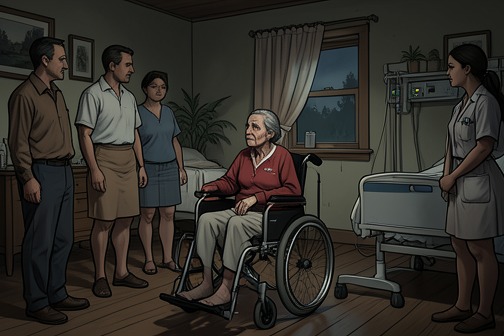
[Kate Ryan](entity:character-recall-character-kate-ryan-f1bee58e9f90)'s return home for hospice care is the turning point at which treatment gives way to the work of living her remaining time among the people she loves. The journey home is physically difficult and emotionally charged, but it brings her into a familiar family setting prepared for her needs. Tully's presence, from helping her into a wheelchair to sharing the last broadcast of her career at the hospital, makes the homecoming part of a larger history of friendship: the girl who once clung to Kate for fear of being lost now stays beside her as Kate faces the end of her life.
## Causes and Decision
Kate's homecoming follows a diagnosis whose seriousness had first emerged through an unexpectedly alarming routine examination. During a breast exam, Dr. Silver asked about a quarter-sized red patch beneath Kate's right nipple. Kate said it had been there for nine months, perhaps a year; it had begun like a bug bite, seemed to improve with antibiotics, then returned. She had received a clear mammogram, but the skin was puckered like an orange peel, and Dr. Silver immediately called to arrange an ultrasound. The contrast between a reassuring mammogram and a symptom that would not stay gone establishes how the illness had eluded ordinary reassurance.
By the time Kate's cancer had metastasized to her brain, she had suffered a minor stroke. Surgeons found nothing they could do, and the cancer was already affecting her faculties. Tully, who had learned the news with the hope of finding another treatment, offered to call a doctor in Ontario whose work she had featured on her program. Kate refused that extension of the search: she had tried the treatments, none had worked, and what she wanted now was for Tully simply to be with her. Returning home therefore follows Kate's own decision to stop pursuing treatment and make presence, rather than another medical intervention, the priority.
## Leaving the Hospital
The transition was taxing even with Kate's pain medication managed. Her family had gathered, and the sequence of getting out of bed, into a wheelchair, into the car, and finally into Johnny's arms made the journey home a series of physical demands rather than a clean break from the hospital. Johnny carried her through the island house, whose familiar smell of scented candles and the previous night's dinner made its ordinary life newly vivid. Kate recognized that he had made spaghetti and knew that tacos would follow the next night, because those were his two recipes. The small domestic rhythm sharpened her awareness of the future he would have to face without her.
Kate understood that being home would hurt: family and familiar surroundings could make the impending loss more immediate than a hospital room did. But ease was no longer the measure of what mattered. She chose time with her family, and that choice gives the homecoming its emotional weight. At the house, each relative fell into a practical role: [Marah](entity:character-recall-character-marah-0bc7b0ff46c8) gathered the boys to watch television, Kate's mother prepared casseroles, and her father was likely mowing the lawn. Johnny, Tully, and Kate moved down the hall toward the guest room that had been redecorated for her return.
## A Home Prepared for Care
The room had been transformed from its former barn-red, beachy look, with white trim, red-and-blue furniture, painted antiques, and shells in glass bowls. It was now pale green, nearly celery-colored, with rose accents and family photographs in white porcelain frames. Tully had done the painting. She explained that the change had something to do with chakras, an idea from a program she had once made; she was unsure it would help, but thought it could not hurt. Her intervention was personal and practical at once: she could not change Kate's prognosis, but she could help shape the room in which Kate would live with it.
Johnny had also prepared the house for the bodily realities ahead. He showed Kate the hospital bed set up beside his own and explained that the bathroom had been fitted with railings and a shower seat, with the recommended equipment in place. A hospice nurse would come by. These provisions make care visible as work shared among family, friends, and professionals: the homecoming is not a return to ordinary independence, but an effort to adapt familiar surroundings to Kate's changing needs.
## Tully's Place Beside Kate
Tully's role at the homecoming gains meaning from the pattern of care that precedes it. When she was young, Kate once held her as Tully began to cry; the embrace had felt foreign, and Tully clung to her, afraid that without Kate she would float away and be lost. Later, Tully told Kate that she had been raped. Kate did not answer with judgment; she quietly asked whether Tully was okay. After Tully's grandmother died, Kate again held her while she sobbed. These earlier scenes establish how Kate's steadiness became a refuge for Tully, not through grand assurances but through listening and physical presence.
The support later runs in both directions. When Kate is injured and being taken to the hospital, Tully insists on riding in the ambulance and repeats that she is there. Now, on Kate's last hospital night, Tully persuades Johnny to take the children home and takes his place in the other bed. She pushes her bed across the linoleum until it nearly touches Kate's, then brings a recording of her final show. The two watch it together like eighth-grade girls at a sleepover. Tully's professional life had once been central to her identity, but the act of leaving the stage and choosing Kate makes the distinction between public work and private responsibility explicit.
The return home completes that movement without pretending that friendship can reverse the illness. Tully helps maneuver Kate into a wheelchair and wraps her in blankets before taking her outside. At home she can offer companionship, memory, and the attention to practical comfort that Kate needs; she cannot promise a cure. The homecoming's significance lies in that limit as much as in its tenderness: as Kate's body weakens, the people around her reorganize daily life to keep her connected to family and familiar places.
Event 41
Kate and Marah's Reconciliation

During Kate’s final illness, [Marah](entity:character-recall-character-marah-0bc7b0ff46c8) comes to her bedside and the two reach a reconciliation that turns years of ordinary mother-daughter conflict into an explicit exchange of apology, pride, and love. Their reunion does not erase the time they have spent at odds; it changes how they understand it, and gives them a brief, intimate chance to say what their relationship has meant before Kate’s death.
## The bedside encounter
Kate is at home, where illness has made her look at her daughter with unusual clarity. Marah’s long black hair is held back with little girl barrettes, and Kate sees in her at once the child she was, the teenager she has become, and the woman she may be. The scene holds those versions of Marah together: she is grown and beautiful, yet the fear in her eyes makes her seem ten years old again.
Kate recognizes that their remaining conversations will be weighted with the knowledge that they may be remembered after she is gone. Against that awareness, Marah begins not with a grand declaration but with an admission: she has been mean to her mother. Her apology arrives in the shadow of a relationship they had once treated as a series of battles, but the approaching loss changes the scale of those arguments.
## Apology and a changed view of the past
Marah broadens her confession, saying that she had treated her grandmother badly as well and connecting her behavior to the familiar friction between teenage girls and their mothers. She also jokes that Tully had been difficult with everyone. The joke lets Marah and Kate share a moment of relief without pretending that the old conflicts did not happen; Kate’s reply accepts the humor and keeps the conversation tender rather than accusatory.
Kate has waited years for Marah to say something like this and had imagined the moment during the period when mother and daughter were at war. Now, with time running short, she sees those fights differently: not as proof that their relationship was broken, but as ordinary struggles between a girl trying to grow up and a mother trying to hold on. The reversal is painful. Kate would welcome another fight if it meant they still had time for one.
## Affection, memory, and continuity
Rather than demand that Marah make amends for every past hurt, Kate tells her she is proud of her big personality and spirit, qualities she believes will take her far. The praise brings tears to Marah’s eyes. Kate opens her arms, and Marah leans down to embrace her fiercely. For Kate, the hug is notably different from the perfunctory embraces of recent years or the hugs Marah had given as a way to get her own way: this one feels real, and Kate could have held on forever.
The embrace leads Marah to remember Kate dancing with her when she was little, holding her and twirling her until she giggled. One time, Kate danced with her so long that Marah threw up on her. Marah says they should not have stopped dancing, and takes responsibility for having let the closeness fade. The memory does more than summon a happier childhood: it gives them a shared image of physical affection that can be recovered, if only for this moment, in the present.
## A future that remains Marah’s
Their reconciliation does not turn Kate’s illness into a reason for Marah to abandon her own life. When Marah says she will stay home rather than work that summer, Kate strokes her hair and asks whether she applied for a summer job at the theater. Marah says she will be home, but Kate insists that she cannot put her life on hold. She reminds her that the job could also help her get into USC. Even while dying, Kate continues to speak to Marah as someone with plans and a future, rather than as a daughter whose only role is to remain at her bedside.
Marah tells Kate about the play, its costumes, and her part, then realizes what she has said: she has talked about Kate seeing a performance despite the possibility that Kate will not live long enough to attend. She becomes desperate to change the subject and apologizes. Kate touches her cheek and promises she will be there. Both understand that the promise may be broken by Kate’s illness, but Kate does not withdraw from Marah’s hope or make the conversation an occasion for another farewell.
## The meaning of reconciliation
Marah connects this bedside moment to an earlier time when a friend, Ashley, stopped speaking to her and she did not know why. Kate took her to lunch then, and Marah remembers that they felt like friends. Kate answers that they have always been friends, even when neither of them knew it. The recollection links a specific act of maternal support to the relationship they are now naming more clearly: friendship was present beneath their conflicts, even when they could not recognize it.
Marah tells Kate she loves her, and Kate says she loves her too. Marah wipes away her tears and quietly leaves the room. The scene offers no cure and does not undo the years of tension; its significance lies in the candor they finally reach. Their reconciliation makes room for apology without reducing their history to blame, for tenderness without denying death, and for Marah’s future without asking her to stop being Kate’s daughter.
Event 42
Kate Watches Marah's Summer Play
As Kate's strength ebbs under terminal cancer, she makes it to [Marah](entity:character-recall-character-marah-0bc7b0ff46c8)'s summer play with Tully beside her. The performance turns a family outing into a last act of witnessing: Kate can no longer shape her daughter's future herself, but she can watch Marah take the stage, hold Tully's hand, and entrust both children and dreams to the friend who has remained at her side.
## Causes and Background
The event follows Kate's diagnosis and the discovery that her cancer has metastasized to her brain. After a minor stroke, surgeons find the disease too advanced to treat, and Kate tells Tully that further treatment has failed: what remains, she insists, is the present and the need for her friend to be with her. The terminal prognosis makes the play more than a school performance. It is one of the experiences Kate fears she will not live to share with Marah, and it gives the evening the weight of a farewell without taking away its ordinary purpose: to see her daughter perform.
Kate's body has become an increasingly demanding limit. As the weeks pass, she struggles to find words and finish sentences; her fingers tremble, nausea becomes unbearable, and she is persistently cold. By late July, her pain has driven her morphine dosage to nearly twice its earlier level. Against that decline, the clear afternoon of the play offers no miraculous recovery. Kate wants to help Marah prepare but is too weak, so she hands the work to Tully. Even smiling takes effort, and pain behind her eyes continues like an alarm that cannot be switched off.
## Getting to the Auditorium
Tully takes over the preparation Kate cannot manage, carrying out the duties with confidence. Kate rests through much of the day, then gathers what strength she can for the evening. The group arrives extraordinarily early: when they pull into the parking lot, there are no other cars. The empty lot gives the family time and space before the audience arrives, while Kate's presence there is itself an achievement measured against her illness.
Johnny settles Kate into a wheelchair, covers her with blankets, and leads the way to the auditorium doors. The practical care surrounding her—rest, assistance, warmth, and Tully's help—does not conceal how fragile she is; it makes possible the specific thing she has come to do. For Kate, attendance means being present for Marah at a moment when her own future with her daughter feels painfully abbreviated.
## Kate and Tully's Conversation
As they wait, Kate asks Tully whether she still knows the person who runs the drama program at USC. Tully says that she does. Kate then raises the possibility of Marah attending the school, explaining that although the idea of her daughter in Hollywood frightens her, Marah has grown up among dreamers: Tully is a television star, and her father works as a news producer. Kate reaches over and squeezes Tully's hand as she asks her to look out for Marah and the boys.
The request gives the evening a second purpose. Kate is speaking about Marah's future while privately confronting the fact that she will not be there to see it unfold. Tully answers that she will always protect them. Kate's response rests on a history of trust: she knows Tully keeps her word. She also asks Tully to look up [Cloud](entity:character-recall-character-cloud-18ae32e774f3) again, extending the conversation from the children's care to the unfinished family bond that still matters to her.
The two friends recognize the distance their lives have traveled from the girls they once were and the shared ambitions they carried into adulthood. Kate tells Tully she is proud of her; Tully returns the feeling, and they acknowledge that many of their dreams came true, even if Kate did not always value them fully while she had the chance. Their exchange brings their long friendship into the present without reducing it to nostalgia: Tully is now the person Kate can ask to carry forward what she cannot.
## The Performance and Its Meaning
Before Kate can answer Tully, the auditorium doors open and people stream inside. Johnny, Kate's mother and father, and the boys take their seats as the lights flicker. The red velvet curtains part to reveal a plainly painted small-town set. Marah enters in a high-school drama's version of a nineteenth-century gown and begins to speak. For Kate, the performance is magic; the simple staging does not diminish the force of seeing her daughter command the stage.
Tully closes her hand over Kate's and gently squeezes it. When Marah leaves the stage to a standing ovation, Kate's pride swells. Leaning against Tully, she says that she now understands why she gave Marah Tully's middle name: Marah is the best of both of them. The observation makes the performance an inheritance as well as a show. Kate sees in her daughter a joining of the two friends, and in Tully's hand over hers, the loyalty that has helped make that joining possible.
The evening does not reverse Kate's illness or promise her more time. Its significance lies instead in what she manages to witness and entrust: Marah's emerging life, the friendship that has endured across decades, and Tully's promise to remain for the children after Kate is gone. Kate's death follows on a rainy [October](entity:time-recall-time-10-06100c8d088d) night, making the play one of her final occasions with the family gathered around her. In that last stretch, the stage gives her a view not of the future she will inhabit, but of the future she hopes her daughter and best friend can share.
Event 43
Kate Ryan's Death
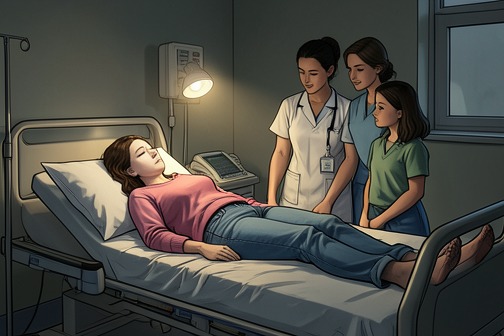
[Kate Ryan](entity:character-recall-character-kate-ryan-f1bee58e9f90)’s death ends her life after breast cancer spreads to her brain and treatment can no longer help. The loss also transforms the novel’s central friendship into an act of final care: Tully stays beside Kate through the last night, while Kate’s farewell to her loved ones gives way to Tully’s work of honoring her wishes and supporting the family.
## Causes and Final Illness
The path to Kate’s death begins with a breast change that had persisted for months. During an examination, Dr. Silver noticed a quarter-sized red patch beneath Kate’s right nipple, with skin puckered like an orange peel. Kate recalled that it had started as what seemed to be a bug bite; her family doctor had treated it as an infection with antibiotics, and a mammogram had been clear. Concerned by the discoloration, Dr. Silver arranged an ultrasound immediately.
By the time Kate told Johnny she had cancer, she had chosen her clothes with deliberate care: a pink cashmere sweater given to her by the children and worn Levi’s. She brushed her hair, tied it back, and put on makeup because she wanted to look healthy for the conversation. The small preparations make the diagnosis a spoken fact rather than an abstract fear, even as Johnny’s bright eyes reveal how difficult it is for him to remain strong.
Later, the cancer metastasized to Kate’s brain. After she suffered a minor stroke, surgeons operated, but found nothing they could do. The cancer had affected her mental faculties; Johnny warned Tully that Kate might not recognize her. When Tully proposed contacting a doctor in Ontario whose new drug she had learned about on a breast-cancer program, Kate refused further treatment: she had tried it all, and none of it had worked. What she asked for instead was presence.
## The Last Days
Kate’s decline is measured through ordinary capacities becoming uncertain. She loses words, cannot finish sentences, and develops trembling weakness in her fingers. Nausea becomes difficult to bear, and she is persistently chilled. By late July, her pain has led her to nearly double her morphine dosage; the doctor tells her that addiction is no longer the problem. The change from treatment and hope to the management of pain makes the limits of medical intervention part of the family’s daily reality.
Tully’s response is shaped by both urgency and care. On Kate’s last night in hospital, she persuades Johnny to take the children home and takes his place in the other bed. She pushes her bed across the linoleum until it nearly touches Kate’s, bringing a tape of her final television show. The two watch it together like eighth-grade girls at a sleepover. The broadcast, which had marked Tully’s public decision to leave her show for the sake of family, becomes private company for her closest friend.
That vigil follows an earlier crisis in which Kate is taken to hospital in an ambulance and Tully insists on going with her. Sitting beside Kate, who is conscious but barely responsive, Tully repeats that she is there. When the hospital staff hurry Kate inside and separate them, Tully is left watching her best friend being carried away. The later bedside vigil reverses that separation: Tully cannot change the outcome, but she can remain close.
## Death and Farewell
Kate dies on a bleak, rainy [October](entity:time-recall-time-10-06100c8d088d) night with the people she loves gathered around her bed. She says goodbye to them one by one, whispering something special to each, then closes her eyes as rain strikes the window and darkness falls. The scene gives her death a deliberate human shape: not simply a medical endpoint, but a final sequence of individual leave-takings shared with those around her.
The loss reverberates through the history of Kate and Tully’s friendship. As a girl, Tully had flinched when Kate first hugged her, unused to being held; once she began to cry, she clung to Kate as though letting go might leave her lost. Later, after Tully disclosed that she had been raped, Kate’s quiet question about whether she was okay met the revelation without judgment. When Tully told Kate that her grandmother had died, Kate held her while she sobbed. These earlier scenes of physical comfort give the final bedside vigil its accumulated meaning: staying with Kate is the last expression of a friendship that repeatedly made room for grief.
## Funeral and Aftermath
Kate leaves a final To Do list for her funeral, and Tully follows it to the letter. The Catholic church on the island is filled with photographs, flowers, and friends. Kate has chosen Tully’s favorite flowers rather than her own, a final gesture that turns the arrangements into a sign of the closeness between them.
In the days after the funeral, Tully concentrates on the practical work of carrying out Kate’s wishes and takes care of everything. The Ryans and the Mularkeys sit together on the beach, holding hands and occasionally remembering to talk. The contrast between Tully’s purposeful activity and the families’ subdued gathering shows the immediate aftermath of the loss without pretending that grief is resolved. Kate’s death closes her story, but her final instructions, the shared memories, and the care her friends and family give one another keep her present among them.
Event 44
Kate Ryan's Funeral and Tully's Farewell
[Kate Ryan](entity:character-recall-character-kate-ryan-f1bee58e9f90)’s funeral and [Tully Hart](entity:character-recall-character-tully-hart-de763f745491)’s farewell bring their lifelong friendship to its final, defining scene. Tully cannot bear the formal service, but a box Kate entrusted to a priest reaches her outside the church. Its letter and three personal gifts transform the moment from public mourning into an intimate exchange between friends; Tully ends by dancing alone, held by the music and memories they shared.
## The funeral and Tully’s retreat
Kate’s last To Do list covered her funeral, and Tully followed it closely. The Catholic church on the island was filled with photographs, flowers, and friends; true to their friendship, Kate had chosen Tully’s favorite flowers rather than her own. In the days before the service, Tully concentrated on arrangements and care for the family while the Ryans and Mularkeys sat together on the beach, holding hands and sometimes remembering to talk. She tried to meet the funeral as a professional might, telling herself she could smile through anything.
That composure failed when the cars arrived at the church. Tully said she could not do it. Inside, an organ began a slow, plodding version of “You and Me Against the World.” The service’s music, the priest’s account of Kate, and the projected montage above the coffin all seemed to Tully to make the woman she knew into a shadow. Before she could reconsider, she walked out. Her departure is not indifference: it marks the limit of what she can endure in the public ritual of grief.
## Kate’s message from beyond the service
A priest who had met Tully when she brought clothes for the burial and photographs for the montage found her outside. He gave her a large black box, explaining that Kate had entrusted it to him for the day of the funeral and had predicted that Tully would be standing out front when the service began. Tully smiled at Kate’s uncanny understanding of her, even through the pain, and carried the box across the street to an iron park bench.
On top lay a letter in Kate’s unmistakable, bold, left-slanted handwriting. Its opening addresses Tully directly and acknowledges that she would not be able to stand the funeral. The letter’s intimate tone makes explicit what the delivery itself already conveys: Kate anticipated Tully’s absence from the service and arranged a different way to reach her. Rather than requiring Tully to participate in the communal ceremony, Kate has prepared a private farewell suited to the particular friend she knows.
## Three gifts and a shared past
Beneath the letter were three objects, each accompanied by a brief instruction: a Virginia Slims cigarette with a yellow sticky note reading “Smoke me,” an autographed David Cassidy picture marked “Kiss me,” and an iPod with headphones marked “Play me and dance.” The gifts are funny and specific, not solemn keepsakes. Together they direct Tully through familiar gestures—smoking, remembering, and moving to music—and give her something to do with grief when the service has become unbearable.
Tully lights the cigarette and coughs as she exhales. Its smell immediately recalls nights with Kate on the banks of the [Pilchuck River](entity:location-recall-location-pilchuck-river-5112972d0ca0), lying against fallen logs and looking at the Milky Way. The memory links a small present-day action to the friendship’s earlier life: the funeral does not erase their history but makes its ordinary shared moments newly vivid. When Tully puts on the headphones and plays Kate’s chosen song, “[Dancing Queen](entity:expression-recall-expression-dancing-queen-78edb17fe6dc)” carries that memory forward into the present.
## Dancing as farewell
Tully whispers to Kate, starts the music, and finds herself laughing or crying as she stands. She feels that she is not alone and that Kate is not simply gone: more than three decades of good and bad times remain theirs, held in music and memory. The friendship’s [“Best friends forever” promise](entity:rule-recall-rule-best-friends-forever-pro-95c7aeb2f229) thus survives not as a denial of death but as a bond Tully can still experience after Kate’s death.
The closing gesture is public and solitary at once. In the middle of the street, by herself, Tully begins to dance. The movement answers the song’s instruction and the earlier years of the friends’ shared music, but it also reverses the funeral’s prescribed stillness: after leaving the church rather than watching Kate’s life projected above the coffin, Tully makes remembrance active and bodily. The farewell does not restore Kate; it gives Tully a way to carry their friendship onward, with grief and joy occupying the same dance.