Carter's Visa card
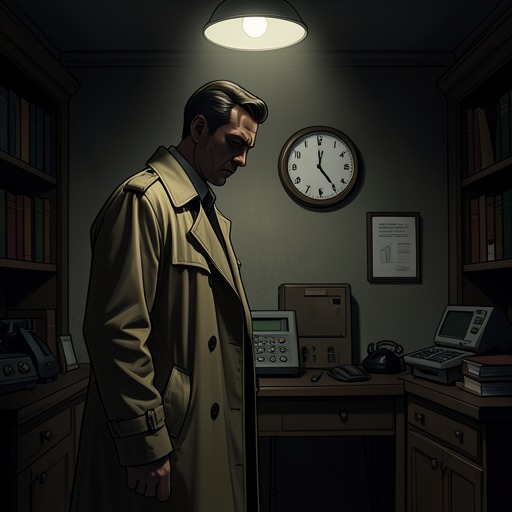
FirewallCarter's Visa card is more than an item of payment: in the confrontation at a cash machine, it is the intended trigger for an attack on the world's financial networks. Under gunpoint, Kurt Wallander is handed the card and a four-digit code; the threat depends on the card being used at a precise time. Its ordinary appearance conceals a mechanism whose consequences could reach far beyond the machine in front of him.
Identity and Operational Role
The card is identified after the confrontation as Carter's Visa card. In the car park, however, the armed man presents it to Wallander without explaining what it will do. He recites the numbers one, five, five, one, drops the card onto the pavement, and points his gun at it. Wallander has to pick it up. The card and code thus arrive together as parts of an imposed procedure, not as the tools of a routine purchase.
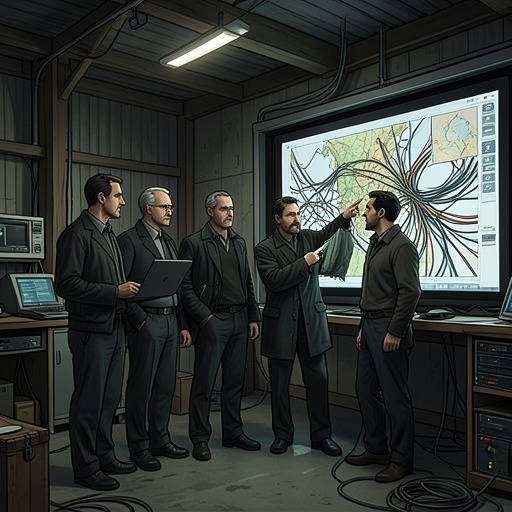
The intended use connects an everyday financial transaction to a hidden attack. Robert Modin later describes the cash machine as the launching pad for a virus bomb, while Wallander's investigation establishes the larger stakes: the machine is linked to a plan that could unleash an electronic avalanche through financial institutions. The card does not itself explain the technical design, but it gives the plot a concrete point of contact between Carter's scheme and the ordinary infrastructure people use to withdraw money.
The Cash-Machine Confrontation
The card becomes decisive in the early-morning standoff. At 5:27 a.m., Wallander is at the cash-machine site, trying to keep people away by claiming that withdrawals are temporarily unavailable. He knows the explanation cannot hold indefinitely, and doubts the evidence behind his theory. Then he sees Modin emerge from behind a pick-up truck. A tall, suntanned gunman approaches from the supermarket with a weapon, and Wallander realizes that Modin has been brought into the confrontation.
The gunman orders Wallander to approach the machine. Wallander understands that an attack on the man could lead to his own death and leave Modin unable to escape. He inserts the card as instructed, while watching for a chance to act. The danger shifts when a shot rings out: Martinsson, who has come across the street, fires at the gunman. The man shoots back and misses; Wallander retrieves his own weapon from a rubbish bin and shoots the attacker in the chest. The card's forced use has brought Wallander to the machine, but the intervention interrupts the sequence before it can become the financial attack.
The Timed Threat
The card's full significance is disclosed in the aftermath. If Wallander or Modin had put it into the machine at exactly 5:31 a.m. on October 20, they would have set off the planned electronic assault. The contrast is central to the object's role: the machine is familiar and practical, yet the operation depends on making that commonplace action serve as a trigger. The immediate scene offers no explanation of this larger mechanism; the later account makes the card's apparent simplicity ominous.
The stakes are not speculative in the sense of an empty threat. Experts tracing Tynnes Falk's infiltrations into bank networks are astonished by how exposed major financial institutions are. Security specialists around the world work to correct the deficiencies, while investigators try to reconstruct what would have happened had the plan begun. The card therefore marks a narrow point of failure: a precise time, a machine, and a transaction stand between the investigation and a crisis in the global financial system.
Consequences and Significance
Wallander does not complete the operation. The account states that he did not put Carter's Visa card into the machine, and the threatened cascade does not occur. Instead, a selection of cash machines in Skåne malfunction for a day; many are shut down, no cause is located, and they later resume normal operation. The distinction between this limited disruption and the catastrophe the card could have initiated makes the near miss legible without implying that the larger attack took place.
The card also gathers together the investigation's human and technological stakes. Wallander's attention is fixed on keeping Modin alive, even as the armed man directs him to the machine; the object turns that protective dilemma into an immediate physical choice. Afterward, Wallander and Modin recognize that the cash machine should have seemed an obvious place to look for a plan involving money. The card's significance lies precisely in that combination of visibility and concealment: it is an ordinary bank card, yet its timed use would have connected an isolated act at a pavement-side machine to vulnerabilities spread across major financial networks.