Ystad power-substation keys
FirewallThe Ystad power-substation keys were the crucial access mechanism in the investigation into Sonja Hökberg’s death at the Ystad power substation. Their colour coding and tightly restricted custody made the contrast between broken outer gates and an apparently unlocked inner door a consequential clue: the scene looked like an unauthorised intrusion, yet entry to the transformer building suggested access to keys. The later discovery of a burglary at a technician’s home offered an explanation for how those keys could have been copied.
Design and Custody
The substation’s perimeter gate and transformer building used separate keys. Andersson’s key chain was marked with coloured tape: the red key opened the gates, while the yellow and blue keys were for the transformer building’s steel door. That inner door required two different keys, or powerful explosives, to open. Its substantial locks were intended to resist forced entry, making the state of the door as important as the body found inside.
Access was limited. Andersson said that only he, another repairman named Moberg, and the main office held copies of the keys. He described security as thorough and said that forgetting to lock the door would have been grounds for immediate dismissal. He also said the locks, made in the United States, were supposed to be impossible to force. The account establishes that keys were restricted and the locks difficult to defeat; it does not establish that authorised key duplication was impossible.
The Door as an Investigative Clue
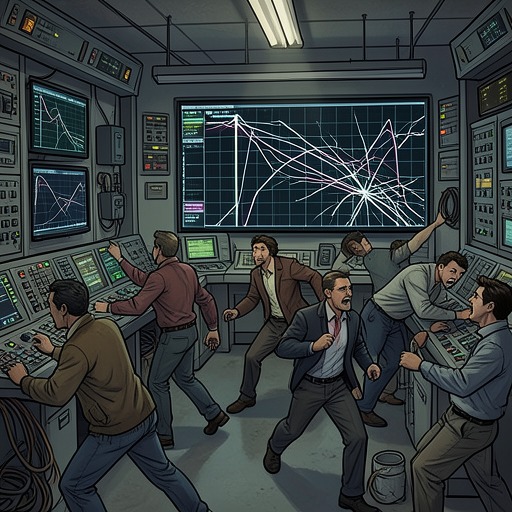
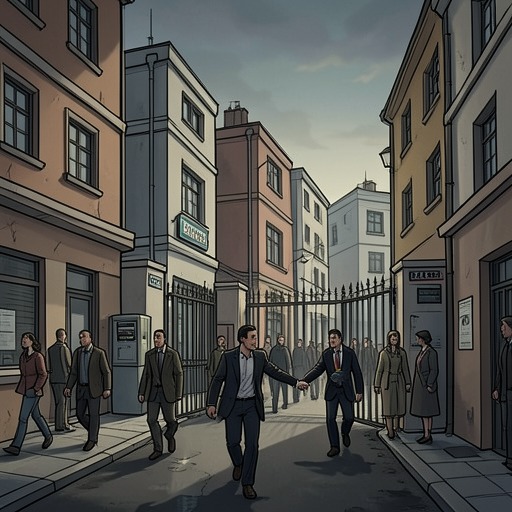
On the night the blackout began, Sydkraft sent Andersson to the substation after a major part of Skåne lost power. He found the outer gates broken open, but the steel door to the transformer building stood ajar without apparent signs of being forced. Inside lay a burned corpse among the power lines; the body had caused the regional outage. The contrast between the damaged gates and the undamaged inner door immediately raised a practical question: if someone had entered unlawfully, how had they opened the secure building?
Wallander pursued that discrepancy while investigators were still considering suicide, murder, or sabotage. Once the handbag found near the fence identified the body as Sonja Hökberg, the keys became part of the effort to establish how she had reached the transformer building and whether she had entered it herself. Hökberg had escaped from police custody about thirteen hours earlier, and the station was three kilometres from Ystad. Wallander considered it more likely that someone had driven her there than that she had walked unnoticed. The unexplained access to the locked building made the suicide explanation harder to accept, though the investigation initially kept both suicide and murder open.
Copying and the Likely Route of Entry
The later inquiry found that Moberg had returned from leave to discover his home had been burgled. The station keys had not been stolen, but Hansson maintained that the burglar must have copied them and had duplicates made by the American manufacturer, probably for a substantial payment. This account supplied a way to reconcile the two kinds of entry: the outer gate had been forced, while someone with copied keys could open the transformer building’s steel door without damaging it.
A check of Jonas Landahl’s passport showed that he had been in the United States in the month after the break-in at Moberg’s home. Investigators treated that travel as supporting the theory that he had arranged the duplication. The source of the money remained uncertain; it may have come from Hua Gang’s bank robberies in Frankfurt and Marseilles. The conclusion about the copied keys was therefore a reconstruction of the likely method, not a complete account of every step or payment.
Role in the Case
The keys matter because they transform a physical detail into a chain of access, opportunity, and suspicion. At the scene, the broken gate suggested intrusion, while the undamaged steel door pointed toward possession of keys. Later, the burglary at Moberg’s home and Landahl’s travel provided a plausible link between the security breach and the wider group behind the crimes. The keys helped investigators explain how the transformer building could have been entered, even as the reason Hökberg was thrown against the high-voltage wires remained unresolved.