Ivan Gross
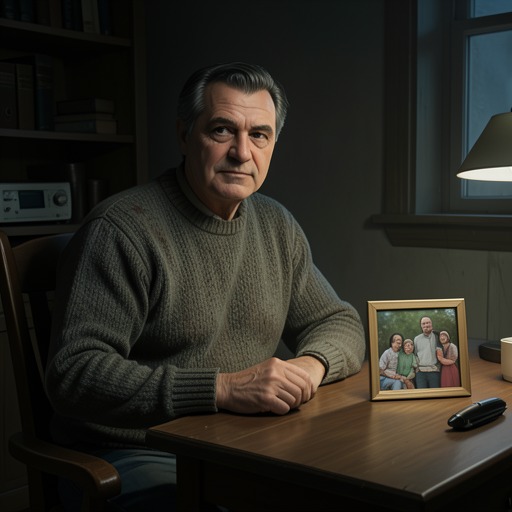
Forever...Ivan Gross, Katherine’s maternal grandfather, is a lawyer living with the effects of a stroke. Though it has left him using a cane and struggling to find words, he continues to go to the office each day. For Katherine, his vulnerability does not make him an object of fear: because she loves him, he changes how she sees old age and helps shape her decision to volunteer with geriatric patients.
Identity and Daily Life
Ivan practices law with his wife, Hallie Gross, in New York. Since his stroke, he no longer handles cases, but he still goes to the office every day, maintaining a routine even as his work has changed. At home, he sometimes wanders into the kitchen while Hallie and Jamie prepare dinner, lifting pot lids and sniffing what is inside.
The stroke has also altered his movement and speech. He walks with a cane and cannot always get the words he wants; even a simple sentence can become a struggle. Katherine finds it painful to watch and has to resist the impulse to finish his sentences for him. The difficulty is not presented as an abstract diagnosis: it appears in these ordinary moments, in the pause over a word and in the family’s response to it.
Family and Katherine’s Changing View of Age
Katherine recalls that as a young child she feared old people, including her grandmother, whom she knew only as a frightening, unfamiliar figure. When that grandmother died, Katherine felt relief because it meant there would be no more visits to Trenton. That early fear returned in a different form when Ivan became ill and she visited him in the hospital. She recognized that he, too, was old, but she was not afraid of him: she loved him.
This difference helps explain Katherine’s choice to work with geriatric patients. She is careful not to cast herself as a nurse or a heroic caregiver; her tasks are modest, such as delivering mail and flowers, bringing water, and adjusting beds. Yet the work makes her feel good. Her affection for Ivan gives her a personal point of connection to the elderly patients she serves, turning an earlier fear into a willingness to be present with them.
Katherine also observes contrasting ways of responding to Ivan’s condition. She sees how painful his illness is for Hallie’s daughter, Katherine’s mother, who had been very close to him while growing up. Hallie, by contrast, treats him as she always has, as though nothing is wrong. The difference does not erase the stroke’s effects; it shows how family members carry those effects in distinct ways.
Recognition and Significance
At a family dinner, Hallie says that Katherine is glowing and asks Ivan whether he sees it too. He answers slowly, "To me, Katherine always glows," and Hallie calls it love. Ivan then raises his water glass in a toast. The exchange makes his difficulty with speech part of the scene without reducing him to it: the measured words he manages are a direct expression of affection.
Ivan’s role in Katherine’s story rests on this intimate contrast. Her childhood association between old age and fear gives way, through loving him, to a more personal understanding of aging and vulnerability. His continued routine, his presence in the kitchen, and his affirmation at the table each show him within family life—not only as someone changed by illness, but as a grandfather whose love remains legible to Katherine.