Secrets and shame
FosterSecrets and shame are explicitly joined in the Kinsella household, where the woman tells the girl that secrecy brings shame and that shame can be dispensed with. The girl later applies what she has learned differently: when Mary asks what happened after the summer placement, she says nothing and recognizes that she does not have to explain. The contrast makes silence more complicated than concealment. It can be demanded by a household rule, but it can also become the girl’s own choice about what to keep private.
The rule against secrets
The idea first takes shape as a question. After the woman asks whether the present moment suits her, the girl wonders whether there is something they are not supposed to do and asks, “Is this a secret?” When the woman asks what she means, the girl clarifies that she wants to know whether she is not supposed to tell. The uncertainty is expressed as a practical question about what may be said, rather than as an accusation or a disclosure.
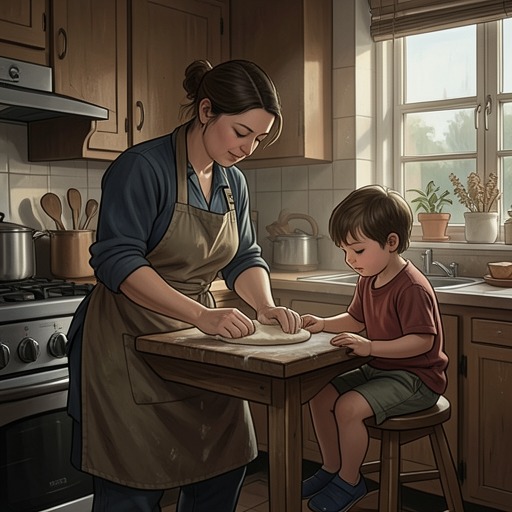
The woman turns the girl to face her. The girl notices the woman’s dark-blue eyes, flecked with other blues, and the moustache visible in the light. The close attention to the woman’s face gives the exchange a particular intensity: the girl has not really looked into her eyes before, and now she must attend to them as the woman makes her answer. The woman states, “There are no secrets in this house, do you hear?” Repeating the demand for confirmation, she makes the household rule something the girl is expected not merely to hear but to acknowledge.
Shame and disclosure
The woman explains the rule in moral terms: “Where there’s a secret,” she says, “there’s shame, and shame is something we can do without.” Her words treat shame as a consequence attached to secrecy and as a burden that can be avoided by refusing to keep things hidden. The girl does not immediately answer. Although she does not want to answer back, she feels that the woman wants a response; she finally says that there are no secrets in the house. She takes big breaths so she will not cry, and the woman puts an arm around her, saying that she is too young to understand. The embrace softens the force of the rule without taking it back: comfort follows the demand, but the girl is still asked to accept the woman’s account of secrecy and shame.
Later, the girl tells John Kinsella what she has heard about the family’s loss. Her statement is concrete: a little boy followed the dog into the slurry tank and died, and the girl wore his clothes to Mass the previous Sunday. The disclosure joins a death to an everyday detail of the girl’s life in the house. It also shows that information presented through a rule about secrets is not simply absent: the girl can speak plainly about the boy and the clothes. The evidence does not show John Kinsella explaining the loss in this exchange; it shows the girl reporting what she was told.
Silence after returning home
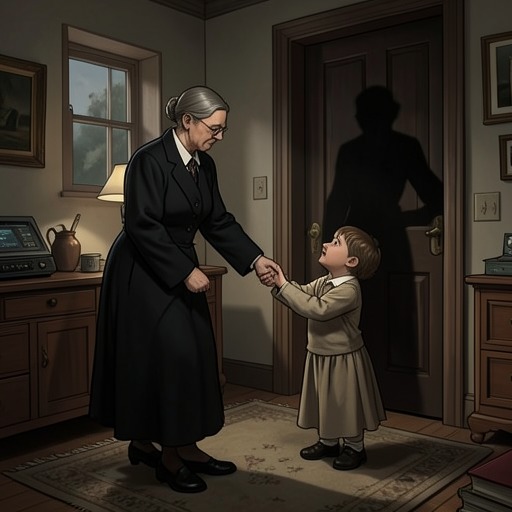
When the car carrying John Kinsella and the woman has gone, Mary asks, “What happened at all?” The girl answers, “Nothing,” then repeats, “Nothing happened,” after Mary asks her to tell. The repetition makes the refusal unmistakable. The girl knows that Mary is her mother, but says she has learned and grown enough to understand that what happened is not something she ever needs to mention. She describes the moment as “my perfect opportunity to say nothing.”
That reasoning revises the earlier household rule without directly arguing against it. The girl does not announce a secret, explain the summer, or identify a shameful act; she decides that an account is not owed. Her silence is therefore not identical to the secrecy the woman warned against. It marks a boundary around what the girl chooses to tell Mary, while the narrative leaves the precise contents of what she withholds unspoken.
Silence, recognition, and care
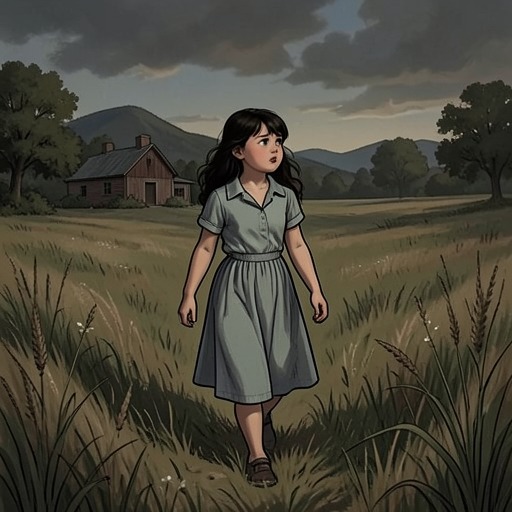
The choice not to tell is followed by movement rather than speech. Hearing the car brake on the gravel and a door open, the girl runs down the lane toward John Kinsella. She remembers several details from the summer as she goes, but her attention settles on the present and on reaching him. When she arrives, he has stopped at the gate; she runs into his arms, and he holds her tightly for a long stretch. The encounter gives their return a physical expression that does not depend on an explanation of what happened.
The sequence leaves the tension between speech and silence unresolved in a deliberate way. The girl has learned a rule that associates secrecy with shame, has spoken about the Kinsellas’ dead boy, and then declines to recount her own experience to Mary. At the same time, the closing embrace offers recognition without a narrated confession: the girl runs, John Kinsella holds her, and the narrative does not make disclosure a condition of that contact. Silence can carry both the pressure of a rule and the force of a chosen privacy.