The girl falls into the well
FosterThe Unnamed girl’s fall into The well interrupts a final, ordinary act of care: after Edna Kinsella leaves for the milking parlour, the child sets out with The zinc bucket to draw water for her tea. At the water’s edge, the familiar route has changed and the water stands much higher than it did on her first visit. As she bends to fill the bucket, a hand appearing like her own seems to pull her under. She returns soaked, is cared for through a brief illness, and later keeps the incident to herself. The fall is both a physical danger and a turning point in how she understands what can be left unsaid.
Before the Fall
By this point, the child’s summer with John Kinsella and Edna Kinsella has given her a place within the rhythms of their household, but not a permanent one. Edna has taught her to make toast, showing her how to turn the bread when one side browns; the lesson makes instruction itself a form of attention and care. Yet that care exists alongside the knowledge that the arrangement must end. Edna has acknowledged that the child cannot stay forever with the two of them, and the girl stands by the fire trying not to cry. The fall takes place in the shadow of this approaching separation, though the immediate decision to go to The well is practical: she thinks of providing water for Edna’s tea when she returns from milking.
The impulse also answers the child’s unsettled sense of where she belongs. Earlier, she has felt divided between wanting Dan to leave her with the Kinsellas and wanting him to take her back to what she knows. She is unused to sitting still and wishes she could be outside working. When Edna goes to the milking parlour, the child considers joining her but decides she would only be in the way. Drawing water offers another way to contribute, one she can undertake alone. She imagines it might be the last thing she does for the household, giving the errand a weight beyond its small domestic purpose.
The Journey to The well
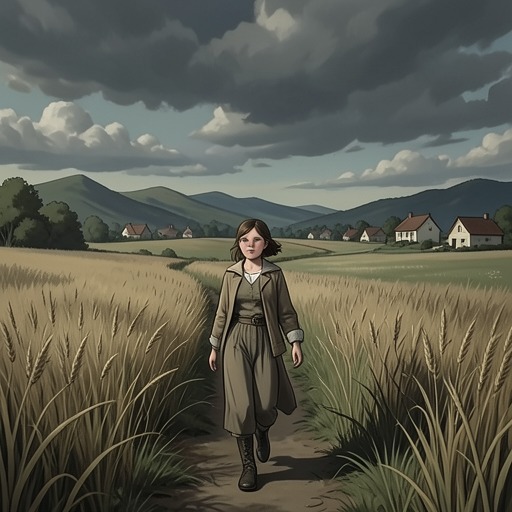
The child knows the route well enough to imagine finding The well with her eyes closed. She puts on a jacket from The deceased Kinsella boy’s clothes, takes The zinc bucket, and walks down the fields, past the cattle and electric fences. But familiarity does not make the path safe. After she crosses the stile, it no longer seems like the path they followed on her first evening there: the ground is now muddy and slippery. She goes on towards the little iron gate and down the steps, encountering a place she knows in conditions that have changed.
The water’s level makes that change unmistakable. On the first visit, she stood on the fifth step; now she stands on the first, with the water reaching up towards the step below her. Before lowering the bucket, she stands breathing and making sounds, listening to them come back. This pause gives the scene a suspended quality: rather than immediately completing the errand, she attends to the returning sounds at the edge of the water. Then she bends, lets the bucket float, and waits for it to swallow water and sink, as Edna does. The familiar method brings her close to the surface at precisely the moment when the well’s altered depth matters most.
The Fall and Its Immediate Aftermath
When the child reaches out with her other hand to lift the bucket, another hand, appearing just like hers, seems to come out of the water and pull her in. The account does not explain the image or establish that another person is present; it records the sudden perception through which the fall happens. The action is abrupt after the extended description of the path, the steps, and the bucket. The well shifts from a known source of household water into an immediate danger, while the handlike image makes the danger feel at once bodily and uncanny.
She comes back from The well soaked to the skin. Edna takes one look at her, turns very still, then gathers her up and carries her inside, where she makes up the child’s bed again. The following morning, although the girl does not feel hot, Edna keeps her upstairs and brings her hot drinks made with lemon, cloves, and honey, along with aspirin. John Kinsella calls it a chill. Edna voices her fear about what might have happened; John replies that she has said it many times and insists that nothing happened and the girl is well. His attempt to close the subject sits beside Edna’s visible alarm and attentive care. The immediate consequence is not a lengthy account of injury, but a period of watching, warmth, rest, and restrained disagreement.
Return and Significance
The child remains in bed, listening to the rain and reading. She follows the books’ plots closely and repeatedly invents different endings for them; when she dozes, her dreams gather images from the summer, including the lost heifer on the strand, cows without milk, and Mary stuck in an apple tree. These details place the well incident within a wider pattern of unease without claiming that the dreams explain it. On Sunday, after the intervening days of rest, she is allowed to get up. The household packs her things, changes into good clothes, eats supper, and sets out for home.
The fall’s later consequence is bound up with what the child chooses not to say. When Mary asks what happened, the girl answers that nothing happened. She understands that the experience is not something she needs ever to mention and recognizes the moment as an opportunity for silence. This does not erase the fall: as she runs down the lane toward John Kinsella, the memory of the bucket pulling her under flashes among other images from the summer. But the event is not made into a confession on returning home. Its significance lies partly in that distinction: the child has been frightened, taken inside, and cared for, yet she retains control over whether the incident becomes a story told to her mother. The water that briefly takes her under thus marks both vulnerability and a newly claimed privacy.