Wexford
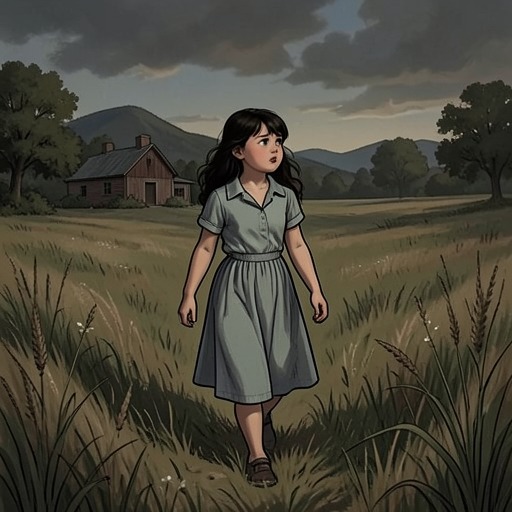
FosterWexford is both a destination and a lived-in rural landscape in the girl’s summer story: her father drives her there instead of taking her home, toward the coast from which her mother’s people came. The county’s roads, farms, household routines, and passing public news place the private world of her stay with John Kinsella and Edna Kinsella within a larger social landscape.
The journey into Wexford
The journey begins after first Mass in Clonegal on a hot Sunday. The car travels deep into Wexford toward the coast, passing Shillelagh and then Carnew. Each place carries a piece of the father’s rural history: in Shillelagh he lost the family’s red Shorthorn in a game of forty-five, and the man who won the heifer later sold her at the mart in Carnew. The route therefore introduces the county not as an abstract destination but as a network of villages, markets, roads, and remembered transactions.
From the back seat, the girl looks up through the rear window at alternating bare sky and cloud, trees crossed by ESB wires, and small flocks of birds. Her attention moves between the passing countryside and imagined possibilities at the Kinsellas’ home. Wexford is the place she is entering, but its meaning is still uncertain: she pictures both being welcomed and being put to work, and wonders what kind of house and bathroom await her.
Rural talk and household life
At the Kinsellas’ yard, Wexford also supplies the language of ordinary male conversation. John Kinsella and the girl’s father stand looking out over the yard before talking about the lack of rain, the fields’ need for it, a priest in Kilmuckridge who prayed for rain, and the unusually dry summer. Their conversation then turns to cattle prices, the EEC, butter mountains, lime, and sheep-dip. The subjects make the county’s agricultural conditions and economic concerns audible, while the men’s pauses, spitting, and movement around the car give the exchange its guarded, practical character.
The girl’s time in the household is shaped by small acts of care as well as unease. After the Kinsellas laugh about the possibility that she will soon be better dressed, Edna clears the table, washes a sharp knife under the tap, and puts it away; she then tells the girl it is time for a bath. The scene takes place within the domestic life of her Wexford stay, where reassurance is not always spoken directly and ordinary household tasks can carry the moment’s tension.
News beyond the county
Wexford is not sealed off from events elsewhere. At the table, John Kinsella reports that another striker has died during the night. Edna responds with sorrow, and John sets the news beside the immediate fact of being fed by two women on a fine day. His remark makes the meal a point of contrast between a man’s death by starvation and the care available within the household.
The television later broadens that contrast. During the nine o’clock news, the girl eats five of Edna’s homemade treats while the broadcast shows the dead striker’s mother, a riot, the Taoiseach, and people in Africa starving. Edna keeps the girl on her lap and strokes her bare feet as the report moves from one subject to another. The domestic intimacy belongs to the Kinsellas’ home in Wexford; the images on screen connect that intimate scene to suffering at a national and international distance.
Narrative significance
The county’s significance lies in how it gathers different scales of experience without making them interchangeable. The drive through named towns ties the girl to her father’s memories and to the practical world of livestock and markets. The talk of rain and farm costs anchors the Kinsellas’ household in a working countryside, while radio and television news carry deaths and hardship into its daily routines. Wexford thus frames the girl’s summer stay as both a particular family experience and a place where private care coexists with a wider world of need.