Bordeaux
HappeningBordeaux is both a remembered setting in Annie Duchesne’s relationship with P and the place she associates retrospectively with the beginning of her pregnancy. Its streets and interiors first belong to an ordinary summer visit; in memory, they become inseparable from the fact that she did not know what was happening to her, and from the growing distance between her and P.
The visit and its setting
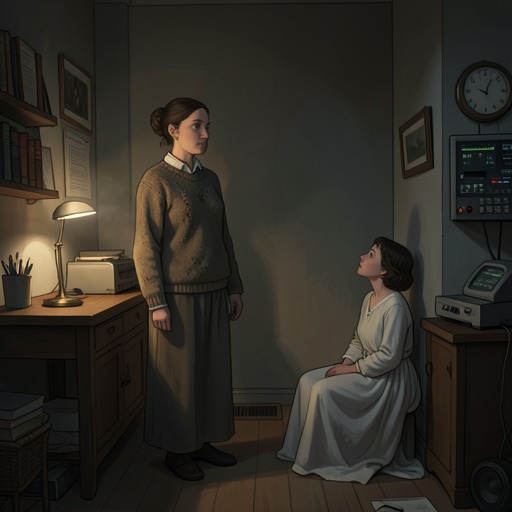
Duchesne met P, a political science student, during the summer vacation and went to see him in Bordeaux. The remembered city is rendered through particular places: a room facing Cours Pasteur, a narrow bed, the sidewalk tables of Café Montaigne, and a cinema where they saw the historical epic The Rape of the Sabine Women. These details establish Bordeaux not as a general backdrop but as a compact geography of the visit, preserved through objects and locations that would acquire a different meaning later.
A place reinterpreted by memory
In early October, Duchesne and P were together on several occasions. In retrospect, she connected that period with the risk indicated by the Ogino method, though she had not imagined that she would become pregnant. The images of Bordeaux consequently changed in significance: the room, café, and cinema came to represent the time when pregnancy was beginning without her knowledge. The city’s importance in the narrative lies in this reversal, as familiar scenes are reorganized around knowledge acquired afterward.
P and the distance from Bordeaux
After learning she was pregnant, Duchesne wrote to P to tell him that she did not intend to continue the pregnancy. His later letters came infrequently from Bordeaux and referred to problems obstructing a solution. She understood that she had been left to cope alone, while P concentrated on his examinations and future career. Although she sensed his lack of care, she did not end the relationship, fearing that a separation would add loneliness to her search for help; she also wanted to disturb the carefree routine she imagined he had resumed in Bordeaux. During the Christmas vacation, P did not tell their companions Annick and Gontran about the pregnancy or Duchesne’s intention to abort, and he seemed anxious not to spoil the trip by discussing it. He said he had found no solution in Bordeaux, a claim Duchesne doubted he had seriously pursued. The city thus remains present in the narrative even when she is elsewhere: it is the point from which his letters arrive and the place where, in her view, his promised efforts have produced little.
Narrative significance
Bordeaux appears chiefly through retrospective recollection rather than as the setting for the later search for an abortionist. Its concrete landmarks give form to a remembered interval whose meaning has been transformed by what followed. The contrast between the vivid specificity of the visit and Duchesne’s later isolation also makes the city a measure of the unequal burden she and P carried: while he remained associated with his life and plans in Bordeaux, she faced the consequences of the pregnancy and the search for a way to end it.