Paris
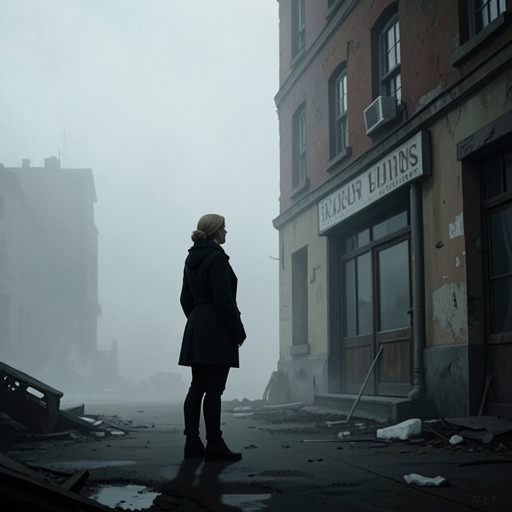
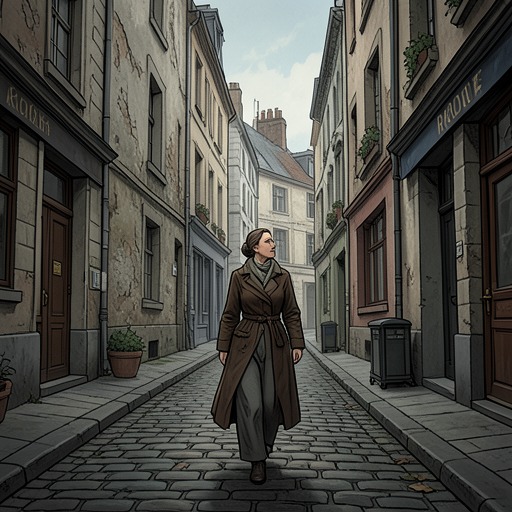
HappeningParis, and specifically its 17th arrondissement, is where the narrator’s search for clandestine abortion help becomes a journey through real streets and into a stranger’s home. Passage Cardinet is first an address passed on by LB, then the site of the narrator’s meeting with Madame P-R, and finally a place revisited years later. Its changing signs, remembered route, and inaccessible doorway give the location a double life: practical point of entry and material trace of an ordeal that writing returns to but cannot make ordinary.
An Address in the City
LB gives the narrator Madame P-R’s address at Impasse Cardinet, describing her as a middle-aged paramedic who works at a clinic. The word impasse summons, for the narrator, the sordid image of a backstreet abortionist found in popular literature. LB counters that the passage opens onto Rue Cardinet, a main street. The narrator knows Paris too little for the address to mean much; the name instead brings to mind Comptoir Cardinet, a jewelry store advertised daily on the radio. In this first account, the location exists partly as an ominous label and partly as a route made less forbidding by LB’s practical explanation.
When the narrator goes to arrange the meeting, the street sign reads Passage Cardinet rather than Impasse Cardinet. She takes the difference as encouraging. The shift in name does not erase the anxiety attached to the destination, but it alters the approach: the feared dead end gives way to a passage that, at least in name, belongs to the city’s ordinary street network.
The Journey and the Building
On Wednesday, January 8, the narrator travels to Paris to settle the date and Madame P-R’s fee. To avoid buying a train ticket, she hitchhikes from the bottom of Côte Sainte-Catherine while sleet is falling; in her state, taking extra risks seems of little consequence. A driver in a large car identifies it as a Jaguar, drives in silence with his gloved hands held at arm’s length on the wheel, and drops her at Neuilly. She continues by Métro.
By the time she emerges in Paris’s 17th arrondissement, it is dark. From Passage Cardinet she reaches the old, dilapidated building where Madame P-R lives, on the third floor. The account withholds the building number. The approach ends not at a public clinic but at a private apartment, reached by a stranger crossing the city to entrust her body to someone she has never met. The building thus marks the threshold between the narrator’s uncertain search and the practical arrangement LB has made possible.
Madame P-R’s Rooms
Madame P-R ushers the narrator through a dark, narrow kitchen into a slightly larger area furnished in an old-fashioned style; these are the apartment’s only two rooms. The confined domestic setting sharply contrasts with the narrator’s long journey and the gravity of the purpose for which she has come. Madame P-R asks when the narrator last had her period, says that three months is about the right time, and feels her stomach with both hands over her skirt. The meeting makes Passage Cardinet more than an address: it is the place where advice and arrangements become bodily examination and a concrete encounter with the person offering help.
Return and the Material Trace
At a later point, the narrator checks a map of Paris before returning to Passage Cardinet. She hopes to locate both the café where she waited before seeing Madame P-R and the church where she had once sat for a long time, Saint-Charles Borromée. The map shows only Saint-Charles-de-Monceau Church, which leads her to wonder whether it is the same church under a new name. Getting off the Métro at Malesherbes, she walks to Rue de Tocqueville and reaches the passage on a cold afternoon suffused with sunlight.
The street has changed in visible, layered ways. A new plaque stands at the entrance, while the former plaque, blackened and illegible, remains above it. The street is empty. At ground level, a large board identifies an association of Nazi camp survivors and deportees from the Seine-et-Oise Département; the narrator does not remember seeing it before. These details place the remembered route in a present-day street whose signs preserve earlier surfaces even as the narrator’s own recollection proves incomplete.
The building is still identifiable, but its door is locked and fitted with a digital entry system. The narrator walks down the middle of the street, looking toward a crack of light at the end of the alley; no one passes and no cars go by. She describes herself as feeling like a puppet re-enacting a scene without emotion. The return does not restore the earlier encounter or provide access to the apartment. Instead, Passage Cardinet becomes a stage on which the old route can be repeated while the locked entrance and the narrator’s estrangement register the distance between memory and the event it seeks to recover.