January 20–21, 1964
HappeningJanuary 20–21, 1964, is the date of the narrator’s clandestine abortion and its immediate crisis: a night of pain, an unexpected delivery, and urgent medical consequences. Remembered for years as an anniversary, the date later acquired a further meaning for her—as an ordeal she connected with her eventual desire to have children and with the act of putting the experience into words.
The Evening in Rouen
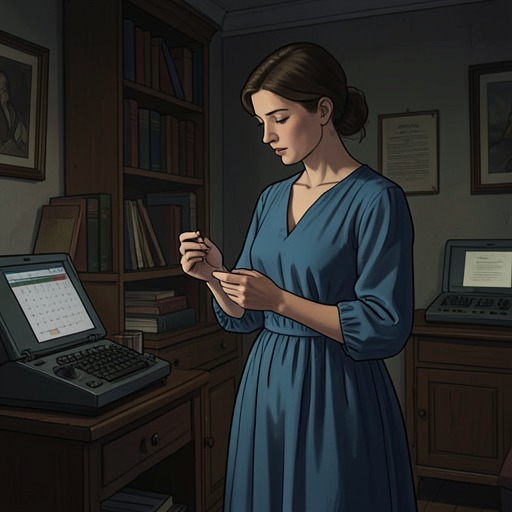
On the evening of January 20, the narrator returned to Rouen on the 16:20 train, a journey of about forty minutes. She had brought instant coffee, condensed milk, and packets of cookies. That night, she went with O to a screening of Battleship Potemkin at the Faluche film club. Increasing pain made it impossible for her to follow the film, and she left for the dormitory. O later came to sit beside her and suggested a breathing method used by pregnant women, but neither knew what would happen next.
The Night’s Turning Point
After midnight, the narrator delivered a three-month-old fetus in the dormitory bathroom and carried it to her room. O joined her there; together they faced the practical question of what to do and decided to cut the umbilical cord, using scissors O fetched. They examined the tiny body and cried silently. The memoir presents the scene as a convergence of life and death, but also as a moment of action for which neither woman had been prepared.
O’s presence is central to the night. The narrator notes that O’s bourgeois ideals and beliefs had not prepared her to sever the cord, yet O alone stayed beside her and acted as an improvised midwife in room 17 of the girls’ dormitory. The actions came to them as the only available course, rather than as the result of any prior plan.
Medical Emergency and Aftermath
The narrator’s condition worsened after the delivery: she was losing blood and became too weak to stand. Having initially believed the ordeal was over, she became afraid that she might die and demanded a doctor. O tried to wake the janitor, and the doctor on night duty eventually arrived. His questioning and demand that the narrator promise not to repeat the act turned the encounter into one of exposure and judgment. He directed her to Hôtel-Dieu Hospital rather than a clinic and took payment from her wallet while she could not get up.
The date also marks the start of an aftermath that did not end when the immediate emergency passed. The narrator describes returning only gradually to what she calls normal life; she resumed work on her thesis and took evening babysitting and switchboard jobs to repay the loan for the abortion. These later details place the night within a longer period of recovery and practical consequence, rather than treating it as an isolated episode.
Anniversary and Retrospective Meaning
For many years, the narrator celebrated the night of January 20–21 as an anniversary. In retrospect, she understood the ordeal and sacrifice as necessary to her eventual wish to have children and to accept reproduction within her own body. The date therefore holds together experiences that might seem opposed: the ending of a pregnancy and a later openness to having children.
The memoir also makes the date a point at which private experience becomes testimony. The narrator describes the event as an extreme human experience involving life and death, time, law, ethics, and taboo, and says that she has finished putting it into words. January 20–21 thus names both the night itself and the later work of giving that night a durable place in memory and writing.