Pregnancy
HappeningPregnancy in the narrator’s 1963–64 account is not simply a medical condition but an unwanted reality that divides ordinary student life from a future she refuses to accept. Its progression—from waiting for a period in Rouen, to diagnosis and a pregnancy certificate, to seeking help for an abortion—shows how bodily change, class, law, and the experience of time converge. In retrospect, the narrator treats the experience not as something made irrelevant by later legal change, but as an event whose consequences and memory demand telling.
Recognition and confirmation
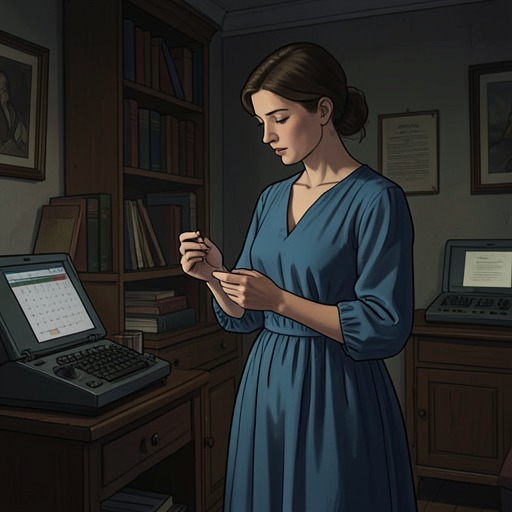
In October 1963, while living in Rouen and waiting for college to resume, the narrator waited more than a week for her period. She browsed department stores and bought stockings, but when she returned to her room in the girls’ dormitory she still hoped to find a stain on her underwear. Each evening she recorded NOTHING in large, underlined capitals in her diary; waking in the night, she instinctively understood that nothing had changed. Her attention narrowed around the possibility of bleeding, while the novel she had begun the previous year receded from view.
A visit to a film and an evening at the theater sharpened rather than relieved that preoccupation. Watching the young clerk in Il Posto, she became convinced that her bleeding would not return. At a performance of Huis Clos, she could recall little beyond Estelle, a blonde girl in a blue dress, and the Boy with red, lidless eyes. In her diary she described the contrast between the play and the reality she carried within her. These episodes show the pregnancy first as a feared certainty emerging through ordinary cultural outings, before it had been medically confirmed.
On November 8, the narrator went to see Doctor N. Earlier, she had encountered Jacques S and concealed the reason for her journey by saying she had a stomach ache and was going to a stomatologist. Doctor N told her that she was most certainly pregnant and explained that what she had taken for stomach pains were bouts of morning sickness. He prescribed injections intended to bring back the bleeding, while appearing doubtful that they would work. On returning to her accommodation, she recorded her condition as a nightmare.
The diagnosis connected the pregnancy to encounters with P, a political science student whom the narrator had met during the summer and visited in Bordeaux. She understood that the encounters in early October had occurred during a risky period according to the Ogino method, but had not believed that pregnancy would result. Later, the remembered scenes of Bordeaux—the room, the narrow bed, the café, and a cinema visit—became fixed in her mind as the setting in which she had been pregnant without knowing it.
A condition that altered time
After Doctor N’s examination, a university nurse gave the narrator two injections. During a weekend with her parents, a brief pink discharge led her to hope that her period had begun; she placed the stained clothing where her mother would see it, intending to misdirect her. Back in Rouen, Doctor N confirmed the pregnancy by telephone and sent a certificate stating a delivery date of July 8, 1964. The narrator imagined summer and sunshine, then tore up the certificate. The document made a future date concrete, but she rejected the future it described.
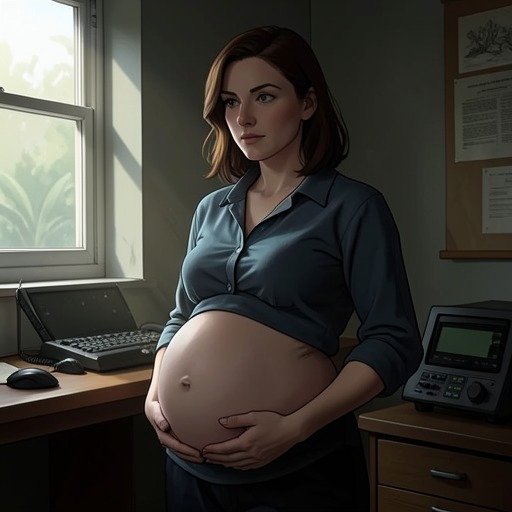
Pregnancy changed the meaning of time before it produced any settled sense of bodily reality. The narrator contrasts her former routine of classes, meals at the university canteen, coffee at La Faluche, and preparation for exams with a present that seemed to grow inside her and had to be ended. She describes herself as inhabiting a different world from the other girls, whose bellies were empty. Yet the condition could also become abstract: at two months, her body felt heavy and her clothes strained, but nausea had stopped, and at times she forgot she was pregnant. She listened to the Brandenburg Concerti as she had the year before and felt that nothing had changed.
Her diary records the division between physical knowledge and imagination: she could touch her belly and know the pregnancy was there, but could not imagine the child whose birth would come in July if time proceeded unchecked. The pregnancy was therefore both materially present and difficult to envisage as a future person. The narrator avoided ordinary terms that seemed to endorse that future, usually referring to it in her diary as it or that thing. Her account makes this language part of the experience: naming the condition in conventional terms would imply an outcome she had already decided against.
Class, law, and the search for help
The narrator connects the pregnancy to her social background without treating it as a simple consequence of her circumstances. Born to a family of laborers and storekeepers, she was the first in her family to pursue higher education; her baccalauréat and liberal-arts degree had helped her avoid factory work and commerce. They had not, in her understanding, erased the poverty associated with her working-class origins. She experienced the pregnancy as a stigma of social failure, linking it to a sense of fatality that education had not overcome.
At first, she considered abortion a feasible undertaking rather than an extraordinary act of courage. Stories from novels and local gossip had given her a vague knowledge of methods and of the possibility of finding a backstreet abortionist, though she knew such help could be expensive. This apparent familiarity did not mean she understood the danger. In retrospect, she emphasizes that an ordeal she had imagined as minor could cost her life. The contrast makes visible the gap between informal knowledge about abortion and access to safe, reliable care.
That gap was reinforced by the criminal framework set out in the book. The law threatened fines and imprisonment not only for people who performed abortions but also for women who had them, those who encouraged them, and people who advocated contraception; some could also lose the right to practise their profession. The narrator later argues that the end of legal prohibition does not automatically end the silence surrounding past clandestine abortions. In her account, secrecy shaped the conditions under which women sought assistance, while the legal danger extended beyond the person who was pregnant to those willing to help.
A week or so before Christmas, LB came to the narrator’s door after Jean T had told her that help was needed. LB supplied the address of Madame P-R, a middle-aged paramedic who worked at a clinic, and explained that she inserted a probe into the opening of the womb and that the patient then waited for a miscarriage. LB described the procedure as hygienic but disclosed that she herself had contracted septicemia; she advised taking antibiotics afterward. The narrator already had a prescription for penicillin. The fee was four hundred francs, and LB offered to lend her the money. An address and the loan seemed to turn an overwhelming problem into a set of practical steps, though the account makes clear that the apparent simplicity did not remove the risks.
Retrospective meaning
The narrator’s later interpretation brings the earlier uncertainty into a longer personal history. She recalls wavering between disbelief that this had happened to her and a conviction that it was bound to happen, and relates that feeling to earlier experiences and anxieties. The pregnancy is thus remembered both as a particular event in 1963 and as part of a life shaped by social expectations, knowledge, desire, and fear. The account does not reduce that history to a single cause; instead, it records the competing explanations through which she tried to understand what had happened.
In the later frame, the narrator insists that the fact that her clandestine abortion belongs to the past is no reason to dismiss it. She rejects the idea that the end of legal prohibition makes former victims’ silence unimportant: the event can remain concealed precisely because it is treated as finished. Writing allows her to return to the experience without substituting a general political formula for its specific reality. She describes the work as an effort to recover dates and images through her diary and engagement book, and to make the bodily experience intelligible in narrative.
The account ends by changing the meaning of the event without claiming that its ordeal was therefore simple or desirable. The narrator says that the experience and sacrifice were necessary to her eventual willingness to have children and accept reproduction in her body. She also says that recounting what happened has freed her from the guilt of having done nothing about the fact that it happened to her. Her proposed purpose for writing is to make her body, sensations, and thoughts into something intelligible and universal, so that her existence can meet the lives and minds of others. Pregnancy remains the hinge between a future she refused and a later act of authorship that gives the experience a form beyond private memory.