Heidi Returns Home from Frankfurt
HeidiHeidi Returns Home from Frankfurt turns a hidden illness into a homecoming: once the doctor recognizes that Heidi’s sleepwalking and declining condition are bound up with homesickness, she is sent back to her grandfather and the mountain life she longs for. The return reunites her with her blind grandmother, Alm-Uncle, Peter, and the goats, but its decisive measure is quieter than the joyful greetings: at home, Heidi sleeps soundly for the first time in a year.
Causes and Diagnosis
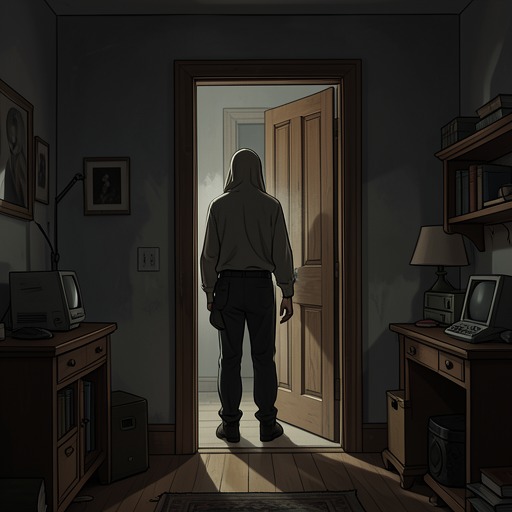
The event begins with the nighttime disturbance that has alarmed the household. After hearing the door open, Herr Sesemann and The doctor go into the hall with lights and revolvers. In the moonlight they find a motionless figure in a white nightgown: Heidi, barefoot, staring at them with wild eyes and trembling. The scene’s apparent threat becomes a medical discovery. The doctor identifies her as a sleepwalker and explains that she has been consumed by homesickness, growing emaciated despite living in a comfortable house.
The doctor connects the two problems rather than treating them as separate mysteries. He attributes the sleepwalking to overstimulated nerves and says that the remedy for both it and her homesickness is a return to her native mountain air. He warns that the illness is not one that pills and powders can cure, and that Heidi may recover if sent home at once. Herr Sesemann is distressed that she has become ill in his house without anyone recognizing it. At first he resists sending her away in such a weakened state, wanting the doctor to make her well before she leaves; the doctor’s warning changes his mind. They arrange her departure that night, and morning light is coming through the hall door by the time their discussion is over.
Departure from Frankfurt
When Herr Sesemann tells Heidi that she is going home that day, the news initially overwhelms her. She turns pale and can scarcely breathe. Her reaction makes the difference between the return she has longed for and the departure as it first appears to her: she has not yet understood that the household has decided to let her go. Once the arrangements are made, however, the journey becomes real.
Fraulein Rottenmeier objects when Heidi tries to take her little bundle, but Herr Sesemann insists that she may take whatever she likes, even kittens and tortoises. Heidi picks up the bundle with evident relief. At the carriage, Herr Sesemann asks her to remember him and Clara Sesemann; Heidi thanks him for his kindness and asks him to thank The doctor too. She remembers his reassurance from the previous night and understands that he helped make her return possible. Sebastian accompanies her, and the basket of provisions goes with them.
During the long railway journey, Heidi keeps the basket on her lap because it contains white rolls for her grandmother. She repeatedly peeks inside at them, and only gradually begins to imagine seeing her grandfather, the mountain, her grandmother, and Peter again. Her anticipation is shadowed by a fear: she asks Sebastian whether her grandmother might have died while she was away. That question gives the rolls their urgency. Heidi has carried them not as an ordinary gift, but as something she feared she might never get to deliver.
Reunion with Her Grandmother
In Dorfli, Heidi pushes through the bystanders who try to question her and hurries uphill with the heavy basket. Their talk reveals that the villagers have heard a very different account of Alm-Uncle from the one Heidi knows: they describe him as increasingly ill-tempered and silent, and assume she would not return if she had somewhere else to go. The miller corrects them, explaining that a gentleman brought her to Mayenfeld and that Heidi herself said she had had everything she needed but wished to return to her grandfather. The news that she chose to leave a luxurious home astonishes the village and is discussed throughout Dorfli that evening.
Heidi’s climb is driven by one anxious question: will her grandmother still be sitting in her usual place by the spinning-wheel? When she reaches the house, she is so breathless and trembling that she cannot speak at first. Her grandmother hears the familiar way she used to run in and longs aloud for her return. Heidi then identifies herself, falls beside the old woman, and clings to her hands. The grandmother recognizes her by her hair and voice, strokes her, and gives thanks that her prayer has been answered. The reunion reverses the separation in a few intimate gestures: the blind woman touches Heidi’s hair and face, while Heidi promises that she has come back and will visit every day.
Heidi immediately brings out the rolls and piles all twelve onto her grandmother’s lap. Their abundance contrasts with the hard bread the old woman has had to eat, and Heidi’s return is itself the greater blessing. She explains that she had been afraid her grandmother would die before she could bring the rolls or see her again. The scene joins the practical purpose of the gift to the deeper purpose of the journey: Heidi has returned not simply to a landscape, but to the people whose absence had made Frankfurt unbearable.
Return to Alm-Uncle and the Mountain
After seeing her grandmother, Heidi continues up the mountain with the basket. Brigitta warns her that Alm-Uncle is in a bad temper and hardly speaks, but the evening landscape soon absorbs her attention. The high peaks rise above the snowfield, which turns crimson in the setting sun; the slopes, rocks, and valley take on golden and rosy light. Heidi stops to look, weeps with happiness, and thanks God that she is home and that everything is as beautiful as she remembered. The scene gives visible form to the return: the mountain is not a consolation offered in place of home, but the place where Heidi recognizes that home has been restored to her.
She runs on to Alm-Uncle’s hut and throws her arms around her grandfather, repeating his name because she is too overcome to say more. Alm-Uncle’s first response is silence; his eyes become wet, and he draws her onto his knee. He asks whether she was sent away, and Heidi hastens to explain that Clara Sesemann, her grandmother, and Herr Sesemann were kind to her. She says that she could not bear being away from her grandfather and felt she could scarcely breathe, but had kept quiet because she did not want to seem ungrateful. She hands him the letter from Frankfurt, leaving him to read the explanation for himself.
The return also restores the ordinary pleasures that had been absent. Heidi drinks her grandfather’s milk eagerly and says it tastes better than anything else in the world. When she hears Peter’s whistle and sees the goats, the animals crowd toward her as she calls them by name. Little Swan and Snowflake rub against her, while Greenfinch pushes forward; even Peter stands speechless at first. He soon takes her hand and asks whether she will go out with him again. Heidi says she must first visit her grandmother the next day, but may go with him the day after. The goats follow her instead of staying with Peter, and she has to go inside the stall with her grandfather’s two goats so that Peter can gather the flock and get home.
First Night and Significance
Alm-Uncle has made Heidi’s bed with freshly gathered hay and clean sheets. She falls asleep with a happy heart, and her rest is sounder than it has been for a year. Her grandfather climbs the ladder repeatedly during the night to check on her and makes sure that hay stuffed into the round window keeps the moonlight from shining too brightly on her. The care is specific and watchful, but the night passes without the wandering that had frightened the household in Frankfurt. Heidi has no need to roam: the longing that had driven her sleepwalking has been answered by her return.
The episode thus resolves the household mystery by locating its cause in separation, and makes recovery a matter of restored belonging rather than a medical procedure alone. The doctor’s diagnosis prompts the journey; the white rolls carry Heidi’s concern for her grandmother; the mountain sunset marks the home she feared losing; and her first settled sleep confirms that she is once again among the people and places she missed. The return is not a rejection of the kindness shown in Frankfurt. Heidi explicitly acknowledges that kindness, even as the events show that affection and comfort there could not replace her grandfather, grandmother, and life on the mountain.