Attempt to Pawn Blanket
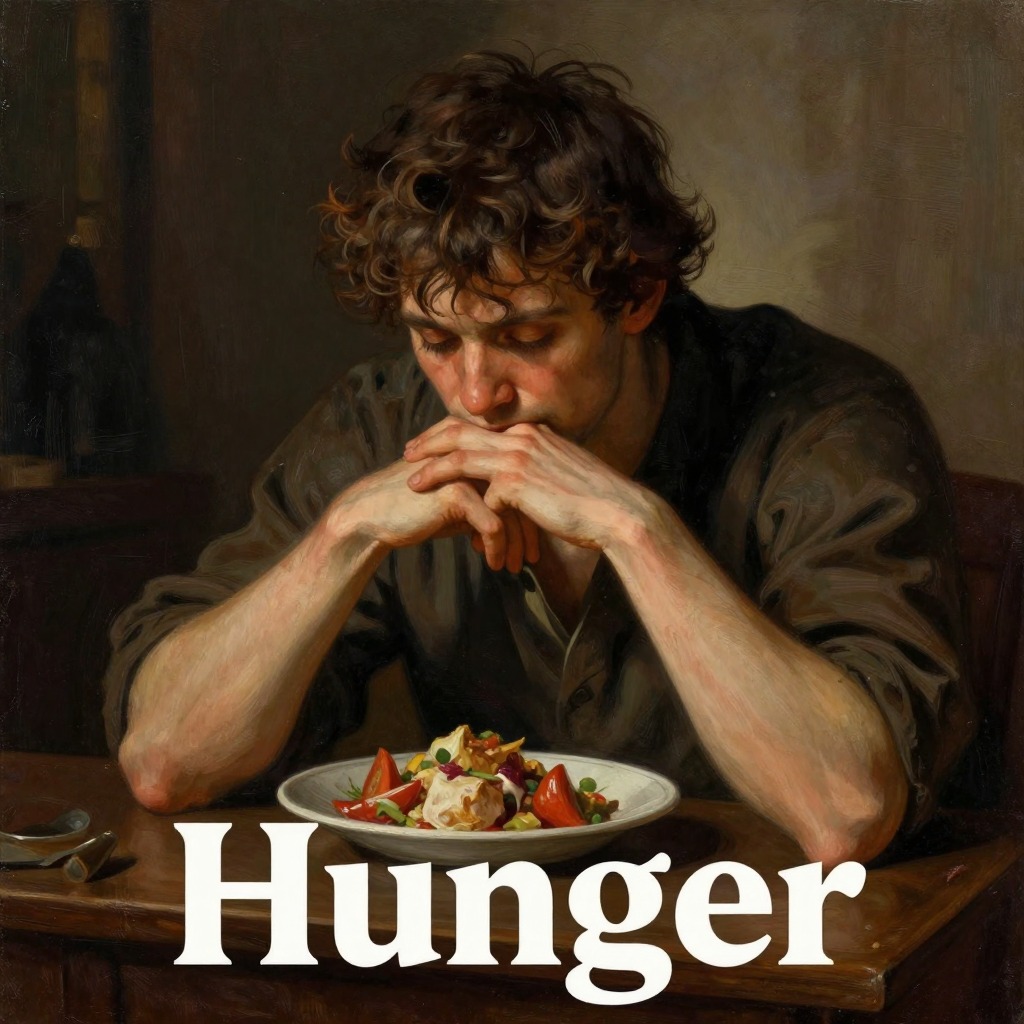
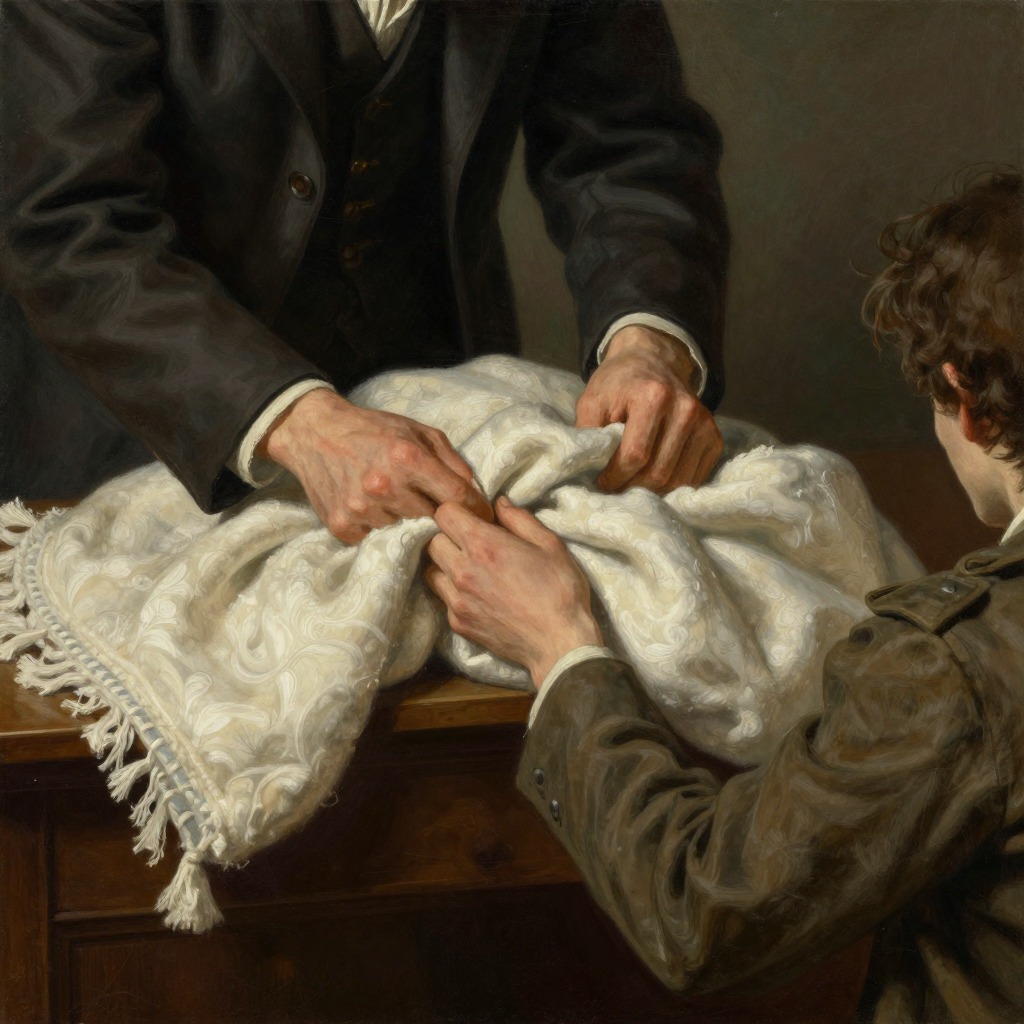
HungerThe Attempt to Pawn Blanket marks the narrator's most direct confrontation with the temptation to commit a dishonorable act for survival, a crisis that tests the very foundation of his identity as an honest man. After a day of fruitless begging and humiliating rejections, the narrator, driven to the edge of physical collapse, seizes upon the idea of pawning Hans Pauli's blanket—the only bedding he possesses, lent to him weeks earlier. The action unfolds as a rapid, desperate sequence: he rolls up the blanket, hurries to a pawnbroker at No. 5 Stener's Street, and enters the shop with a mixture of bravado and shame. Yet the pawnbroker, after a single glance, refuses even to consider it, declaring he "wouldn't have it in the house." The narrator's offer to accept as little as threepence is met with a flat dismissal. Defeated, he carries the blanket home, spreads it back over the bed, and smooths it out, trying to erase every trace of his intention. He then rationalizes the near-fall as a momentary weakness, a "relaxation in my inner self," and rejoices that he did not succeed in sullying his last hours with a dishonorable act. This episode is the culmination of a long day of degradation: earlier, he had been turned away by the grocer Christy, mocked by the shop assistant "Scissors," and reduced to begging at the music-seller Cisler's, where he was dismissed with a curt "no." The blanket, as a borrowed object, carries a specific moral weight—it belongs to Hans Pauli, a friend who had helped him, and pawning it would be a betrayal of that trust. The narrator's internal struggle is intense: he hears "half inward cries about a certain stain on my honour" but initially suppresses them, telling himself he is "no hero—no virtuous idiot." Only after the pawnbroker's refusal does he fully recoil, and his relief at having been prevented from committing the act is profound. He later reflects that he "could not possibly have been in my right mind at the moment when I came to the conclusion to commit this rascally trick." The blanket itself becomes a symbol of the line he will not cross, and his decision to keep it intact—even as starvation continues—reinforces his commitment to a code of honor that, however battered, still defines him. The episode also echoes earlier moments of temptation: he had previously considered stealing oats from the stable and had fantasized about taking a schoolgirl's savings, but each time he pulled back. The Attempt to Pawn Blanket is the most concrete of these tests, and its failure—or success, depending on perspective—leaves him both humiliated and purified. In the narrative's broader arc, this action foreshadows the later theft of five shillings from the provision shop, a fall that the narrator will confess to Ylajali and then attempt to undo by giving the money to a cake vendor. The blanket, meanwhile, remains with him, a threadbare emblem of his precarious hold on decency.