Pawn Waistcoat
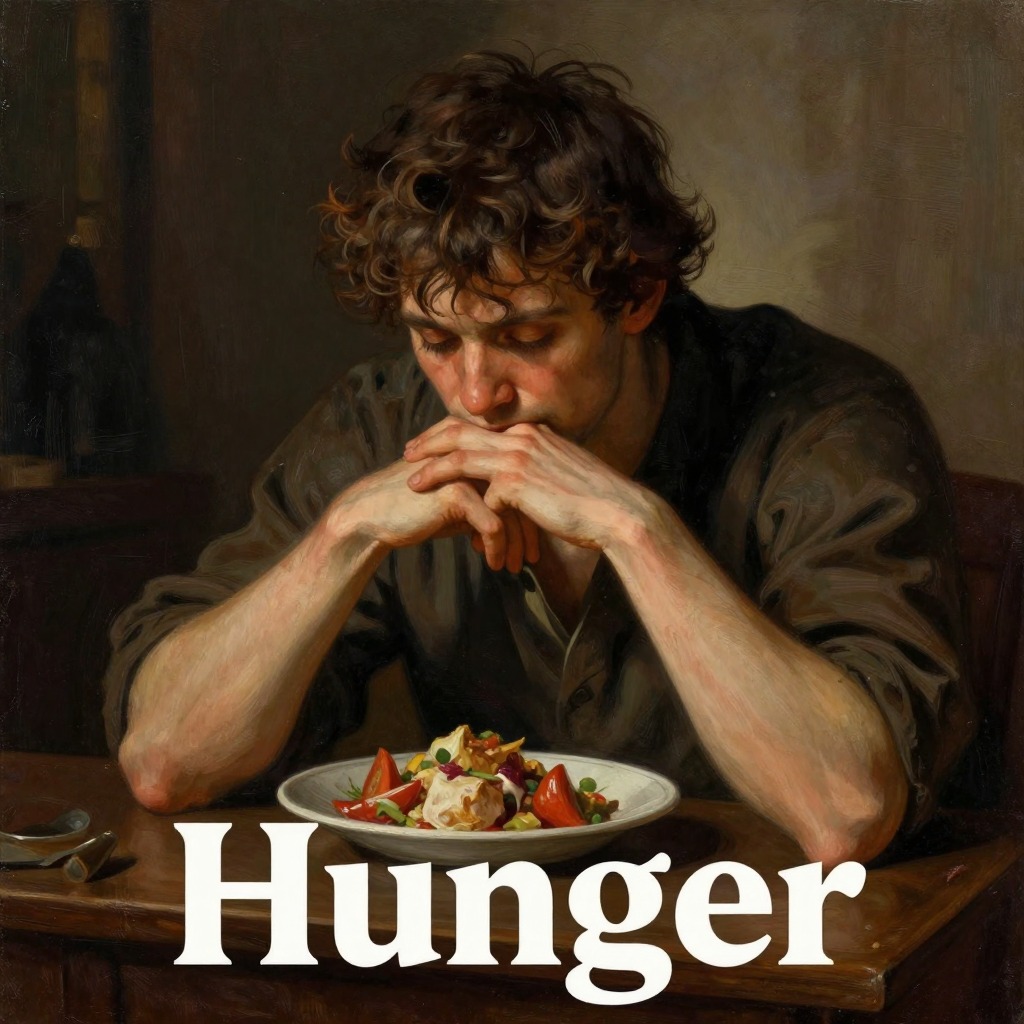
HungerOne morning in Christiania, the starving narrator, wandering the streets in a state of nervous exhilaration, encounters an old, lame man who has been shuffling ahead of him for ten minutes. The man, a shoe-binder who claims to have eaten nothing since the previous day in Drammen, asks for a halfpenny for milk. Impulsively, the narrator decides to help. He hurries to a pawnbroker on Pyle Street—one he has never visited before—and pawns his waistcoat for one shilling and sixpence. He returns to the beggar and gives him the money, declaring, "I am glad you applied to me first."
The Transaction and Its Aftermath
The pawnbroker, a man the narrator describes as an "obliging little man," gives him the money and a ticket. The narrator, feeling a surge of generosity, tells the beggar that if it were not for the waistcoat beginning to feel tight, he would not part with it. He then becomes irritated when the beggar scrutinizes him, particularly the knees of his trousers. The narrator, feeling his honor is being questioned, delivers a sharp dressing-down, insisting he is an "honest man, honourable to his finger-tips." He stamps on the pavement, swears at the man, and tells him to keep the money, claiming it might be an old debt. He then walks away, feeling freed from the "work-ridden plague."
A Brief Respite and Renewed Ambition
With the remaining money, the narrator buys a piece of cheese and a French roll for a sixpence. He eats greedily on a bench in the park, feeling a "sated quiet" that reminds him of the calm after a good cry. His courage rises, and he decides to write a treatise on "Philosophical Cognition" in three sections, planning to "crush pitiably some of Kant's sophistries." However, his ambition is immediately thwarted when he discovers he has left his pencil in the pocket of his pawned waistcoat. This trivial loss sends him into a fury, and he paces before his seat "like a maniac."
Thematic Significance
The act of pawning the waistcoat is a microcosm of the narrator's entire struggle. It is a desperate, impulsive gesture of charity that momentarily elevates his self-worth, yet it is built on the very poverty he is trying to escape. The transaction is not purely economic; it is a performance of honor and a negotiation of social standing. The narrator's subsequent anger at the beggar's scrutiny and his elaborate lies about the pencil reveal a fragile psyche, one that oscillates between grandiosity and humiliation. The episode underscores how hunger and poverty warp not only the body but also the mind, turning simple acts into complex dramas of pride and shame.