Mija's diary
JudasMija's diary is the private record through which Atalia learns how Mija's body was found after he disappeared during a convoy's fight on the road to Jerusalem. The account, written in fewer than ten words, preserves a fact that had otherwise been withheld from her; its brevity does not contain the horror so much as set it loose in her imagination, where the scene returns every day and night.
The Diary as a Record
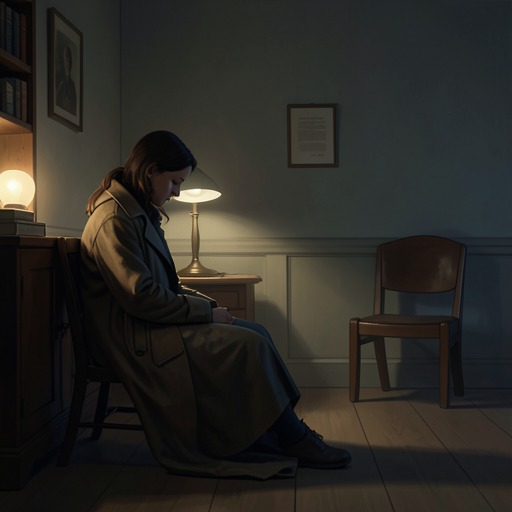
Mija's diary comes into Atalia's hands by chance. About a year after Mija's death, one of his comrades dies in a workplace accident in Galilee, and Atalia receives his diary. In it she finds a terse description of how Mija was found among the rocks. The account does not give her a complete narrative of his final hours, and its few words leave crucial details unknown. It is not a public report or an official military record: a comrade's private writing, passed to Atalia through the contingencies of another death.
That fragment becomes the only source Atalia identifies for the circumstances of Mija's mutilation. She says that neither she nor the household had been told what happened; the diary's brief entry breaks that silence after the fact. Its evidentiary power is therefore inseparable from its limits: it confirms the body's condition, but cannot establish whether Mija was mutilated before or after he died.
What the Entry Records
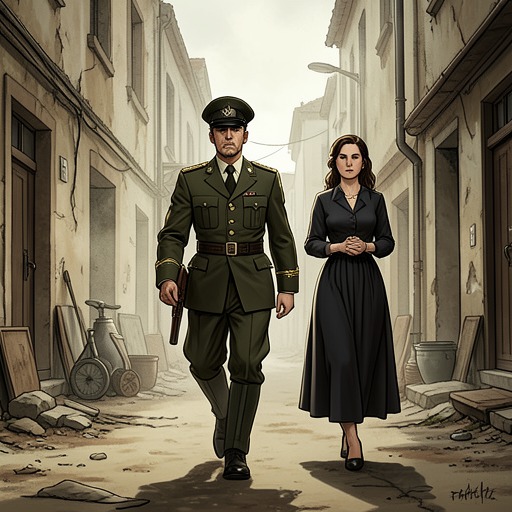
The diary concerns the aftermath of the convoy attack of April 2, 1948. Mija, then thirty-seven, had been sent to escort a convoy bound for Jerusalem along a winding road in a deep ravine, where Arab fighters fired on the vehicles from the surrounding heights. As darkness approached, some fighters descended to clear a stone barricade while others, including Mija, climbed the slope to attack sniper positions with homemade grenades. The assault was repelled, and the fighters withdrew at night carrying the dead and wounded—but not everyone.
Only after the convoy was nearing Jerusalem did someone realize Mija was missing. His friends searched the hills the following morning and found him among the rocks. Atalia's recollection, which connects the diary's few words to the larger sequence of the battle, cannot determine whether he remained alive and alone through the night, tried to crawl toward the road, or was discovered by his attackers after the others withdrew. She likewise cannot know whether his throat was cut before or after his genitals were severed. The diary preserves the discovery, not the unknowable order or experience of Mija's last hours.
Atalia's Recollection and Trauma
Atalia recounts the discovery in harrowing physical detail: Mija's lower body was stripped, his throat cut, and his severed genitals placed in his mouth. The uncertainty about when the mutilation occurred becomes a question that, she says, remains open. What she learned from the diary did not end with reading it. She repeatedly sees the image in her mind, with her eyes closed or open, at night and in the morning. The diary thus functions less as a completed explanation than as the point from which an unresolved image continually returns.
The document also marks the failure of the household's silence to protect Atalia. She had not been told what happened, and the account reached her only through a comrade's journal after that comrade's accidental death. The delay and the fragmentary disclosure shape her knowledge: the record gives her enough to imagine the violence, but not enough to settle its final uncertainties. In her telling, the diary's scant words endure as a witness to what was concealed and as the source of a memory she cannot put aside.
Private Writing and the Missing Archive
The diary's arrival belongs to a wider pattern in which private writing competes with official silence. Shmuel searches issues of Davar from June 1947 through February 1948 for traces of Shaltiel Abravanel, finding reports of Abravanel's request to present an individual proposal to the United Nations commission and, later, his removal from Zionist institutions over political disagreements. Yet the Jewish Agency's secret meeting protocols are classified for another forty years, and Abravanel's resignation letter is said not to have existed. After his death, his papers are also found to have been torn up and flushed away.
Against those blocked or destroyed records, Mija's diary survives by accident and carries a small but devastating piece of testimony. The contrast does not make the diary a complete account: it is itself fragmentary, and its writer is not identified by name in Atalia's recollection. But it shows how the history of the household reaches the present through scraps of private writing, while official records remain inaccessible and personal archives can vanish. For Atalia, the diary's few words disclose what the family had not said; for the reader, their brevity makes the limits and lasting force of such testimony inseparable.