Davar
JudasDavar, the Hebrew newspaper Shmuel Ash searches in the National Library’s newspaper archive, becomes a crucial but incomplete record of Shaltiel Abravanel’s political dissent. Its brief notices let Shmuel recover two pivotal facts: Abravanel sought to put a minority peace position before the United Nations Palestine commission, and he was subsequently removed from the Zionist leadership after opposing the course he believed would lead to war. Yet the notices’ obscurity, and the silences around them, make the newspaper as important for what it cannot establish as for what it reports.
The newspaper in Shmuel’s investigation
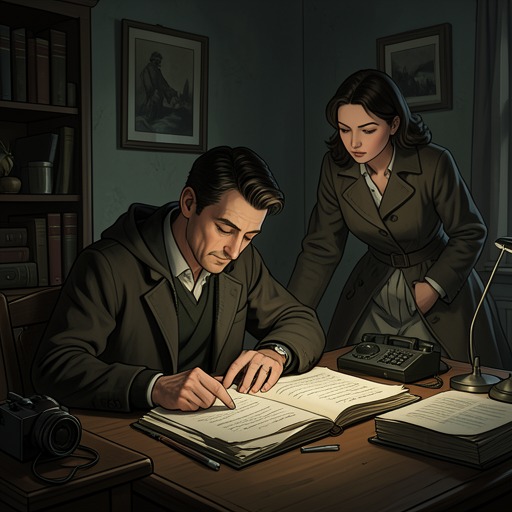
On a Tuesday morning during a break in the rain, Shmuel travels by bus to the National Library’s newspaper reading room at Givat Ram. He requests nine monthly volumes of Davar, from June 1947 through February 1948, and works through them with papers and a pen borrowed from Gershom Wald’s desk. Rather than approach the political history through a continuous account, he searches issue by issue for references to Abravanel, a former member of the Zionist Executive and the Jewish Agency leadership.
The form of his discoveries matters. The first relevant report is tucked near the bottom of an inside page. The next lies at the bottom of page three, beneath a notice urging owners of cargo vehicles to register with the National Guard. Davar preserves evidence, but in small, easy-to-miss items rather than a prominent narrative of Abravanel’s break with the institutions he served.
The June 1947 report
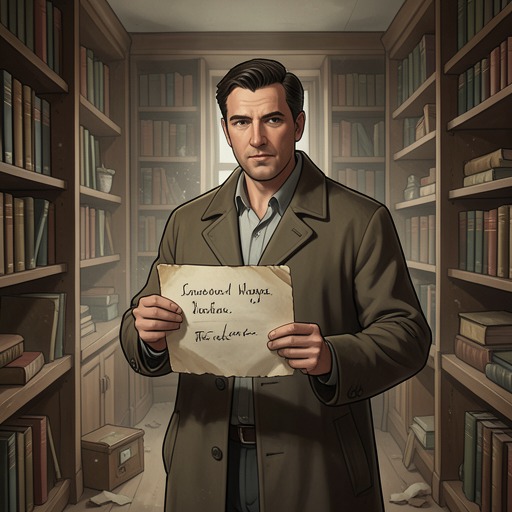
After about half an hour of searching, Shmuel finds a report dated June 18, 1947. It says Abravanel asked to appear before the United Nations Special Committee sent to clarify Palestine’s future. He wanted to present a minority view—indeed, his individual view—on the conflict between Jews and Arabs and to offer an original way to achieve peace.
The Jewish Agency leadership rejected the request. It argued that the Agency and the Zionist Executive had to address the committee in one voice rather than present conflicting positions. The report says Abravanel considered appearing anyway, but ultimately submitted to the majority’s discipline. It suggests that he may have been warned that an independent appearance would cost him his place in the principal institutions of Jewish society. Shmuel copies the report onto a sheet, folds it, and puts it in his shirt pocket: a small newspaper item becomes a tangible piece of the history he is trying to reconstruct.
A public record and its gaps
Shmuel continues through the September and October issues, reading about the committee and the proposed division of Palestine into Jewish and Arab states. But he finds no published account of a public debate over Abravanel’s position and no report of an appeal by him to either the Jewish or Arab communities. The absence does not explain what happened; it limits what the newspaper search can show. Davar gives Shmuel a trace of Abravanel’s political intervention, but not a public record of the argument or its reception.
This evidentiary limit becomes sharper when Shmuel tries to consult institutional records. A clerk at the Jewish Agency explains that the Zionist Executive’s documentation consists of transcripts of public speeches, whereas the secret protocols of the Agency leadership’s debates are classified and will remain so for another forty years. Set beside that barrier, the newspaper’s brief notices are unusually valuable: they are accessible evidence of a dispute whose fuller proceedings remain closed.
The November vote and December dismissal
The next morning, Shmuel finds the November 30, 1947, issue. Its headline announces that a Hebrew state will soon be established, following the United Nations Assembly’s decision by a majority of more than two-thirds. The accompanying report says the land will be divided into independent Jewish and Arab states with economic relations and a common currency, while Jerusalem and Bethlehem will be under international control. Reading the account moves Shmuel intensely; his eyes fill with tears, as if the decision described in the old paper had just taken place.
Later, among the December 1947 and January and February 1948 volumes, he discovers the second report about Abravanel. Dated December 21, it says that the previous day he had been removed from his positions in the Zionist Executive and the Jewish Agency leadership because of disagreements with his colleagues. Abravanel declined to answer the reporter’s question about the reasons for his dismissal. The article nevertheless conveys his objection: he believed the course chosen by David Ben-Gurion and others led inevitably toward a bloody war between the two peoples, with no clear victor, and risked the lives of the 600,000 Jews in the land. He still saw some opening for a historic compromise between the peoples living there. Davar identifies him as a lawyer and Arabist who had been near the top of both institutions for almost nine years.
The newspaper against later testimony
The reports allow Shmuel to date Abravanel’s dissent and removal, but they do not settle the question of how his departure was handled. Gershom Wald later tells him that Abravanel was forced to choose between submitting a resignation letter within twenty-four hours or being formally expelled, and that the reasoned letter was hidden. According to Wald, no newspaper would publish it; years later, Atalia searched the Zionist archive for the letter or a copy and was told that no such letter had ever existed. This recollection describes suppression that the notices Shmuel finds do not themselves document.
Davar thus occupies a precise place in the novel’s account of historical knowledge. Its pages preserve public traces of a minority position, a threatened war, and a dismissal; the buried placement of those notices and the lack of a reported public debate leave the record fragmentary. Read beside the sealed protocols and Wald’s later account of the missing letter, the newspaper is neither a complete authority nor a disposable source. It is the surviving public surface of a conflict whose private and institutional record remains partly inaccessible.