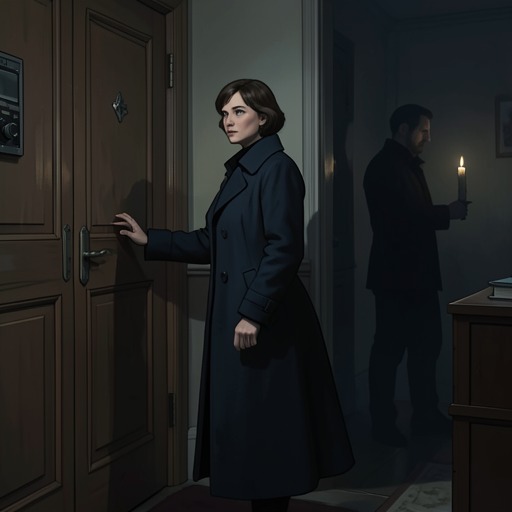
Dubois's Robbery and Poisoning Plot Against Dubreuil
JustineDubois’s Robbery and Poisoning Plot Against Dubreuil is a failed theft that becomes a fatal act of retaliation. Dubois plans to use Therese to draw a wealthy young tradesman away from his room, but Therese secretly warns him instead. When Dubois finds that the intended target’s room is guarded, she poisons him, robs Therese, and flees toward Turin. Dubreuil dies after expressly clearing Therese of blame; the plot saves her intended victim from the theft, but it costs him his life and returns Therese to destitution.
The proposed theft
Dubois identifies Dubreuil as a young tradesman from Lyon who has been dining at the inn for four or five days. She tells Therese that he is enamored of her and carries eight hundred thousand francs in gold or paper in a small coffer near his bed. Her scheme depends on turning his interest into an opportunity: Therese is to let him believe she will receive his attentions, accept a drive with him beyond the town, and keep him away while Dubois searches his room. Dubois intends to have the stolen property sent to Turin before she leaves Grenoble, then to depart openly with Therese and pay her a thousand louis in Piedmont.
Therese agrees outwardly, but not in order to participate. She means to alert Dubreuil and is reluctant to report Dubois because she remembers owing her freedom to her ten years earlier. Her position is therefore more conflicted than a simple choice between accomplice and informant: she wants to prevent a crime while avoiding, if possible, the punishment of the woman who once helped her. She hopes to find a way to stop the theft without exposing Dubois to prosecution.
Therese warns Dubreuil
On the day planned for the outing, Dubois invites both Therese and Dubreuil to dine in her room. After the meal, the two go downstairs to summon the carriage. Alone with Dubreuil for a moment, Therese urgently asks whether he has a reliable friend at the inn and tells him to have that friend stay in his room while they are out. She warns him that the woman with whom they have dined is a bandit who means to rob him during their absence, and insists that he hand over his room key before they leave.
Dubreuil follows her instructions. His associate remains in the room, preventing Dubois from finding it unguarded. Once the carriage is underway, Therese explains the whole scheme and recounts the misfortunes that brought her into Dubois’s company. Dubreuil responds with gratitude and sympathy, not suspicion: he recognizes that her warning has protected him from losing his savings and offers to marry her. He proposes that she accompany him to Geneva, where he plans a substantial investment, and says he will give her his name there if she wishes.
An offer of safety overturned
The proposal briefly offers Therese a way out of poverty and insecurity. She does not accept without reservation: she wants Dubreuil to know enough of her circumstances that he will not later regret his offer. He is grateful for her honesty and presses his proposal more warmly. The passage thus places an unexpectedly generous future directly beside the consequences of Therese’s decision to act honorably. She has saved Dubreuil’s money and gained his trust, but the prospect of security is overturned before it can be realized.
After they have travelled two leagues from Grenoble and are about to stop beside the Isère River, Dubreuil becomes violently ill. Therese has him returned to the city, where he must be carried to his room. His associate is still there, as instructed, and a doctor is called. The diagnosis is poisoning. The sequence converts a planned theft into a deadly plot: Dubois’s failure to reach the guarded room does not end the danger to Dubreuil.
Dubois’s retaliation and escape
Therese rushes to Dubois’s room and finds that she has gone. Therese’s own armoire has been forced open, and the little money and belongings inside have been taken. She is told that Dubois left three hours earlier in the direction of Turin. The theft from Therese follows the failure of the original plan: Dubois has been prevented from reaching Dubreuil’s room, but has instead harmed the person who warned him and taken what little she possessed.
Therese reconstructs Dubois’s likely design from the circumstances. Finding Dubreuil’s room occupied, Dubois may have poisoned him at dinner so that, on their return, his grave condition would distract him from pursuing her and give her time to escape with his fortune. His death would also make Therese appear more suspect than the departing woman. Therese acknowledges that the evidence does not directly disclose every step of the scheme, but the theft, poisoning, and flight together make her accusation compelling within the episode. Dubois reaches the road toward another country while Therese remains in Grenoble, unable to prevent the crime or pursue its author.
Death, vindication, and renewed poverty
Therese returns to Dubreuil’s room but is initially forbidden to approach his bedside because he is dying and occupied with his religious duties. Before his death, however, Dubreuil exonerates her, assures those present that she is innocent, and expressly forbids them to pursue her. He then dies. His final intervention prevents the immediate suspicion against Therese from becoming a formal pursuit, but it cannot reverse either his death or the loss of her belongings.
Dubreuil’s associate, Valbois, later hears Therese’s account of both the planned robbery and what happened to her. He sympathizes with her, mourns Dubreuil, and blames her scruples for not making a complaint as soon as Dubois’s intentions became clear. They judge that Dubois, only four hours from another country and a place of safety, will be gone before they can organize a pursuit. A chase would also be costly, and the innkeeper, whose own position is compromised, might defend himself aggressively and leave Therese in greater danger. The episode therefore ends without arrest or recovery: Dubois has escaped, Dubreuil is dead, and Therese’s decision to protect him has not secured her a lasting refuge.
Narrative significance
The episode turns on a sharp reversal between intention and outcome. Therese’s warning defeats the robbery’s immediate conditions: Dubreuil’s room is guarded, and his associate remains inside. Yet the protection she arranges cannot stop Dubois from retaliating, and the young man whose gratitude seemed to promise Therese a different life dies before the offer can be fulfilled. The contrast makes her moral action consequential without making it a means of safety.
The plot also exposes the practical cost of Therese’s hesitation to report Dubois. Her motive is not complicity but gratitude toward someone who once secured her freedom; she tries to prevent harm while sparing her former rescuer the consequences of prosecution. In the end, that attempt to find a morally acceptable middle course leaves Dubois time to act and escape. Dubreuil’s deathbed vindication establishes Therese’s innocence, but the episode’s material outcome is unchanged: the perpetrator escapes, the intended victim is lost, and Therese is again left without money or dependable protection.