Juliette and Justine Become Orphans and Part Ways
JustineJuliette and Justine Become Orphans and Part Ways is the formative rupture that leaves the sisters poor, parentless, and on opposing moral trajectories. Their father’s bankruptcy and death, followed a month later by their mother’s death, reduce their inheritance to one hundred crowns apiece; released from the convent, the sisters reject one another’s proposed ways of surviving and part without promising to meet again.
Loss and release
A catastrophic bankruptcy drives the girls’ father into circumstances from which he does not recover; he dies of grief. Their mother dies a month later. Two distant relatives discuss what should become of the orphans, but creditors have consumed most of the family’s legacy, leaving each sister only a hundred crowns. No one volunteers to take responsibility for them. The convent opens its door, returns their small dowries, and leaves them to make their own way.
The apparent freedom of that release is inseparable from deprivation. The girls have been educated together in a celebrated abbey, but education and upbringing offer no continuing protection once their parents and family resources disappear. They are given twenty-four hours to leave and must decide how to live with little money and no dependable support.
Two answers to insecurity
Juliette, already confident and delighted to be her own mistress, spends only a brief moment trying to console Justine. When her sister’s tears continue, she turns from comfort to rebuke. She argues that a person should be troubled only by what affects her personally, and that physical pleasure can suppress painful moral feeling. In her view, wisdom means increasing pleasure rather than deepening sorrow, and sensibility is a liability that benefits others while bringing its possessor distress.
Her practical proposal follows from that philosophy. Juliette points to a neighbor’s daughter who has left home and is now well maintained, and disputes that marriage is the route to a woman’s happiness. She presents libertinage as a way to secure support while retaining leverage through a choice of lovers. This is not merely a general argument: Juliette urges her sister to share the course she intends to take.
Justine refuses. The suggestion horrifies her, and she says she would rather die than accept what she regards as ignominy. Juliette’s reasoning cannot displace Justine’s moral convictions; the disagreement makes their different responses to poverty explicit before either has begun an independent life.
Separation and its consequences
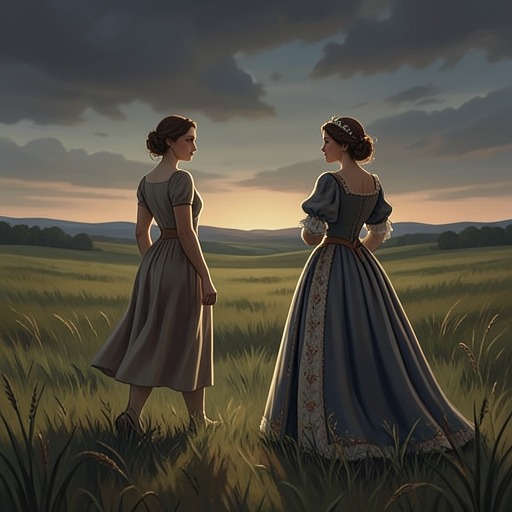
Once each has declared her intentions, the sisters part without making any promise to see one another again. The separation is presented as mutual as well as practical: Juliette doubts that she could receive a poor, virtuous sister without risking her own ambitions, while Justine fears that living with Juliette would endanger her morals. On the following day they leave the convent separately, turning a shared family catastrophe into two distinct paths.
Justine’s first attempt to find help shows how little her inheritance can protect her. She seeks the woman who had once cared for her as a child and asks for employment, but the woman scarcely recognizes her and drives her away. Later, recounting her early misfortunes to Madame de Lorsange, Justine recalls approaching Monsieur Dubourg as a poor orphan of not yet fourteen, hoping his wealth and influence might help her find a place. Her story thus gives the sisters’ parting a continuing material consequence: Justine’s refusal of Juliette’s proposal does not lead to security, but into a succession of precarious efforts to survive.
Narrative significance
The opening reversal is stark: two girls raised together and educated in the same convent inherit neither family protection nor meaningful financial security, and respond to that loss in opposite ways. Juliette treats moral feeling as an obstacle to pleasure and advancement; Justine holds to it even when it offers no practical shelter. The contrast frames the novel’s recurring tension between virtue and vice, while their separate departures establish the conditions for the sisters’ later, unequal experiences of dependence and power.