Event 1
Juliette and Justine Become Orphans and Part Ways

[Juliette and Justine Become Orphans and Part Ways](entity:event-recall-event-juliette-justine-9887689595e7) is the formative rupture that leaves the sisters poor, parentless, and on opposing moral trajectories. Their father’s bankruptcy and death, followed a month later by their mother’s death, reduce their inheritance to one hundred crowns apiece; released from the convent, the sisters reject one another’s proposed ways of surviving and part without promising to meet again.
## Loss and release
A catastrophic bankruptcy drives the girls’ father into circumstances from which he does not recover; he dies of grief. Their mother dies a month later. Two distant relatives discuss what should become of the orphans, but creditors have consumed most of the family’s legacy, leaving each sister only a hundred crowns. No one volunteers to take responsibility for them. The convent opens its door, returns their small dowries, and leaves them to make their own way.
The apparent freedom of that release is inseparable from deprivation. The girls have been educated together in a celebrated abbey, but education and upbringing offer no continuing protection once their parents and family resources disappear. They are given twenty-four hours to leave and must decide how to live with little money and no dependable support.
## Two answers to insecurity
[Juliette](entity:character-recall-character-juliette-99dd48fdc5e1), already confident and delighted to be her own mistress, spends only a brief moment trying to console [Justine](entity:character-recall-character-justine-cc9f00a8d838). When her sister’s tears continue, she turns from comfort to rebuke. She argues that a person should be troubled only by what affects her personally, and that physical pleasure can suppress painful moral feeling. In her view, wisdom means increasing pleasure rather than deepening sorrow, and sensibility is a liability that benefits others while bringing its possessor distress.
Her practical proposal follows from that philosophy. Juliette points to a neighbor’s daughter who has left home and is now well maintained, and disputes that marriage is the route to a woman’s happiness. She presents libertinage as a way to secure support while retaining leverage through a choice of lovers. This is not merely a general argument: Juliette urges her sister to share the course she intends to take.
Justine refuses. The suggestion horrifies her, and she says she would rather die than accept what she regards as ignominy. Juliette’s reasoning cannot displace Justine’s moral convictions; the disagreement makes their different responses to poverty explicit before either has begun an independent life.
## Separation and its consequences
Once each has declared her intentions, the sisters part without making any promise to see one another again. The separation is presented as mutual as well as practical: Juliette doubts that she could receive a poor, virtuous sister without risking her own ambitions, while Justine fears that living with Juliette would endanger her morals. On the following day they leave the convent separately, turning a shared family catastrophe into two distinct paths.
Justine’s first attempt to find help shows how little her inheritance can protect her. She seeks the woman who had once cared for her as a child and asks for employment, but the woman scarcely recognizes her and drives her away. Later, recounting her early misfortunes to [Madame de Lorsange](entity:character-recall-character-madame-de-lorsange-6f22533c4d7d), Justine recalls approaching Monsieur Dubourg as a poor orphan of not yet fourteen, hoping his wealth and influence might help her find a place. Her story thus gives the sisters’ parting a continuing material consequence: Justine’s refusal of Juliette’s proposal does not lead to security, but into a succession of precarious efforts to survive.
## Narrative significance
The opening reversal is stark: two girls raised together and educated in the same convent inherit neither family protection nor meaningful financial security, and respond to that loss in opposite ways. Juliette treats moral feeling as an obstacle to pleasure and advancement; Justine holds to it even when it offers no practical shelter. The contrast frames the novel’s recurring tension between virtue and vice, while their separate departures establish the conditions for the sisters’ later, unequal experiences of dependence and power.
Event 2
Juliette谋杀德洛桑热伯爵

[Juliette](entity:character-recall-character-juliette-99dd48fdc5e1)’s murder of the Comte de Lorsange converts a private ambition into the hidden crime that secures her title, wealth, and freedom from marriage. Its significance lies not only in her calculated rise, but in the story’s wider contrast between a powerful offender who escapes scrutiny and vulnerable people whose poverty makes them easy to accuse and punish.
## Background and Motive
By the time she was twenty, Juliette had already moved from dependence into fashionable society. An elderly, wealthy admirer had helped establish her there, and she learned to turn that position to her advantage. The Comte de Lorsange, a gentleman from Anjou about forty years old, became captivated by her and gave her his name, an income of twelve thousand pounds, a house, and servants. He also promised her the remainder of his fortune if he died first.
Marriage offered Juliette security and public standing, but she wanted to enjoy wealth without being bound by a husband. The narrative presents her decision as the product of dangerous counsel and reading, as well as a desire for pleasure and independence. It also marks the change from an imagined transgression to an enacted crime: the thought first takes shape in a moment of heightened desire, then becomes a plan.
## The Murder and Its Immediate Consequences
Juliette develops the scheme during what the narrative describes as a state in which desire overrides restraint. The account distinguishes this private imagining from the act itself: a fantasy might have remained an abstract wrong, but Juliette carries the idea further and puts it into effect. She does so in such secrecy that she avoids pursuit and conceals the evidence of the murder.
With the Comte dead, Juliette becomes both a widow and a countess. She returns to her former way of life, now with an income and a recognized place in society. Her conduct becomes less openly indecorous, but the change is one of presentation rather than principle: the narrative stresses that her new respectability coexists with the same transactional use of her position.
## Public Reputation and Social Protection
The contrast between Juliette’s ascent and the treatment of poorer accused people gives the murder its broader social force. In the case of [Justine](entity:character-recall-character-justine-cc9f00a8d838), an employer plants a diamond in her room after she resists his attempt to involve her in wrongdoing. The authorities treat the discovery as decisive, while her poverty and lack of influence count against her defense. Her explanation of the employer’s motive is dismissed, and she is convicted despite her innocence.
Later, Justine is nearly condemned again when a brand associated with a criminal gang is found on her. A magistrate listens to her account, and testimony from the counterfeiters helps establish that she was an unwilling participant; she is acquitted and released. The contrast with Juliette is stark: Juliette’s concealed murder brings her title and fortune, while Justine’s involuntary association with crime repeatedly threatens her life.
## The Wider Pattern of Impunity
The narrative also connects individual crimes to systems that exploit poverty. A wealthy trafficker describes how commercial influence and economic fluctuations can deepen scarcity, enlarge the class of people in need, and make them easier to recruit or exploit. This account places private wrongdoing within a broader world where the powerful can use social and economic leverage while those with few resources bear the consequences.
That pattern persists in the ending of Justine’s legal ordeal. Royal letters annul the proceedings against her, restore her standing as an honest citizen, and award her an annual income. Yet the officials who abused their power have already received new appointments, and influential families quiet the resulting scandal. Juliette’s success and Justine’s delayed vindication therefore belong to the same unequal order: concealed or protected wrongdoing can prosper, while justice for the vulnerable depends on exceptional intervention.
Event 3
德于阿尔潘诬陷Therese盗窃并使其获罪

Du Harpin’s framing of [Therese](entity:character-recall-character-therese-e6f71bb95cb7) for theft is the punishment for her refusal to become his accomplice. By planting a diamond in her room and relying on his standing as an employer, he turns her honest resistance into a criminal charge that a court accepts without seriously weighing her account. The episode establishes a recurring injustice in Therese’s story: the vulnerable are swiftly condemned, while wealth and influence protect those who exploit them.
## The refusal and the frame
Therese recounts that Du Harpin had urged her to steal a neighbor’s box, giving her two lock picks and promising an extra crown for two years in return. He defended theft as useful and relatively seldom punished, and invoked examples of societies that honored it as a demonstration of courage and skill. Therese rejected the proposal and challenged him for attempting to corrupt a servant. Du Harpin then claimed that the suggestion had merely been a test, a lie Therese recognized.
Her refusal left her in a perilous position: she had become an enemy to a man whose criminal proposal she could expose. Rather than leave his house, she remained there. More than a month passed without any apparent sign of resentment; Du Harpin waited until the end of her second year in his service before acting against her.
## Arrest and conviction
One evening, after Therese had retired to her room, Du Harpin arrived with four watchmen and accused her of stealing a diamond worth a thousand crowns. He insisted that it would be found in her room or on her person. The diamond was discovered in her mattress, and the watchmen seized and imprisoned her. Therese protested that Du Harpin knew she had not stolen it, but his uproar and the planted evidence overwhelmed her denial.
The proceedings moved quickly. Therese says that the lawyer assigned to her had only a brief, formal role, while the court treated her employer’s accusation and the diamond in her room as decisive proof. When she tried to explain that Du Harpin had proposed a theft and was retaliating against her refusal, the court construed her account as an accusation against a supposedly reputable man. His standing counted for more than her testimony.
## [Poverty](entity:state-recall-state-0dc074e24d58), prison, and the larger pattern
Therese presents the conviction as an instance of a justice system that treats poverty itself as evidence of guilt. In her account, an accused person without influence or protection is presumed to have committed the crime that their circumstances supposedly make likely; without money or title to establish innocence, innocence is dismissed as implausible. Her case therefore turns not only on a planted diamond but on the disparity between Du Harpin’s credibility and her own.
Transferred to the [Conciergerie](entity:location-recall-location-conciergerie-24e42eca0f41), Therese faced the prospect of a capital sentence for a crime she says she did not commit. There she encountered [Dubois](entity:character-recall-character-dubois-a7031019ef9c), who was also awaiting execution and arranged a prison fire as a means of escape. Therese’s account thus links the theft conviction to a further reversal: after legal proceedings fail to hear her defense, her escape from prison depends on another criminal act, not on judicial correction.
## Repetition and eventual redress
The false charge anticipates later episodes in which Therese is accused, detained, or threatened with punishment while powerful wrongdoers evade consequences. After the [Marquise de Bressac](entity:character-recall-character-marquise-de-bressac-4846c62276eb)’s death, for example, the [Comte de Bressac](entity:character-recall-character-comte-de-bressac-3bb395d2ca74) blamed the absent Therese for poisoning her, and the family left him in possession of the inheritance. Much later, Therese was again convicted on false testimony; [Monsieur de Corville](entity:character-recall-character-monsieur-de-corvill-c7fdedc9fb7e) intervened, took responsibility for her innocence, and arranged for her custody at his château while seeking official review.
That intervention ultimately brought legal redress unavailable to Therese when Du Harpin first framed her. Royal letters nullified the proceedings against her, restored her standing as an honest citizen, silenced the tribunals that had defamed her, and granted her an annual pension. Yet the officials and influential families implicated in her persecution largely escaped consequences. Set against that outcome, the theft case establishes the story’s central contrast between the force of evidence when wielded by the powerful and the difficulty of making an innocent person’s testimony count.
Event 4
杜布瓦纵火劫狱并带Therese越狱
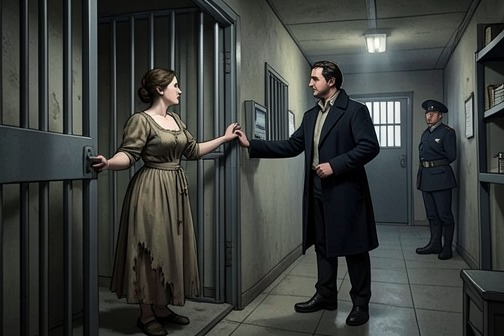
[Dubois](entity:character-recall-character-dubois-a7031019ef9c)’s prison fire and escape with [Therese](entity:character-recall-character-therese-e6f71bb95cb7) reverse the apparent verdict of her trial: after Therese is condemned on fabricated evidence, a criminal act saves her from execution. The rescue offers freedom without security. Dubois treats survival as permission to pursue profit by any means, while Therese insists that gratitude for her life does not oblige her to join a criminal life.
## Causes and Background
Therese’s imprisonment follows her refusal of her employer, [Monsieur du Harpin](entity:character-recall-character-monsieur-du-harpin-39a82be726bc), who retaliates by planting a diamond in her mattress and accusing her of theft. The authorities treat the discovered ring as decisive evidence; her account that the accusation is revenge for resisting his advances is dismissed as recrimination. Because du Harpin has a reputation for integrity and Therese is poor and without influence, her defense carries little weight. She is convicted despite maintaining her innocence, and the case brings her to the [Conciergerie](entity:location-recall-location-conciergerie-24e42eca0f41), where she faces the death penalty.
The episode sets an unjust legal process against an illicit rescue. Therese says that Providence uses crime to protect her after the law has failed to hear her. That reversal does not make the court’s judgment right or Dubois’s methods virtuous: it shows how, in Therese’s experience, the instrument that preserves her life is itself criminal.
## The Fire and Escape
Dubois, a notorious criminal awaiting execution, has taken an interest in Therese and wants to recruit her. Two days before their scheduled executions, she tells Therese to stay near her and reveals that she has arranged for the Conciergerie to catch fire between seven and eight. Dubois’s four confederates are to join them in the escape. She regards the danger to other people as irrelevant beside the chance to save herself and Therese.
The fire spreads, and twenty-one people die. In the confusion, Dubois and Therese make their escape. That same day they reach the cottage of a poacher, a close associate of the gang, in the [Forest of Bondy](entity:location-recall-location-forest-of-bondy-bac7b804562f). The route from prison to a hiding place is swift, but it does not bring Therese into safety independent of criminals: she remains with the person who planned the fire and controls the next proposed stage of her life.
## Dubois’s Offer and Therese’s Refusal
At the cottage, Dubois presents the escape as proof that virtue is a poor guide to survival. She tells Therese she is free to choose her life, then offers to make her wealthy within two years. The offer is conditional in substance: Dubois will not lead her to fortune by virtuous means. She urges the young, attractive Therese to stop at nothing, arguing that Therese’s scruples brought her close to the scaffold while a grave crime rescued her.
Therese acknowledges her debt to Dubois for saving her life, but separates gratitude from obedience. She says she would rather face a thousand deaths than commit the crime herself, and declares that she prefers the hardships of virtue to the dangerous favors associated with crime. Her religious faith sustains this decision: she hopes Providence will compensate her in a better world for the difficulties of her present life. The exchange turns the escape into a test of allegiance. Dubois sees survival as a reason to renounce moral limits; Therese accepts the rescue without accepting its proposed price.
## Consequences and Significance
The rescue changes Therese’s immediate situation from condemned prisoner to fugitive, but it does not resolve the conditions that made her vulnerable. She has escaped the court’s sentence only to face pressure from a criminal group, and the protection she has received is inseparable from the danger created by the fire. Her refusal preserves her moral position while leaving her exposed to the practical risks of refusing Dubois’s offer.
The event also establishes a recurring contrast in Therese’s story: the law can punish an innocent person, while crime can temporarily shield her; neither reversal guarantees that justice will follow. The twenty-one deaths make the cost of Dubois’s rescue explicit, even as Therese rejects the argument that the outcome justifies participation. The episode’s tension rests in that distinction: she can be grateful for being saved and still condemn the means, holding to virtue precisely when experience gives her reasons to doubt that virtue is safe.
Event 5
Therese在蒙塔尔吉获准陈述身世

The [Montargis](entity:location-recall-location-montargis-70a246451687) encounter turns [Therese](entity:character-recall-character-therese-e6f71bb95cb7) from a condemned, guarded traveler into the witness whose life story occupies the novel’s central frame. [Madame de Lorsange](entity:character-recall-character-madame-de-lorsange-6f22533c4d7d) and [Monsieur de Corville](entity:character-recall-character-monsieur-de-corvill-c7fdedc9fb7e) pause at an inn after a walk beyond their estate and see Therese arrive bound in the custody of mounted constables, accused of murder, theft, and arson. Their decision to hear her account opens the book’s extended testimony, while its eventual disclosure of her identity joins that testimony to the sisters’ reunion and a possible rescue.
## The Encounter at the Inn
Madame de Lorsange and Monsieur de Corville have been living together for four years as if married. A recently acquired property near Montargis has brought them to [Bourbonnais](entity:location-recall-location-bourbonnais-30e507cb61b4); one evening, tired from walking toward Montargis, they stop at the inn where the coach from [Lyon](entity:location-recall-location-lyon-1a930ca08d16) calls, intending to send for a carriage. From a room looking onto the courtyard, they watch the coach’s passengers descend. Therese is carried down by the guards, dressed in a worn jacket and covered by a dark mantle, bound hand and foot and too weak to stand without support.
Madame de Lorsange reacts with surprise and horror at the sight. She and Monsieur de Corville approach the constables and ask what Therese has done. The guards report that she is accused of murder, theft, and arson, while one admits reluctance to escort someone who seems gentle and honest. The accusation is especially grave because Therese has been tried at Lyon and is being taken to [Paris](entity:location-recall-location-paris-c02b439ce220) for confirmation of the sentence before she is returned to Lyon for execution.
## From Prisoner to Narrator
Madame de Lorsange wants to hear Therese’s account directly, and Monsieur de Corville shares her wish. After he identifies himself and offers to take responsibility for the prisoner, the guards agree to remain overnight in Montargis. Therese is unbound, given food, and treated with kindness. The change in circumstance is immediate but provisional: she is no longer physically bound in the room, yet the sentence and the journey toward its confirmation still hang over her.
Once Therese has recovered somewhat, Madame de Lorsange asks how she came to such a dreadful position. Therese hesitates, describing her story as an example of innocence oppressed and expressing anxiety that recounting it may amount to a complaint against Heaven’s will. She then begins at the beginning, asking to conceal her name and birth. She says she was born in Paris, lost her parents while young, and spent the small inheritance they left her while trying to find a suitable position. Her account begins with the poverty and lack of support that marked her early misfortunes, and proceeds into her first encounter with Dubourg, a wealthy Parisian tradesman to whom she had been directed for help.
The frame gives the long retrospective its particular force: Therese does not speak from safety, but while under sentence and in the custody of the authorities. The people hearing her are not neutral spectators. Their sympathy creates the conditions for her story to be told, while the facts she recounts must contend with the judicial verdict already attached to her. In this way, the episode establishes a contrast between a vulnerable person’s testimony and the legal process that has classified her as a criminal.
## Testimony Against the Libertine Argument
Therese’s account includes not only the sequence of her misfortunes but also arguments over how to live amid them. [Dubois](entity:character-recall-character-dubois-a7031019ef9c) urges her to set aside religious belief and argues that the wealthy’s indifference makes the poor person’s crimes understandable; Therese rejects this reasoning, insisting that she would rather endure the dangers of virtue than participate in crime. Their exchange brings the novel’s moral conflict into the testimony itself: hardship is made the occasion for a dispute about Providence, poverty, law, and self-interest.
A later crisis sharpens that dispute when the [Comte de Bressac](entity:character-recall-character-comte-de-bressac-3bb395d2ca74) tells Therese that he has resolved to kill his aunt and wants to use her hand to carry out the plan. Therese refuses. He attempts to persuade her that killing does not truly destroy matter, since [Nature](entity:concept-recall-concept-8955fbc2cbb1) merely changes its forms, but his reasoning does not overcome her refusal. Her recollection presents libertine philosophy not as detached speculation but as an argument pressed upon someone vulnerable, with a concrete crime as its proposed conclusion.
After Therese escapes, she tries to recover her belongings and the money she had earned while serving the [Marquise de Bressac](entity:character-recall-character-marquise-de-bressac-4846c62276eb). She has only six louis with her, while more than forty remain at the château. She sends a peasant girl named Jeannette with a letter, concealing her own location and asking for her clothes and money. Jeannette returns with news that the Marquise has died, that the Comte has blamed a fleeing chambermaid for poisoning her, and that the inheritance has made him far wealthier. This episode underscores the distance between Therese’s account of an attempted murder and the public story that leaves the Comte in possession of his inheritance.
## Recognition and Intervention
Therese’s narrative finally changes the meaning of the encounter for its listeners. Monsieur de Corville is deeply moved; Madame de Lorsange, whose past crimes have not extinguished her capacity for feeling, is overwhelmed by sympathy. She recognizes in the prisoner the sister she had lost and asks whether the young woman is Therese—[Justine](entity:character-recall-character-justine-cc9f00a8d838), her sister. Therese recognizes [Juliette](entity:character-recall-character-juliette-99dd48fdc5e1) in turn, and the sisters embrace, their sobs interrupting their speech. What had begun as a request for the prisoner’s story becomes a recognition of kinship, linking the two women’s separate histories at the inn.
Monsieur de Corville responds with action. He writes to the Lord Chancellor, assumes responsibility for Therese’s innocence, and asks that she be held at his château until the case is clarified. He makes himself answerable for her to the guards, who entrust her to his care, and a carriage is called. Madame de Lorsange urges Therese to go with the protector who, unlike those who had abandoned her, will not leave her unsupported. The intervention does not itself constitute a final legal judgment, but it breaks the immediate chain of custody leading toward execution and opens a route to review.
## Narrative and Moral Significance
The episode establishes a layered structure of testimony: the outer narrative presents the meeting and its listeners’ responses, while Therese’s first-person account supplies the extended history they—and the reader—must assess. Her changing status at Montargis, from bound prisoner to unbound storyteller and then to a person entrusted to Monsieur de Corville, makes the act of listening consequential rather than merely explanatory. The story is heard by people whose responses can alter her circumstances.
The novel’s prefatory statement announces an unusual design: instead of the customary victory of virtue and punishment of vice, it proposes to show vice triumphant and virtue made to suffer. At Montargis, that design is embodied in the disparity between Therese’s apparent innocence and the sentence carried against her, and in the contrast between the prosperous Madame de Lorsange and the condemned woman who recounts her misfortunes. Yet the sisters’ recognition and Monsieur de Corville’s intervention introduce a counteraction: testimony awakens sympathy, and sympathy becomes practical aid. The closing moral directs readers to see virtue as ultimately worthy of reward in Heaven even when it is persecuted on Earth, framing Therese’s ordeal within the work’s stated problem of Providence and suffering.
Event 6
Therese救出圣弗洛朗并逃离匪帮

[Therese](entity:character-recall-character-therese-e6f71bb95cb7)’s rescue of [Saint-Florent](entity:character-recall-character-saint-florent-48cd938589ab) turns a bandit capture into an escape: she secures the merchant’s life with a fabricated claim of kinship, then risks her own safety to get him out of the gang’s camp. Their flight reaches [Luzarches](entity:location-recall-location-luzarches-99a2f2659082) by daybreak, but the rescue’s apparent promise of a fresh start is complicated by what Therese later recounts about her relationship with him.
## Capture and the Bargain
The encounter begins when Saint-Florent, a [Lyon](entity:location-recall-location-lyon-1a930ca08d16) merchant returning from Flanders, loses his way while traveling alone at night. His valet has left him, and he is heading toward [Paris](entity:location-recall-location-paris-c02b439ce220) to find another servant and attend to business. When the bandits stop him, he offers everything he possesses in exchange for his life. The gang searches his purse and finds that he carries securities worth nearly half a million francs, a few gems, and about a hundred gold louis.
[Coeur-de-fer](entity:character-recall-character-coeur-de-fer-56b2108aad6f) regards the robbery as reason enough to kill the traveler: in his view, the bandits cannot leave a victim alive after taking his property. Therese throws herself at the leader’s feet and pleads that he spare Saint-Florent, explaining that his name suggests they may be related. The claim is invented, but it gives her a way to ask for his life without openly revealing her full purpose. Coeur-de-fer agrees only on the condition that Saint-Florent join the band. Saint-Florent, understanding neither the alleged kinship nor the danger behind the offer, accepts because it is the price of survival.
## Therese’s Deception and Escape
Coeur-de-fer reminds Therese that the favor carries a personal condition. He tells her to rest beside [Dubois](entity:character-recall-character-dubois-a7031019ef9c) and threatens to kill Saint-Florent if Therese fails to come when summoned near dawn. Therese answers as though she means to comply, but privately treats deception as the only way to protect the captive and escape the gang.
The bandits drink and fall asleep. With the camp quiet, Therese tells Saint-Florent that she is not his relative and that she invented the connection to save him and create an opportunity to flee. She urges him to take his pocketbook back, but to leave the stolen money behind: trying to recover it would put them in danger. She also asks him to respect her honor and take pity on her, placing herself in his keeping as they leave the camp together.
They do not risk taking the horse, whose noise might wake the gang. Moving softly through the copse, they reach the path leading out of the forest and are clear of it by daybreak without anyone following. Before ten o’clock they arrive in Luzarches, where they can rest. The route and timing make the escape tangible: Therese’s successful ruse is followed not by an immediate return to safety, but by a difficult journey on foot with the bandits’ camp still behind them.
## Aftermath and Unequal Resources
Although Saint-Florent may have had five hundred thousand francs waiting in Paris, the gang has taken his ready money, leaving him without a coin for the inn. Therese gives him twenty louis, which she has retained from the thieves’ proceeds, and tells him to use them and give any remainder to the poor. She refuses to keep money obtained through murder. Her response distinguishes the act of rescuing a victim from profiting by the violence that made his rescue necessary.
Saint-Florent refuses the money at first and offers to repay Therese, declaring his gratitude and proposing marriage. Therese does not accept his declaration. Rather than demand a personal reward, she asks to continue with him to Lyon and to be placed in a respectable household, where, she hopes, her modesty will no longer be endangered. The exchange leaves the practical imbalance between them in view: despite her role in saving him, she has almost no resources and must ask him for protection and work.
## Place in Therese’s Story
The episode gives Therese a rare moment of decisive action. She reads Coeur-de-fer’s condition, sustains a false promise long enough to create an opening, and chooses flight over the money that would have made recovery more dangerous. Her generosity toward Saint-Florent is concrete, but it also exposes her dependence on his response: she entrusts herself to the very man she has saved and asks him to secure her employment.
The later account of her life places a shadow over this apparent rescue. When she tells her story to [Madame de Lorsange](entity:character-recall-character-madame-de-lorsange-6f22533c4d7d) and [Monsieur de Corville](entity:character-recall-character-monsieur-de-corvill-c7fdedc9fb7e), Therese includes the episode among the successive misfortunes she has endured; the listeners’ sympathy culminates in the sisters’ recognition and Monsieur de Corville’s intervention on her behalf. Thus the escape from the bandits is an episode in a larger testimony, not a lasting release from danger. Therese’s capacity to act and her continued need for protection coexist, while the rescue’s hopeful bargain with Saint-Florent anticipates the instability of trusting those who possess greater power and resources.
Event 7
圣弗洛朗在森林中袭击并洗劫Therese

[Saint-Florent](entity:character-recall-character-saint-florent-48cd938589ab)’s attack on [Therese](entity:character-recall-character-therese-e6f71bb95cb7) in the [Forest of Bondy](entity:location-recall-location-forest-of-bondy-bac7b804562f) is a reversal in which apparent rescue becomes a new betrayal: after she has helped restore his life and fortune, he takes advantage of her trust, abandons her, and steals her money. Recounted later as part of Therese’s testimony to [Madame de Lorsange](entity:character-recall-character-madame-de-lorsange-6f22533c4d7d) and [Monsieur de Corville](entity:character-recall-character-monsieur-de-corvill-c7fdedc9fb7e), the episode also links her physical and material vulnerability to her renewed appeal to God.
## The Promise of Safety
After Therese refuses Saint-Florent’s offer of marriage, she asks instead to travel with him to [Lyon](entity:location-recall-location-lyon-1a930ca08d16) and be placed in a respectable household. He assures her that he can help, claiming to have relatives in the city and proposing that she stay with one of them near Bondy. Therese, grateful for his apparent generosity and unaware of his intentions, accepts the plan.
They rest at [Luzarches](entity:location-recall-location-luzarches-99a2f2659082) before setting out on foot. Saint-Florent says the weather is fine and presents the walk as an enjoyable way to reach his relative’s estate. His conduct has seemed consistently proper, and Therese believes herself as safe with him as she would be with her father. The journey thus begins under the sign of trust; the forest destination, which she expects to be a route to shelter, becomes the setting of her assault.
## Attack and Robbery
They enter the Forest of Bondy in the late afternoon and follow narrow paths as darkness approaches. Therese walks ahead, then turns to ask whether they are on the right trail and whether they will arrive soon. Saint-Florent answers by striking her with his cane and knocking her unconscious. When she regains awareness, she understands that he has assaulted her, taken her purse, and left her alone in the forest.
The theft sharpens the betrayal: the money he takes is the same money Therese had generously offered him when he was in need. Her clothes are torn, and she is injured and without resources or hope of immediate help. In her account, she recalls wishing she could end her life, a measure of how completely the episode has overturned the security she thought Saint-Florent had promised.
## Prayer and the Frame Narrative
Therese interprets the attack through the contrast between her effort to help Saint-Florent and his violence toward her. She asks what she had done to deserve such treatment and condemns the rule of human passion that permits a beneficiary to turn against the person who saved him. Her accusation makes the episode more than a personal misfortune: it is one instance in her larger testimony about innocence exposed to exploitation.
After the first shock and exhaustion, Therese looks toward the night sky and prays. She credits God with preventing her from taking her own life, asks for mercy, and insists on her innocence even as she tries to accept that her good intentions have brought punishment rather than protection. The prayer does not undo the attack; it marks the means by which she endures its immediate aftermath.
Therese recounts the episode years later while bound and under guard, accused of murder, theft, and arson and being transferred from Lyon toward [Paris](entity:location-recall-location-paris-c02b439ce220). At [Montargis](entity:location-recall-location-montargis-70a246451687), Monsieur de Corville takes responsibility for her, and Madame de Lorsange urges her to tell the story of her troubles. Their reception of her account—especially their compassion—makes the forest episode part of a larger contest between her testimony and the criminal identity imposed on her. In the course of that testimony, the sisters recognize one another, and Monsieur de Corville acts to protect Therese and seek the clarification of her case.
Event 8
Therese Enters the Service of the Marquise de Bressac

[Therese Enters the Service of the Marquise de Bressac](entity:event-recall-event-therese-be1b23a435b9) after the [Comte de Bressac](entity:character-recall-character-comte-de-bressac-3bb395d2ca74) finds her concealed in the woods and offers her work in his aunt’s household. The offer rescues her from immediate danger and leads to a promising position, but it is made under threat: the Comte makes her employment conditional on obedience to his intentions. The episode thus turns apparent shelter into a new dependency, even as the Marquise’s sympathy briefly gives [Therese](entity:character-recall-character-therese-e6f71bb95cb7) hope of clearing her name and rebuilding her life.
## Encounter in the Woods
The episode unfolds within Therese’s account of her misfortunes, told to [Madame de Lorsange](entity:character-recall-character-madame-de-lorsange-6f22533c4d7d) and [Monsieur de Corville](entity:character-recall-character-monsieur-de-corvill-c7fdedc9fb7e) after they encounter her being transported as a prisoner. In the woods, Therese has taken refuge in a thicket. She overhears the Comte de Bressac and his valet, Jasmin, and then becomes visible to them. The Comte realizes she has witnessed what he and Jasmin were doing and orders Jasmin to bring her out. Therese steps forward herself and pleads for compassion, explaining that her desperate circumstances, rather than wrongdoing, have brought her there.
The Comte asks whether she saw what had passed between the two men. Therese says that she saw them conversing on the grass, but nothing more. He warns that she would not leave alive if he believed she had witnessed more. Instead of letting her go, he and Jasmin make her recount the hardships of her life. Her testimony is not a formal plea before a court: it is a story told to men who have power over her immediate fate. The recounting gains her a possible place to go, but does not remove the danger or give her control over the terms of her escape.
## The Comte’s Offer and Threat
After hearing Therese’s account, the Comte presents his decision as a form of justice, suggesting that her alleged crimes warrant punishment. He and Jasmin seize her and threaten her before the Comte abruptly changes course. He tells her that his aunt, the [Marquise de Bressac](entity:character-recall-character-marquise-de-bressac-4846c62276eb), needs a second maid and that he will introduce Therese to her, using the story she has just told to interest the Marquise in her case.
The offer is inseparable from a warning. The Comte says that Therese must attach herself to him, avoid betraying his confidence, and submit to his intentions. He points to the four trees around the place where he has threatened her, and tells her that the spot could become her grave if she provokes him. He also stresses that the château is only a league away and that he can bring her back there. Therese accepts the offer with relief, embraces his knees, and promises good conduct; the Comte tells her that her actions, not her assurances, will determine her fate. The change from threatened death to a household position is therefore not a release from coercion, but a shift into a more controlled and uncertain form of dependence.
## Arrival at the Château
Therese follows the Comte and Jasmin to the Marquise’s château. The household’s magnificence and numerous servants lead her to believe that even a lowly post there will be better than her former work for [Monsieur du Harpin](entity:character-recall-character-monsieur-du-harpin-39a82be726bc). Jasmin provides for her comfort while she waits. The Comte speaks with his aunt about what has happened, then returns and introduces Therese to the Marquise.
The Marquise is forty-six, a widow for two years, and described as beautiful, respectable, and sensible, though somewhat austere in her principles. The Comte’s dependence on her wealth makes the household’s generosity consequential: his inheritance from his father is insufficient to fund the life he wants, while the Marquise has a substantial income and has made him her sole heir. He resents the months he must spend with her in the country, away from [Paris](entity:location-recall-location-paris-c02b439ce220) and the pleasures he pursues there. Therese’s arrival thus places her inside a household shaped by both the aunt’s patronage and the nephew’s expectation of inheritance.
## A Position and the Promise of Redress
The Marquise listens to Therese’s story and says her candor makes her believe it. She intends to verify Therese’s identity, explaining that she knew her father and that this would give her another reason to help. She also promises to address the accusation brought against Therese by Monsieur du Harpin through visits to the Chancellor. In return, she requires flawless conduct, presenting the gratitude she expects as something that will ultimately benefit Therese herself.
Therese assures the Marquise that she will not disappoint her. The Marquise raises her from her feet and appoints her second chambermaid on the spot. Three days later, information from Paris supports Therese’s account, and the Marquise praises her for having told the truth. For a short time, Therese’s expectation of renewed hardship gives way to hope. The respite, however, is fragile: the narrative frames these moments of calm as a prelude to later distress rather than as a secure restoration of her fortunes.
## Promise, Testimony, and Reversal
In Paris, the Marquise acts on her promise. The first president judge hears Therese’s account, and the accusations brought by Monsieur du Harpin are recognized as calumnies. The authorities also conclude that, although Therese had benefited from the prison fire, she had not caused it. The case against her is dropped without further formalities, or so Therese is told. Her changing status—from accused prisoner to a servant whose innocence is acknowledged—depends on influential people listening to her and acting on her testimony.
The protection proves temporary. After Therese has left the château, she writes to the Comte asking him to return her clothes and the money she earned while in the Marquise’s service, which remains in her room. She conceals her address and sends the letter by Jeannette, a peasant woman, asking her not to reveal where Therese is staying. Jeannette returns with news that the Marquise became seriously ill on the day Therese left and died the next morning. The Comte accuses a chambermaid who has fled, and the family’s suspicions fall upon Therese. At the same time, the Marquise’s death makes the Comte wealthier than he had expected: hidden money, jewels, and other valuables add more than six hundred thousand francs to his inheritance. The position that briefly brought Therese employment and legal assistance ends in a reversal that exposes how precarious her protection was within a household governed by the Comte’s interests.
## Narrative Significance
The event is narrated retrospectively by Therese as part of the long testimony prompted by her arrest and impending transfer from [Lyon](entity:location-recall-location-lyon-1a930ca08d16) to Paris. Her account makes the circumstances of the job offer matter as much as the job itself: the listener learns that the person who appears to rescue her has also threatened her, and that her access to the Marquise depends on his decision to bring her to the château. The later account of the Marquise’s death and the Comte’s inheritance further reinterprets the apparent refuge in light of the household’s financial stakes.
The episode also establishes a recurring instability in Therese’s fortunes. Her candor persuades the Marquise; the Marquise’s influence helps clear her name; and the appointment briefly seems to promise security. Yet none of these gains removes Therese’s dependence on others, and the Comte’s threats remain present beneath his offer of shelter. In the outer frame, Madame de Lorsange and Monsieur de Corville receive Therese’s testimony with profound emotion. The reunion of the sisters and Monsieur de Corville’s intervention come later, but the structure of the event prepares the reader to see both the power and the limits of a spoken account: it can win sympathy and assistance, while leaving the speaker exposed to forces beyond her control.
Event 9
Therese Foils Bressac's Plot Against the Marquise and Faces Retaliation
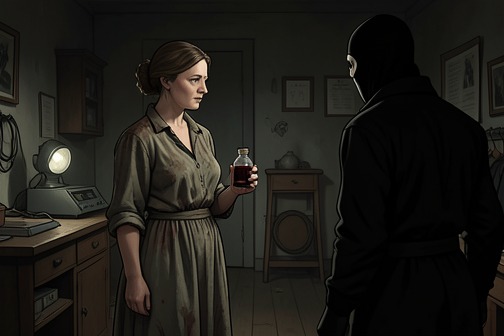
[Therese](entity:character-recall-character-therese-e6f71bb95cb7)’s attempt to prevent the [Comte de Bressac](entity:character-recall-character-comte-de-bressac-3bb395d2ca74) from murdering his aunt, the [Marquise de Bressac](entity:character-recall-character-marquise-de-bressac-4846c62276eb), turns a secret plot into a test of whether integrity can protect anyone in a world governed by wealth and power. She refuses to poison the Marquise, exposes the scheme, and seeks help for her; the Count intercepts the appeal and punishes Therese. The Marquise dies shortly afterward, and the Count uses her death to cast suspicion on the very person who tried to save her.
## Causes and Background
Therese has served the Marquise for four years, enduring continued hardship while remaining attached to the household. The Comte de Bressac has cultivated her trust, and she admits that she once felt affection for him. That intimacy makes his disclosure all the more shocking: believing he can rely on her, he tells her that he has condemned his aunt to die and intends to use Therese to accomplish it.
The Count presents murder as an ordinary matter of nature, arguing that destruction merely changes the forms of matter and cannot truly annihilate life. He also dismisses the added gravity of killing a relative. His reasoning is not an abstract conversation detached from action: it is designed to make Therese an accomplice. She initially resists, but deliberately delays her refusal and appears to yield, allowing the Count to believe that his arguments have overcome her objections.
## Therese Warns the Marquise
The Count gives Therese poison and directs her to put it in the Marquise’s morning chocolate. He promises her immunity from consequences and offers a written annuity of two thousand crowns, payable after the deed. His confidence grows when he learns that an uncle has left him a substantial inheritance. Rather than abandon the plan now that his fortunes have improved, he insists that the murder proceed before the household returns to [Paris](entity:location-recall-location-paris-c02b439ce220) and presses Therese to act quickly.
Therese sees danger whichever way she turns. She fears that if she simply refuses, the Count will suspect her, and that if she consults the law, she may expose herself to his vengeance. She decides instead to warn the Marquise, first requiring her to promise not to confront her nephew openly. To prove the threat, Therese produces the poison; the women test a small quantity on a dog, which dies after convulsions. The Marquise then sends a courier to the Duc de Sonzeval, asking him to approach the Secretary of State secretly, obtain a lettre de cachet, and hurry to protect her from her nephew.
## The Appeal Is Intercepted
The Count grows suspicious after noticing the Marquise’s agitation and Therese’s unease. The Marquise gives him a false explanation for the courier’s journey, saying it concerns the newly inherited estate and possible litigation. The Count pretends to accept this account, leaves under the pretext of a walk, and intercepts the messenger on the route he knows the man must take.
The courier, who proves more loyal to the Count than to the Marquise, allows his master to inspect the dispatches. The Count pays him a hundred louis and orders him never to return to the household. With the appeal for help in his possession, the Count goes back and continues to behave as though nothing has changed. He still cajoles Therese and asks whether she will carry out the poisoning, concealing that he has discovered her intervention. Therese, unaware that the message has been intercepted, attends their arranged meeting in the woods.
## Retaliation and Accusation
At the meeting, the Count leads Therese toward the four trees where she had previously been bound. There he has prepared a punishment and accuses her of betraying him after agreeing to the crime. He claims that she chose the greater wrong by endangering his freedom, and insists that virtue has brought her only danger. The Count’s response reverses the roles of protector and threat: the man who once spared her now uses his power over her to exact revenge for her attempt to save his aunt.
The Count has Therese bound and sets his mastiffs upon her while he watches. He stops the attack before it kills her, then orders her to dress and leave. He refuses to offer compassion or practical help, although he allows her to keep whatever money she has. He warns that the arrest warrant against her remains in force and that she will be publicly blamed for the Marquise’s murder. Rather than face one case, he tells her, she will now have to contend with a rich and powerful enemy intent on pursuing her.
Therese answers that she will not retaliate against him. She explains that she acted only because the Marquise’s life was at stake and promises to pray for him despite his cruelty. The Count leaves, and she never sees him again. The exchange sharpens the event’s central conflict: his language makes complicity sound like safety, while her refusal to harm an innocent person leaves her exposed to punishment.
## The Marquise’s Death and the Aftermath
A local surgeon named [Rodin](entity:character-recall-character-rodin-960f1a96791a) treats Therese and gives her a place to stay. After thirty days, she has recovered enough to make inquiries at the château. She has only six louis with her, while more than forty remain in her room at the Marquise’s residence. Hoping to recover her belongings and earnings, she sends a letter through a young peasant woman named Jeannette, carefully concealing where she is staying.
The news Jeannette brings makes the consequences of Therese’s warning especially stark. The Marquise fell gravely ill on the day Therese left and died the following morning. The Comte de Bressac claimed that a chambermaid who had fled had poisoned her. The household’s relatives gathered, lamented the Marquise, and spoke of avenging her, but the Count retained undisputed possession of his inheritance and the valuables in the Marquise’s strongbox, pocketbook, and jewels—worth more than six hundred thousand francs in addition to his revenues.
The Count’s reply to Therese’s request compounds the accusation. In the letter, he calls her the criminal responsible for his aunt’s death, accuses her of theft, and threatens to have Jeannette detained if she makes another request. Therese is more distressed by the implication that the Marquise was indeed murdered than by the refusal to return her property. The letter confirms that the Count has turned the failure of her rescue into a story in which she is the perpetrator, while he profits from the death she had tried to prevent.
## Significance in the Framed Narrative
This episode is part of Therese’s first-person account to [Madame de Lorsange](entity:character-recall-character-madame-de-lorsange-6f22533c4d7d) and [Monsieur de Corville](entity:character-recall-character-monsieur-de-corvill-c7fdedc9fb7e), whom she meets while being transported as a prisoner. The larger story thus presents the plot against the Marquise not only as a past ordeal but as testimony offered by a woman already accused of murder, theft, and arson. The circumstances of her testimony matter: she tells her history to explain how she came to be treated as a criminal, while the listeners have the opportunity to judge her account and respond to it.
The event also establishes a recurring reversal in Therese’s fortunes. She attempts to prevent a killing and instead faces a violent reprisal; the intended victim dies, while the would-be murderer gains wealth and retains power. Yet her account does not end with the Count’s accusation. Madame de Lorsange and Monsieur de Corville listen with profound emotion, and the Countess’s recognition of Therese as her sister ultimately changes the conditions of Therese’s captivity. In the frame narrative, the story of failed protection becomes the testimony that helps make a new intervention possible.
Event 10
泰蕾兹目睹罗丹虐待学生

[Therese](entity:character-recall-character-therese-e6f71bb95cb7)’s witnessing of [Rodin](entity:character-recall-character-rodin-960f1a96791a) abusing students exposes the violence concealed within his school’s disciplinary routines and reveals that [Rosalie](entity:character-recall-character-rosalie-f13f4674466e), too, has been harmed by her father. What begins as observation from a hiding place becomes a confrontation with the institution’s wider pattern: Rodin targets both boys and girls, suppresses religious instruction, and uses punishment to maintain control. The episode supplies Therese with grounds to reject his later advances and marks a shift from suspicion to knowledge.
## Setting and Circumstances
The events take place at Rodin’s school. Therese has come to understand that Rosalie may be at risk, and Rosalie directs her to watch from a closet rather than remain with her during the lessons. The concealment is practical: if Rodin noticed Therese beside his daughter, he might become suspicious. From this restricted vantage, Therese sees what Rodin does to pupils and later what happens when the classroom is used for abuse outside lesson time.
Rodin’s role as teacher gives him control over the children and the setting. The punishments are presented as corrections, but the scene shows how he turns that authority into a means of violence. The classroom’s double function—as a place of instruction and a place where Rodin abuses those under his care—makes the school’s apparent order inseparable from the private abuse it conceals.
## The Punishments Therese Witnesses
After releasing Julie from her bonds, Rodin sends her back to class and fetches a fifteen-year-old boy. He reprimands the pupil, alternates threats and gestures of apparent affection, and then abuses him. When the boy resists, Rodin takes up the whip and beats him. The shift from scolding to assault makes clear that discipline is not a separate pretext for the violence: Rodin uses his authority as a teacher to put the children within his reach.
The scene extends beyond a single pupil. Rodin successively whips nine students: five boys and four girls. The last is a fourteen-year-old boy who resists; Rodin beats him and then sends him back to class after warning him against repeating what Rodin characterizes as misconduct. Therese describes the episode as something she heard and saw. Her testimony frames the scene not as rumor but as direct witness to a repeated practice.
The count gives the episode a grim institutional scale. Rodin has not simply singled out one child: he cycles through pupils, and the nine cases form a sequence that makes the abuse appear routine. The repetition also matters to Therese’s understanding: the severity of Rodin’s conduct is not an isolated loss of control, but part of his recurring treatment of students.
## Rosalie’s Disclosure
After the lesson, Therese asks Rosalie how anyone could take pleasure in inflicting such torment. Rosalie replies that Therese has not yet seen the full extent of her father’s conduct. She explains that when Rodin believes a pupil is particularly vulnerable, he abuses girls as well as boys. She describes his method as one intended to avoid pregnancy, while insisting that this does not make the girls safe from harm or free from his exploitation.
Rosalie gives the pattern specific proportions: she says that of fourteen girls Therese has seen, eight have already been subjected to Rodin’s abuse, and that he has abused nine boys. She also says the two women who serve in the household are subject to his treatment. These disclosures widen the meaning of the nine punishments Therese has just witnessed. The school is not merely a setting where Rodin sometimes mistreats pupils; Rosalie presents his abuse as an established practice extending across the children and household.
Rosalie then reveals that she herself became Rodin’s victim when she was barely eleven. Her disclosure changes the scene from a report about students into a revelation about the person who brought Therese to the closet. Rosalie’s childhood experience shows that Rodin’s abuse reaches into his own family and begins before a child is able to protect herself.
## Religious Control and the Second Observation
Therese asks whether Rosalie could have turned to religion or confessed what had happened. Rosalie explains that Rodin forbade religious devotions and had given the children little religious instruction. She says that he ridiculed religious belief and worked to remove it from those he corrupted; where families compelled children to fulfill religious duties, their observance was so indifferent that Rodin had little reason to fear disclosure. The episode thus connects physical abuse with deliberate control over the children’s access to religious guidance and potential sources of support.
Rosalie invites Therese back into the closet to witness what happens after lessons. She explains that the same room where Rodin punishes students is used for his abuse of the women in the household. Rodin enters Rosalie’s room, brings her into the other room, and is joined by the two household women. Therese watches rather than risk being discovered beside Rosalie. The return to the closet makes witnessing a repeated act: first Therese sees the public-facing punishment of pupils, then she sees the private violence that the school’s routines conceal.
## Consequences and Narrative Significance
After seeing enough to convince herself, Therese decides what answer to give Rodin’s offers. Two days later, he comes to her room and claims that he is checking whether her wounds have healed. The routine of examining her, which he has performed twice daily for a month without what Therese understood as an offense against her modesty, gives him an excuse to approach her. This time, he restrains her and makes clear that he intends to exploit her. Her observation of his conduct toward Julie, the other pupils, Rosalie, and the household women has prepared her to recognize the danger in his conduct toward her.
The episode therefore links the school’s repeated abuse to Therese’s immediate peril. Rodin’s authority, the children’s isolation from religious instruction, and the concealment afforded by an ordinary classroom combine to make his conduct difficult to challenge. Yet the act of watching also gives Therese knowledge that cannot be dismissed as an isolated accusation: she has seen the punishments herself and heard Rosalie explain the broader pattern. The scene turns the school from a place Therese is merely visiting into a system she understands as dangerous.
Event 11
Therese's Failed Attempt to Rescue Rosalie
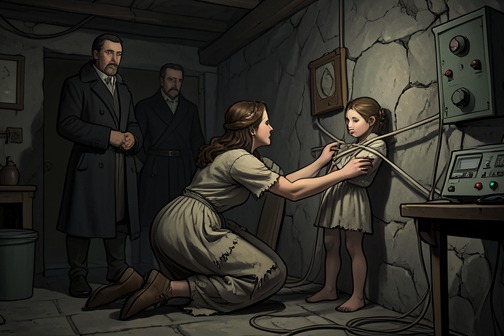
[Therese's Failed Attempt to Rescue Rosalie](entity:event-recall-event-fefbddd15fca) is a failed rescue that lays bare [Rodin and Rombeau](entity:relation-recall-relation-rodin-rombeau-8f6e6cd8f104)'s plan to kill [Rosalie](entity:character-recall-character-rosalie-f13f4674466e) under the pretext of scientific advancement. [Therese](entity:character-recall-character-therese-e6f71bb95cb7) finds her friend hidden in a cellar, but when she tries to free her, the men catch them. Rosalie remains in their power; Therese is branded and abandoned at the edge of a forest, left to flee without knowing what will happen to the girl she tried to save.
## Causes and Background
Therese has come to fear for Rosalie, [Rodin](entity:character-recall-character-rodin-960f1a96791a)'s daughter and the young woman to whom she is devoted, because Rosalie is exposed to continuing danger in her father's household. Therese has urged her to escape, believing that removing her from Rodin's control is less dangerous than leaving her there. Before that effort can succeed, Rosalie disappears. Rodin says she has gone to spend the summer with a relative ten leagues away, and people in the neighborhood repeat that she left after bidding them farewell. Yet Therese doubts the account: Rosalie has departed without a word to her, and Rodin's character gives her reason to fear for her friend's safety.
The next day, while alone in the house, Therese searches it carefully. She hears sounds from a secluded cellar, where firewood blocks a narrow door. Behind it, she finds Rosalie imprisoned. Rosalie explains that [Rombeau](entity:character-recall-character-rombeau-54218566e71e), Rodin's friend and colleague, had examined her before the disappearance, and that Rodin had ordered her to submit to further abuse by him. After the two men had kept her for hours, Rodin arranged a false departure: Rosalie crossed through town under an old woman's guardianship and bade acquaintances farewell, but after nightfall her conductress brought her back. Rodin then seized her, silenced her, and confined her in the cellar.
Rosalie fears that the men intend to use her in an experiment. She does not know where the cellar key is kept, and Therese cannot find it before she must return upstairs. Therese promises to come back the following day; if she has learned nothing that can help Rosalie, she will leave the house, fetch the police, and try to free her by any means. The promise makes the next discovery more urgent: the threat is not merely imprisonment but a planned killing.
## The Plan Revealed
That evening, Therese hides near the dining room while Rodin and Rombeau eat together. Their conversation confirms her fears. They discuss killing a girl around fourteen or fifteen and examining her body after a violent death, claiming that only such an experiment could produce anatomical knowledge they could not obtain otherwise. Rombeau argues that Rosalie is suitable for the proposed dissection; Rodin agrees, dismissing the fact that she is his daughter as no reason to spare her.
Rodin gives the project an impersonal rationale. He compares the intended killing to the sacrifices he claims are made under natural laws, and invokes historical customs and legal traditions to argue that fathers have possessed power over their children. His appeal to precedent does not restrain the violence; it converts it into an asserted right. Rombeau, meanwhile, presents the experiment as necessary because no other method could yield the desired information. Together, they recast murder as research and parental authority as permission to dispose of a child.
The dinner conversation also discloses a separate motive. Rodin says that Rosalie has served his pleasures for five years and that, having lost interest in her, he intends to end her life. His scientific argument therefore coexists with personal disgust and possessiveness. Therese hears enough to understand that the men mean to act that very night, and rushes back to the cellar to warn Rosalie and attempt her escape.
## The Rescue and Its Reversal
Therese tries to batter down the cellar door. A blow dislodges an object, and she discovers that it is the key. She opens the door, embraces Rosalie, urges her to flee, and promises to follow. Rosalie springs toward the exit, but Rodin and Rombeau appear with the governess before she can get away. Rodin catches his daughter just beyond the cellar threshold; Rombeau seizes Therese.
Rodin accuses Therese of encouraging a daughter's escape from her father and calls her conduct espionage and seduction. Therese answers that rescuing Rosalie is justified because her father is plotting her death. The men drag both women back to the apartments and bolt the doors. They tie Rosalie to a bedpost, while the punishment they impose on Therese begins with a threat of a lethal experiment intended to observe her heart. The reversal is immediate: the key that briefly makes escape possible becomes the means by which the fugitives are caught at the threshold of freedom.
## Branding, Abandonment, and Aftermath
Rodin stops Rombeau from proceeding with the threatened experiment, saying that their strength must be reserved for the operation planned for Rosalie. Instead, he decides to brand Therese with the mark used on thieves. He intends the mark, together with the accusations he can make against her, to expose her to disgrace, hunger, and possible execution. Rombeau holds her while Rodin applies the heated iron behind her shoulder. The men bandage and dress her, give her a little brandy, and take her out under cover of night.
At the edge of a forest, they abandon Therese and warn her about the dangers of making a complaint. She fears the consequences of accusing them, despite believing that she could prove they were criminals rather than officials of a tribunal. Her past experiences in [Paris](entity:location-recall-location-paris-c02b439ce220) and at the [Château de Madame de Bressac](entity:location-recall-location-ch-teau-de-madame-de-b4c8f92c5317) intensify that fear. What weighs on her most, however, is that she has left an innocent Rosalie with the men who intend to kill her. Therese sets out without direction; on the fourth day, she realizes that she has circled back only as far as Lieursaint. She then chooses the road toward the southern provinces, hoping to find peace farther from the places where she grew up, though her expectation of safety will prove mistaken.
## Narrative Significance
The episode makes Therese's compassion the direct cause of her exposure to danger, while showing how easily power can disguise violence as accepted authority. Rodin and Rombeau invoke science, history, and paternal rights, but their justifications conceal a concrete plan to kill Rosalie, alongside Rodin's admission that he has simply tired of her. Their arguments do not establish moral legitimacy; they reveal the language by which the powerful excuse what they intend to do.
The rescue follows a sharp pattern of discovery and reversal: Rosalie's disappearance leads Therese to the cellar; the hidden conversation exposes the imminent threat; the recovered key opens the door; and the attempt to cross the threshold ends in capture. Therese's failure does not come from indifference or hesitation. She acts on what she learns, but the household's control defeats her effort and turns her into its next victim. Rosalie's fate remains unresolved in this episode, leaving Therese to travel onward with the burden of having escaped while her friend remains behind.
Event 12
Therese Is Imprisoned at Saint Mary Monastery

[Therese](entity:character-recall-character-therese-e6f71bb95cb7)’s imprisonment at Saint Mary Monastery is a betrayal that converts her search for religious refuge into captivity. On August 7, after leaving Auxerre, she follows a shepherdess’s assurances toward Saint Mary-in-the-Wood, believing its secluded monks and miraculous Virgin offer a haven for prayer. Instead, [Dom Severino](entity:character-recall-character-dom-severino-bc17b97d74db) exploits her confession and isolation to deliver her into the monastery’s hidden abuse. The scene exposes the distance between the institution’s public image of sanctity and the coercive system concealed behind its walls.
## The search for a religious refuge
The episode belongs to Therese’s first-person account, which she tells to [Madame de Lorsange](entity:character-recall-character-madame-de-lorsange-6f22533c4d7d) and [Monsieur de Corville](entity:character-recall-character-monsieur-de-corvill-c7fdedc9fb7e) after they encounter her under guard at [Montargis](entity:location-recall-location-montargis-70a246451687). She begins the relevant part of her history by explaining that religious feeling had remained with her despite the hardships of her life. On August 7, after leaving Auxerre, she rests beneath an oak in the midday heat. From her resting place she notices a distant bell tower and imagines the religious community there as a refuge from the crimes and dangers that have marked her experience.
A shepherdess tells her that the building is a [Benedictine](entity:organization-recall-organization-40b315df58d3) monastery inhabited by four exceptionally devout monks. She also describes an annual pilgrimage to a miraculous Virgin whose help, she says, answers the faithful’s wishes. The superior, Dom Severino, is presented as gentle, respectable, and generous to visitors. Therese gives the shepherdess a crown despite her own need for money, then sets off, hoping to pray and make up for duties she has been unable to observe.
The apparent accessibility of the refuge gives way to physical isolation. After losing sight of the tower, Therese follows a path through the forest, walking at least five leagues before hearing a bell after dark. The monastery lies in a hollow, surrounded by dense woods; the nearest other dwelling is six leagues away. Visitors must first approach through a gardener’s cabin beside its walls. These details, initially part of the difficulty of reaching a secluded holy place, also establish how far Therese is from possible help.
## The welcome and the confession
At the gate, Therese describes her purpose as a religious duty and asks to visit the Virgin. Because the monks are at supper, the gardener brings [Dom Clement](entity:character-recall-character-dom-clement-93c929f3e676), the monastery’s steward, to assess her request. Clement’s stern manner alarms her. He questions the propriety of arriving at that hour and suggests she looks like an adventuress, but then asks where she will spend the night, noting that the monastery has no hospice. Therese explains why she could not come earlier. Clement reports to the superior, and the church is opened for her.
Dom Severino’s appearance and manners initially reassure her. At fifty-five, he is described as vigorous and courteous, with an elegant bearing and an Italian accent. He agrees to hear her confession despite the late hour and says they can then discuss a decent place for her to spend the night; she will be able to visit the sacred image the next day. In the church, with its doors closed and a lamp beside the confessional, Therese trusts him enough to disclose her past, her hardships, and the brand inflicted by [Rodin](entity:character-recall-character-rodin-960f1a96791a).
In her later account, Therese recognizes that the confession was also an assessment of her vulnerability. Severino asks whether she is truly an orphan born in [Paris](entity:location-recall-location-paris-c02b439ce220), whether she has relatives, friends, or anyone she could write to, and whether she told anyone besides the shepherdess about her destination or arranged to meet anyone on her return. He also probes her past abuse and whether anyone might have followed her or seen her enter the monastery. These questions establish that the superior is not simply hearing a penitent: he is checking whether she has connections who might search for or protect her.
## From hospitality to captivity
After Therese answers candidly, Severino takes her by the hand and says he will provide for her needs. He leads her deeper into the church, toward the sacristy. When she asks why they are going inside, he mocks her concern and reveals that she is expected to serve the monks’ desires. His manner changes from gracious hospitality to threat: he orders her to keep moving and makes clear that resistance will be useless.
The route through dark passages further separates Therese from the entrance. Severino leads her up a staircase of thirty or forty steps, through a door, and into a brightly illuminated room. There she sees three monks and seven girls, with four other women serving the table. Severino presents her to the group as a newcomer whose apparent reputation contrasts with the innocence he claims to see in her. The scene ends with the threat of Clement approaching her, while Therese suspends her account to explain that she must first describe the people gathered there.
The setting makes the deception legible in retrospect. The monastery’s reputation, the shepherdess’s recommendation, the promised miraculous image, the confessional, and Severino’s offer of lodging all help draw Therese inward. The journey’s remoteness and the monastery’s concealed interior then limit her ability to leave or appeal for help. The episode thus makes the violation of trust not an incidental turn but the method by which the captivity is accomplished.
## The monks’ system of coercion
Once Therese is brought before the assembled group, Severino tells her that the retreat is inaccessible and that no outsider has ever entered its premises. He claims the monks are beyond the reach of family, judges, or other authorities and insists that pleas, tears, and appeals to religion will not move them. He shows her instruments used to punish girls who do not comply and demands submission. The speech defines the immediate stakes: the apparent religious house is presented by its superior as a closed system in which the captors make the rules and the captive has no recognized recourse.
Therese tries to appeal to Severino, but he rejects compassion and orders Clement to seize her. The monks then subject her to a prolonged inspection in the presence of the others. She later withholds some of its details from her listeners, while making clear that this initial ritual prepares her for worse treatment. Her account emphasizes both the captors’ collective control and the way the other women’s presence is used to impose a pattern of expected submission.
Severino’s actions also turn religious space into an instrument of profanation. In the course of the assault, he attacks the altar when frustrated, treating a place of prayer as an object of violence. The detail reverses the sanctuary Therese had imagined: the church does not protect her, and its sacred objects do not restrain the man who presides over the house. Her faith remains part of how she understands what has happened, but the monks use the authority and setting associated with religion to disguise and enact their abuse.
## Aftermath and narrative significance
At the end of the episode, Therese collapses in pain and tears, overcome by the contrast between the virtue she had relied on and the treatment she has received from people she had expected to offer spiritual comfort. Her distress does not prompt the monks to show mercy; Severino treats it as entertainment. This reversal establishes the coercive logic that will govern her captivity and marks the beginning of a further sequence of suffering inside the monastery.
The framing of the incident shapes how readers receive it. Therese recounts the episode as testimony to Madame de Lorsange and Monsieur de Corville, rather than as detached narration. Her listeners’ interest had begun when they encountered her being transported to Paris after a [Lyon](entity:location-recall-location-lyon-1a930ca08d16) conviction for murder, theft, and arson. At Montargis they release her from her restraints, provide food, and ask her to tell the story of her troubles. Therese hesitates because recounting them seems to challenge the will of Heaven, then speaks as someone presenting a history of innocence oppressed.
That testimony also helps expose the limits of official justice. In a later part of her account, Therese describes her wrongful conviction after a diamond was planted in her mattress and her employer’s accusation was accepted over her defense. In the frame narrative, Madame de Lorsange recognizes Therese as her sister, [Justine](entity:character-recall-character-justine-cc9f00a8d838), and Monsieur de Corville assumes responsibility for her case, secures her release into his protection, and writes to seek official reconsideration. The monastery episode therefore forms part of the accumulated evidence behind the prisoner’s testimony: her apparent criminality is set against a history in which institutions and powerful people repeatedly turn vulnerability into a reason to disbelieve her. The promised refuge at Saint Mary-in-the-Wood is one of the starkest reversals, because the very signs that invite trust lead her away from protection.
Event 13
Florette's False Apparition of the Virgin and the Profanation of the Eucharist

[Florette's False Apparition of the Virgin and the Profanation of the Eucharist](entity:event-recall-event-f5ea251643cf) is the festival’s double performance: the monks first manufacture a miracle to strengthen the monastery’s public reputation, then turn the sacred image and Eucharist into instruments of deliberate sacrilege. Through [Thérèse](entity:character-recall-character-th-r-se-3cf60cbeca5b)’s account, the sequence sets public confidence in the monastery against its concealed violence, while showing how the rituals she approaches in faith are appropriated by those who exploit her.
## Festival and Manufactured Miracle
The festival is Notre-Dame d’Août, a rare occasion when outsiders visit the isolated monastery. [Omphale](entity:character-recall-character-omphale-e139ae8aa3fc) explains that the monks’ apparent religious austerity helps satisfy visitors and win praise for the house, while keeping scrutiny away from its hidden practices. The superior intends to preserve these secret privileges; the monastery’s reputation and its apparent hospitality help sustain its impunity.
As the festival approaches, Omphale warns Thérèse that the occasion often brings new captives. The monks may obtain girls through confession or make them disappear, and these recruits take the place of those being removed. The festival is therefore not merely a public ceremony: it coincides with the institution’s recruitment and management of the girls it exploits.
For the staged apparition, the monks dress [Florette](entity:character-recall-character-florette-3bfbca37d1bd), the youngest girl, in the Virgin’s garments and ornaments. They secure her against a niche with concealed strings and direct her to raise her arms toward heaven as the host is elevated. Threatened with severe punishment if she speaks or fails in her role, Florette performs as instructed. The concealed mechanism and the child’s compelled obedience produce what the monks present as a visible miracle.
## Public Success and Profanation
The deception succeeds with the visitors. They acclaim the event as a miracle, leave rich offerings for the Virgin, and depart more convinced of the efficacy of her intercession. The ritual thus converts an imposed performance into public religious confidence and material support for the monastery.
That evening, the monks carry the fraud into their private gathering. They make Florette appear in the same costume that had drawn the visitors’ reverence, now turning the image of the Virgin into part of their abuse of her. They then strip away the devotional disguise and use a representation of Christ and the Eucharist in a deliberately sacrilegious act. Thérèse witnesses the scene and faints. The episode’s reversal is stark: the costume and symbols that secured public reverence become tools in a hidden ritual that violates the very faith they appear to serve.
Severino responds to Thérèse’s distress by forcing her into the ritual as well. The abuse is not something she consents to or regards as an act of worship; in her account, she is made an unwilling participant in a desecration that attacks what she holds sacred. Afterward, she is carried back to her room and spends a week in tears over what she has been forced to endure.
## Faith, Deception, and Narrative Meaning
The scene draws force from the difference between the monks’ professions and their actions. The false apparition exploits the visitors’ devotion, while the public’s offerings and confidence help preserve the monastery’s respectable appearance. In private, the same religious signs are inverted into instruments of cruelty. The scandal lies not simply in disbelief but in the monks’ calculated use of a faith they publicly claim to honor.
That contrast is especially sharp because Thérèse remains a believer. Earlier, she argues that recognition of God entails worship and that virtue is the foundation of that worship; she has also tried to bring religious consolation to [Rosalie](entity:character-recall-character-rosalie-f13f4674466e). Bressac, by contrast, attacks religion as an invention and Christianity as a barbaric creed. His argument belongs to his own libertine position, not to Thérèse’s account of her convictions. The monastery episode gives those opposed views a concrete, disturbing setting: religious belief is defended by Thérèse’s moral seriousness, while people who wear the forms of religion betray them.
The event is narrated retrospectively by Thérèse as part of the life story she tells to [Madame de Lorsange](entity:character-recall-character-madame-de-lorsange-6f22533c4d7d) and [Monsieur de Corville](entity:character-recall-character-monsieur-de-corvill-c7fdedc9fb7e) after her arrest. Her distress remains present in the telling: she says that the memory still gnaws at her and that she shudders whenever she recalls the scene. The narrative therefore presents the festival not as an abstract argument about religion but as testimony to the consequences of a religious institution’s deception and abuse. Its public success compounds the injury: the visitors leave reassured, while the captive girls remain subject to the monastery’s secret authority.
Event 14
Oumphal Is Expelled from the Monastery
[Oumphal Is Expelled from the Monastery](entity:event-recall-event-304b9317af1d) is a sudden removal within the convent’s system of confinement: after singling [Omphale](entity:character-recall-character-omphale-e139ae8aa3fc) out during an inspection, the superior tells her she is being dismissed and takes her away before she can properly say goodbye. [Thérèse](entity:character-recall-character-th-r-se-3cf60cbeca5b) understands the order as a threat rather than an ordinary departure, offers to help, and is left grieving when Omphale is taken from the house. The episode makes the monastery’s power visible in its command over the girls’ safety, relationships, and belongings.
## The Order to Leave
Near the end of the month, the superior enters the girls’ chamber in an agitated state and examines them one by one. He pays particular attention to Omphale, then abruptly changes the inspection into a dismissal: he tells her that the company is tired of her and that she must be ready that afternoon. The bluntness of the announcement leaves no room for negotiation or explanation.
Omphale weeps and turns to Thérèse, asking whether she can still fail to understand what the threatening preliminaries mean for her. Thérèse does not offer reassurance without qualification. She says she has made up her mind and is waiting for an opportunity, and urges Omphale to seek a delay if the measures against her prove as cruel as they fear. Thérèse promises to try to rescue her from the monastery’s control.
## A Departure Without Farewell
Omphale agrees that, if she is released, she will help Thérèse in turn. Their brief exchange establishes a mutual promise at the moment when their ability to act together is about to be cut off. The day passes without an immediate change, but at five the superior returns and demands to know whether Omphale is ready.
Omphale asks permission to embrace her friends. The superior refuses, saying there is no time for emotional farewells and that they are waiting. When she asks whether she should take her belongings, he answers that everything belongs to the house and that she no longer needs any of it. He then partially retracts the implication, explaining that her old clothes have become useless and that she will be given clothes fitted to her size; she is to leave wearing only what she has on. His words present the removal as an administrative transfer while making clear that Omphale has no control over its terms or over her possessions.
Thérèse asks whether she may accompany Omphale to the door. The superior answers with a look that makes her recoil, and she does not press the request. Omphale leaves, turning back toward the girls with an anxious, tearful look. Once she is gone, Thérèse throws herself onto the bed in despair. The scene’s emotional force lies in its compressed separation: a request for one last embrace is denied, and Thérèse’s intended rescue remains only a promise.
## What the Departure Reveals
The removal is not narrated as a freely chosen exit. The superior controls its timing, denies Omphale a farewell, claims the girls’ belongings for the house, and gives her no account of where she is going. Omphale’s question about her possessions and the superior’s abrupt correction suggest that the practical arrangements are part of a larger, concealed procedure; the episode does not disclose her eventual destination or fate.
The next evening’s events sharpen the threat without resolving it. Thérèse observes that the Girls of the Watch are absent, that the monks whisper among themselves and drink heavily, and that the girls are sent away early rather than retained as usual. She recalls Clement’s warning and fears that Omphale’s departure may signal danger to the others, yet hope interrupts her deductions. In this way, the expulsion becomes both a specific loss and a warning: within the monastery, an unexplained order can remove a girl from her companions while leaving those still inside to guess what has happened.
## Narrative and Thematic Significance
The episode is framed through Thérèse’s first-person testimony to the woman she addresses as Madame. Its details—the hour of the superior’s return, the request to embrace friends, the question about belongings, and the glance that silences Thérèse—come through a narrator who is both witness and would-be rescuer. Her limited knowledge is essential: she recognizes the danger but cannot establish what the order means or prevent Omphale’s departure.
The expulsion also contrasts the convent’s public religious identity with its internal coercion. The same institution that claims authority over the girls’ lives treats a person’s departure as a matter of command, suppresses ordinary expressions of attachment, and asserts ownership of personal effects. Thérèse’s promise to help Omphale offers a fragile counterforce of solidarity, but the superior’s power over movement prevails in this scene. The episode therefore extends the convent narrative’s pattern of isolation and uncertainty without pretending that Thérèse knows more than she does.
Event 15
Octavie's Abduction and Abuse by the Monks
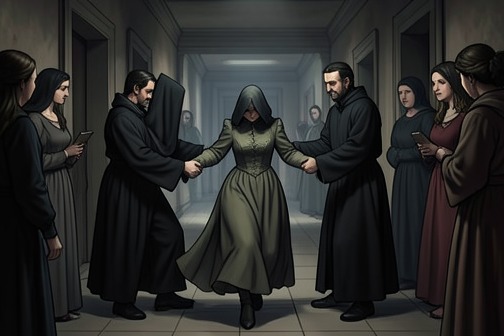
[Octavie](entity:character-recall-character-octavie-98151e86a9af)’s abduction and abuse at the monastery turns the institution’s routine exploitation into a stark new crisis: a young woman taken from a journey to her marriage is brought in as a replacement for [Omphale](entity:character-recall-character-omphale-e139ae8aa3fc), subjected to the monks’ violence, and later sent away without protection. Her story shows how the monastery treats its captives as interchangeable, while her presence and departure sharpen [Thérèse](entity:character-recall-character-th-r-se-3cf60cbeca5b)’s understanding that favor and time served offer no reliable safety.
## Abduction and Arrival
Octavie appears after Omphale’s departure, when Thérèse and the other girls have been left uncertain about what the monks intend to do next. Four days after the supper at which Omphale’s replacement is announced, the girls are summoned to a gathering attended by eight women and the Girls of the Watch. The superior identifies the newcomer as the person chosen to replace Omphale, then reveals her to the assembled company.
Octavie is fifteen, born in [Paris](entity:location-recall-location-paris-c02b439ce220), and of high social standing. She has just left a convent in preparation for marriage to the Comte de * * *. She was traveling with two governesses and three lackeys when she was kidnapped at nightfall; she alone was taken, and after being blindfolded she was brought to the monastery. She does not know what happened to her attendants. Her abrupt removal from a supervised journey and her confinement among captive women expose the monastery’s power to reach beyond its walls and seize new victims.
Her appearance briefly unsettles even the men who have brought her there. The narrator describes the assembled monks as momentarily absorbed by her beauty, but that hesitation does not become restraint. Their admiration quickly gives way to their customary abuse, and Octavie’s distress and resistance are ignored. The scene makes the institution’s violence unmistakable: the newcomer is not welcomed as a person but assessed as a captive to be used.
## Abuse and Thérèse’s Witness
The superior orders Octavie to undress, and the monks proceed despite her distress and efforts to resist. Thérèse witnesses the assault alongside the other girls. Severino takes the leading role; Clement and [Antonin](entity:character-recall-character-antonin-ea15d693ced3) assist him, while the other monks participate in the abuse. Octavie’s tears and appeals do not stop them. The account establishes the essential sequence without making the violence its own spectacle: the monks assert control, assault her, and treat her suffering as no reason to desist.
Octavie is then subjected to further abuse by the men, including punishment inflicted by Clement. Their companions encourage them rather than intervene. This collective response matters: the violence is not a private transgression hidden from the monastery’s inhabitants, but a practice carried out in their presence and affirmed by the group. The captive girls, including Thérèse, are made witnesses to the system as well as its victims.
The episode also links Octavie’s treatment to the monks’ profanation of religious imagery. Earlier, they had used [Florette](entity:character-recall-character-florette-3bfbca37d1bd), the youngest girl, in a staged apparition of the Virgin to deceive visitors and attract offerings. That evening they made the religious costume part of their abuse of her. When Thérèse fainted at the spectacle, Severino ordered that she be used in turn, and the sacred host was subjected to deliberate desecration. The false miracle and the assault on Octavie belong to the same pattern: the monks exploit religious forms publicly and privately, converting the appearance of devotion into an instrument of deception and domination.
## Captivity and Departure
After the assault, Octavie is returned to her room. Thérèse would like to comfort her, but Thérèse herself is assigned to Severino that night and cannot offer the support she wants to give. Octavie’s arrival therefore produces no safe refuge within the captive community: she is left to face a radical change of circumstances while those who might sympathize with her remain under the same coercive control.
Octavie has a strong religious feeling and is described as virtuous and sensitive; those qualities make her situation especially painful to her. Her presence also confirms a rule Thérèse had learned from Omphale: a girl’s length of service does not determine when she will be dismissed. The monks may send a captive away after a week or after twenty years, whether from caprice or fear of future inquiries. Octavie has not been at the monastery for four months when [Jerome](entity:character-recall-character-jerome-9396baf9647c) announces that she must leave. Although he had appeared to favor her during her stay, that apparent preference does not protect her or give her control over her departure.
Like Omphale, Octavie promises to help the remaining girls after she leaves, but she does not keep that promise. The narrative presents this failure without suggesting that she had the freedom or power to rescue them: inside the monastery, promises made under captivity cannot guarantee what happens afterward. For Thérèse, Octavie’s brief presence and disappearance reinforce the danger of depending on another captive’s intervention.
## Consequences and Significance
Octavie’s abduction, abuse, and removal change Thérèse’s assessment of the choices before her. After Omphale has failed to return and Octavie has likewise gone, Thérèse resolves to pursue the escape plan she has been developing. She sees no security in remaining: staying offers the prospect of death, while a successful flight might save her. Octavie’s story is thus not a separate episode of suffering alone; it helps make Thérèse’s decision to act more urgent by demonstrating how quickly the monks can seize, use, and dismiss any girl in their custody.
The episode also sharpens the contrast between religious appearance and institutional conduct. The same community that stages a Marian miracle for public offerings uses captives as disposable instruments and permits its members to abuse them openly. Octavie’s social standing and intended marriage do not protect her once she is isolated; nor do the monks’ fleeting admiration, Jerome’s apparent favor, or the customary promise of help from a departing girl. Her trajectory—from bride-to-be, to captive, to abruptly dismissed victim—shows the monastery’s power not as a stable hierarchy of care, but as a system in which the monks alone decide who is taken, used, and sent away.
Event 16
Therese's escape from Saint Mary-in-the-Wood

[Therese's escape from Saint Mary-in-the-Wood](entity:event-recall-event-therese-s-escape-from-s-2cc06c88917e) is both a practical flight from confinement and a revelation of the institution's hidden violence. After two months of preparation, she slips out through a window, encounters evidence of other imprisoned girls and dead victims, and makes her way beyond the monastery's enclosing barriers. The escape secures her freedom from the building, but not peace: at dawn she is left to reckon with what she witnessed and with the damage the monastery has done to her faith.
## Preparation and Opportunity
The immediate opening comes when [Antonin](entity:character-recall-character-antonin-ea15d693ced3) announces that Father Severino has been appointed General of the [Benedictine Order](entity:organization-recall-organization-benedictine-orde-85a7a7766b34) and is departing. Severino leaves without taking his leave of the women; the monks are expected to appoint a replacement reputed to be even more debauched. The news makes delay more dangerous. When the monks decide to remove another companion, [Therese](entity:character-recall-character-therese-e6f71bb95cb7) chooses the day her sentence is pronounced, calculating that their attention will be occupied by the condemned girl.
Therese has been preparing for two months without arousing suspicion. With a dull pair of scissors, she saws through the bars at her window until the gap is wide enough for her head. She makes a rope from sheets and linen, long enough to descend the building's twenty or twenty-five feet, and keeps the opening carefully covered until the night of her attempt. Her small reserve—about six louis, hidden when her other belongings were taken—goes into her hair. These details make the escape a patient act of planning rather than a sudden dash: she has arranged a way out of the room, preserved a little money, and selected a night when the authorities are distracted.
## The Enclosures and the Hidden Victims
Once on the ground, Therese finds that leaving the window is only the first obstacle. The monastery’s grounds are divided by six successive enclosures of stone and trees, their narrow rings only about eight feet across. In the darkness, she circles the first barrier and passes the apparently deserted dining hall. A lit basement window, however, opens onto a scene that changes her understanding of the place: her condemned companion lies on a trestle table, while four naked girls unknown to Therese’s own group are also held below. The revelation is not merely that the monks have more captives than the women knew; the monastery’s hidden system extends beyond the chamber and circle of prisoners Therese has experienced.
She abandons the search for an existing gap and cuts through a hedge with a long knife. Beyond it, the ground turns soft, and she realizes she has entered what appears to be the burial area. Her hands meet a corpse’s head beneath the shallow earth. The bodies may include [Omphale](entity:character-recall-character-omphale-e139ae8aa3fc) or [Octavie](entity:character-recall-character-octavie-98151e86a9af), though Therese cannot identify them; the uncertainty makes the discovery a reckoning with the fate that may await every captive, including herself. For a moment she questions whether escape is worth pursuing and whether she has contributed to the crimes around her. She then turns that despair into resolve: she believes she must resist the institution and prevent further victims from suffering under it.
## Breaking Through and Reaching the Road
Therese keeps moving through the successive hedges, cutting openings with her knife. Past the apparent burial ground, the terrain becomes firm, and she finds no further sign of the horrors she has just encountered. She reaches the moat beside the church and adjoining building; the wall Omphale had described is absent, though the ditch itself remains an obstacle. Following its edge to a point opposite a forest road, Therese crosses the dry, brick-lined moat. Her first attempt to climb the far side fails when loose bricks collapse beneath her, bringing rubble down on her and leaving her head cut and bleeding. The fall makes her wonder whether Heaven is warning her not to continue, but she rejects the idea that the monastery’s corruption has made evil necessary or escape sinful. Using the new gaps in the debris, she climbs out and reaches the crest.
She has strayed from the forest road during the struggle, but, having noted its position, finds it again and runs. Before daybreak she reaches the edge of the forest and the small hill from which, six months earlier, she had first seen the monastery. Freedom brings relief, but not uncomplicated triumph: Therese kneels to ask God to forgive the sins she unwillingly committed inside the institution, and tears follow. She compares her present condition with her earlier departure, when she had set out under a devout principle that proved disastrously misplaced. Her reflections are partly relieved by the knowledge that she is free; she continues toward Dijon, believing that only there can she properly lodge her complaints.
## Framing and Aftermath
The escape is recounted not as an independent scene in the outer narration but as part of Therese’s testimony to [Madame de Lorsange](entity:character-recall-character-madame-de-lorsange-6f22533c4d7d) and [Monsieur de Corville](entity:character-recall-character-monsieur-de-corvill-c7fdedc9fb7e) at [Montargis](entity:location-recall-location-montargis-70a246451687). The listener’s response gives the flight a second consequence: when Therese pauses, exhausted by the emotion of her account, Monsieur de Corville brings refreshments, and she resumes the story in detail. The frame makes her escape both an ordeal she survived and evidence placed before people with the power to act on her behalf.
The account’s aftermath also clarifies that getting beyond the monastery’s barriers does not end Therese’s exposure to danger or injustice. Earlier, after escaping the immediate reach of the [Comte de Bressac](entity:character-recall-character-comte-de-bressac-3bb395d2ca74), she tried to recover the clothes and more than forty louis left in her room at the château; she had only about six louis with her. She sent Jeannette with a carefully worded letter, concealing her location and asking for her belongings and money. The report that returned instead described the [Marquise de Bressac](entity:character-recall-character-marquise-de-bressac-4846c62276eb)’s death, the Comte’s accusation against the absent chambermaid, and the inheritance that made him substantially wealthier. Against this pattern, the monastery escape marks a physical break from one enclosure, not a guarantee that Therese’s innocence or security will be recognized.
At Montargis, the effect of hearing her accumulated misfortunes becomes decisive. Madame de Lorsange and Monsieur de Corville are deeply moved; Madame de Lorsange recognizes Therese as her sister, [Justine](entity:character-recall-character-justine-cc9f00a8d838), and the sisters embrace. Monsieur de Corville then writes to the Lord Chancellor, pledges responsibility for Therese’s innocence, and arranges for her to be placed at his château rather than returned to prison while her case is reviewed. The escape’s significance thus reaches beyond the forest road: the testimony that includes it helps turn private suffering into a claim heard by protectors, although the protection comes only after repeated captivity and long after the flight itself.
Event 17
Therese's abduction and captivity at Gernande château

[Therese](entity:character-recall-character-therese-e6f71bb95cb7)’s abduction and captivity at Gernande château turns her search for safety into another forced dependency: seized on a forest road after escaping the Saint Mary-in-the-Wood monastery, she is delivered to the Comte de Gernande, who confines and abuses his wife and seeks to recruit Therese into a profitable system of exploitation. Told later as part of Therese’s first-person testimony to [Madame de Lorsange](entity:character-recall-character-madame-de-lorsange-6f22533c4d7d) and [Monsieur de Corville](entity:character-recall-character-monsieur-de-corvill-c7fdedc9fb7e), the episode links private captivity to a wider economy that deliberately feeds on poverty, and exposes how the appearance of employment can conceal coercion.
## Seizure and forced journey
While traveling away from the monastery, Therese stops in a grove to eat bread and drink from a stream. Resting beneath a tree, she reflects with gratitude on her renewed strength and on the divine protection she believes enabled her escape. The scene abruptly turns: two men cover her head, prevent her from calling out, bind her, and drag her away. After nearly two hours they remove the covering, and she sees that they are taking her through a forest. Her fear that she is being returned to the monastery makes the seizure feel like a reversal of her brief escape.
When Therese asks where they are taking her, one of the men tells her not to fear: a wealthy master needs a maid for his wife, and she will be well provided for. Therese points out that, if the position is genuinely meant for her welfare, there is no reason to constrain her; the men loosen her restraints but keep her hands bound. They explain that the wife is said to be insane, kept in her room, and so feared as a charge that no one will willingly serve her. Their employer, they admit, therefore has girls carried off by force. The false reassurance of a respectable domestic position collapses into an explicit account of abduction as a recruitment method.
## Arrival at the château
The men identify their employer as the Comte de Gernande, a Parisian landowner said to possess considerable property and an income of five hundred thousand pounds a year. The isolated château they reach is vast but seems sparsely occupied; signs of life appear chiefly around the kitchens below the central building. One guide takes Therese inside while the other presents her to the Count.
The Count receives her in a lavish apartment, dressed in an oriental satin robe and attended by two adolescent boys. He accepts her as a new servant with little attention to her wishes, orders the doors closed, and inspects her. The boys’ presence and their evident exhaustion offer an early indication that the household’s apparent order conceals a system of abuse. Therese has arrived not at a safe place of employment but within a secluded household whose rules are set entirely by the Count.
## Violence and the secret of the household
Soon after her arrival, the Count announces that he must test Therese and orders one of the youths to bring surgical instruments. Another positions her on a stool with her arms fastened overhead, and the Count wounds her arms. Therese cries out and loses consciousness. When she recovers, she is in bed under the care of two older women, who give her broth at intervals. After two days, the Count summons her for a conversation.
He explains that the attack was meant to acquaint Therese with his tastes and to warn her of what could happen if she betrayed him or accepted help from the woman she is to serve. The Count reveals that this woman is his wife, whom he keeps confined while telling others that she is insane. He says that her mother, who lives six leagues away, believes this account and does not visit. He also describes a long-standing pattern of harming his wife and says he has had several wives before her. His explanation converts what might have seemed an isolated act of violence into the operating rule of the household: confinement, secrecy, and the Count’s control over his wife are sustained by a lie about her condition.
## A wider economy of exploitation
The Count’s offer to Therese extends beyond the château. He wants her to replace a woman who organized the procurement of young women for his operation. He describes a trade in which girls are sent to matchmakers in towns including Montpellier, Toulouse, Nimes, Aix, and Marseilles, with most of the net profits going to him. He claims that his victims come from places of extreme poverty, where the need to survive can make people vulnerable to recruitment and coercion.
His account goes further: he says he uses his influence to encourage commercial and economic fluctuations and rising prices, worsening the conditions that leave poor people without work or the means to live. He presents scarcity not merely as the background to his business but as something he can help intensify to enlarge the pool of people within his reach. The proposed manager would supervise four people, earn ten thousand crowns, and draw on her own experience of hardship to recruit others. A promise of wages and authority is thus attached to complicity in a structure that manufactures and exploits desperation.
## Refusal and narrative significance
Therese rejects the offer, condemning the Count’s willingness to profit from misery and to prolong it for his own gratification. Her response preserves the distinction between the survival strategies imposed on her and the deliberate exploitation he asks her to administer. The scene also extends the pattern established by earlier episodes: after escaping one institution of captivity, she is seized again and offered apparent employment under conditions she did not choose.
The episode reaches the reader through a layered act of testimony. Therese recounts her past to Madame de Lorsange and Monsieur de Corville after the guards bring her, bound and facing transfer to [Paris](entity:location-recall-location-paris-c02b439ce220) for confirmation of a sentence imposed at [Lyon](entity:location-recall-location-lyon-1a930ca08d16), to [Montargis](entity:location-recall-location-montargis-70a246451687). The later listeners’ emotional response frames the château narrative as evidence of her accumulated suffering, not as an impersonal report. At the end of her account, Monsieur de Corville accepts responsibility for her innocence and writes to the Lord Chancellor, asking that she be held at his château until her case is clarified. The protective intervention contrasts sharply with the Count’s power: where the Count turns wealth into confinement and recruitment, Corville uses his standing to secure Therese’s custody and offer a chance of redress.
Event 18
Therese's escape from Gernande château

[Therese's escape from Gernande château](entity:event-recall-event-therese-s-escape-from-g-da9312be3fc0) is a failed rescue attempt that becomes an escape from imprisonment. She and [Madame de Gernande](entity:character-recall-character-madame-de-gernande-56355ad7faba) plan to send the Countess's mother a letter exposing the Count's abuses, but the supposed way out proves to be an inner park enclosed by a higher, fortified wall. The Count discovers the letter and imprisons [Therese](entity:character-recall-character-therese-e6f71bb95cb7); only when news of the Countess's collapse draws him away does Therese find an opening to flee. She reaches [Lyon](entity:location-recall-location-lyon-1a930ca08d16), but the escape brings neither justice for the Countess nor relief from the pattern of hardship that defines Therese's life.
## A Plan to Reach the Countess's Mother
After a year in the household, Therese believes that Madame de Gernande understands her wish to help. The two women agree to expose the Count's conduct to the Countess's mother, whom Madame de Gernande expects to come quickly to her daughter's aid. Their difficulty is practical as well as political: they are closely watched and confined to the Countess's apartment, and cannot simply leave the château to seek help.
Therese studies the ramparts around the terrace and estimates that they are scarcely thirty feet high. From what she can see, she assumes that descending them would bring her directly to the road through the forest. Madame de Gernande cannot confirm this impression: she was brought to the apartment at night and has not left it since. Therese therefore takes responsibility for testing the route, while the Countess writes a letter designed to persuade her mother to rescue her.
## The Descent and the Hidden Enclosure
After nightfall, Therese uses the bed linen to lower herself to the ground outside the terrace. The descent does not carry her beyond the château's outer boundary, as she had expected. She has entered only a park, itself enclosed by walls that the dense trees had concealed from view. These walls rise more than forty feet and are topped with broken glass. The apparent route to freedom thus leads into another enclosure, more formidable than the one she had tried to cross.
With dawn approaching, Therese recognizes that returning to the apartment would expose the attempt. She fears the Count's response, especially because he has spoken of making a woman suffer through repeated bloodletting. She waits beside a tree, uncertain what will happen, until the Count himself enters the park in the morning. Startled to find her there, he asks what she is doing; Therese admits fault and begs him to punish her. But the letter she has forgotten to destroy is visible above her kerchief. The Count takes it, reads it, and orders her to follow him.
## Imprisonment and the Count's Threat
The Count leads Therese through a concealed stairway into the château's vaults and locks her in a dungeon. He declares that her attempted escape is punishable by death and says he will carry out the sentence after dinner the following day. Before leaving, he roughly drags and throws her across the cell, then renews his threat to make her death more terrible by delaying it. Therese spends the night in fear, unable to know what punishment awaits her.
After thirty-six hours, the Count returns alone and announces that he intends to bleed her three times a day as an experiment. He draws two bowls of blood from her arm. The threat has moved from words to action: Therese's attempt to carry the Countess's appeal to the outside world has resulted in her own confinement and an immediate assault on her health.
## The Opening and Flight to Lyon
The Count is interrupted by a servant who reports that Madame de Gernande is dying and wants to speak with him. He leaves in alarm and fails to secure the dungeon door. Despite fasting and the blood she has lost, Therese escapes her cell, crosses the courtyard and park, and reaches the forest without being seen. Her release therefore follows not from the successful execution of the women's plan, but from a lapse caused by the crisis inside the château.
Therese walks until she reaches a cottage four leagues away, where she rests and has her needs attended to. At daybreak she sets out again, asks directions to Lyon, and arrives there on the eighth day, weak and suffering but no longer pursued. She chooses not to make another complaint to the authorities and concentrates first on recovering. The failed attempt to secure help for the Countess has become a narrow escape for Therese herself; the evidence does not establish what happens to Madame de Gernande after the servant's announcement.
## Narrative Significance and Aftermath
The episode turns on a repeated reversal: a route Therese believes leads out of captivity brings her into a more tightly enclosed space, and a plan to obtain help instead exposes her to the Count's punishment. Her eventual escape depends on an unforeseen interruption rather than on the strength of the plan. The Count's departure, prompted by news that the Countess is dying, creates the opening through which Therese survives.
The escape is also recounted within Therese's testimony to [Madame de Lorsange](entity:character-recall-character-madame-de-lorsange-6f22533c4d7d) and [Monsieur de Corville](entity:character-recall-character-monsieur-de-corvill-c7fdedc9fb7e). At [Montargis](entity:location-recall-location-montargis-70a246451687), the guards have brought Therese toward [Paris](entity:location-recall-location-paris-c02b439ce220) for confirmation of a sentence handed down in Lyon; moved by the account of her troubles, the listeners give her the opportunity to speak. Her recollection of the château thus forms part of a larger appeal to be understood as innocent rather than criminal. Its aftermath preserves the novel's stark contrast between virtue under pressure and wrongdoing apparently rewarded: in Lyon, Therese reads that [Rodin](entity:character-recall-character-rodin-960f1a96791a) has been appointed First Surgeon to the Empress of Russia, even as she continues her journey toward [Grenoble](entity:location-recall-location-grenoble-6325891692ec).
Event 19
Roland's betrayal and enslavement of Therese

[Roland's betrayal and enslavement of Therese](entity:event-recall-event-roland-s-betrayal-and-e-5ec71ab385d7) is a decisive reversal in [Therese](entity:character-recall-character-therese-e6f71bb95cb7)’s account: after she stops to aid a man who has been attacked, he offers her a place in his household, then reveals that he is the chief of a criminal operation and that she is to be held there against her will. The episode turns an act of charity into the means of capture, and gives [Roland](entity:character-recall-character-roland-0ceeb2dc978c)’s libertine argument about gratitude a brutal practical consequence.
## Rescue and the promise of employment
Therese encounters Roland on the road near [Vienne](entity:location-recall-location-vienne-9f4b7caf9efd), where two riders have left him injured. Though she is herself destitute and has reason to fear involvement with strangers, she approaches him, helps him recover with spirits and wine, and tears one of her blouses to bandage his wounds. She has little left to spare, but gives up part of it to assist him. Roland responds with apparent gratitude and asks what he can do for her. Therese tells him of her misfortunes, trusting that someone whose life she has helped save will feel bound to help her in return.
Roland introduces himself as the owner of a mountain château and says that he needs someone to wait upon his beloved sister. He offers Therese the vacant position. For her, the proposal appears to answer an urgent need: work promises shelter and a way to live without accepting the criminal employment she has previously resisted. Roland’s account of his wealth and his explanation for traveling on foot reinforce the impression that he is a prosperous man with a household to offer, not the source of a new danger.
## The journey into isolation
Therese and Roland set out together, initially traveling to an inn and then continuing by mule. They stop at Virieu before heading into the [Dauphiné](entity:location-recall-location-dauphin-bde49879d3af) highlands. The farther they travel, the less reassuring the setting becomes. The route climbs for more than four leagues through difficult mountain country, away from settlements and ordinary roads, until they reach an isolated fortress above a precipice. Therese’s unease grows as the journey carries her deeper into a place from which escape appears increasingly difficult.
The last details of the journey sharpen the reversal. Roland dismisses the muleteer who has accompanied them, leaving Therese without even that limited outside connection. When she questions the character of the place, Roland confirms that its inhabitants are dishonest: he is taking her to serve the counterfeiters of whom he is chief. His offer of domestic work has been a deception, and the isolated château is not a safe household but the center of a criminal enterprise.
## Forced labor and Roland’s doctrine
On entering the courtyard, Therese sees four women, nude and shackled, turning a wheel in a deep grotto. Roland identifies them as her companions and tells her that she too will be required to work there for ten hours a day. He sets out the ration she is to receive—six ounces of black bread and a plate of kidney beans—and declares that she will not regain her freedom. He threatens that those who die from overwork will be thrown into a nearby pit, where the remains of between sixty and eighty others already lie. Therese pleads with him to remember that she saved his life and that he seemed to offer happiness in return; her appeal makes explicit the gap between the employment she expected and the captivity he has arranged.
Roland rejects the idea that her help entitles her to repayment. He argues that Therese acted because she chose the pleasure of helping him, not because he asked her to, and therefore has no claim upon him. He extends the argument into a defense of ingratitude: to him, receiving a favor is humiliating because it places the recipient beneath the benefactor, while refusing repayment preserves the pride of the powerful. This reasoning recasts kindness as a self-contained pleasure and denies that it creates any obligation between people. At the château, the doctrine is not abstract. Roland’s wealth and force let him impose his interpretation on the woman who trusted him.
## Capture and significance
After making this argument, Roland gives Therese no opportunity to answer. His servants seize her, strip her of her belongings, and shackle her beside the other women, putting her to work immediately after the exhausting journey. He then punishes and humiliates her, invoking the brand left by [Rodin](entity:character-recall-character-rodin-960f1a96791a) as part of his abuse and striking her as a warning about what will happen if she fails at the task. The incident makes the promised employment disappear entirely: Therese is treated not as a worker with an agreed position but as a captive whom Roland claims the right to use and control.
The episode repeats a pattern established by Therese’s earlier history. Orphaned and left with only a small share of her family’s lost inheritance, she has repeatedly had to seek work or assistance from people whose wealth gives them power over her choices. At Monsieur Dubourg’s house, her poverty exposed her to a predatory proposal; later, she learned that a man who had exploited her distress prospered financially. Roland’s offer follows the same material imbalance in a more openly organized form: he presents a position to someone with few alternatives, then converts dependence into imprisonment. The episode therefore connects Therese’s personal misfortune to a wider economy of exploitation, in which need supplies powerful men with people they can recruit, deceive, and dispose of.
Its narrative form intensifies that connection. Therese recounts the encounter as part of her testimony to [Madame de Lorsange](entity:character-recall-character-madame-de-lorsange-6f22533c4d7d) and [Monsieur de Corville](entity:character-recall-character-monsieur-de-corvill-c7fdedc9fb7e), listeners who have asked how she came to be accused and brought before them under guard. Her account of Roland’s deception belongs to the long sequence of reversals she discloses to them, giving the isolated mountain château a place in a larger history of repeated vulnerability. The contrast between her expectation of gratitude and Roland’s celebration of ingratitude is especially stark because she has just demonstrated care at personal cost. In this episode, that care is not rewarded; it becomes the opening through which a stronger man takes control.
Event 20
The Raid on Roland's Counterfeiting Château and Therese's Release

[The Raid on Roland's Counterfeiting Château and Therese's Release](entity:event-recall-event-roland-therese-65d0963cf538) is a sequence of reversals in which escape from a criminal stronghold does not bring safety at once. [Therese](entity:character-recall-character-therese-e6f71bb95cb7) is first freed from forced labor by a comparatively humane successor to [Roland](entity:character-recall-character-roland-0ceeb2dc978c), then swept up in a constabulary raid and threatened with execution for crimes committed by the group. Only a magistrate’s willingness to hear her testimony distinguishes her from the counterfeiters and restores her liberty.
## From Roland’s Rule to Dalville’s
Roland’s departure leaves the women at the château expecting his sister to go with him. Instead, he brings her before them and kills her before leaving. This abrupt violence marks the end of his control, but not the end of the women’s confinement or labor: the change in leadership comes only after Roland has gone.
His successor, Dalville, immediately releases the women from the work they had been made to perform. He objects that such work is unsuitable for women and that their criminal trade should not be compounded by gratuitous cruelty. Under his direction, Therese takes over the duties previously assigned to Roland’s sister, while the other women cut counterfeit coins. Their circumstances improve materially as well: they receive good lodgings and excellent food. The reprieve is real, but it remains conditional on the authority of a man who runs the criminal operation.
## The Raid and Arrest
Two months later, Dalville tells the women that Roland has reached [Venice](entity:location-recall-location-venice-0377938b8d6a), established himself there, and secured the peaceful fortune he had sought. The contrast is stark: Roland has escaped with his gains, while Dalville, described as unusually honest within his criminal profession, is soon caught. The criminal world’s uneven distribution of consequences anticipates Therese’s continuing vulnerability to accusation and punishment.
The authorities arrive without warning. Sixty constables invade the château after storming its gates and bridging the moats; its occupants have no time to organize a defense, and surrender is their only option. Therese and the others are shackled and marched to [Grenoble](entity:location-recall-location-grenoble-6325891692ec). The raid destroys their temporary security, but the authorities make no immediate distinction between Therese and the people who knowingly operated the counterfeiting enterprise.
## Trial and Acquittal in Grenoble
On entering Grenoble, Therese fears that the city will become the place of her execution, despite having imagined that her happiness might begin there. The court moves quickly through the counterfeiters’ case and sentences the group to death. When the authorities notice the brand on Therese, they scarcely question her before preparing to hang her with the others. Her past victimization, visible on her body as a mark, thus increases rather than resolves the danger of being misidentified as a willing criminal.
Therese makes a final appeal to a magistrate whose integrity and benevolence distinguish him from the officials who have treated her case as settled. He listens, takes her account seriously, and becomes her advocate. The other counterfeiters’ depositions support her explanation that she had been an unwilling party to the crime. The court declares her innocent and acquits her of every charge, setting her at liberty.
The magistrate’s intervention also has practical consequences beyond the verdict. He organizes a collection for Therese’s relief, which raises more than fifty louis, and gives her letters of recommendation. She leaves jail with money and a possible route toward finding work, planning to remain in Grenoble for a time and return to [Lyon](entity:location-recall-location-lyon-1a930ca08d16) if the recommendations fail. The reprieve is substantial, but the narrative immediately qualifies her hope: Therese believes she may have reached the end of her troubles, only to recognize that her hardships have not definitively ceased.
## Significance in Therese’s Story
The château episode turns on a distinction the legal proceedings initially erase: Therese has been compelled into the criminal enterprise, yet she is processed and nearly condemned with those who direct it. Her acquittal depends not on an automatic guarantee of justice but on a magistrate who listens, considers corroborating testimony, and assumes responsibility for helping her. Freedom arrives through an individual act of judgment after institutions have nearly treated the brand on her body as enough evidence for execution.
The sequence also makes escape and safety markedly different things. Dalville’s restraint gives the women better conditions, but does not alter their dependence on the château’s criminal hierarchy; the raid then replaces that precarious shelter with imprisonment and a death sentence. Therese’s release is a genuine reversal, secured by testimony and advocacy, yet it does not end the cycle of danger. Her immediate hope of a settled future is already shadowed by the story’s warning that one acquittal cannot guarantee lasting security.
Event 21
Dubois's Robbery and Poisoning Plot Against Dubreuil

[Dubois](entity:character-recall-character-dubois-a7031019ef9c)’s Robbery and Poisoning Plot Against Dubreuil is a failed theft that becomes a fatal act of retaliation. Dubois plans to use [Therese](entity:character-recall-character-therese-e6f71bb95cb7) to draw a wealthy young tradesman away from his room, but Therese secretly warns him instead. When Dubois finds that the intended target’s room is guarded, she poisons him, robs Therese, and flees toward [Turin](entity:location-recall-location-turin-7d5a70373e49). Dubreuil dies after expressly clearing Therese of blame; the plot saves her intended victim from the theft, but it costs him his life and returns Therese to destitution.
## The proposed theft
Dubois identifies Dubreuil as a young tradesman from [Lyon](entity:location-recall-location-lyon-1a930ca08d16) who has been dining at the inn for four or five days. She tells Therese that he is enamored of her and carries eight hundred thousand francs in gold or paper in a small coffer near his bed. Her scheme depends on turning his interest into an opportunity: Therese is to let him believe she will receive his attentions, accept a drive with him beyond the town, and keep him away while Dubois searches his room. Dubois intends to have the stolen property sent to Turin before she leaves [Grenoble](entity:location-recall-location-grenoble-6325891692ec), then to depart openly with Therese and pay her a thousand louis in [Piedmont](entity:location-recall-location-piedmont-98c373a67ee0).
Therese agrees outwardly, but not in order to participate. She means to alert Dubreuil and is reluctant to report Dubois because she remembers owing her freedom to her ten years earlier. Her position is therefore more conflicted than a simple choice between accomplice and informant: she wants to prevent a crime while avoiding, if possible, the punishment of the woman who once helped her. She hopes to find a way to stop the theft without exposing Dubois to prosecution.
## Therese warns Dubreuil
On the day planned for the outing, Dubois invites both Therese and Dubreuil to dine in her room. After the meal, the two go downstairs to summon the carriage. Alone with Dubreuil for a moment, Therese urgently asks whether he has a reliable friend at the inn and tells him to have that friend stay in his room while they are out. She warns him that the woman with whom they have dined is a bandit who means to rob him during their absence, and insists that he hand over his room key before they leave.
Dubreuil follows her instructions. His associate remains in the room, preventing Dubois from finding it unguarded. Once the carriage is underway, Therese explains the whole scheme and recounts the misfortunes that brought her into Dubois’s company. Dubreuil responds with gratitude and sympathy, not suspicion: he recognizes that her warning has protected him from losing his savings and offers to marry her. He proposes that she accompany him to Geneva, where he plans a substantial investment, and says he will give her his name there if she wishes.
## An offer of safety overturned
The proposal briefly offers Therese a way out of poverty and insecurity. She does not accept without reservation: she wants Dubreuil to know enough of her circumstances that he will not later regret his offer. He is grateful for her honesty and presses his proposal more warmly. The passage thus places an unexpectedly generous future directly beside the consequences of Therese’s decision to act honorably. She has saved Dubreuil’s money and gained his trust, but the prospect of security is overturned before it can be realized.
After they have travelled two leagues from Grenoble and are about to stop beside the [Isère River](entity:location-recall-location-is-re-river-6224f2a3f214), Dubreuil becomes violently ill. Therese has him returned to the city, where he must be carried to his room. His associate is still there, as instructed, and a doctor is called. The diagnosis is poisoning. The sequence converts a planned theft into a deadly plot: Dubois’s failure to reach the guarded room does not end the danger to Dubreuil.
## Dubois’s retaliation and escape
Therese rushes to Dubois’s room and finds that she has gone. Therese’s own armoire has been forced open, and the little money and belongings inside have been taken. She is told that Dubois left three hours earlier in the direction of Turin. The theft from Therese follows the failure of the original plan: Dubois has been prevented from reaching Dubreuil’s room, but has instead harmed the person who warned him and taken what little she possessed.
Therese reconstructs Dubois’s likely design from the circumstances. Finding Dubreuil’s room occupied, Dubois may have poisoned him at dinner so that, on their return, his grave condition would distract him from pursuing her and give her time to escape with his fortune. His death would also make Therese appear more suspect than the departing woman. Therese acknowledges that the evidence does not directly disclose every step of the scheme, but the theft, poisoning, and flight together make her accusation compelling within the episode. Dubois reaches the road toward another country while Therese remains in Grenoble, unable to prevent the crime or pursue its author.
## Death, vindication, and renewed poverty
Therese returns to Dubreuil’s room but is initially forbidden to approach his bedside because he is dying and occupied with his religious duties. Before his death, however, Dubreuil exonerates her, assures those present that she is innocent, and expressly forbids them to pursue her. He then dies. His final intervention prevents the immediate suspicion against Therese from becoming a formal pursuit, but it cannot reverse either his death or the loss of her belongings.
Dubreuil’s associate, [Valbois](entity:character-recall-character-valbois-0d6043234dc9), later hears Therese’s account of both the planned robbery and what happened to her. He sympathizes with her, mourns Dubreuil, and blames her scruples for not making a complaint as soon as Dubois’s intentions became clear. They judge that Dubois, only four hours from another country and a place of safety, will be gone before they can organize a pursuit. A chase would also be costly, and the innkeeper, whose own position is compromised, might defend himself aggressively and leave Therese in greater danger. The episode therefore ends without arrest or recovery: Dubois has escaped, Dubreuil is dead, and Therese’s decision to protect him has not secured her a lasting refuge.
## Narrative significance
The episode turns on a sharp reversal between intention and outcome. Therese’s warning defeats the robbery’s immediate conditions: Dubreuil’s room is guarded, and his associate remains inside. Yet the protection she arranges cannot stop Dubois from retaliating, and the young man whose gratitude seemed to promise Therese a different life dies before the offer can be fulfilled. The contrast makes her moral action consequential without making it a means of safety.
The plot also exposes the practical cost of Therese’s hesitation to report Dubois. Her motive is not complicity but gratitude toward someone who once secured her freedom; she tries to prevent harm while sparing her former rescuer the consequences of prosecution. In the end, that attempt to find a morally acceptable middle course leaves Dubois time to act and escape. Dubreuil’s deathbed vindication establishes Therese’s innocence, but the episode’s material outcome is unchanged: the perpetrator escapes, the intended victim is lost, and Therese is again left without money or dependable protection.
Event 22
Dubois Abducts Therese and Delivers Her to a Nobleman

[Dubois Abducts Therese and Delivers Her to a Nobleman](entity:event-recall-event-dubois-therese-2a1b23cff3bc) is a reversal in [Therese](entity:character-recall-character-therese-e6f71bb95cb7)’s account of repeated captivity: after she has escaped one danger, the woman she once helped returns not as an ally but as an avenger, handing her over to a powerful man who regards suffering and death as pleasures. The carriage ride ends in a locked house, where [Dubois](entity:character-recall-character-dubois-a7031019ef9c) names Therese’s resistance as her offense and presents her to the nobleman as a coveted victim. By making the rescue-minded listener [Madame de Lorsange](entity:character-recall-character-madame-de-lorsange-6f22533c4d7d) and the protective [Monsieur de Corville](entity:character-recall-character-monsieur-de-corvill-c7fdedc9fb7e) hear this history, the frame narrative also places the episode within the testimony that will eventually move them to act.
## Background and Occasion
The abduction comes after Therese has intervened against Dubois’s criminal design. Dubois later accuses her of thwarting the crime she was planning; Therese insists that she never betrayed Dubois by speaking against her, but that defense does not alter Dubois’s understanding of the offense. To Dubois, opposition itself warrants punishment. Her revenge thus grows directly from Therese’s refusal to assist wrongdoing, turning a moral choice into the pretext for renewed danger.
By the time she is seized, Therese has also experienced a brief prospect of support. [Valbois](entity:character-recall-character-valbois-0d6043234dc9) has asked that she be cared for and set out with [Madame Bertrand](entity:character-recall-character-madame-bertrand-39e0d32c5351), and his kindness has stirred her hope that she might find consolation after a long succession of misfortunes. She walks beside the [Isère River](entity:location-recall-location-is-re-river-6224f2a3f214), absorbed in thought, and night falls before she realizes how far she has gone. The contrast is stark: an offer of humane assistance has just appeared, but she is alone when the next act of violence begins.
## Seizure and Delivery
Three men attack Therese in the isolated place. One clamps a hand over her mouth while the other two force her into a carriage; they give no answer to her questions as it travels for three full hours with its blinds drawn. The closed carriage denies her both a view of the route and any knowledge of her destination. When it stops, the men carry her through several dark rooms into a house, shut the doors, and leave her waiting near a lit room with the promise that she will soon see an old acquaintance.
That acquaintance is Dubois, who enters carrying a candle. She addresses Therese arrogantly, calls the encounter a reward for the virtues Therese exercised at her expense, and angrily takes her by the hand. Her words make the logic of revenge explicit: Dubois is not claiming that Therese exposed her, but punishing her for having obstructed a crime. The sudden reunion transforms the apparent mystery of the abductors’ destination into the return of a familiar enemy.
Dubois leads Therese into a magnificently furnished apartment. At its far end, a man of about forty reclines on an ottoman in a loose taffeta dressing gown. Dubois presents him as [Monseigneur](entity:character-recall-character-monseigneur-23064b0414e6) and identifies Therese as the celebrated young woman whom [Grenoble](entity:location-recall-location-grenoble-6325891692ec) has interested itself in: she had been condemned to hang with counterfeiters, she says, but was delivered because of her innocence and virtue. She also advertises another young woman, a pensionnaire from the [Benedictine](entity:organization-recall-organization-40b315df58d3) convent at [Lyon](entity:location-recall-location-lyon-1a930ca08d16), as due to arrive shortly, making clear that Therese is being delivered as one of two intended victims.
The nobleman confirms that Dubois has brought him the person he wanted. He says that less than four days earlier he had strongly desired to have Therese in his power, and Dubois answers that she has now placed her in his hands. She describes Therese as possessing a deep-rooted, sentimental chastity, even while contrasting her with the other girl’s physical and moral integrity. The language of praise is part of the transaction: Therese’s innocence, which has repeatedly failed to protect her, is presented as an added attraction to the man who claims possession of her.
## Recognition of the Threat
The nobleman initially speaks as though he can end Therese’s misfortunes within a day. His laughter and his remarks about relieving a young woman’s distress make his promise ominous rather than reassuring. Dubois reinforces the threat by telling him that Therese had been useful in her latest enterprise at Grenoble and asking him to repay what she owes her with interest. Therese cannot know every implication at once, but Dubois’s words, the promised arrival of the second girl, and the man’s manner rapidly clarify what kind of danger she faces.
He calls Therese to him and kisses her, then examines the nape of her neck after lifting her hair. He exclaims over how it is attached and says it will be divine to make it jump free. The anatomical scrutiny turns the menace into a specific threat of decapitation: Therese recognizes that this libertine’s pleasure lies in the agony or death of victims procured for him. Her fear is not a mistaken inference but a recognition of the fate implied by his gesture and words; she understands that she may lose her life.
## Narrative Frame and Consequences
The episode reaches the reader as part of Therese’s long first-person account, not as an independently narrated scene. She tells it to Madame de Lorsange and Monsieur de Corville after guards bring her, bound and weakened, through [Montargis](entity:location-recall-location-montargis-70a246451687). Accused of murder, theft, and arson, she is being sent from Lyon to [Paris](entity:location-recall-location-paris-c02b439ce220) for confirmation of her sentence and then back to Lyon for execution. The listeners have her unbound, give her food, and ask her to recount her troubles. This frame makes the abduction one testimony within a larger effort to understand how an apparently gentle and innocent woman came to stand before them as a condemned prisoner.
Therese’s narration at this point leads into the account of the two figures whose company she says she will share for a while. The nobleman’s household is therefore a new stage in her repeated exposure to coercion, rather than an isolated danger resolved in the scene. Her later explanation of the Grenoble episode and the ensuing events will show how the threat connects to her continuing struggle to escape those who treat her as property or prey.
The listeners’ reaction gives the account consequences beyond the immediate captivity. Monsieur de Corville is deeply moved by what he hears, and Madame de Lorsange is nearly overcome. After Therese completes her story, Madame de Lorsange recognizes her as her lost sister, [Justine](entity:character-recall-character-justine-cc9f00a8d838); Monsieur de Corville then writes to the Lord Chancellor, accepts responsibility for Therese’s innocence, and obtains custody of her at his château while the case is reviewed. The abduction therefore belongs to the chain of testimony that brings the sisters together and prompts a concrete intervention, even though the rescue comes only after Therese has endured the nobleman’s threat.
## Significance
The scene concentrates the novel’s recurring reversal of moral expectation. Therese’s virtue is not merely powerless in the face of violence: Dubois makes it the stated reason for punishment, while the nobleman treats innocence and grief as qualities that intensify his appetite. The greater the danger, the more clearly the episode contrasts Therese’s refusal to assist crime with the impunity of those who exploit her.
Its movement from a dark, shuttered carriage to a splendidly furnished room also makes the threat legible through changing surroundings. The journey hides where Therese is being taken; the opulence of the destination does nothing to make it safe. Instead, the grand room supplies a stage on which Dubois can formally transfer her to Monseigneur and the nobleman can turn a gesture of inspection into a declaration of lethal intent. The episode’s danger lies not in uncertainty alone, but in the sudden clarity of what her captors mean to do.
Event 23
Therese Escapes Monseigneur's Estate
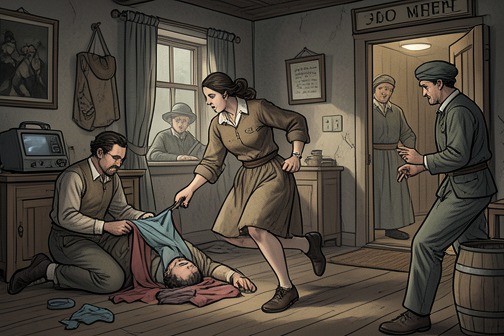
[Therese](entity:character-recall-character-therese-e6f71bb95cb7)’s escape from [Monseigneur](entity:character-recall-character-monseigneur-23064b0414e6)’s estate turns on a sudden opening: while her captors are incapacitated, she takes [Dubois](entity:character-recall-character-dubois-a7031019ef9c)’s discarded clothes, deceives a household attendant into hurrying to the master’s aid, and gets out. She finds [Valbois](entity:character-recall-character-valbois-0d6043234dc9) at the inn in [Grenoble](entity:location-recall-location-grenoble-6325891692ec) and is given back the money Dubois took, along with the promise of new clothes. The flight offers immediate safety, but only briefly; it sends her onward with [Madame Bertrand](entity:character-recall-character-madame-bertrand-39e0d32c5351) toward the events that will expose her identity and prompt [Monsieur de Corville](entity:character-recall-character-monsieur-de-corvill-c7fdedc9fb7e) to intervene.
## The opportunity to escape
Monseigneur has brought Therese and Dubois into his private rooms, where Therese is made a victim and witness of his violence. As the ordeal continues, he and Dubois stop to eat. Both become incapacitated, and Therese seizes the chance rather than risk waiting for them to recover.
She takes the skirt and mantle Dubois had removed, along with a candle, and heads for the stairs. The house is nearly empty of servants. When she encounters someone, she claims that the master is dying and urges the person to help him. The deception draws attention away from her, and she reaches the door without further obstruction.
## Flight to Grenoble and Valbois’s help
Therese does not know the roads: she was not permitted to see the route by which she had arrived. She takes the first road she encounters, which leads to Grenoble, and enters an inn while its occupants are still in bed. There she goes to Valbois’s room and tells him what happened, explaining that Dubois has also taken her clothing and the five louis he had given her.
Valbois calls her the unluckiest girl on earth, but interprets her survival as evidence of a protecting celestial power and urges her to remain virtuous. He declines to pursue Dubois, invoking the same reasons Therese had given the previous day for letting her go. Instead, he returns the stolen money and promises that a seamstress will bring two complete outfits and linen within an hour. His response repairs some of the immediate loss without undoing the danger she has escaped.
## Departure and the next journey
Valbois tells Therese that she must leave that day because Madame Bertrand is expecting her. He has persuaded Bertrand to delay her departure by a few hours, giving Therese time to join her. Therese thanks him, and she leaves Grenoble with Bertrand in a small covered carriage drawn by one horse. Bertrand’s fifteen-month-old daughter travels with them; Therese quickly becomes deeply attached to the child.
The flight therefore leads not to a settled refuge but to another journey. The escape preserves Therese’s life and briefly restores her means of travel, while returning her to the precarious dependence that has marked her repeated attempts to find safety.
## The escape within Therese’s testimony
Therese recounts the escape as part of the life story she tells [Madame de Lorsange](entity:character-recall-character-madame-de-lorsange-6f22533c4d7d) after being brought, bound and weakened, before her and Monsieur de Corville. Accused of murder, theft, and arson, she has been tried at [Lyon](entity:location-recall-location-lyon-1a930ca08d16) and is being taken to [Paris](entity:location-recall-location-paris-c02b439ce220) for confirmation of her sentence before a planned return to Lyon for execution. At [Montargis](entity:location-recall-location-montargis-70a246451687), Monsieur de Corville takes responsibility for her, and the guards permit her to speak after she has been unbound and given food.
Her account shifts the apparent meaning of the prisoner’s arrival: the woman being transported as a criminal is the witness to a long sequence of abuses and precarious escapes. When Therese finishes, Madame de Lorsange recognizes her as her lost sister, [Justine](entity:character-recall-character-justine-cc9f00a8d838). Moved by the testimony, Monsieur de Corville writes to the Lord Chancellor, assumes responsibility for Therese’s innocence, and arranges for her to stay at his château pending clarification of her case. The escape from Monseigneur’s estate thus forms one link in the chain of events that brings Therese within reach of protection, even as the larger account makes clear how repeatedly that protection has failed her.
Event 24
The Villefranche Inn Arson and Therese's False Accusation

[The Villefranche Inn Arson and Therese's False Accusation](entity:event-recall-event-d1c23013059f) turns an act of rescue into the occasion for [Therese](entity:character-recall-character-therese-e6f71bb95cb7)’s recapture and renewed prosecution. At an inn in [Villefranche](entity:location-recall-location-villefranche-ca4c39040ee6), she enters a burning building to save [Madame Bertrand](entity:character-recall-character-madame-bertrand-39e0d32c5351)’s infant; the child falls from her grasp as she tries to return it to its mother. [Dubois](entity:character-recall-character-dubois-a7031019ef9c), who admits that she arranged the fire to seize Therese, then reverses the story before the authorities, accusing the innocent traveler of arson, theft, and murder. The episode brings the novel’s repeated conflict between virtue and criminal power into a single night: Therese acts to protect a child, but her vulnerability and Dubois’s command of appearances make that compassion appear incriminating.
## Causes and Background
Therese and Madame Bertrand reach Villefranche after leaving [Lyon](entity:location-recall-location-lyon-1a930ca08d16) late in the day. They have stopped for the night at an inn, hoping to continue their journey the next morning. Therese explains that this circumstance is part of the misfortune that has repeatedly overtaken her: her conduct is virtuous, but the events around her are used to make her seem guilty. The fire begins less than two hours after the travelers retire, and the urgency of the emergency leaves little time for deliberation.
The immediate cause of the disaster is not an accident. In the post-chaise after her recapture, Dubois tells Therese that she had the hotel set on fire by men in her employ. She had arrived in Villefranche about an hour after Therese and learned that she had missed her by two hours in Lyon. Dubois claims that she wanted either to kill Therese in the blaze or take her back alive; the fire is thus both a threat and a trap. She also explains that [Monseigneur](entity:character-recall-character-monseigneur-23064b0414e6) was angry when Therese escaped and that he paid her two hundred louis for each girl she procured. Her pursuit is driven by this arrangement and by the consequences of failing to return Therese.
## The Rescue and Recapture
The fire wakes the travelers with the smell of smoke. They leave their room amid collapsing structures, burning timber, and the cries of people caught in the blaze. In the confusion, Therese realizes that Madame Bertrand has not taken her baby to safety. Without stopping to argue, she returns through the flames, reaches the infant, and attempts to carry it back to its mother.
As Therese crosses a partly burned beam, she loses her footing. Her instinctive movement to catch herself makes her release the child, which falls into the fire before Madame Bertrand’s eyes. Therese is then seized and carried away before she can understand whether the people surrounding her have come to help or to harm her. She discovers that she is in a post-chaise beside Dubois, who threatens her with a pistol and declares that she has caught her. The rescue fails, the child is lost, and Therese is once more in the custody of the woman who arranged the disaster.
## A Manufactured Account
Dubois openly claims responsibility to Therese for the fire, but when constables stop the carriage in Dauphine, she gives them a different account. She presents herself as a respectable woman who had been staying at the Villefranche inn and says she took Therese into her carriage out of pity after the fire. In her version, Therese approached her, claimed to have lost everything, and asked to be taken to Lyon to seek employment. Dubois says Therese then offered to serve her, and portrays her own decision to help as a mistake born of kindness.
The invented story makes Dubois appear to be a witness and benefactor rather than the person who engineered the fire. She disowns Therese and urges the officers to impose the law’s harshest penalties. Her account takes advantage of the gap between what the reader has just learned in the carriage and what the constables can verify at the roadside: Dubois knows the truth, while Therese’s effort to accuse her is treated as a self-serving complaint. The same woman who admits to arson in private can claim public respectability and present her captive as a criminal.
## Evidence, Prejudice, and Arrest
Dubois supplements her story with accusations that connect the fire to earlier rumors and incidents. She claims Therese set the inn ablaze to facilitate a robbery, stole all the money from her traveling companion, and threw the baby into the fire so that Madame Bertrand would be too distressed to notice the theft. She also repeats further slanders, portraying Therese as a woman of suspect character and alleging that she had escaped execution in [Grenoble](entity:location-recall-location-grenoble-6325891692ec). These charges turn a desperate rescue attempt into an apparent motive for murder and theft.
A local examination makes the accusation seem plausible because Therese had entered the hayloft that evening. Her reason was innocent: she had been looking for a water closet after receiving unclear directions from a maid. Yet the fact of her presence provides a circumstantial link to the place where the fire began. When she asks the officers to search her and establish that the stolen money is not on her, they dismiss the possibility that she acted alone, supposing that she must have passed the money to accomplices. Evidence that might have opened a line of inquiry instead becomes part of a story already formed against her.
Dubois then draws attention to the brand on Therese’s body, a mark left by [Rodin](entity:character-recall-character-rodin-960f1a96791a). Therese says Dubois knows both that she bears it and the misfortune that caused it, but the constables treat the mark as confirmation that she has a criminal history. Dubois offers to accompany Therese back if the officers require it, maintaining the pose of a helpful and wronged companion. They tell her that her admission, the mark, and the accusations are sufficient. They handcuff Therese, put her on a constable’s horse, and accept Dubois’s money for her guards before she leaves.
## Consequences and Narrative Significance
The officers take Therese to Lyon and place her in the keep, where she is registered as an arsonist, a thief, a prostitute, and a child-murderer. Seven people have died in the hotel fire. Therese had herself been close to dying there, yet the person who arranged the blaze escapes the authorities while the woman who tried to save the baby is left facing disgrace, punishment, and death. The reversal is not simply an error about who started the fire: it shows how a powerful accuser’s account can displace the known truth when the accused is poor and unprotected.
The event also repeats the legal pattern Therese described in her account of an earlier false charge. Then, a powerful employer framed her for theft after she resisted him, and her poverty helped make the accusation seem credible. At Villefranche, Dubois similarly uses a planted narrative and the appearance of respectability to redirect suspicion. In both episodes Therese’s denial is dismissed as recrimination, while material circumstances are interpreted in the prosecution’s favor. The arson case therefore adds another link to the chain of wrongful accusations that brings her before the courts.
The account reaches the reader as Therese’s testimony to [Madame de Lorsange](entity:character-recall-character-madame-de-lorsange-6f22533c4d7d) and [Monsieur de Corville](entity:character-recall-character-monsieur-de-corvill-c7fdedc9fb7e), rather than as an independent investigation of the fire. The frame listeners have already heard the charges against her when she begins explaining the circumstances of her arrest. Her narrative supplies the crucial distinction between the visible evidence—the hayloft, the fire, and the dead—and the hidden cause: Dubois’s deliberate plan to recapture her. After the tale, Madame de Lorsange and Therese recognize one another as sisters, while Monsieur de Corville takes responsibility for Therese’s case and seeks her release. That later intervention offers a route toward vindication, but it also underscores how much her safety depends on a powerful protector willing to credit her testimony.
Event 25
Saint-Florent and Cardoville's Secret Abuse of Therese
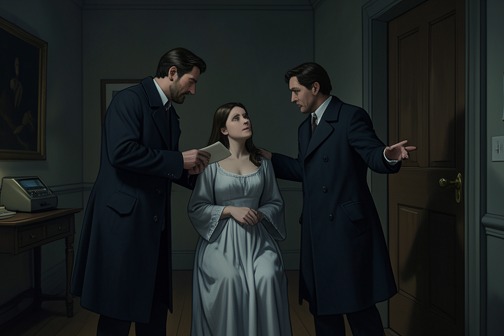
[Saint-Florent and Cardoville's Secret Abuse of Therese](entity:event-recall-event-257612ae5966) is the nighttime assault that turns a promise of judicial help into another instrument of [Therese](entity:character-recall-character-therese-e6f71bb95cb7)’s captivity. [Saint-Florent](entity:character-recall-character-saint-florent-48cd938589ab) presents access to [Monsieur de Cardoville](entity:character-recall-character-monsieur-de-cardovi-61613e81247d) as a possible path to clearing her name; instead, the two men use their official and social power to abuse her in private, suppress any prospect of complaint, and send her back to prison. The episode makes the injustice of Therese’s case concrete: the man who claims authority to judge her is among those exploiting her, and the mechanisms meant to establish guilt also help conceal their own crimes.
## The Promise of a Hearing
Therese is imprisoned under accusations Saint-Florent has helped direct against her. When she appeals to him for help, he acknowledges that her fate rests with Monsieur de Cardoville, an official whose position gives him influence over the case. Saint-Florent says he will speak to his childhood friend and suggests that a private interview might make it easier to turn matters in Therese’s favor. He tells her to be ready to justify herself, while leaving the nature of the proposed arrangements ominously undefined.
Therese recognizes the danger in Saint-Florent’s offer: his stated concern does not fit what she knows of his character. Yet her options have been reduced to desperation. She decides to go when summoned, reasoning that even a dangerous prospect of help may be preferable to the criminal’s end that awaits her. The episode’s trap therefore begins before she reaches the mansion. Her need to escape a wrongful sentence is precisely what makes the appearance of assistance effective.
At nine that evening, the jailer tells her that Saint-Florent and Cardoville want to see her and presents the summons as a favor offered by Heaven. Two unfamiliar men take custody of her without explanation and convey her by carriage to Saint-Florent’s mansion. They lead her to the fourth floor, through a succession of small rooms whose doors close behind them, and into a remote room without windows. The arrangements make clear that this is not an ordinary interview: the secrecy and isolation prevent Therese from seeking help or being seen.
## Authority Turned Against Therese
Cardoville is there with Saint-Florent. Therese is told that this heavy-set man, dressed informally but recognizable as a legal professional, is the person upon whom her case depends. The room is lit by twenty candles; Saint-Florent’s two young associates, La Rose and Julien, are also present. One of them confirms that the household has been shut in for the night, the servants sent away, and the gatekeeper instructed to admit no one. What has been presented as a confidential opportunity to plead her innocence is thus a meeting arranged to exclude witnesses.
Cardoville claims that forty-two witnesses stand against Therese and treats this number as proof that her case is already settled. He then makes the condition of any supposed favor explicit: she must obey what the men demand. Therese protests that innocence should not have to yield to wrongdoing to escape a judicial snare. Saint-Florent answers by describing the weak as subject to the desires of the strong, reducing the case to a contest in which their power, not evidence or justice, determines what happens.
The men strip and examine Therese against her resistance. Saint-Florent and Cardoville use the encounter to assert control over her, while the other two men take part in the assault. Therese’s account stresses not only the violence but its arrangement: the men control the room, her movements, and the terms on which she is handled, while she has no ally or means of appeal. Cardoville’s role is especially revealing. He is not simply present as Saint-Florent’s companion; he uses the authority attached to his judicial position to threaten Therese and assist in making her powerless.
## Escalation and Concealment
The abuse continues through successive stages, with Cardoville and Saint-Florent directing the proceedings and La Rose and Julien joining them. The narrative presents the event as a coordinated exercise in domination rather than a private encounter between Therese and a single attacker. When the men pause, they arrange for the effects of their violence to be treated so that visible traces disappear, while Therese remains in pain. Cardoville mocks the prospect of a complaint by pointing to the difficulty of proving what they have done if evidence of the assault can be removed.
The men then make their impunity explicit. Cardoville argues that Therese will not be believed if she reports that she left the prison that night: the jailer belongs to them and will deny it, and their local standing gives them control over proceedings. He presents the suffering they inflicted as an expiation for the crimes of which they accuse her, twisting the language of justice and religious submission to make violence sound like deserved punishment. Their threats are effective because every safeguard Therese might appeal to—custody records, testimony, judicial authority, and public credibility—is in the hands of their associates.
Before dawn, the men return Therese to prison in a carriage. Julien and La Rose assault her again during the journey. Once she is back in her cell, the jailer warns that any account of her absence will be contradicted and will achieve nothing. The warning confirms that the visit was not an evasion of the prison’s control but an operation made possible by it: Therese can be taken out and returned without a witness, while the official record remains in the jailer’s keeping.
## The Case Recast as Evidence
The next day, Therese hears nothing. She is so distressed that she refuses food. Two days after the assault, Cardoville comes to question her in his judicial capacity, behaving as though he has no connection to the previous night. Therese tries to defend herself, but Cardoville turns the interview into another means of establishing her guilt. The same official who participated in her abuse now presides over the process that will determine her fate.
Cardoville relies on Saint-Florent’s testimony to add to the accusations. He claims that Therese had belonged to a band of thieves, had urged them to kill Saint-Florent, and later stole a watch and one hundred louis from him during a supposed visit to his home. Therese’s knowledge of Saint-Florent is made to serve as support for the accusation, while her response is treated as evidence against her: Cardoville orders the clerk to record her silence and expressions as an admission of guilt. The interrogation does not test testimony impartially. It converts the men’s account, and even Therese’s distress, into material for a predetermined judgment.
This turn links the episode to the wider pattern of Therese’s misfortunes. Earlier, when [Monsieur du Harpin](entity:character-recall-character-monsieur-du-harpin-39a82be726bc) accused her of stealing a diamond, the stone was found in her mattress and the authorities refused to hear her explanation; her poverty and lack of protection made the accusation seem credible. Now Saint-Florent again supplies the accusation, while Cardoville controls how it is recorded and understood. In both cases, a powerful accuser’s story outweighs Therese’s testimony, but here the collusion reaches inside the judicial process itself.
## Witness, Recognition, and Rescue
The account of the abuse becomes part of Therese’s longer first-person recital. At [Montargis](entity:location-recall-location-montargis-70a246451687), the guards permit [Monsieur de Corville](entity:character-recall-character-monsieur-de-corvill-c7fdedc9fb7e) to take responsibility for the prisoner, and [Madame de Lorsange](entity:character-recall-character-madame-de-lorsange-6f22533c4d7d) asks Therese to tell the story of her troubles. Therese is hesitant to speak because her history seems to accuse Heaven’s will; nevertheless, she recounts the succession of misfortunes that has brought her to a criminal’s predicament. The episode is therefore presented not as an isolated report but as testimony offered to listeners who can act on what they hear.
Monsieur de Corville and Madame de Lorsange are profoundly moved when Therese finishes. Madame de Lorsange recognizes her as her sister, [Justine](entity:character-recall-character-justine-cc9f00a8d838), and the two embrace after years of separation. Their recognition changes the immediate stakes: Therese is no longer a prisoner pleading to strangers but a sister whose identity and innocence have become personally urgent to her listeners.
Monsieur de Corville writes to the Lord Chancellor, accepts responsibility for Therese’s innocence, and asks that she be held at his château until her case is clarified. He gives his word that he will produce her in court when required and makes himself answerable to the guards, who entrust her to him. His intervention does not undo the assault or erase Cardoville’s fabricated case, but it breaks the immediate chain of prison custody and creates the possibility of legal review. The episode’s decisive contrast is between two forms of authority: Cardoville uses office and secrecy to make abuse appear unchallengeable, while Corville uses his standing to place Therese under protection and bring her case before a higher authority.
Event 26
Therese Is Wrongfully Convicted in Lyon

[Therese Is Wrongfully Convicted in Lyon](entity:event-recall-event-12daf0b17954) is the judicial culmination of a pattern in which false accusations and unequal power repeatedly turn her innocence into apparent guilt. In the [Lyon](entity:location-recall-location-lyon-1a930ca08d16) case, [Monsieur de Cardoville](entity:character-recall-character-monsieur-de-cardovi-61613e81247d) stages a corrupt interrogation around [Saint-Florent](entity:character-recall-character-saint-florent-48cd938589ab)’s fabricated account, treats [Therese](entity:character-recall-character-therese-e6f71bb95cb7)’s distress as confirmation, and sends her toward execution; her release comes not through an impartial reconsideration of evidence but through [Monsieur de Corville](entity:character-recall-character-monsieur-de-corvill-c7fdedc9fb7e)’s intervention, her reunion with [Juliette](entity:character-recall-character-juliette-99dd48fdc5e1), and ultimately a royal decree.
## The Case and Its Frame
The conviction first enters the story through the arresting party’s explanation to Monsieur de Corville and [Madame de Lorsange](entity:character-recall-character-madame-de-lorsange-6f22533c4d7d). Therese is accused of murder, theft, and arson at an inn several leagues from Lyon. She has already been tried there, and under the stated procedure is being taken to [Paris](entity:location-recall-location-paris-c02b439ce220) for confirmation of the sentence before she is to be returned to Lyon for execution. The guards themselves describe her as gentle and honest, a contrast that prompts Monsieur de Corville to suspect one of the errors common in the lower courts and leads the travelers to ask to hear her account.
At [Montargis](entity:location-recall-location-montargis-70a246451687), Monsieur de Corville takes responsibility for the prisoner, has her unbound and given food, and offers the safety in which she can speak. Madame de Lorsange, moved by the contrast between the accused girl’s condition and her own prosperity, asks Therese to tell the story of her misfortunes. Therese hesitates because recounting her life seems to her to amount to an accusation against Heaven, but then begins her testimony. The Lyon prosecution is thus presented within a larger first-person account, heard by people whose responses will alter the immediate course of the case.
## The Interrogation and Fabricated Testimony
The central judicial abuse occurs when Monsieur de Cardoville questions Therese in prison. She recognizes him as a man who has already abused and exploited her, yet he enters in the role of a judicial authority. Her attempt to plead her cause cannot overcome the account he has prepared: his skill at accusation, she says, supplies more charges than she can devise defenses.
Cardoville asks whether she knows Saint-Florent, a wealthy and supposedly estimable citizen of Lyon. When Therese acknowledges that she does, Cardoville presents that acquaintance as the foundation for a series of claims. Saint-Florent alleges that Therese once belonged to a band of thieves, stole his money and pocketbook, and urged the others to kill him, although he escaped. He further claims that, years later in Lyon, he received her at his home after she promised to behave well, and that she stole a watch and one hundred louis while he was advising her to remain on the path of righteousness.
Therese is overcome with anger at these allegations. Cardoville exploits that reaction by ordering the clerk to record her silence and facial expressions as an acknowledgment of guilt, effectively turning the accused person’s distress into supposed evidence. When she cries out against him and invokes the God of Justice, he tells the jailer that she is unsettled by despair and remorse and therefore cannot continue the interrogation. He then declares the dossier complete and represents her as having confessed to all the charges. The proceeding makes the appearance of confession out of a protest that it refuses to hear.
## Sentence and Its Consequences
The case is tried quickly. The narrative identifies hatred, vengeance, and lust as the forces directing the court, and Therese is condemned despite her innocence. She is dispatched to Paris for confirmation of the sentence, traveling in the status of a criminal although the reader has heard her account of the accusations against her. Her journey becomes another occasion for her to reflect on a recurring imbalance: acts of generosity and refusals to participate in wrongdoing have repeatedly brought her punishment, while those who injure her prosper.
The Lyon case also recalls an earlier failure of justice in Therese’s life. When [Monsieur du Harpin](entity:character-recall-character-monsieur-du-harpin-39a82be726bc) accused her of stealing a diamond worth a thousand crowns and the ring was found in her mattress, the authorities seized and imprisoned her without seriously entertaining her defense. Her explanation—that the accusation arose from his revenge after she resisted his attempt to involve her in crime—was treated as recrimination, while his reputation for integrity counted in his favor. Therese’s account explicitly connects such outcomes to the way poverty and lack of protection make a defendant’s supposed guilt seem self-evident. The later Lyon proceedings repeat that structure in a more elaborate form: a powerful accuser’s claims carry institutional weight, while Therese’s protest is recast as evidence against her.
## Reunion and Intervention
The transfer to Paris does not end with the sentence’s confirmation. At Montargis, after Therese has completed her account, Monsieur de Corville is profoundly moved, and Madame de Lorsange is nearly overcome. Madame de Lorsange recognizes in the prisoner the sister she has lost: [Justine](entity:character-recall-character-justine-cc9f00a8d838) is the name by which Therese had been known, and Madame de Lorsange is Juliette. The sisters embrace, their reunion giving Therese a moment of comfort before her impending execution.
Monsieur de Corville responds by writing to the Lord Chancellor. He accepts responsibility for Therese’s innocence, offers to guarantee it under oath, and asks that she be held at his château rather than another prison until her case is clarified. He identifies himself to the guards, takes charge of the prisoner, and arranges a carriage. His intervention changes the immediate situation from a forced transfer toward execution to protected custody, but it does so through his standing and personal guarantee rather than through the Lyon court’s recognition of its own failure.
## Royal Reversal and Unequal Justice
The King’s letters eventually nullify the legal proceedings unjustly brought against Therese, restore her name as an honest citizen, silence the tribunals that had sought to defame her, and grant her an annual income of one thousand crowns. That allowance comes from interest on gold seized in the counterfeiting workshop in [Dauphiné](entity:location-recall-location-dauphin-bde49879d3af). The decree therefore provides both legal restoration and material support, addressing the public stigma and poverty that had marked her vulnerability.
The attempted consequences for Monsieur de Cardoville and Saint-Florent reveal the limits of that reversal. They are to answer for their actions, but before their crimes become known Cardoville has been appointed to an administrative post and Saint-Florent to the general supervision of colonial trade. The edicts do not reach them; powerful families quiet the resulting scandal, and the men settle into positions of prosperity while their abuses are soon forgotten. Therese’s name is cleared, but the outcome does not produce equivalent accountability for those who fabricated the evidence and used their authority against her. The contrast makes the episode’s central injustice structural: access to protection and credibility follows power, and even a successful appeal depends on sympathetic elites and royal intervention.
Event 27
Therese Reunites with Juliette and Is Rescued
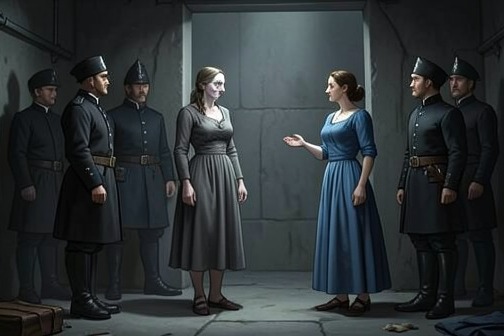
At [Montargis](entity:location-recall-location-montargis-70a246451687), a prisoner facing transfer from [Lyon](entity:location-recall-location-lyon-1a930ca08d16) to [Paris](entity:location-recall-location-paris-c02b439ce220) for confirmation of a death sentence is recognized as the missing sister of [Madame de Lorsange](entity:character-recall-character-madame-de-lorsange-6f22533c4d7d). The revelation turns [Therese](entity:character-recall-character-therese-e6f71bb95cb7)’s first-person account of repeated persecution into a family reunion and a rescue: [Monsieur de Corville](entity:character-recall-character-monsieur-de-corvill-c7fdedc9fb7e) assumes responsibility for her, while [Juliette](entity:character-recall-character-juliette-99dd48fdc5e1)’s compassion becomes the emotional counterpart to the legal and social protection she has lacked. Her restoration is substantial but qualified. The King later nullifies the proceedings against her and grants her an annuity, yet the officials and accusers implicated in her suffering retain powerful positions.
## The condemned traveler at Montargis
The reunion begins not with recognition but with the spectacle of a prisoner in custody. Therese is bound and physically weakened; she faces accusations of murder, theft, and arson. A constable explains that she has been tried at Lyon and is being taken to Paris to have the sentence confirmed before she is returned to Lyon for execution. Even the guards regard her as gentle and apparently honest, a contrast that makes the charges seem doubtful to Monsieur de Corville and Madame de Lorsange.
Monsieur de Corville identifies himself and takes responsibility for the prisoner. The party stays overnight at Montargis, Therese is unbound and given food, and Madame de Lorsange asks to hear her story. This change in custody creates the conditions for the disclosure: rather than meeting Therese only as a condemned stranger, the couple hear the history that has led her to the brink of execution.
## Testimony and recognition
Therese hesitates to tell her story because she fears that recounting her life will amount to accusing Heaven and questioning divine will. She nevertheless begins, explaining that she has concealed her name and birth. Her account describes an orphan who lost her parents young, spent a small inheritance while seeking an appropriate position in Paris, and became increasingly exposed to poverty and exploitation. The frame of testimony makes her history more than a sequence of misfortunes: it asks the listeners to judge the gap between her insistence on innocence and the institutions that have repeatedly treated her as guilty.
Madame de Lorsange listens with profound emotion. She tells Therese that an unusually tender feeling draws her toward the prisoner and asks her to disclose her identity, suspecting that she may be her sister. Therese recognizes the name Juliette and throws herself into Madame de Lorsange’s arms. The two women identify one another as sisters; their sobs briefly leave them unable to speak. The recognition reverses the scene’s initial arrangement: the prisoner who had been approached as an unknown criminal is now known as a beloved member of a family.
## Corville’s intervention and immediate care
The reunion moves Monsieur de Corville to act. He writes to the Lord Chancellor, attests that he accepts responsibility for Therese’s innocence, and requests that she be held at his château rather than another prison until the case is clarified. He gives his word that he will produce her in court when required, identifies himself to the guards, and takes charge of her. His intervention changes Therese’s immediate circumstances from state custody and an impending transfer to the protection of a powerful advocate.
Corville presents the change to Therese as a promise that her virtues will not remain unrewarded. Juliette urges her sister to trust the protector who will not abandon her as others have done. Both women embrace Corville’s knees and weep. A carriage takes them to the château, where Corville and Juliette provide food, a comfortable bed, medicine, bathing, and clothing, and make a sustained effort to restore her health and ease. This care is the practical aftermath of recognition: kinship gives Therese a place of belonging, while Corville’s status supplies protection that personal virtue alone has not secured.
## Exoneration and the limits of redress
At the château, an excellent surgeon treats the brand left by [Rodin](entity:character-recall-character-rodin-960f1a96791a)’s violence, and the mark soon disappears. Corville also mobilizes support at court, reviving the zeal of Monsieur S* * * and publicizing the mistreatment Therese has suffered. Her recovery therefore proceeds on two connected fronts: those around her attend to her condition, while Corville works to undo the legal story that has made her appear guilty.
Letters from the King eventually nullify the legal proceedings initiated against Therese, restore her standing as an honest citizen, and direct the realm’s tribunals to cease efforts to defame her. She is also awarded an annual income of one thousand crowns, drawn from gold seized in the counterfeiters’ workshop in [Dauphiné](entity:location-recall-location-dauphin-bde49879d3af). The decree reverses her legal status and provides material support, but it does not produce equal accountability. The authorities wish to make Cardoville and [Saint-Florent](entity:character-recall-character-saint-florent-48cd938589ab) answer for their actions; before their crimes become public, however, Cardoville is appointed to a provincial administration and Saint-Florent to the general supervision of Colonial Trade. Their powerful families help quiet the resulting scandal, and the men remain installed in positions of influence.
## Narrative and thematic significance
The episode completes the movement from testimony to recognition to intervention. Therese’s story, initially requested by listeners who see her as a possible victim of judicial error, discloses the family relationship that changes the stakes of their encounter. The reunion is not merely an emotional reward: it creates the personal bond that prompts Corville’s formal appeal and gives his advocacy a concrete object. In a narrative where accusations and testimony repeatedly fail to secure justice for the poor, the listeners’ willingness to hear and act on Therese’s account becomes decisive.
The outcome nonetheless complicates the promise of rescue. Therese is released from the immediate threat of execution, legally cleared, and materially provided for, but the men whose power helped produce her suffering are not meaningfully punished. Protection arrives through Juliette’s recognition and Corville’s influence, while royal authority restores Therese’s name without dismantling the privilege that shields her persecutors. The reunion offers a profound personal reversal, but its partial justice preserves the larger contrast between innocence in distress and power that survives accusation.
Event 28
Therese Is Exonerated by Royal Decree

[Therese Is Exonerated by Royal Decree](entity:event-recall-event-fe4f41c46ea9) reverses the legal ruin imposed on an innocent woman, restoring her name and granting her an income, while revealing how little the courts have protected her without powerful advocates. Her vindication brings personal relief, but the officials and accusers responsible for her suffering largely escape consequences.
## Background: A Pattern of Judicial Injustice
The decree answers a long chain of fabricated accusations and failed appeals. Earlier, her employer, [Monsieur du Harpin](entity:character-recall-character-monsieur-du-harpin-39a82be726bc), planted a diamond in her mattress after she refused his advances. The discovery was treated as conclusive proof; [Therese](entity:character-recall-character-therese-e6f71bb95cb7) was arrested and sent to the [Conciergerie](entity:location-recall-location-conciergerie-24e42eca0f41) without the authorities hearing her defense. Her poverty and lack of protection made the accusation easier to believe than her protestations of innocence.
Her later attempt to explain that Monsieur du Harpin had framed her out of vengeance was dismissed as recrimination. The narrator presents the case as a system in which a poor defendant’s circumstances are mistaken for evidence of guilt, while a man reputed to be respectable is presumed incapable of wrongdoing. The royal action eventually reverses the consequences of this presumption, but only after Therese has endured years of further persecution.
## Protection and Recovery
The immediate path to redress begins when [Monsieur de Corville](entity:character-recall-character-monsieur-de-corvill-c7fdedc9fb7e) takes responsibility for Therese’s case after she is brought before him in [Lyon](entity:location-recall-location-lyon-1a930ca08d16). He writes to the Lord Chancellor, guarantees her innocence under oath, and asks that she be placed in his custody until the case is resolved. Therese is transferred to his protection and brought to his château, where de Corville and [Madame de Lorsange](entity:character-recall-character-madame-de-lorsange-6f22533c4d7d) provide food, rest, medical attention, and clothing.
An excellent surgeon removes the brand inflicted by [Rodin](entity:character-recall-character-rodin-960f1a96791a). The account links this physical recovery with a broader restoration: Therese’s health improves, her appearance revives, and laughter returns after years of distress. De Corville also publicizes her mistreatment and enlists Monsieur S* * * in pressing her case, extending the appeal beyond the private refuge of the château and toward the institutions able to reverse the proceedings.
## The Royal Decree
Letters from the King nullify the legal proceedings unjustly initiated against Therese and restore her the name of an honest citizen. The decree also orders the realm’s tribunals to remain silent about the efforts made to defame her and awards her one thousand crowns a year. The income comes from interest on the gold seized from the counterfeiters’ workshop in Dauphine, tying her material security to the confiscation of criminal proceeds.
The decision is therefore more than a declaration of innocence: it formally repairs her civic standing and gives her continuing financial support. Yet the account distinguishes official vindication from full justice. The King’s letters undo the charges against Therese, but do not produce an equivalent reckoning for the people whose power enabled her persecution.
## Unequal Consequences
Cardoville and [Saint-Florent](entity:character-recall-character-saint-florent-48cd938589ab) are to be made answerable for their crimes, but the prospect of punishment quickly dissolves. Before their offenses become public, Cardoville receives an administrative appointment in a province and Saint-Florent a position overseeing colonial trade. Both have already reached their posts when the edicts take effect; powerful families then quiet the scandal, and their depredations are soon forgotten.
This contrast defines the decree’s mixed outcome. Therese is cleared and supported, but the men who helped condemn and abuse her remain protected by status and influence. Royal intervention can restore her name, yet it does not make the ordinary machinery of justice equal: her rescue depends on de Corville’s advocacy and the King’s authority, while her persecutors retain positions and escape lasting accountability.
## Significance in the Narrative
The exoneration briefly reverses the novel’s recurring pattern of virtue suffering while wrongdoing prospers. It gives Therese what the courts repeatedly denied her—recognition as innocent—and confirms the practical force of loyal protection. At the same time, the appointments and quieting of the scandal prevent the reversal from becoming a simple triumph. The decree repairs the victim’s legal status without dismantling the privilege that made her vulnerable, so vindication arrives as relief within an unjust order rather than proof that the order has been corrected.
Event 29
Therese Is Killed by Lightning

[Therese Is Killed by Lightning](entity:event-recall-event-27f51dbd7ef0) is the abrupt death that closes [Therese](entity:character-recall-character-therese-e6f71bb95cb7)’s long ordeal and precipitates [Madame de Lorsange](entity:character-recall-character-madame-de-lorsange-6f22533c4d7d)’s conversion. In a room exposed to a violent storm, Therese is struck while trying to protect her sister; the lightning turns the image of a fleeting brilliance into the means of a death that Madame de Lorsange reads as a warning about virtue, crime, and divine judgment.
## Causes and Setting
Near the end of summer, [Monsieur de Corville](entity:character-recall-character-monsieur-de-corvill-c7fdedc9fb7e) is staying at his country estate. A planned outing is postponed as a dreadful storm approaches, and the intense heat has left all the windows open. The scene begins with nature in convulsion: lightning flashes, hail lashes down, and the winds rage. The narration presents the storm as more than background, imagining [Nature](entity:concept-recall-concept-8955fbc2cbb1) as exhausted by what it has made and ready to unsettle the elements and wrench new forms from them.
## The Fatal Strike
Terrified by the storm, Madame de Lorsange urges her sister to hurry and close the shutters. Therese rushes to the windows, already being battered and broken by the weather. She struggles against the wind for a minute, is forced back, and is struck by a blazing thunderbolt in the middle of the room. It enters her right breast, reaches her heart, consumes her chest and face, and exits through her belly. The detail makes the death bodily and irreversible: the lightning does not merely interrupt a rescue attempt but leaves no possibility of hope for Therese.
## Witnesses and Immediate Aftermath
Madame de Lorsange cries out and faints; Monsieur de Corville calls for help. When Madame de Lorsange revives, Monsieur de Corville orders that Therese’s body be carried away. Madame de Lorsange stops him, asking that the body remain before her eyes. She says that she must contemplate it to confirm the decision she has just made, and refuses to let her resolve be swayed. The death thus becomes a scene of witnessing as well as loss: the body that marks the end of Therese’s suffering becomes the immediate focus of her sister’s reckoning with her own life.
## Meaning and Consequences
Madame de Lorsange interprets Therese’s calamities as a warning from the Eternal. She contrasts Therese, who respected her duties and had no sin to repent, with the criminals who prospered while feeding on her; their apparent good fortune, she concludes, was only a trial of virtue. She likens crime’s prosperity to lightning: a treacherous brilliance that briefly adorns the atmosphere before plunging the dazzled victim into death. The storm’s literal flash therefore gives physical form to her moral interpretation of the story’s recurring reversal, in which vice appears to flourish while virtue suffers.
The revelation does not resolve the mystery of providence. Madame de Lorsange acknowledges that Heaven’s actions are enigmas beyond human understanding, but insists they must not seduce anyone into imitating the wicked or mistaking temporary prosperity for moral approval. Faced with Therese’s death, she condemns her own libertinage, irreligion, and abandonment of principle, and decides to separate from Monsieur de Corville and undertake penance. She leaves for [Paris](entity:location-recall-location-paris-c02b439ce220), takes the [Carmelite](entity:organization-recall-organization-b22ef5415622) veil, and becomes an example to her order through her piety, wisdom, and regular conduct. Therese’s death is therefore both the final catastrophe of her own narrative and the turning point in her sister’s life; it gives no worldly compensation to the victim, but becomes the occasion for Madame de Lorsange’s religious renunciation.
Event 30
Juliette Renounces Her Former Life and Enters a Convent

[Juliette Renounces Her Former Life and Enters a Convent](entity:event-recall-event-01051fec1de5) is the final moral reversal in the story: after lightning kills [Therese](entity:character-recall-character-therese-e6f71bb95cb7), [Juliette](entity:character-recall-character-juliette-99dd48fdc5e1) reads her sister’s suffering and death as a divine warning, abandons her former life, and enters a [Carmelite](entity:organization-recall-organization-b22ef5415622) convent. Her conversion gives the novel’s ending its explicit moral frame, even as it follows a catastrophe that has just made the relation between virtue, suffering, and Providence appear painfully uncertain.
## The catastrophe and its interpretation
At [Monsieur de Corville](entity:character-recall-character-monsieur-de-corvill-c7fdedc9fb7e)’s country estate, a violent storm interrupts an intended outing. With the windows open because of the heat, Juliette urges Therese to close the shutters. Therese rushes toward the windows already being broken by the storm; after struggling briefly against the wind, she is driven back and struck by lightning. The bolt enters her right breast, reaches her heart, burns her chest and face, and exits through her belly. Her death turns the reunion that had restored the sisters to one another into the immediate cause of Juliette’s transformation.
Juliette refuses to let Therese’s body be carried away. She asks to keep it before her eyes because she needs to contemplate it while deciding what to do. She says that Therese’s extraordinary suffering, despite her having respected her duties, has forced her to examine herself. The contrast is stark: the sister whose life had been marked by innocence and calamity is dead, while Juliette recognizes that her own life has been stamped by libertinage, irreligion, and abandonment of principle.
## Renunciation and departure
Juliette interprets the storm not as proof that vice prospers without consequence, but as a warning that apparent prosperity may mislead. She calls the prosperity of crime an ordeal to which Providence exposes virtue, likening it to lightning that briefly embellishes the sky before hurling the dazzled person into death. Therese’s disasters, in this reading, are a warning to Juliette to heed her guilt and seek refuge in God. The explanation is Juliette’s conviction, not an account that resolves the novel’s larger mystery of why the virtuous suffer.
She tells Monsieur de Corville that no bond requires them to remain together and asks him to forget her while approving her decision to undertake penance. She describes the lightning strike as necessary to her conversion in this life and to the happiness she hopes for in another. Her departure therefore entails both a religious commitment and the end of her relationship with the man who had just protected Therese and undertaken to secure her exoneration.
Juliette asks Monsieur de Corville not to make inquiries into what becomes of her. She takes some money, leaves the rest of her property to him with a request that it be made into a pious legacy, and immediately sets out for [Paris](entity:location-recall-location-paris-c02b439ce220) by carriage. There she takes the Carmelite veil. The sequence is decisive and concrete: she leaves the estate, relinquishes most of her possessions, and enters religious life rather than merely expressing remorse.
## Aftermath and narrative significance
In the years that follow, Juliette becomes an example to her order and an edifying presence through her piety, wisdom, and regularity of conduct. The ending presents her conversion as a sustained change in life, not a momentary response to grief. Monsieur de Corville, meanwhile, rises to the highest posts in his country and uses his honors to benefit the people, serve his ruler, and aid his friends.
The novel’s closing appeal makes Juliette’s interpretation its stated moral: readers are urged to conclude that true happiness lies in virtue and that, if God permits virtue to be persecuted on earth, it is to be compensated in heaven. This conclusion gives Therese’s death a theological meaning within Juliette’s response, but it does not erase the force of the reversal that prompted it. The final movement from lightning-struck death to penitential withdrawal converts the sisters’ reunion into the occasion for Juliette’s renunciation, while leaving the question of earthly justice at the center of the book’s argument.