Arteriosclerosi
LeilaArteriosclerosi, or arteriosclerosis, enters the novel through the remembered diagnosis of Marcello Trento’s father and the shadow that history casts over Marcello’s own final days. The parallel is deliberately unsettling: Marcello has reached the age at which his father fell ill, and he later dies after violent vertigo, but the narrative never states that a physician diagnosed Marcello with arteriosclerosis. The condition therefore shapes the family’s anticipation of death without supplying a confirmed explanation for it.
The diagnosis in Marcello’s family
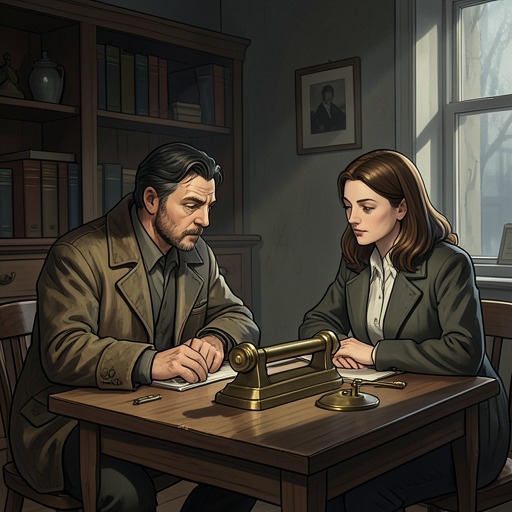
Marcello’s father had once been seen to lower his head while talking, roll his eyes, and then recover, convinced that he had merely fallen asleep. A physician told the family that this was arteriosclerosis and advised them to prepare for the worst. Five months later, the devout old man was found dead in his bed. The account makes the diagnosis consequential not through a clinical description of its course, but through the short interval between the physician’s warning and the death that followed.
Marcello and the return of the warning
At seventy-two, the age his father had reached during his illness, Marcello stands by a large window overlooking the dark sky above Mount Torraro and the wooded slopes descending toward the Posina ravine. He joins his hands in prayer. The narrator presents the moment as solemn rather than tragic: Marcello imagines death as a hoped-for reunion with the souls he has lost, while also feeling awe before God as judge. Beside him, a brass lamp recalls the one that had burned beside his father’s bed. The object links the two generations and gives the remembered diagnosis an immediate, material presence. Teresina, who knows how Marcello’s father died, wonders whether Marcello has thought of that history. She does not tell Lelia Camin, who may not know it; instead, she proposes calling a doctor and sparing Marcello the emotion of meeting Massimo Alberti that evening. Her concern shows how the past diagnosis governs the household’s reading of Marcello’s condition, even before a new medical judgment is reported.
Vertigo, death, and the limits of diagnosis
Later, after arranging household wages and monthly aid for the poor, Marcello takes two cyclamen plants outside and places them together behind the villa on the grassy slope. He has experienced vertigo before, including when rising after tending the soil around his plants, and does not heed it. That night, after kneeling to say his prayers and getting into bed, he is struck by a more violent attack. A sensation like lightning runs from the nape of his neck to his legs; he believes he cries out but cannot, and recognizes that he is dying. He cannot finish the prayer he tries to say. The scene records a sudden death, not a definitive diagnosis: the earlier report of arteriosclerosis concerned his father, and the text does not identify Marcello’s attack as the same disease.
Other illness and medical limits
The novel also depicts serious illness through episodes that should not be mistaken for arteriosclerosis. When Lelia is found after leaving at night and losing consciousness, Donna Fedele Vayla tells the doctor only what is necessary and asks him to accept the explanation of sleepwalking so as to respect Lelia’s private feelings. Later, a doctor finds Donna Fedele’s heart very weak, but cannot assess her fully because she does not permit the complete examination he considers necessary. When her fever rises sharply, he identifies a general infection and says nothing more can be done. These episodes distinguish diagnosis, observed symptoms, and what a patient or caregiver permits the doctor to know. Set beside the inherited warning surrounding Marcello, they make medical knowledge in the novel consequential but limited: it can alert a family to danger, while leaving the precise cause or course of an individual death uncertain.