Lelia’s childhood
Lelia’s Troubled Origins
[Lelia Camin](entity:character-recall-character-lelia-camin-eaf7777ee78d) grows up between parents whose disreputable conduct teaches her early to distrust the household that should have sheltered her. She recognizes in herself the passions she associates with their example and tries to oppose them through pride and self-discipline.
Her schooling at a convent develops her intelligence and musical gift, but leaves her religious practice more habitual than deeply understood. That tension later shapes both her skepticism and her resistance to anyone who claims authority over her conscience.
Fedele’s adolescence and youth
Fedele’s First Love
As a girl, [Fedele Vayla di Brea](entity:character-recall-character-fedele-vayla-di-bre-a87e98bedf2d) forms an intense attachment to [Marcello Trento](entity:character-recall-character-marcello-trento-a30478b1e1de), who is much older and already moving toward marriage. When their closeness threatens to become an acknowledged passion, Marcello withdraws rather than betray his fiancée.
Fedele accepts the renunciation, but the unfulfilled love remains a private wound. She eventually leaves the area, carrying its memory through years of solitude and service to others.
Several years before the opening
Andrea Courts Lelia
[Andrea Trento](entity:character-recall-character-andrea-trento-144084ce7610) falls in love with [Lelia](entity:character-recall-character-lelia-7294c2d2495f) while she is still very young. She accepts his devotion more from gratitude and the pleasure of being cherished than from an equal certainty of love.
[Andrea](entity:character-recall-character-andrea-9846246a92e3) imagines their marriage and a future together at [La Montanina](entity:location-recall-location-la-montanina-63db9eb3472e). His friend [Massimo Alberti](entity:character-recall-character-massimo-alberti-680dc8c27221), whom Andrea greatly admires, becomes a subject of their conversations, though Lelia refuses to meet him.
Before the opening
Benedetto’s Influence
Massimo meets [Benedetto](entity:character-recall-character-benedetto-de60f42ab536), formerly [Piero Maironi](entity:character-recall-character-piero-maironi-0642ea562d7e), and comes to love him as a teacher and spiritual guide. Benedetto’s example helps Massimo remain within the [Roman Catholic Church](entity:organization-recall-organization-ba391efc867a) even as he studies religious reform and contested questions of belief.
[Don Aurelio](entity:character-recall-character-don-aurelio-fe663b9ae8d4) also becomes close to Benedetto and Massimo. Their shared circle will later make the fate of Benedetto, and Massimo’s changing faith, central to the story.
Three years before the opening
Andrea’s Death
[Andrea](entity:character-recall-character-andrea-9846246a92e3) dies before he and [Lelia](entity:character-recall-character-lelia-7294c2d2495f) can marry. His death leaves his parents grieving and Lelia bereft, while Massimo loses the friend who had spoken so warmly of the family and the mountains around their home.
Marcello and his wife take Lelia into [La Montanina](entity:location-recall-location-la-montanina-63db9eb3472e), both to protect her from her parents’ influence and to keep close a living reminder of their son. Lelia understands that the arrangement is also bound up with guilt over having opposed Andrea’s marriage plans.
After Andrea’s death
Fedele Returns to Arsiero
After her parents die, Fedele returns to the [Arsiero](entity:location-recall-location-arsiero-d69ff772b27b) area and renews her acquaintance with Marcello. His bereavements deepen her respectful affection for him, but misunderstandings between her and [Lelia](entity:character-recall-character-lelia-7294c2d2495f) make visits to [La Montanina](entity:location-recall-location-la-montanina-63db9eb3472e) painfully difficult.
Fedele stays away rather than risk offending the girl who is precious to Marcello. She and Marcello continue to meet on the road, keeping their old feelings unspoken.
The years after Andrea’s death
Lelia’s Vow of Purity
[Lelia](entity:character-recall-character-lelia-7294c2d2495f) comes to regard any future love as a betrayal of [Andrea](entity:character-recall-character-andrea-9846246a92e3) and of the trust Marcello has placed in her. She also fears that her desire for love is inherited from the parents she despises, and turns that fear into a severe ideal of personal purity.
Her growing aversion to Massimo’s name is partly a defense against feelings she cannot admit. On the night before he arrives, she kisses Andrea’s portrait and their ring, then weeps alone.
The evening Massimo arrives
Marcello Loses Consciousness
At the [Montanina](entity:location-recall-location-montanina-3df3a56f3e6d), [Marcello briefly loses consciousness](entity:event-recall-event-a6597ce72bb7) while reading in his study. [Teresina](entity:character-recall-character-teresina-48e5333b3c81) revives him with water, but he insists that he merely fell asleep and angrily rebukes her for fussing over him.
Left alone, he takes the episode as a solemn warning of approaching death. He turns toward the mountains in prayer, thinking of reunion with his dead wife and son while also confronting fear of divine judgment.
That same evening
The Guest Is Expected
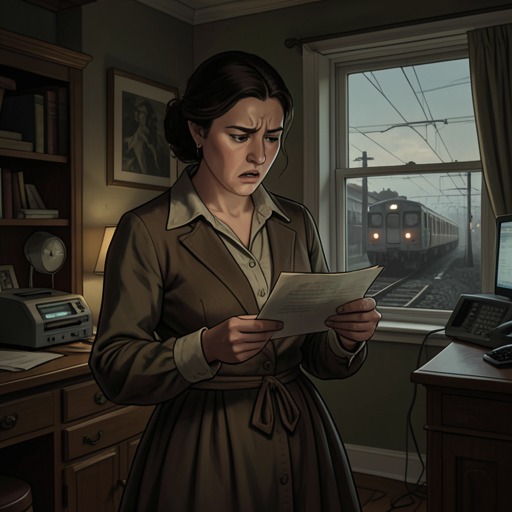
[Teresina](entity:character-recall-character-teresina-48e5333b3c81) tells [Lelia](entity:character-recall-character-lelia-7294c2d2495f) that Marcello has been unwell and explains what she witnessed in the study. Lelia is alarmed, but her attention is repeatedly drawn to the distant train carrying Massimo toward the valley.
She insists she does not care about his arrival, although her agitation betrays the opposite. Her letter from her father, which she has been crumpling in her hand, adds another source of dread.
Late that evening
Massimo Reaches the Villa
Massimo expects to stay with [Don Aurelio](entity:character-recall-character-don-aurelio-fe663b9ae8d4), but learns on the walk from the station that the priest has taken in a sick Bible seller and has sent him instead to [La Montanina](entity:location-recall-location-la-montanina-63db9eb3472e). His first irritation gives way to memories of [Andrea](entity:character-recall-character-andrea-9846246a92e3) and the landscape the young man loved.
[Teresina](entity:character-recall-character-teresina-48e5333b3c81) warns Massimo that Marcello is unwell and asks him to keep their reunion quiet and brief. Marcello nevertheless comes down the path to embrace his friend, overwhelmed by the happiness of seeing him again.
Late that evening
The Rose and the Old Letters
In the room once imagined as [Andrea](entity:character-recall-character-andrea-9846246a92e3)’s future home with [Lelia](entity:character-recall-character-lelia-7294c2d2495f), Massimo finds a white rose arranged over Andrea’s photograph and a bundle of his old letters. He also discovers an inscription from his dead mother in a devotional book kept as a family memento.
The room feels to him like a shrine. Its tenderness confirms that Marcello has prepared the guest’s welcome as an act of love for both Massimo and his dead son.
The first night at La Montanina
Marcello Plays Through the Night
Unable to sleep, Marcello brings out [Andrea](entity:character-recall-character-andrea-9846246a92e3)’s portrait and improvises at the piano, reaching for music that can express his longing for death, reunion, and forgiveness. [Teresina](entity:character-recall-character-teresina-48e5333b3c81) fears that he is becoming mentally unwell and wakes [Lelia](entity:character-recall-character-lelia-7294c2d2495f) to listen.
Lelia recognizes the music as inspired rather than delirious. When she comes downstairs, Marcello plays a melody associated with Andrea and calls her by the intimate name Leila that Andrea had once used.
That same night
The Inheritance Is Refused
On the terrace, Marcello gently hints that [Lelia](entity:character-recall-character-lelia-7294c2d2495f) may inherit [La Montanina](entity:location-recall-location-la-montanina-63db9eb3472e) and enough money to preserve the estate. She refuses at once, fearing that accepting his wealth would make her appear bought or would invite her father back into the house.
Marcello misunderstands the refusal as fear that she will be unable to keep her parents away. He decides to speak again and privately considers how to protect her from their influence without imposing an unacceptable condition on her inheritance.
Before arriving at La Montanina
Massimo’s Flight from Milan
Massimo has come to the mountains exhausted by public attacks from both conservative Catholics and religious reformers. His lectures on sixteenth-century Italian reformers have made him a target for people who accuse him of cowardice, heresy, or inconsistency.
He longs to leave the religious controversy and live quietly, but the conflict remains unresolved. His wish for peace is soon complicated by his growing attraction to [Lelia](entity:character-recall-character-lelia-7294c2d2495f) and by the illness of his friends.
The morning after his arrival
Fedele Meets Massimo
Massimo meets Fedele on the road to [Don Aurelio](entity:character-recall-character-don-aurelio-fe663b9ae8d4)’s home. She recognizes him as the son of her old school friend and accompanies him through the village, telling him about the sick Bible seller [Ismaele Pestagran](entity:character-recall-character-ismaele-pestagran-6deefe0e6c74).
Fedele’s kindness to villagers and her understated humor make a strong impression on Massimo. At the church, they also find Marcello attending Mass, absorbed in prayer.
The morning after Massimo’s arrival
Pestagran Flees the Curate
At [Don Aurelio](entity:character-recall-character-don-aurelio-fe663b9ae8d4)’s house, the sick Bible seller has become convinced that a message from the local clergy means the curate will be expelled because he sheltered him. He escapes while still ill, leaving behind a coin and his watch.
Don Aurelio and Massimo search for him and find him collapsed near an inn. Pestagran refuses to return to the curate’s house, so a local carter and several Alpine soldiers help convey him toward Fedele’s villa.
The morning after Massimo’s arrival
Don Aurelio Is Dismissed
The message from the diocese orders [Don Aurelio](entity:character-recall-character-don-aurelio-fe663b9ae8d4) to leave his curacy within fifteen days and clear the house for a successor with family. He receives the dismissal with resignation, though its timing and wording make the treatment of Pestagran seem suspicious.
Marcello privately asks Don Aurelio to help him explore whether Massimo might marry [Lelia](entity:character-recall-character-lelia-7294c2d2495f). He hopes such a match would protect her future and preserve the [Montanina](entity:location-recall-location-montanina-3df3a56f3e6d), but does not want to demand a lifelong sacrifice from her.
The day after his arrival
Lelia and Massimo Meet
Marcello formally introduces Massimo to [Lelia](entity:character-recall-character-lelia-7294c2d2495f) as his daughter. She is cold and withdrawn, while he recognizes the thoughtful face from [Andrea](entity:character-recall-character-andrea-9846246a92e3)’s photographs and finds himself more affected than he expected.
When Marcello praises Lelia’s sacrifices for him and his late wife, she escapes from the room, embarrassed by the praise. Her brief glance back at the doorway leaves Massimo with the first unsettling impression that her reserve hides a deeper conflict.
That same day
The Lunchroom Sparks
At lunch, [Lelia](entity:character-recall-character-lelia-7294c2d2495f) speaks with [Don Aurelio](entity:character-recall-character-don-aurelio-fe663b9ae8d4) about mountain solitude and flowers, while Massimo watches her with growing fascination. When the conversation turns to religious modernism and [Benedetto](entity:character-recall-character-benedetto-de60f42ab536), she asks pointed questions about the dead teacher’s reputation.
Massimo’s defense of Benedetto draws a sudden, fiery glance from Lelia. Her hostility wounds him, but also confirms that the enigmatic young woman is neither indifferent nor easy to understand.
That afternoon
A Walk Ends in Rejection
Marcello arranges for [Lelia](entity:character-recall-character-lelia-7294c2d2495f) to show Massimo the grounds. She gives him a chilly, mechanical tour, and he finally asks her not to trouble herself on his account.
She steps aside without looking up, and Massimo walks past, stung by what he takes for deliberate contempt. He considers leaving the villa, but his concern for [Don Aurelio](entity:character-recall-character-don-aurelio-fe663b9ae8d4) and his attraction to Lelia pull him in opposite directions.
The day after Massimo’s arrival
Marcello Seeks a Match
Marcello confides to [Don Aurelio](entity:character-recall-character-don-aurelio-fe663b9ae8d4) that he hopes Massimo might marry [Lelia](entity:character-recall-character-lelia-7294c2d2495f). He believes a marriage could secure her future, but worries that she will refuse his inheritance and be left vulnerable to her parents.
Don Aurelio is uncertain how to broach the idea, especially because he does not know Lelia’s feelings. He nevertheless agrees to learn whether Massimo is free to marry and to advise Marcello as best he can.
The day after Massimo’s arrival
Fedele Agrees to Help
[Don Aurelio](entity:character-recall-character-don-aurelio-fe663b9ae8d4) tells Fedele about Marcello’s hope for a marriage between [Lelia](entity:character-recall-character-lelia-7294c2d2495f) and Massimo. Though the proposal is delicate and the young people’s feelings uncertain, Fedele agrees to help discover Lelia’s wishes.
She has already noticed Massimo’s growing attachment and suspects that Lelia’s hostility may conceal a struggle with love. Her involvement gives the match a compassionate advocate, while also drawing her back into the emotional orbit of Marcello’s family.
Several days after Massimo’s arrival
A Night of Musical Signals
[Lelia](entity:character-recall-character-lelia-7294c2d2495f) alternates between resisting Massimo and responding to him through music, questions, and involuntary glances. Massimo is especially moved when she plays Schumann, though neither can openly interpret what the other’s behavior means.
Marcello’s encouragement and Fedele’s discreet visits make Lelia suspect that others are conspiring to arrange her marriage. Her pride turns their care into a perceived attempt to trade her for security or inheritance.
During Massimo’s first week at La Montanina
The Clergy Spread Rumors
[Don Tita Fantuzzo](entity:character-recall-character-don-tita-fantuzzo-b5c593b30600) and [Don Emanuele Costi de Villata](entity:character-recall-character-don-emanuele-costi-c2d8acf26f73) devise a way to warn [Lelia](entity:character-recall-character-lelia-7294c2d2495f) against Massimo by circulating a rumor that he has an affair with a married woman. They use village gossip and the anxious concern of Lelia’s mother to give the allegation a false appearance of reliable knowledge.
Their maneuver is part of a wider effort to undermine [Don Aurelio](entity:character-recall-character-don-aurelio-fe663b9ae8d4)’s influence and direct Lelia toward the clergy’s preferred choices. The rumor will soon distort Lelia’s reading of Massimo’s motives.
During Massimo’s first week at La Montanina
Fedele Challenges the Provost
Fedele confronts [Don Tita](entity:character-recall-character-don-tita-96838aba96db) about the allegation against Massimo and makes clear that she knows the clergy have been exchanging information about her household. The provost denies personal involvement but admits the accusation is a secret he has heard.
Fedele then challenges [Don Emanuele](entity:character-recall-character-don-emanuele-b88ef9945168) directly. He claims to possess a trustworthy source but refuses to identify it; she concludes that the charge has been fabricated rather than verified.
Several nights after Massimo’s arrival
Lelia Enters Velo Park
Disturbed by her attraction to Massimo and by the suspicion that he has come to pursue her inheritance, [Lelia](entity:character-recall-character-lelia-7294c2d2495f) secretly enters [Parco di Velo](entity:location-recall-location-parco-di-velo-b2c1c816af00). Alone among the trees, she gives herself to the night and bathes in a stream as the moon rises.
The experience does not resolve her feelings, but it reveals how powerfully she longs for love and release from the restraints of pride. She returns to the villa shaken and promises herself not to repeat the excursion.
The following day
Fedele Questions Lelia
Fedele speaks privately with [Lelia](entity:character-recall-character-lelia-7294c2d2495f) about Marcello’s wish that she accept his inheritance and consider marriage. Lelia interprets the conversation as an attempt to place her in a convenient match and accuses Massimo of seeking a wealthy bride.
Her distrust convinces Fedele that the rumor about Massimo may have reached her. Fedele advises Marcello not to pressure Lelia or keep Massimo at the villa against his will.
That evening
Massimo Confesses His Love
Massimo tells [Don Aurelio](entity:character-recall-character-don-aurelio-fe663b9ae8d4) that he has fallen seriously in love with [Lelia](entity:character-recall-character-lelia-7294c2d2495f), despite her mixed signals and his continuing doubts. Don Aurelio reveals that Marcello would welcome their marriage, but cannot say whether Lelia feels the same.
Massimo is elated and frightened by the possibility. When Don Aurelio asks whether Lelia is now all that matters to him, Massimo recognizes how completely love has absorbed his attention.
That night
Don Aurelio Leaves in Secret
[Don Aurelio](entity:character-recall-character-don-aurelio-fe663b9ae8d4) tells Massimo that he will leave Lago secretly before dawn, fearing that the villagers may try to detain him and seeing no hope of reversing the dismissal. He plans to seek another post and asks Massimo to pray for those he believes have acted wrongly but sincerely.
The two sort his books and belongings, and Massimo offers money for the journey. Don Aurelio refuses to let him abandon his own prospects, urging him to remain and pursue the love that might give him a life suited to his character.
The night Don Aurelio departs
Marcello’s Final Night
After Massimo leaves to return to the villa, Marcello spends the evening alone in heavy weather. He considers whether his health has truly failed and briefly imagines finding a useful project if he has years left.
He carries two cyclamen plants outside so they can receive the rain, then returns to his room. A sudden vertigo overtakes him as he gets into bed, and he dies instantly beside the still-burning lamp.
The next morning
Lelia Learns of Marcello’s Death
[Teresina and Lelia](entity:relation-recall-relation-teresina-lelia-5c28a3661a54) discover Marcello dead in bed, his face composed and his room still lit by the lamp. The missing cyclamen plants are found outside in their earth pots, evidence of his last act of care.
An agent arrives with news that the estate’s will is deposited with a notary. Fedele comes to support [Lelia](entity:character-recall-character-lelia-7294c2d2495f), while the clergy arrive and speak of the dead man’s religious state with a coldness that intensifies Lelia’s anger.
The day of Marcello’s death
Lelia Inherits the Estate
The notary opens Marcello’s holographic will and confirms [Lelia](entity:character-recall-character-lelia-7294c2d2495f) as universal heir, with [Teresina](entity:character-recall-character-teresina-48e5333b3c81) receiving a daily allowance. The document also exposes the mistake Marcello made about Lelia’s age: she is not yet of full age.
Her father, [Girolamo Camin](entity:character-recall-character-girolamo-camin-76c0e9f6d3f3), announces that he is coming to exercise his paternal rights. Lelia is horrified by the prospect of living with him and resents the sudden claim on a home she has understood as a refuge.
The day after Marcello’s death
Massimo Returns to Milan
Massimo reaches Milan and finds [Don Aurelio](entity:character-recall-character-don-aurelio-fe663b9ae8d4), who has secured temporary help through a priestly friend. He also learns how widely hostile gossip has spread about him, including rumors that he is a heretic and a lover of a married woman.
Massimo is drawn toward a proud withdrawal from society and religious debate. He refuses an invitation to a fashionable gathering, choosing instead to mourn Marcello privately and write to Fedele and [Lelia](entity:character-recall-character-lelia-7294c2d2495f).
Soon after Massimo’s return
The Milan Salon Attack
At a Milanese salon, several guests attack Massimo for refusing to endorse either traditional Catholicism or radical religious reform. Their accusations reveal how both camps demand a simple allegiance from someone struggling with genuine doubts.
Massimo refuses to defend himself, saying that solitude is more welcome than their judgments. Walking home, he imagines building an impregnable tower of pride against [Lelia](entity:character-recall-character-lelia-7294c2d2495f), his uncle, and the world.
A few days after Marcello’s death
Fedele Tells Massimo Lelia Loves Him
At [San Giorgio Cemetery](entity:location-recall-location-0a9cd92f270a), Fedele meets Massimo beside Marcello’s fresh grave and tells him about [Lelia](entity:character-recall-character-lelia-7294c2d2495f)’s distress. She believes Lelia loves him but is resisting both her feelings and the fear that he sought her fortune.
Fedele urges Massimo to stay and hear the rest, but he initially refuses, ashamed to return after Lelia’s insults. As the train is about to leave, Fedele catches him and says plainly that Lelia loves him.
The day he leaves Milan
Massimo Chooses Dasio
Massimo boards the train despite Fedele’s revelation, uncertain whether hope would make him betray his dignity. On the journey he imagines [Lelia](entity:character-recall-character-lelia-7294c2d2495f) reaching for him, then forces himself to resume ordinary conversation with a fellow passenger.
In Milan he continues to face hostility over his religious position and refuses invitations to defend himself in public. He decides to leave the city and seek a modest medical post in [Valsolda](entity:location-recall-location-valsolda-0bc766d476ef), where he hopes to live in solitude.
After Massimo’s departure
Lelia Is Rescued from the River
Convinced that she has lost both Marcello and any chance of escaping her father, [Lelia](entity:character-recall-character-lelia-7294c2d2495f) again contemplates suicide. She writes a farewell note, goes out into the storm, and approaches the water intending to throw herself into a canal.
[Carnesecca](entity:character-recall-character-carnesecca-d2adb88d6b26), who has taken shelter near the villa, sees her and reaches her before she can jump. Fedele and the servants bring the unconscious girl inside, and Fedele conceals from her the true nature of the attempt.
During Lelia’s feverish recovery
Fedele Shares Her Past
As [Lelia](entity:character-recall-character-lelia-7294c2d2495f) recovers under her care, Fedele confides that she once loved Marcello and later failed to return the love of a younger officer, who died by suicide. The officer’s family blamed her, and she has secretly supported his surviving sister ever since.
Fedele asks Lelia to continue that support after her death and to tell the sister that the rejection came from an honest mistake, not deliberate cruelty. Lelia is moved by the trust and promises to fulfill the request.
Several days after Marcello’s death
Lelia Returns to Her Father
Fedele persuades [Lelia](entity:character-recall-character-lelia-7294c2d2495f) that she must return to [La Montanina](entity:location-recall-location-la-montanina-63db9eb3472e) when her father demands it, arguing that she may still protect herself and perhaps improve the atmosphere of his home. Lelia agrees reluctantly, though she expects the return to be unbearable.
Before she leaves, Fedele gives her a letter from Massimo. Lelia reads his painful account of his doubts and his love, then secretly crosses out the line in Fedele’s reply that would disclose her feelings to him.
After Lelia returns to La Montanina
The Father Claims the Montanina
Girolamo arrives with his companion [Carolina Gorlago](entity:character-recall-character-carolina-gorlago-809300f67c1d) and the adviser [Francesco Molesin](entity:character-recall-character-francesco-molesin-1bcdd0b84a5f). His strained manners conceal financial schemes, while Molesin watches for ways to secure a settlement from the estate and influence [Lelia](entity:character-recall-character-lelia-7294c2d2495f)’s future.
Lelia refuses to see her father at first, then endures a brief, formal meeting. She is repelled by his servility and by the household atmosphere created by [Gorlago](entity:character-recall-character-gorlago-3f5f5f5957fa), whose presence makes the villa feel alien to her.
During the first days of Girolamo’s visit
Molesin Bargains with Camin
Molesin proposes that Girolamo pay a large percentage to settle his creditors, but Girolamo rejects the demand and exposes how little money he can actually produce. Both men continue to maneuver, each hoping to exploit the inheritance without trusting the other.
At the same time, [Don Emanuele](entity:character-recall-character-don-emanuele-b88ef9945168) encourages Molesin to help remove [Gorlago](entity:character-recall-character-gorlago-3f5f5f5957fa) and return [Lelia](entity:character-recall-character-lelia-7294c2d2495f) to her father’s control. Religious language masks the clergy’s practical interest in the estate and its influence over the household.
Soon after returning to La Montanina
Lelia Returns to Fedele
Unable to bear the father’s false humility, Molesin’s insinuations, and [Gorlago](entity:character-recall-character-gorlago-3f5f5f5957fa)’s place in the house, [Lelia](entity:character-recall-character-lelia-7294c2d2495f) returns to Fedele’s villa. She admits that the [Montanina](entity:location-recall-location-montanina-3df3a56f3e6d) no longer feels like home and fears she may not even be Girolamo’s daughter in any meaningful sense.
Fedele refuses to let her turn pain into a final decision, while continuing to protect her. Their closeness deepens as Fedele tries to make Lelia face both her pride and her responsibility toward the dying Marcello’s memory.
During her stay at Fedele’s villa
Lelia Destroys Her Rejection
After reading more of Massimo’s letter, [Lelia](entity:character-recall-character-lelia-7294c2d2495f) understands that his doubts about faith and his longing for love are sincere. She writes Fedele a message asking her never to speak of Massimo again, hoping to protect herself from a love she believes she does not deserve.
At the garden stream, she tears up the note and watches its fragments disappear in the water. The act does not settle her feelings, but it marks the first time she chooses not to turn her fear into a permanent refusal.
While Lelia is at Fedele’s villa
The Clergy Plan a Conversion
[Don Emanuele](entity:character-recall-character-don-emanuele-b88ef9945168) persuades [Bettina Pagan](entity:character-recall-character-bettina-pagan-a12e1eb7f490) to draw [Lelia](entity:character-recall-character-lelia-7294c2d2495f) toward confession and religious life through charitable visits and a pilgrimage. He hopes to displace Fedele’s influence and eventually steer Lelia toward a convent.
His plan also exploits the presence of [Gorlago](entity:character-recall-character-gorlago-3f5f5f5957fa) in Girolamo’s household, intending that Lelia encounter the scandal and become disgusted with the world. Bettina follows his instructions uneasily, not understanding the full design.
After Girolamo returns to the Montanina
The Pilgrimage Is Arranged
Bettina obtains Girolamo’s permission to take [Lelia](entity:character-recall-character-lelia-7294c2d2495f) on a pilgrimage to [Monte Berico](entity:location-recall-location-monte-berico-f0ca2ef297ca) and then toward Castelletto. Lelia accepts, while secretly preparing a valise with devotional books and other belongings that suggest she may not intend to return quickly.
Girolamo warns her that the clergy may have designs for her, but his own motives are compromised by his financial interests and his continuing relationship with [Gorlago](entity:character-recall-character-gorlago-3f5f5f5957fa). Lelia remains guarded and does not tell him what she intends.
The morning of the pilgrimage
Lelia Escapes at Vicenza
At [Monte Berico](entity:location-recall-location-monte-berico-f0ca2ef297ca), [Lelia](entity:character-recall-character-lelia-7294c2d2495f) pretends that she has already confessed and lets Bettina believe they will continue to [Padua](entity:location-recall-location-053f67259df7). Once the older woman is occupied, Lelia boards a Milan-bound train alone, leaving her companion behind at the station.
Bettina realizes the deception only after the train has left. Lelia’s escape turns her private decision into an irreversible journey toward Massimo, while the clergy and her father are left to guess where she has gone.
The day Lelia escapes
Fedele Abandons the Surgery Trip
At the villa, Fedele receives [Lelia](entity:character-recall-character-lelia-7294c2d2495f)’s letter announcing that she is traveling to Massimo in [Valsolda](entity:location-recall-location-valsolda-0bc766d476ef). Though she had been preparing to go to [Turin](entity:location-recall-location-24620228c0cd) for a dangerous operation, she immediately postpones it and arranges to follow the young woman.
She sends Massimo a telegram urging him to behave as a Christian and a gentleman. Her decision is a deliberate sacrifice of her own treatment and safety for the future of the two people she loves.
The night after leaving Vicenza
Lelia Reaches San Mamette
[Lelia](entity:character-recall-character-lelia-7294c2d2495f) travels alone through Milan and across the lake to [San Mamette](entity:location-recall-location-san-mamette-7739b9e14683), her resolve alternating with fear as the moment of meeting approaches. A stranger’s unwanted advances on the train sharpen her sense of belonging to Massimo.
At the [Valsolda](entity:location-recall-location-valsolda-0bc766d476ef) inn she takes a room and spends the night awake, troubled by the unfamiliar place and the uncertainty of how he will receive her. By morning she has decided to go to him rather than retreat.
The morning after Lelia arrives
The Road to Pian di Nava
[Lelia](entity:character-recall-character-lelia-7294c2d2495f) hires a boy to guide her from [San Mamette](entity:location-recall-location-san-mamette-7739b9e14683) toward [Dasio](entity:location-recall-location-323ee5fa0e05). The climb exhausts her, but the sight of the village and the Dolomite peak that recalls the [Montanina](entity:location-recall-location-montanina-3df3a56f3e6d) renews her courage.
When she learns that Massimo has gone to visit a sick man at [Muzzaglio](entity:location-recall-location-muzzaglio-9a677ffacb77), she waits near [Pian di Nava](entity:location-recall-location-pian-di-nava-0e00551760d9) rather than entering the inn. Her solitary vigil leaves her exposed and physically weakened as she watches the path for his return.
That morning at Pian di Nava
The Lovers Reconcile
Massimo first passes [Lelia](entity:character-recall-character-lelia-7294c2d2495f) without recognizing her. When he turns back, she is trembling and unable to speak; he asks whether she has come with Fedele or her father, and finally realizes she has traveled alone.
Their restraint gives way to an embrace and a kiss. Lelia admits that she has loved him all along, and Massimo calls her his bride, though both remain conscious of the harm caused by their earlier mistrust.
Later that morning
A Future in Valsolda
Massimo and [Lelia](entity:character-recall-character-lelia-7294c2d2495f) walk through the woods and hills above [Dasio](entity:location-recall-location-323ee5fa0e05), exchanging apologies and speaking of a shared life. Lelia tells him of her journey and the clergy’s attempted schemes, while he learns that she has read the letters in which he described his love and religious doubts.
Massimo explains that he may not secure the medical post in [Valsolda](entity:location-recall-location-valsolda-0bc766d476ef). Lelia nevertheless wants to remain with him, and he promises to seek the means to make their life together honorable and lasting.
That afternoon
Lelia Refuses Her Inheritance
Massimo reads [Lelia](entity:character-recall-character-lelia-7294c2d2495f)’s letter to her father, in which she asks to live modestly and says she will not demand an account of the remaining estate. The refusal convinces Massimo that she has not come to claim wealth, and he is overwhelmed by her generosity and the depth of her love.
He writes to Fedele asking her to seek Girolamo’s consent to the marriage. He and Lelia then leave the inn for a private walk, their happiness shadowed by the impending arrival of [Benedetto](entity:character-recall-character-benedetto-de60f42ab536)’s remains.
That afternoon
The Lovers Share Their Past
On the path above [Dasio](entity:location-recall-location-323ee5fa0e05), [Lelia](entity:character-recall-character-lelia-7294c2d2495f) admits that she read Massimo’s letters and came because she understood the depth of his love. She confesses her cruelty toward him and her fear that she may be too proud or strange to make him happy.
Massimo tells her that Marcello had hoped they would marry and that they will honor [Andrea](entity:character-recall-character-andrea-9846246a92e3)’s memory together. Lelia agrees to take the name Leila in remembrance of Andrea’s old wish, and the ring he gave her becomes a quiet bond among the living and the dead.
The afternoon and evening after their reunion
A Day of Love and Doubt
Massimo and [Lelia](entity:character-recall-character-lelia-7294c2d2495f) wander through the [Valsolda](entity:location-recall-location-valsolda-0bc766d476ef) landscape, sharing music, tenderness, and dreams of a life in the mountains. Lelia asks whether they can remain there, while Massimo cautions that his appointment is not yet secure and that their immediate future depends on family consent.
At the waterfall, Lelia loosens her hair while arranging it in the water’s reflection, and Massimo sees her as part of the landscape’s poetry. Yet beneath their joy, Massimo’s uncertainty about faith and the approaching funeral remains unresolved.
The evening after Lelia’s arrival
Fedele Arrives in Valsolda
Fedele reaches [San Mamette](entity:location-recall-location-san-mamette-7739b9e14683) with her cousin Eufemia, exhausted and gravely ill. [Lelia](entity:character-recall-character-lelia-7294c2d2495f) is overcome by the sight of her, while Fedele asks to hear what has happened and begins gently reproaching her for the reckless journey.
Lelia tells her that Massimo loves her and intends to marry her. Fedele is relieved, but insists that Lelia cannot remain alone in [Valsolda](entity:location-recall-location-valsolda-0bc766d476ef) while the future is uncertain and her father’s response is pending.
The morning after her arrival
Fedele Sets the Departure
Fedele persuades [Lelia](entity:character-recall-character-lelia-7294c2d2495f) that she must leave [Valsolda](entity:location-recall-location-valsolda-0bc766d476ef) with her for [Turin](entity:location-recall-location-24620228c0cd), or at least stay temporarily with Eufemia in [Santhià](entity:location-recall-location-santhi-63d243539fea). She fears the impropriety and danger of Lelia remaining at the inn with Massimo, even though their intentions are honorable.
Massimo agrees to respect the arrangement. Fedele also reveals that she has met [Don Aurelio](entity:character-recall-character-don-aurelio-fe663b9ae8d4) in Milan and knows of Massimo’s spiritual crisis, which deepens her concern for both lovers.
The day Benedetto’s remains arrive
Massimo Faces Benedetto’s Return
Massimo goes to [Porto Ceresio](entity:location-recall-location-porto-ceresio-e2d616ff0376) to meet the funeral party carrying [Benedetto](entity:character-recall-character-benedetto-de60f42ab536)’s remains from Rome. The delay leaves him alone with the memory of his teacher and the shame of having abandoned the Catholic faith that Benedetto lived by.
As the people of [Albogasio](entity:location-recall-location-albogasio-246c92756955) gather to receive the body, Massimo sees their devotion and is moved by their simple gratitude. He still cannot decide whether he can speak publicly at the grave without pretending to beliefs he no longer holds.
That evening
The Funeral Procession
[Benedetto](entity:character-recall-character-benedetto-de60f42ab536)’s coffin arrives at [Porto Ceresio](entity:location-recall-location-porto-ceresio-e2d616ff0376) after a long delay and is placed aboard the special steamer. The people of [Albogasio](entity:location-recall-location-albogasio-246c92756955) accompany it across the dark lake, praying the rosary as the vessel moves through wind, waves, and sweeping electric beams.
Massimo cannot bear the conflict between love for his teacher and his loss of faith. He goes below deck and weeps, promising Benedetto that he has not abandoned him and will return.
During the crossing to Oria
Massimo Returns to the Church
When the steamer nears [Oria](entity:location-recall-location-oria-9a4d09c15cad), Massimo tells [Don Aurelio](entity:character-recall-character-don-aurelio-fe663b9ae8d4) that he has returned to Christ and the Church. [Benedetto](entity:character-recall-character-benedetto-de60f42ab536)’s body, the prayers of the mourners, and the memory of his teacher have broken through the spiritual isolation in which Massimo had been trapped.
Don Aurelio embraces him with joy and relief. Massimo’s return restores his ability to honor Benedetto openly and prepares him to speak at the burial.
That night at Albogasio Cemetery
Don Aurelio Speaks at the Grave
In darkness and rising wind, [Don Aurelio](entity:character-recall-character-don-aurelio-fe663b9ae8d4) speaks beside [Benedetto](entity:character-recall-character-benedetto-de60f42ab536)’s grave. He distinguishes the teacher’s devotion to the Catholic Church from the disputed statements attributed to him, and asks listeners to forgive those who condemned or mocked him without authority.
His address urges people to be wayfarers in the night, helping one another find the path rather than judging those who cannot follow. Massimo hears the words as both a defense of his teacher and a summons to renewed faith.
After the burial
Jeanne’s Secret Vigil
A young woman wearing a veil attended the funeral, approaching Benedict's grave only after the crowd had dispersed. Her companion asked Maximilian Alberti if he could speak, and then helped her blend in with the mourners, ensuring she would not be noticed. The young woman was Jane, whose past relationship
That same day in San Mamette
Fedele’s Final Hours
At the inn, [Donna Fedele](entity:character-recall-character-donna-fedele-700354d49860) Vaira's condition worsened, she began to have a high fever and developed sepsis. She received the last rites and knew death was near, yet she still worried about [Massimo Alberti](entity:character-recall-character-massimo-alberti-680dc8c27221), hoping he could return before she lost the ability to speak to
The dawn after Benedetto’s burial
Fedele Dies at Dawn
Maximo Alberti and [Don Aurelio](entity:character-recall-character-don-aurelio-fe663b9ae8d4) rushed back to San Mammetto, arriving at [Donna Fedele](entity:character-recall-character-donna-fedele-700354d49860) Vaira's bedside around midnight. When Maximo Alberti arrived, her face briefly brightened, and she asked him to read [Girolamo Camin](entity:character-recall-character-girolamo-camin-76c0e9f6d3f3)'s letter; the letter permitted L