Donna Fedele’s terminal illness
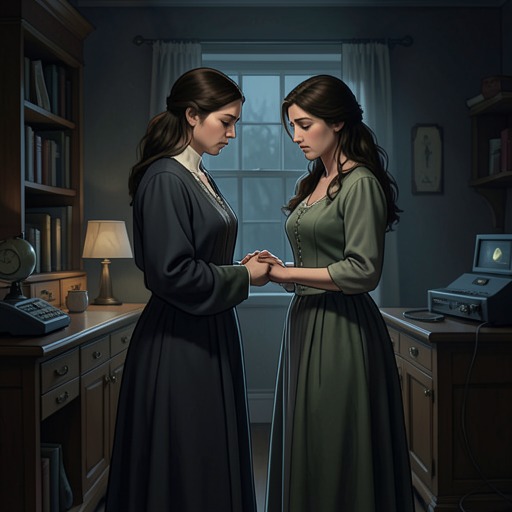
LeilaDonna Fedele’s terminal illness is marked by a sharp contrast between the body’s sudden collapse and her continued moral and religious composure. A weak heart, an interrupted journey to Torino for an operation, severe pains, and then an extremely high fever lead to the doctor’s recognition of a general infection that can no longer be treated. Yet the illness does not erase her agency: fully aware of her condition, she asks for a priest and the viaticum, attends to the people around her, and dies with a crucifix in her hands as the sun rises.
Signs of Frailty and Limits of Examination
The novel has already shown Donna Fedele’s capacity to exhaust herself in care for Lelia Camin. After Lelia’s night-time crisis, Donna Fedele stays beside her, tells the doctor only what is necessary to protect Lelia’s private feelings, and arranges for him to follow her explanation of the girl’s night wandering. By evening, Donna Fedele herself is flushed and feverish. The doctor attributes her condition to fatigue and advises her to sleep alone; she does not explain why solitude would be no comfort. Instead, she chooses to remain near Lelia, finding purpose in giving herself to the young woman and in continuing the affection that Marcello Trento had borne for his dead son. This earlier episode establishes her willingness to subordinate her own comfort to another’s care, but it does not identify the cause of her later terminal illness.
During the final illness, the doctor’s assessment is constrained. When he visits, Donna Fedele will not permit the complete examination he says is needed to understand her condition. He does find her heart very weak and tells Lelia that he fears for her life. Donna Fedele, meanwhile, speaks of the operation she intends to undergo in Torino, but says she will not leave without the doctor’s permission. She asks him to return in the morning and give his judgment. The scene leaves a gap between her stated plan and the seriousness of her condition: the doctor can offer a grave warning, but cannot make a complete assessment.
Acute Symptoms and the Abandoned Journey
That night, Donna Fedele suffers another attack of intensely painful colic. By dawn the pains have subsided, but the doctor from Cadate finds her feverish and judges travel impossible. Massimo Alberti nevertheless leaves for Porto Ceresio, intending to return to Oria on a special steamer after the burial of Benedetto. His absence becomes an added source of distress: Donna Fedele asks repeatedly when he will return and admits to Lelia that she fears he may not arrive in time for the words she wants to say to him.
After midday, her condition worsens almost suddenly. The fever rises very high, and the doctor recognizes the onset of a general infection. There is nothing more to attempt; in his judgment, her body has entirely lost the power to resist, and death is near. The narrative presents this as a decisive change rather than a prolonged sequence of treatment: the earlier possibility of travel and an operation gives way to an illness for which no remedy remains. Her lack of pain at the initial point of this final deterioration does not lessen the urgency of the fever or the doctor’s prognosis.
Religious Agency and Care at the Bedside
Donna Fedele understands the medical sentence and immediately asks for a priest and the viaticum. The provost of San Mamette is summoned, and by five o’clock she has received the religious consolations, including the anointing of the sick. The account emphasizes her faith, piety, and resignation, while keeping her clear-minded: she recognizes what is happening and chooses how to meet it. Her religious observance is an action she requests, not merely a rite performed around an unconscious patient.
Even after receiving the last rites, her attention turns to Massimo’s return. When a telegram arrives from Porto Ceresio, she is visibly displeased, though she does not say so; Lelia understands that she thinks he need not have gone. Donna Fedele apologizes for repeatedly asking after him and explains that she wants to tell him a few things before she dies. Lelia cannot reassure her. A knot of tears prevents her from speaking, while Eufemia Magis tends the sick woman with grave, steady composure. Donna Fedele’s leave-taking also reaches beyond the room: when she asks Eufemia to greet her sisters, the cousin nearly loses the composure she has been trying to maintain.
Death and the Meaning of the Final Scene
As Donna Fedele’s final hours continue, roses become part of the bedside scene. When she signals that they should not be put on the bed, those present understand that she wants them scattered after her death. Don Aurelio gives voice to this interpretation, and she thanks him with her eyes. The gesture links the roses to the care and affection surrounding her without turning them into a medical remedy or a denial of death.
At last, her eyes close and her hands settle on the crucifix. She dies as dawn appears, dressed in black, with the crucifix between her hands and fresh roses from Valsolda beside the fading roses of the villa. The ending presents her death as the completion of a life of service: the narrator connects it with her promise, made in prayer at Marcello’s deathbed, and with the self-offering that had shaped her care for Lelia. The final illness therefore brings bodily resistance to an end while giving her one last opportunity to act according to her faith and attachments.