Catholic Intransigents
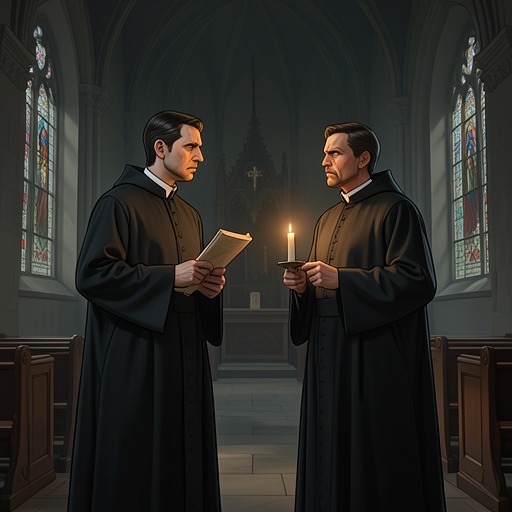
LeilaThe Catholic Intransigents are presented as a clerical faction in the novel’s contested religious landscape, not as a formally described institution with a stated hierarchy or membership. Their significance lies in the pressure they help create around Massimo Alberti: his defense of Church authority does not shield him from suspicion, while attacks from opposing camps deepen his sense of isolation and strain his faith.
Identity and Position
The novel places the Catholic Intransigents alongside Catholic Modernists and the skeptical social world of Milano as distinct sources of judgment on Massimo. The factions do not share a single doctrine or program: the Intransigents belong to the clerical side of the dispute, whereas the Modernists fault Massimo for remaining too bound to tradition. Massimo experiences the resulting conflict as a double rejection. He is condemned by some for his fidelity to Church law and by others for thinking and writing as a man of his time.
The text gives no formal organizational structure, named leadership, or collective platform for the Catholic Intransigents. It identifies them through reported attitudes and the controversies surrounding religious speech. The label therefore marks a current within the novel’s clerical world rather than establishing a clearly bounded association whose every member acts in concert.
Pressure and Public Reach
A letter Massimo receives after returning to Milano gathers hostile judgments from several social settings, including the clerical Intransigents, Catholic Modernists, and elegant skeptical society. The letter reports that the Saint Vincent de Paul Society had resolved to expel Massimo after he had nearly defended sixteenth-century heretics, and that Catholic booksellers had been forbidden to sell his lectures. It also recounts a clerical allegation that he and Don Aurelio intended to prepare a Catholic Modernist periodical. The account places these incidents within the wider climate of opposition, but does not establish that the Intransigents as a body directed each measure.
Other reported attacks sharpen the distinction between institutional suspicion and personal accusation. A friar had alluded from the pulpit to Massimo’s discourse on heretics as dangerously subtle, while a clerical newspaper described him as pitiable. Rumors about his private relations also circulated in clerical circles. The novel presents such reports as part of the atmosphere Massimo encounters, not as verified findings about his beliefs or conduct.
Massimo and the Conflict over Belief
The hostility matters because Massimo is already questioning the religious work to which he has devoted himself. He recalls the wounds, disappointments, and humiliations of defending a cause that may have been doomed, and briefly imagines withdrawing from religious conflict to live for beauty, love, and joy. The narrative qualifies this as bitter release rather than a settled decision to abandon his work; nevertheless, the attacks make his public moral identity feel like both a support and a constraint.
His response to the letter is not Don Aurelio’s patient prayer for those who offend. Massimo takes refuge in pride, inwardly setting himself above the clerical, Modernist, and fashionable circles that judge him. Their hostility hardens his resolve to remain on his chosen path, even as the letter exposes how little welcome that path brings. The episode thus gives the Intransigents a role in a wider irony: Massimo’s loyalty to Church authority coexists with his resentment of those who claim to defend it by condemning him.
Accusation, Authority, and Narrative Significance
The controversy extends beyond Massimo to Benedetto, whose religious teaching and reputation are also contested. In a letter to Donna Fedele, Massimo describes the accusations made against his dead teacher and the corrosive effect of both clerical hostility and the negative criticism of religious innovators. He fears that speaking at Benedetto’s burial without sharing the dead man’s firm belief in the permanence of the Roman Catholic Church and the duty of obedience would dishonor his memory. This account connects the factional dispute to Massimo’s own crisis of faith, without making every accusation the work of the Catholic Intransigents.
At Benedetto’s funeral, Don Aurelio answers the charge that Benedetto was a theosophist, a pantheist, or estranged from the sacraments. He presents Benedetto as one who remained obedient to the Church and conformed to its beliefs and practices until death, while asking that those who condemned him without authority be forgiven. The speech offers a direct moral counterpoint to factional denunciation: it insists on obedience, but also on restraint in judging another’s faith. In this way, the Catholic Intransigents belong to the novel’s account of religious conflict not simply as opponents in a doctrinal dispute, but as part of the social pressure against which the characters negotiate conscience, authority, and charitable judgment.