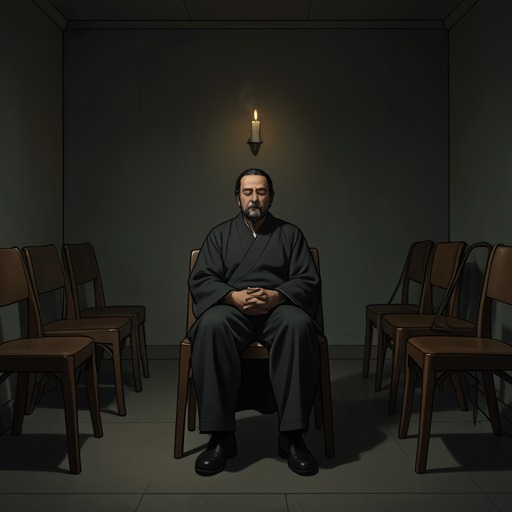
Apophatic theology
LongingApophatic theology is a way of approaching God through the relinquishment of images and concepts rather than through representations drawn from the created world. In Meister Eckhart’s account, this is not simply a theory about what can be known: it is a discipline of inward stillness that prepares the soul for divine action. Its central paradox is that relinquishing what the mind can grasp does not lead to emptiness as an end in itself, but to a receptive encounter with God.
Definition and contrast
Eckhart’s account sets apophatic theology against cataphatic theology. The latter understands God through images and created things; apophatic practice seeks freedom from images, concepts, words, and sensory knowledge. The contrast is not between belief and unbelief, but between two ways of approaching divine reality: through what can be represented, or by letting those representations fall away. The book connects the cataphatic approach with the idea that created things can disclose God, while emphasizing that Eckhart’s concern is the soul’s capacity to receive God without making an image of the divine.
For Eckhart, therefore, even a seemingly mature or abstract picture of God remains something the mind has fashioned. The practice aims beyond replacing a crude image with a subtler one. Silence and receptivity are the point: rather than directing God through a mental picture, the soul leaves room for God to act.
The soul’s ground
Eckhart locates this divine action in the soul’s ground, its most secret and purest part, also described as the spark of the soul. The birth of the Divine Word takes place there in a person who lives nobly, is inwardly collected, and turns away from scattering attention among created things. The ground is not a space that creatures can enter or a faculty busy with activity and understanding. Its stillness is precisely what allows God to work there without an image or creature intervening.
This account holds together two claims that can seem contradictory: the ground is described as having no creaturely activity or understanding, yet God acts there and unites with the soul. The silence is not presented as the soul’s achievement of divine power; it is the condition of receptivity. The book evokes the paradox through darkness: human beings live in darkness, God comes in darkness, and the Son reveals what was hidden. The movement is from the limits of representation toward a disclosure that the soul could not produce for itself.
Unknowing as discipline
Eckhart’s emphasis falls on self-denial in the soul rather than on extreme bodily austerities. The book contrasts his teaching with practices such as fasting, going without sleep, and exposing the body to hardship. His concern is instead to release images, disregard knowledge arriving through the five senses, and purify one’s attitudes. This inward discipline is described as knowing by not knowing: the soul turns away from what is already known so that it can become receptive to God.
The approach does not mean merely thinking less while continuing to cling to familiar assumptions about the divine. It asks for a more thorough withdrawal from the mental and sensory materials by which the mind ordinarily forms its objects. In Eckhart’s account, freedom from images allows God to unite with the soul on God’s initiative. The discipline is therefore active in its demands—requiring attention, inwardness, and a changed relation to created things—even though its aim is receptivity rather than conceptual mastery.
Ethical implications and misreading
Eckhart connects the birth of Christ in the soul with giving up attachment to created externals and following Christ. The book notes that his claim that such a person could not commit a mortal sin was widely misunderstood and contributed to the trouble he encountered. It distinguishes his meaning from the radical position associated with the Brethren of the Free Spirit, who were said to regard union with God as freedom from ordinary moral norms. Eckhart’s point, as presented here, was not that mystical union licenses sin: a person in whom Christ has been born in the soul would naturally seek to avoid sinful activity.
That qualification makes the ethical consequence integral to the account. Apophatic release is not a private exemption from responsibility; inward transformation should appear in conduct. The passage thus resists treating spiritual experience as a claim to stand beyond moral judgment. What is relinquished is attachment to images and externals, not the obligation to live in accordance with the life of Christ.
Silence and cross-traditional encounters
The book also describes encounters that resonate with apophatic themes without equating them with Eckhart’s theology. In India, Howard Thurman and the head of an Oriental Studies division first debated from their respective religious positions. When they resumed their conversation that afternoon, Thurman described a profound experience of spiritual unity that crossed social, political, and cultural frames while leaving both men individually distinct. The episode suggests how encounter can exceed argument without erasing religious difference.
Thomas Merton’s interest in Zen Buddhism offers another point of comparison. He visited D. T. Suzuki, whose work compared Buddhist mysticism with Meister Eckhart, and later discussed monastic vows, spiritual progress, and the purification of the mind with the Dalai Lama. The book presents these exchanges as evidence of Merton’s serious engagement with other traditions, not as proof that their teachings are interchangeable. Similarly, Dag Hammarskjöld’s meditation room at the United Nations used no religious image beyond a shaft of light falling on iron ore. Its deliberate simplicity made room for silence and reflection among people who worshipped under different names and forms. These examples broaden the book’s account of restraint before the divine: images may be set aside, but the resulting openness does not require religious traditions to become one.