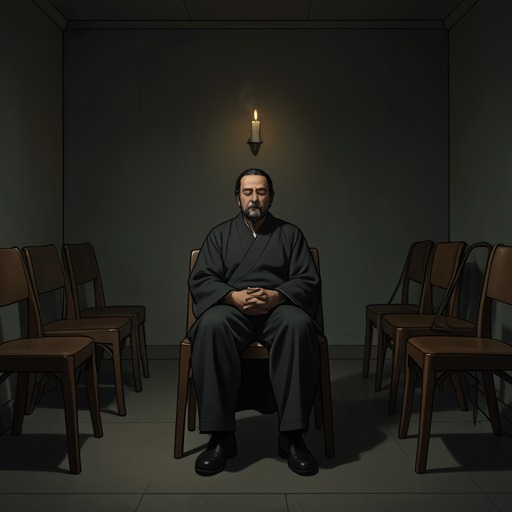
Dominican Order
LongingThe Dominican Order combined a strong intellectual culture with a commitment to orthodox doctrine and active preaching. Its schools trained theologians, its offices governed a network of houses, and its members taught both within academic settings and among wider lay audiences. The careers of Meister Eckhart and Henry Suso illustrate how these structures supported learning and spiritual direction, while also bringing the Order into conflicts over the limits of mystical teaching.
Learning and institutional life
The Order’s intellectual emphasis was built into its expectations for its members. Its Constitutions required sustained study: Dominicans were instructed to keep learning continually, at home or on the road, by day or night, and to commit what they learned to memory. The account presents this discipline not as a narrow academic specialty but as a defining feature of Dominican formation, one that enabled members to teach, preach, and engage with theology and philosophy.
Meister Eckhart’s career shows how that formation could lead from convent life to advanced study and positions of authority. Around eighteen, in the mid-to-late 1270s, he entered the Dominican convent at Erfurt. His ability was recognized, and he was sent to study at Cologne’s studium generale and later in Paris. There he encountered the debate over whether philosophy should serve theology or remain separate from it; Eckhart held that the two could nourish one another without contradiction.
In 1294, Eckhart returned to Erfurt as prior of the convent and an official of the Order. He later taught theology in Paris, a distinction described as the pinnacle of academic success. After two years, he returned to Erfurt as provincial, or overseer, for Saxonia, a province encompassing forty-seven Dominican houses. In that role he founded three convents for women. His subsequent return to Paris for another teaching term in 1311 was exceptional: only Thomas Aquinas had previously held the same distinction. Eckhart later served in Strasbourg as vicar to the Dominican Master General, linking his work to the Order’s wider leadership as well as its local communities.
Preaching and spiritual formation
The Order’s influence extended beyond universities and official posts. Eckhart wrote in Latin, as was customary among medieval writers, but turned increasingly to popular German because he wanted his teaching to reach more people. His early German work, The Talks of Instruction, was directed to novices; its twenty-two brief chapters offered an account of spiritual life, and its vernacular form helped it find a readership beyond its original audience. Fifty-one surviving manuscripts attest to its popularity, with the number of copies once in circulation likely greater.
Eckhart’s preaching reached people across Germany and parts of Switzerland. Friars, nuns, beguines, and ordinary listeners came to hear him and sought the transformation that would bring them into closer contact with God. He continued as a vernacular preacher and spiritual guide, emphasizing detachment and mystical union. This ministry shows the Order’s teaching operating beyond the formal classroom: the preacher addressed audiences with different levels of education, while adapting his language so that spiritual ideas could be communicated outside academic Latin.
Henry Suso’s formation followed a related path. Recognized for his intellectual ability, he studied philosophy and theology first in Strasbourg and later at the Dominican studium generale in Cologne, where he encountered Eckhart, a major influence on him. After returning to his home convent, Suso became a lector, or teacher. His case also shows that Dominican teaching could become a site of institutional scrutiny: because he used Eckhart’s ideas in his instruction amid the proceedings against Eckhart, Suso was removed from his teaching position. Around 1329, after Eckhart’s death, he wrote The Book of Truth to defend Eckhart against his critics.
Houses, mobility, and controversy
Dominican life connected local convents to broader institutional and political disputes. Suso and his Dominican brothers supported Pope John XXII in his conflict with Louis the Bavarian, who opposed the requirement that the pope approve an emperor’s election before he could exercise his duties. The community had to leave Constance and moved to Dissenhofen in 1343. The relocation marked a change in Suso’s work: he began travelling through Germany and the Netherlands as an itinerant preacher and confessor, presenting his mystical ideas and emphasizing the inner transformation of Christians. Around 1348, he transferred to the convent at Ulm, where he died in 1366.
Eckhart’s final years reveal the risks facing Dominican teachers whose mystical language attracted suspicion. In late 1323 or early 1324, he moved from Strasbourg to Cologne, an important intellectual center for the Dominicans in Germany. There, concerns about the Brethren of the Free Spirit, who were said to claim that mystical encounters freed them from moral obligations, contributed to an atmosphere of suspicion around mysticism. In 1326, Eckhart appeared before a diocesan commission on a charge of heresy. He distinguished intellectual error from heresy, which he understood as a matter of the will, and maintained that he could be mistaken without being a heretic.
The investigation continued at the papal court in Avignon in 1327. Of 150 articles, twenty-eight remained under consideration; Eckhart denied preaching two of them and was prepared to retract errors. A papal bull issued the following year designated seventeen articles heretical and the others as bearing the mark of heresy. Eckhart had died by then. The pope subsequently absolved him, stating that at the end of his life he had professed the orthodox faith and revoked and deplored twenty-six articles attributed to him. The episode shows both the reach of ecclesiastical oversight and the difficulty of judging teaching that moved between technical theology and vernacular preaching.
Significance
The Dominican Order appears here not simply as a setting for individual mystics but as the institutional means through which learning, teaching, and spiritual guidance circulated. Its commitment to study enabled figures such as Eckhart and Suso to develop as theologians; its convents and offices provided roles from prior and provincial to lector and preacher; and its travel and preaching connected religious ideas with audiences beyond the academy. At the same time, Eckhart’s proceedings and Suso’s removal from teaching show that the same institutional structures could constrain the transmission of contested ideas.
The careers of these two men also locate Dominican activity within the informal movement known as the Friends of God. It had no organization or formal structure, but its members corresponded, and some Dominicans served as popular preachers and spiritual directors for people seeking transformation in God. The Order’s institutional framework and the movement’s informal relationships therefore worked alongside one another: Dominican offices and schools provided organized forms of ministry, while correspondence, vernacular teaching, and itinerant preaching carried spiritual influence through less formal channels.