Geraint and Enid’s estrangement
MabinogionGeraint and Enid’s estrangement is the crisis that turns an established marriage into a test of trust. It begins not with Enid’s betrayal but with Geraint’s misreading of her sorrow: he withdraws from the public duties that once defined him, then takes her concern as proof that she longs for another man. The trials that follow repeatedly expose the distance between what Enid does and what Geraint believes, until danger makes her loyalty impossible to mistake.
Background: A Successful Knight Turns Inward
Before the estrangement, Geraint’s life is marked by adventure and public recognition. Following Kynon’s account of the Fountain, he travels to the valley, provokes the challenge there, and defeats its Knight. The victory brings him to the Countess, whose earldom needs a defender. Her subjects consent to her marriage to Geraint, and they do him homage. He protects the Fountain and shares the spoils of his victories with his barons and knights. For three years he is loved by his people.
His change comes after that success. Geraint gains renown at tournaments, enriches his court and companions with horses, arms, and jewels, and becomes so formidable that no one seems a worthy opponent. He then turns from the public life that earned his standing. He stays in the palace for minstrelsy and diversions, spends increasingly long periods in Enid’s chamber, and gives up his friendships with the nobles, hunting, and other amusements. The retreat alters both his conduct as ruler and the balance of his marriage: the court sees him forsake its company for his wife, while Enid herself does not want him to abandon his people.
Misreading and the Order of Silence
Erbin hears the court’s complaints and asks Enid whether she caused Geraint’s withdrawal. Enid denies it and says that nothing is more hateful to her than his abandonment of his hosts. She is caught between the difficulty of raising the matter with Geraint and the distress of letting him continue without warning. The estrangement thus begins before he knows of her concern: she sees a failing in his public conduct, but cannot easily make him see it too.
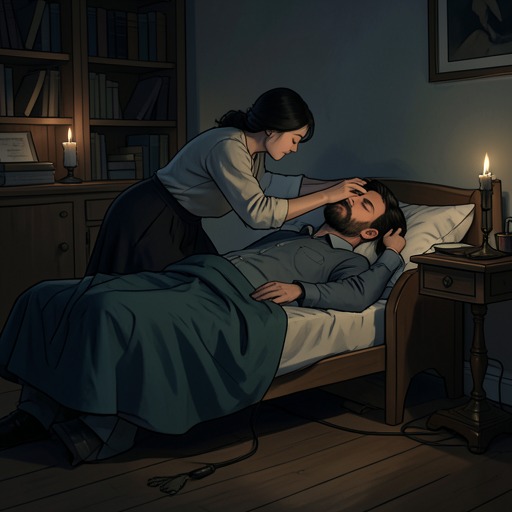
One summer morning, as Geraint sleeps beside her, the sunlight falls on him and leaves his arms and breast uncovered. Enid looks at the body and remembers the warlike fame it once represented. Her tears fall on him as she grieves that he may have lost that glory through her. Geraint wakes, but mistakes the cause of her words and tears. Instead of understanding them as concern for his reputation and responsibilities, he imagines that she is thinking of another man and wants different company.
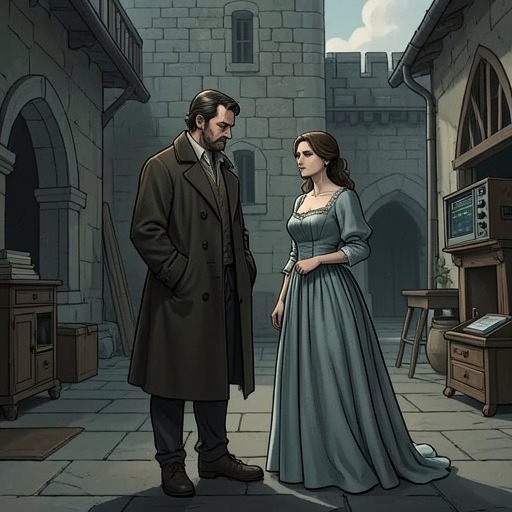
He responds by ordering his horse and arms prepared and telling Enid to wear her poorest riding clothes. He declares that she must not return until she has learned whether his strength is truly gone and whether she can seek the company she supposedly desires. He does not explain the accusation, and when Enid says she does not understand his meaning, he refuses to clarify it. The couple leave together, but his instructions enforce separation within their companionship: Enid must ride ahead, remain silent unless he speaks, and not turn back for anything she sees or hears.
The Road as a Test of Trust
Geraint chooses not a pleasant or well-travelled route but a dangerous road through forest and wilderness. When armed horsemen emerge and discuss seizing the travelers, Enid hears the threat while fearing Geraint’s prohibition against speaking. Her silence is not indifference; she is torn between obeying his command and protecting him. That conflict gives the journey its defining pattern: Geraint makes her silence a test, while the dangers they meet make warning him an act of loyalty.
The test reverses its meaning as the journey continues. Enid does not abandon Geraint or seek the easier life offered by others. When Earl Dwrm becomes enamored of her, she refuses his offer of his earldom, insisting on the faith she has pledged to Geraint. Dwrm claims he could kill Geraint and keep her by force; Enid answers by encouraging him to return the next day as if she were willing to go with him. She does not tell Geraint at once, not to betray him, but because she fears her disclosure will provoke his anger and distress.
At midnight, she gathers Geraint’s armour and wakes him gently to report Dwrm’s intentions. Geraint is angry, yet he takes warning and arms himself. Before leaving, he gives their host eleven horses and eleven suits of armour, then slips out by another road with Enid ahead of him. When Dwrm pursues with eighty armed knights, Enid sees the danger and warns Geraint despite the silence imposed on her. These episodes make her conduct a repeated answer to the suspicion that first drove them onto the road: she risks punishment to protect him and rejects an offer of rank and comfort rather than forsake him.
Recognition and Reconciliation
Dwrm’s assault leaves Geraint apparently dead. At the Earl’s hall, Enid refuses to change her travelling clothes or eat and drink while Geraint lies on a bier. Dwrm strikes her when she will not comply. Her cry awakens Geraint from his swoon; he finds his sword in the hollow of his shield and kills Dwrm with a blow that cleaves his head. The people flee at the sight of the man they took for dead rising to strike. Geraint looks at Enid and grieves both her altered appearance and the fact that she was right. His recognition arrives through the ordeal he imposed: the woman he suspected has remained faithful, and her judgment of his condition was sound.
The danger does not end immediately. As Geraint rides away with Enid, another host approaches, and the Little King comes to their aid. Later, Geraint enters the mist surrounding Earl Owain’s enchanted games alone. He defeats the knight who challenges his right to sit in the empty chair, then insists that the mist, hedge, magic, and enchantment be ended. When he sounds the horn that dispels the mist, the assembled hosts are reconciled. These later trials extend the movement from isolation toward restored fellowship, while Enid remains part of the journey rather than an opponent to be left behind.
Geraint and Enid return to his dominions, where he reigns prosperously and his warlike fame and splendour endure, shared in honour with Enid. The account closes not with a detailed apology or explanation but with a changed public and marital outcome: the withdrawal from court life and the suspicion that fractured their companionship give way to renewed rule and shared renown. The estrangement matters because its apparent test of Enid’s fidelity also exposes Geraint’s mistaken judgment; the trials bring him to recognize what her actions had shown throughout.