Robert Rothman’s Abduction of Kaye Swan
MasqueradeRobert Rothman’s abduction of Kaye Swan begins with a deliberate search for an accessible target and ends with Swan held captive in her own home. The episode also exposes the logic Rothman uses to choose victims and recast his violence as an expression of an unchangeable nature; later, he intends to use Swan as a distraction for the FBI.
Selection and Approach
On a weekday, Rothman bought two disposable cell phones at a busy convenience store, then continued through the shopping center looking for an opportunity. He turned toward the parking area designated for the Lady Lite Fitness Center. There he found an unlocked luxury car containing modern dance music and photographs of six smiling, fit young adults. The photographs showed three women and three men, including one redhead. Rothman inferred that the car’s owner was young and financially comfortable, and hoped she was the redhead.
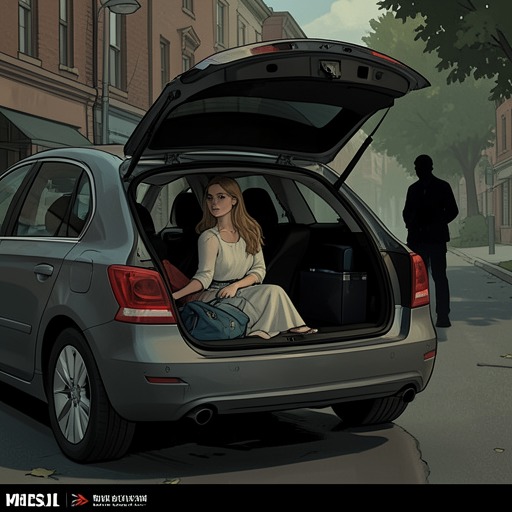
The owner was Kaye Swan, a twenty-three-year-old law student and a redhead. Rothman hid in the car’s trunk, where he had cut a narrow opening in the folded rear seats so he could watch for her return. When Swan drove home, he remained concealed through the journey and emerged in the attached garage of her two-story house. The entry door was unlocked, but a chirping alert sounded as he opened it. Rothman expected Swan to react; when she did not, he searched the house and found her upstairs in the shower.
Capture and Control
Rothman had taken duct tape and a length of blue-and-white clothesline from the garage, intending to restrain Swan and question her before her husband returned. While he was occupied with thoughts of his wife, Claire Rothman, Swan entered the room and noticed the rope. Rothman struck her from behind, restrained her to the bed, and covered her mouth before she could call for help. The capture took less than a minute. The unlocked house and its entry alert had not prevented him from reaching her; once inside, he turned the household’s ordinary rooms and objects into instruments of confinement.
Rothman interpreted his control over Swan through a predator-and-prey framework. He recognized that she might suffer and claimed to feel some sympathy, but described that feeling as weaker than his desire to possess and control her. He treated his conduct not as a choice for which he was responsible but as the expression of a nature he believed he had been created with, and said he had stopped questioning it. The episode thus presents his self-definition as part of the violence: he converts a deliberate act against a particular woman into an apparently inevitable law of nature.
Swan’s captivity continued as Rothman tried to manage the risk of discovery. He learned that her husband was expected home between six and seven, depending on which train he took. When Swan screamed after he removed the tape, Rothman threatened her and used his knife to punish her. He later cut the rope from one of her arms but made clear that this was not freedom: she was to treat her injuries in the bathroom while he waited outside, and he conditioned her survival on obedience. His promise that she might live and see her husband again was therefore another means of keeping her under control, not a release from captivity.
Rothman eventually described Swan as useful because he planned to make her a distraction for the FBI. Her abduction consequently became more than an attack on an isolated target: he intended to exploit his captive as part of a larger effort to misdirect the agents searching for him. The shift from selecting Swan for access to using her in his escape plan shows how his control over her served both his immediate predatory aims and his wider conflict with law enforcement.
The Distraction and Its Reversal
Swan’s captivity eventually became part of Rothman’s effort to misdirect the FBI. But when she reached the FBI Safe House, still with her wrists bound, an agent saw her through the kitchen window and alerted the others. Her arrival briefly appeared to be a plea for help; Swan then saw Victoria Belle charging toward the house and warned the agents to shut the door. Belle had concealed a knife behind her back, and the warning came too late to prevent her from attacking an agent at the entrance and forcing her way inside.
The sequence turns Rothman’s use of Swan against the FBI into a point of vulnerability: the captive’s appearance drew the agents’ attention, while Belle’s sudden approach transformed that response into the opening for an assault. Swan’s abduction thus connects Rothman’s private violence to the wider confrontation with law enforcement, but the safe-house attack also shows that the plan’s consequences were not under his control.
Narrative Function and Contrast
Swan’s abduction also places Rothman’s private theory of himself beside another predator’s judgment. Rothman had once fought against what he considered his nature, while Victoria Belle openly embraced predation and, unlike him, made no effort to blend into ordinary society. When Belle later recognized Rothman as one of her kind, her assessment gave his self-description an external counterpart; his insistence that he would never be like her, however, preserved a distinction between them. The episode’s significance therefore extends beyond Rothman’s claim of inevitability: his actions make him legible to Belle, while his resistance to her identification exposes a tension between the identity he has adopted and the one he still rejects.