Robert Rothman’s serial-killer double life
MasqueradeRobert Rothman’s serial-killer double life turns the appearance of a quiet, secluded marriage into a cover for decades of concealed violence. The contrast between his mild manner and the evidence uncovered after a home invasion is central to the story: the crimes are not an isolated secret but a hidden history that reshapes what Claire Rothman and others understand about him.
The Hidden Life Behind the Marriage
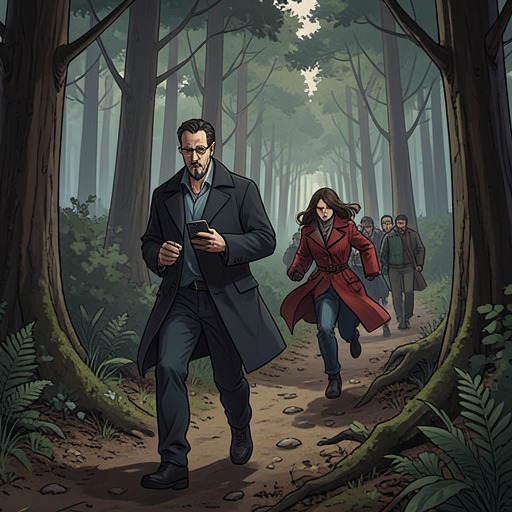
Robert and Claire had lived quietly on a secluded farm until three robbers invaded their home on a rainy night. When the chaos ended, the robbers were dead and Robert was wanted. That abrupt reversal draws attention to him, but the investigation reveals that the home invasion is only the opening into a much longer story.
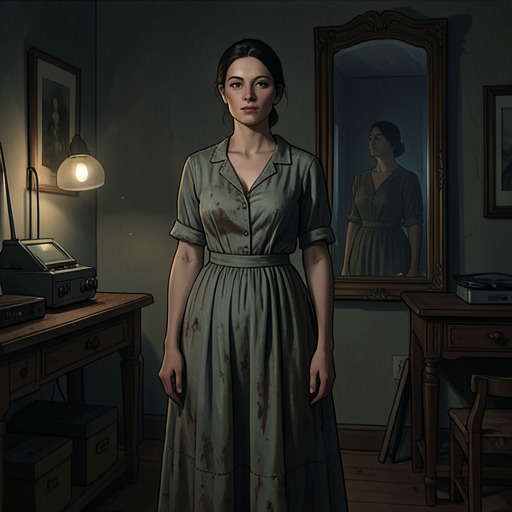
At about sixty, Robert appeared timid and mild-mannered. He had nevertheless kept secrets from Claire for decades. The discrepancy is more than a contrast between public temperament and private conduct: it means that the person sharing Claire’s daily life was also someone whose history she had not known. Her marriage, understood as a familiar and settled bond, becomes inseparable from the years of deception that preceded the investigation.
The eventual evidence changes the scale of that deception. Investigators find a hidden chamber on the farm, including a body suspended from chains, specialized equipment, and a drain. The room’s white-tiled surfaces, hooks, and supplies of plastic curtains point to a space arranged for repeated use, rather than an ordinary part of the home. The discovery gives physical form to the life Robert concealed: what had been hidden from his wife is embedded in the property where they lived.
A History Measured in Victims
The chamber’s evidence connects Robert’s secret to victims beyond the events of the invasion. One body is identified as Heather Alue, an eighteen-year-old student whose disappearance had been reported a week earlier. The discovery makes the investigation personal and concrete: a missing-person alert that Dan Stevens had seen now leads him to a victim inside Robert’s concealed space.
The numbered black drums in the room add another measure of the hidden history. Dozens stand stacked together, with drums numbered 1 and 42 pulled away from the others. At a later briefing, investigators report that the bodies in the barrels were not Robert’s only victims: seven more bodies have been found on the property. The chief forensic technician estimates that Robert’s first victim had been dead for at least forty years. The chronology reaches back far beyond the farm’s immediate crisis and makes the double life a sustained pattern, not a recent lapse.
That length of time sharpens the betrayal at the center of the story. Claire had believed that Robert’s first victim was Victoria Belle, a teenager. The later forensic finding overturns that understanding: Robert’s murderous history began decades earlier than Claire had thought, and extended through their marriage. She is devastated to learn that he had been killing innocent people while much of what she believed about her husband was false.
The Work of Choosing a Victim
The narrative also shows Robert’s concealment in motion, through the practical steps by which he identifies and approaches a new target. At a shopping center, he obtains two disposable phones from a convenience store, places a call, leaves a message when it goes unanswered, and sets the phone to vibrate. He then moves through the parking area, looking for an opportunity rather than drawing attention to himself.
His attention settles on the parking spaces marked for Lady Lite Fitness Center. When he finds an unlocked luxury car, its contents become clues for his assessment of its owner: a collection of modern dance music and photographs clipped to the sun visor, showing a group of smiling, fit people in their twenties. He reasons that the owner is likely young and affluent, and that affluence may mean a more private home. The photographs show three women and three men; he hopes the red-haired woman owns the vehicle. These details expose the cold calculations beneath his outwardly unremarkable appearance: he turns ordinary signs of someone’s life into information for choosing a target.
Robert then hides in the car’s trunk while waiting for its owner. Using a knife, he cuts into the back of the fold-down rear seats until he has a narrow view. When the woman returns, he sees her get in. She is Kaye Swan, a twenty-three-year-old law student and the redhead he had hoped to find. Her towel, music, and water bottle mark the return from an ordinary day; to Robert, she has already become the object of a plan. The scene links his concealed identity to patient surveillance and selection, not simply to the chamber later found on the farm.
Exposure and the Meaning of the Mask
Robert’s discovery also alters how Jessica White sees her own marriage. In Claire, Jessica recognizes a woman much like herself and begins to wonder whether her own husband has hidden his true self behind a mask. When she discovers the answer, she knows that her marriage and life will never be the same. The parallel does not make the two marriages identical; it carries the question raised by Robert’s deception beyond Claire’s experience and gives the idea of a hidden self consequences for Jessica as well.
The double life is therefore revealed in stages: first through the aftermath of the invasion, then through the room and its numbered drums, the victims’ identities, and finally the evidence that Robert had been selecting and pursuing people outside the farm. Each discovery revises the apparent boundary between his public life and his crimes. By the time investigators establish that his first victim died at least forty years earlier, the mild, timid husband is no longer a complete account of Robert Rothman. The mask has lasted for decades, but the evidence left behind makes its cost visible to Claire, the investigators, and Jessica.