Jessica White’s husband’s predatory impulses
MasqueradeJessica White’s husband’s predatory impulses are presented as a lifelong, intermittently triggered condition that he claims to monitor and resist. His account depends on a sharp distinction between himself and Robert Rothman: he says that Jessica’s support helps him keep his desires under control. But Victoria Belle places him among people like herself and Robert, and Jessica later discovers that he built and concealed a chamber from her. The resulting tension is not simply between desire and restraint; it is between his self-description and the evidence of a life hidden from his wife.
Identity and Self-Description
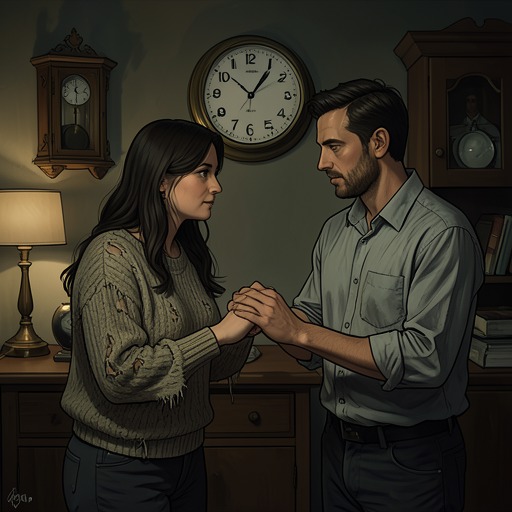
When Jessica asks whether he thinks often about abducting, abusing, or killing women, her question makes the nature of the danger explicit without establishing that he has carried out those acts. He answers that he does not fantasize about them. Instead, he describes a desire that arises when something triggers it, and calls the underlying sickness something that has been with him throughout his life. His account therefore distinguishes deliberate fantasy from an impulse that he experiences as persistent but not continuously active.
That distinction shapes how he presents responsibility. He says he remains aware of, and on guard against, his desires and compulsions, and maintains that he will not yield to them as Rothman did. This is a claim about ongoing vigilance, not evidence that the impulses have disappeared. The language of guarding himself gives self-control the character of continuing work: the threat is treated as present, even as he asserts that it can be contained.
Jessica’s Role and the Comparison with Rothman
He identifies Jessica not only as his wife but as someone who has also served as his therapist. In his explanation, the intimacy of their relationship provides what he believes Rothman lacked: a person to confide in and from whom to seek help and understanding. He proposes that, without such support, Rothman’s sickness festered until he could no longer control it. The comparison thus makes marriage part of his account of restraint, while also making Jessica responsible, in his telling, for a form of emotional support that helps him manage his impulses.
That framing does not show that Jessica knows the full extent of his inner life, or that her support guarantees his safety. Her direct questions indicate that the subject is being confronted between them, but his answer remains his own account of what the impulses mean and how he handles them. His contrast with Rothman is consequently both an admission of likeness in the existence of a sickness and an attempt to establish difference through vigilance, disclosure, and the presence of a confidante.
Recognition and Concealment
Victoria Belle’s assessment unsettles that distinction. Speaking to Robert Rothman, she identifies another man as strikingly like them and then insists that he belongs to their kind, whether or not he acknowledges it. Her words establish Belle’s perception of a kinship among the men; they do not, by themselves, verify a particular crime or explain the basis for every part of her judgment. Their significance lies in the challenge they pose to the husband’s preferred separation from Rothman: someone outside his marriage sees a resemblance he emphasizes resisting.
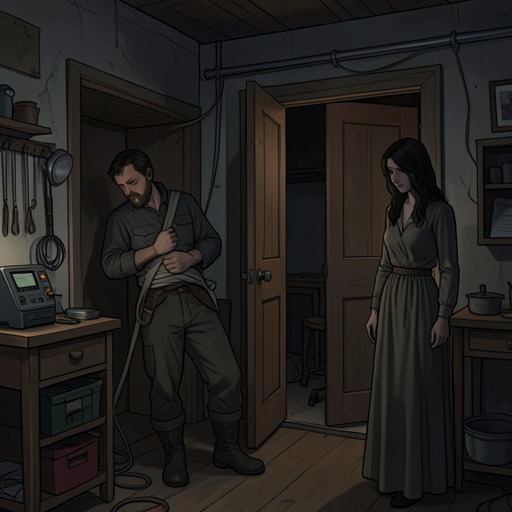
Jessica’s later discovery adds a different kind of evidence. Her husband had built a chamber and kept it hidden from her. She sinks to her knees, holding herself as she weeps from betrayal. The scene establishes both the concealment and its immediate consequence for their marriage: what she finds is not merely unknown to her, but something her husband deliberately kept from her. The evidence does not specify the chamber’s purpose, so it cannot on its own prove how he used it or connect it to a particular act. It does, however, make secrecy an unavoidable part of assessing his assurances of openness and control.
Contradiction and Significance
The account leaves two facts in tension. The husband describes himself as alert to impulses he has had all his life and as determined not to follow Rothman’s path; the hidden chamber shows that he has maintained a substantial secret from Jessica. That discovery does not erase his stated efforts at restraint, but it prevents his self-description from serving as the whole story. Jessica’s role as wife and confidante is shadowed by the limits of what she knew, while Belle’s recognition gives the husband’s claimed difference an external challenge.
The state’s significance rests on this unresolved gap between impulse, claimed self-command, and concealed construction. The narrative does not equate a triggered desire with a completed crime, nor does the chamber’s discovery settle what occurred there. Instead, it makes the husband’s insistence on vigilance harder to separate from the secrecy that has damaged Jessica’s trust. His contrast with Robert Rothman remains a distinction he asserts; the evidence of concealment leaves its adequacy in question.