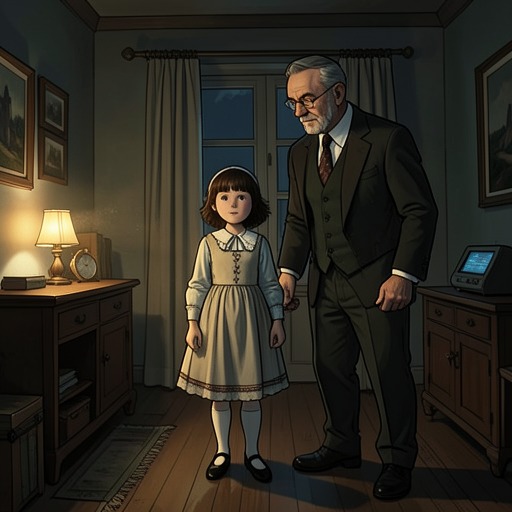
Matilda and Harry Wormwood’s father-daughter relationship
MatildaMatilda and Mr. Wormwood’s father-daughter relationship comes to a decisive test when he prepares to take the family to Spain. Matilda asks to stay where she feels at home, but her father treats her objection as an interruption to his plans. He ultimately allows her to remain with Miss Honey, yet the family’s abrupt departure leaves the contrast between Matilda’s need for belonging and Mr. Wormwood’s practical, impatient authority starkly visible.
Identity and Conflict
The relationship is shown most clearly through a dispute about Matilda’s home and future. When she returns from spending time with Miss Honey, she finds Mr. Wormwood and Mrs. Wormwood stuffing clothes and belongings into suitcases in the hallway. A large black Mercedes is waiting outside. Mr. Wormwood tells Matilda that the family is leaving for the airport in half an hour and orders her to pack; her brother is already nearly ready upstairs. The move is presented as a decision already made, not a matter for discussion with his daughter.
Matilda’s response makes plain that her wishes diverge from her father’s. She asks where they are going and learns that it is Spain, which he prefers for its climate. She says that she does not want to go: she likes living where she is and enjoys school. Her father does not engage with either reason. He tells her to do as she is told and stop complaining, saying that he has enough difficulties without her protests. When she tries to continue, he shouts her down. Their disagreement is therefore not only about a destination; it is also about whether Matilda’s attachment to her home and school counts in a decision that will shape her life.
The Departure and Matilda’s Appeal
Matilda presses for practical clarity, asking how long the family will be away and when they will return. Mr. Wormwood answers that they will not return, then orders her to get out of his way because he is busy. The permanence of the move makes her exclusion especially consequential: she is not being asked to endure a temporary journey but to leave the place and school she has just said she values. Rather than continue pleading in the hallway, she turns and runs back to Miss Honey’s home.
When Matilda reaches her parents again, she arrives with Miss Honey and makes a direct request: she wants to stay and live with her teacher, provided her parents give permission. Miss Honey offers to care for Matilda and pay the costs herself, while emphasizing that this is Matilda’s wish and that she will take her in only if Mr. Wormwood genuinely agrees. The exchange sets Miss Honey’s careful attention to Matilda’s choice against the father’s haste. Mr. Wormwood recognizes Miss Honey as the woman from the school who once came to the house, but his attention quickly returns to loading the luggage.
Consent Given Under Pressure
Mrs. Wormwood accepts the proposal first, telling her husband to let Matilda go if that is what she wants and adding that it means one fewer person to care for. Mr. Wormwood’s answer is shorter and shaped by the immediate deadline: he has to catch the plane, so Matilda can stay if she wants to. His consent changes the outcome, allowing Matilda to remain with Miss Honey, but it is given amid the rush to leave rather than through a conversation about what Matilda needs or why she wishes to stay.
The distinction between permission and affection matters to the scene. Miss Honey offers care and takes responsibility for the expense; Matilda asks to remain with her, not to be persuaded to change her mind. Mr. Wormwood does not obstruct the arrangement once it is offered, but his stated urgency and continued focus on the luggage leave little sign that he is weighing the emotional meaning of the separation. The decision grants Matilda what she asks for while also revealing how readily her father treats the matter as settled once it no longer delays his departure.
Separation and Significance
After Mr. Wormwood agrees, Matilda throws herself into Miss Honey’s arms, and Miss Honey embraces her. The parents and Matilda’s brother get into the car and drive away. Her brother waves through the rear window; Mr. and Mrs. Wormwood do not look back. Miss Honey continues to hold Matilda as they watch the black car disappear around the end of the road. The contrast gives the relationship its closing image: Matilda is physically held by the person who has agreed to care for her, while the people leaving make no answering gesture toward her.
The episode does not resolve the relationship through reconciliation. Mr. Wormwood’s decision gives Matilda the freedom to stay, but the family’s departure, and especially the parents’ failure to look back, leaves the emotional separation intact. The father-daughter conflict thus ends in a change of household rather than a change in their connection: Matilda’s expressed preference is finally acted upon, while the care she seeks is supplied by Miss Honey.