Miss Honey’s oppression and exploitation by her aunt
MatildaMiss Honey’s oppression and exploitation by her aunt began in childhood and continued into her working life, joining domestic servitude to the seizure of her home and earnings. Orphaned young, Miss Honey was left in the care of a guardian who made her obey, work, and surrender her salary; the return of her father’s will eventually exposed the injustice and gave her a route to reclaim her property.
Identity and Background
Miss Honey was born in a fine old red-brick house, hidden in the woods beyond the hills. Her father was the village doctor, but her mother died when Miss Honey was two. Because he had a busy practice and needed someone to run the household and care for his daughter, he asked his unmarried sister-in-law to live with them. The aunt agreed. Miss Honey remembered missing her mother intensely and disliking her aunt from the beginning, though her father did not see the aunt’s unkindness: when he was home, she behaved differently.
The next loss came when Miss Honey was five. Her father died suddenly, leaving her alone with the aunt, who became her legal guardian and, in Miss Honey’s account, acquired full parental authority over her. The aunt also became owner of the house. Miss Honey later learned that her father’s death was surrounded by uncertainty, but she did not claim to know what had happened. That unresolved history shadows the later dispute over the home: the child who depended on her guardian also lost control of the property in which she had been raised.
Childhood Under Her Aunt’s Control
After her father’s death, the aunt’s treatment became terrifying. Miss Honey described her life as a nightmare and recalled growing so afraid that she trembled when the aunt entered a room. She contrasted her own shy, timid nature with Matilda Wormwood’s greater strength of personality, emphasizing how fear and temperament together made resistance difficult. She would not discuss the details of what the aunt did, but made clear that the harm was sustained and that she lived in constant fear.
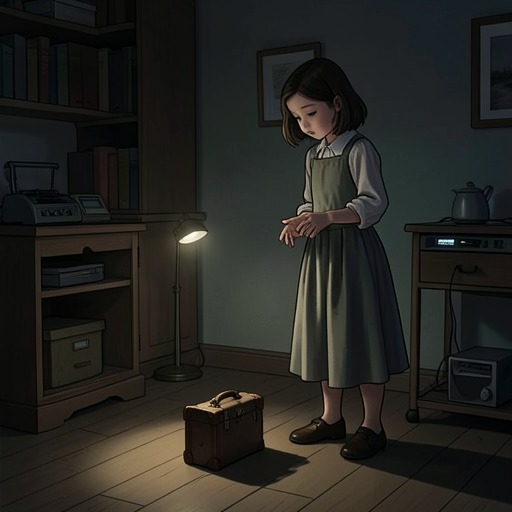
Miss Honey attended the same school Matilda Wormwood later attended, but continued living at home. Over the years, she became so thoroughly cowed that she obeyed every order immediately. By ten, she considered herself her aunt’s slave and was doing the whole household’s work: making the aunt’s bed, washing and ironing her clothes, cooking, and learning the other tasks required to keep the home. She could not safely complain. She was too frightened to seek help, and said she was permitted to cry only when her aunt was absent. Her private tears and enforced silence reveal how control reached beyond the chores themselves: even the expression of distress had to be hidden.
Education and Financial Exploitation
Miss Honey said she was a good student and could easily have gone to university, but university was not an option. Her aunt’s control over her upbringing had left her with little power to choose her future. When Miss Honey later secured a teaching job, the aunt recast years of care as a debt. She claimed that food, clothes, and shoes had cost thousands of pounds and demanded ten years of Miss Honey’s salary in repayment. Miss Honey was to receive only one pound of spending money each week.
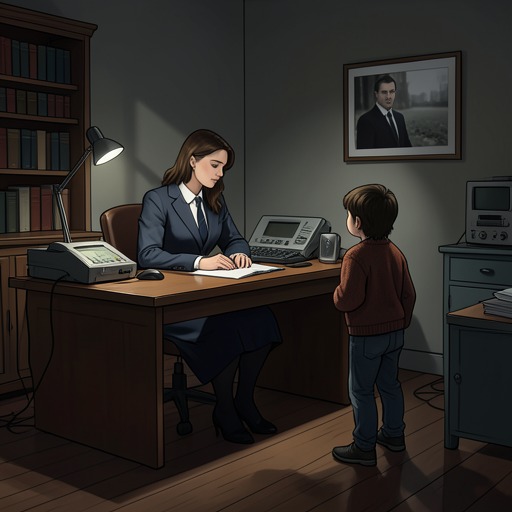
The arrangement was not merely a demand made within the household: the aunt arranged for the school to deposit Miss Honey’s wages directly into her own bank account and made Miss Honey sign a document. Matilda Wormwood recognized that the salary could have been Miss Honey’s chance at freedom. Miss Honey agreed, but explained that after nearly a lifetime of obedience she lacked the courage to refuse; her aunt could still hurt her deeply. The episode shows the continuation of childhood domination into adulthood, now enforced through control of income and a signed paper as well as fear.
Property, Power, and the Missing Will
Miss Honey believed her father had not intended his sister-in-law to keep the house forever. As she explained it, a guardian might be allowed to live in a house for a time, while the property was held for the child and would become hers on reaching adulthood. Yet her father’s will had never been found, and Miss Honey thought someone had destroyed it. The aunt produced a document supposedly signed by her brother, leaving the house to her in return for caring for Miss Honey. Miss Honey was certain the document was forged, but said that nobody could prove it.
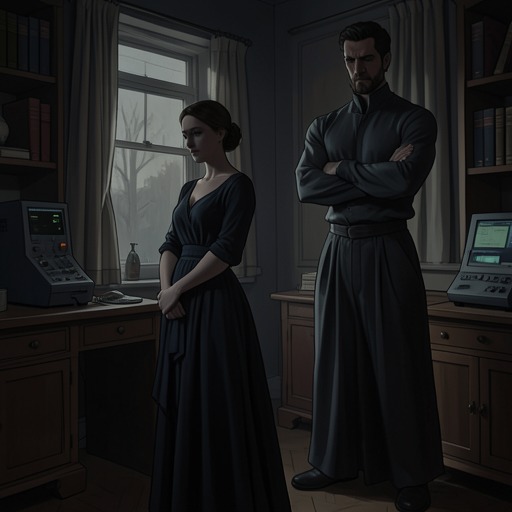
A legal challenge was beyond Miss Honey’s means. Her aunt was also a highly respected and influential member of the community, giving the dispute a further imbalance: Miss Honey lacked both money for a lawyer and the social standing that might help her contest the aunt’s claim. The house, savings, and earnings were therefore bound up in the same pattern of dependence. The aunt’s authority was not presented as a single childhood episode; it continued through disputed documents, control of wages, and the apparent loss of Miss Honey’s inheritance.
The Will’s Return and a New Home
Two days after Agatha Bulstronk disappeared, a local solicitor sent Miss Honey a registered letter saying that her late father’s will had mysteriously come to light. It established that she had been the legal owner, since her father’s death, of the property known as Het Rode Huis, which Agatha Bulstronk had occupied, and that her father’s savings had also been left to her and remained safe in the bank. The solicitor asked her to visit so the house and money could be put in her name. Within three weeks, Miss Honey moved into the house where she had grown up; its old furniture and paintings were still there.
The recovery of the will reverses the apparent permanence of the aunt’s control. What had seemed to be an unprovable claim backed by wealth and influence gives way to a document that confirms Miss Honey’s ownership and inheritance. Her return to Het Rode Huis does not erase the years of fear, domestic labor, or lost educational opportunity, but it changes her material circumstances: the home and savings that had been withheld are again hers. Matilda Wormwood began visiting after school every day, and the teacher and child formed a close friendship. Later, Miss Honey offered to care for Matilda and cover all her expenses, making the home once associated with Miss Honey’s childhood subjection the setting for a relationship of chosen care. She insisted that Matilda’s parents must agree, while Matilda’s mother treated the move as one less child to look after and her father, in a hurry to catch a plane, gave his permission. The contrast is sharp: Miss Honey’s childhood was governed by an adult’s authority over her, while her offer to Matilda centers on care and asks for consent.