Matilda’s parental neglect
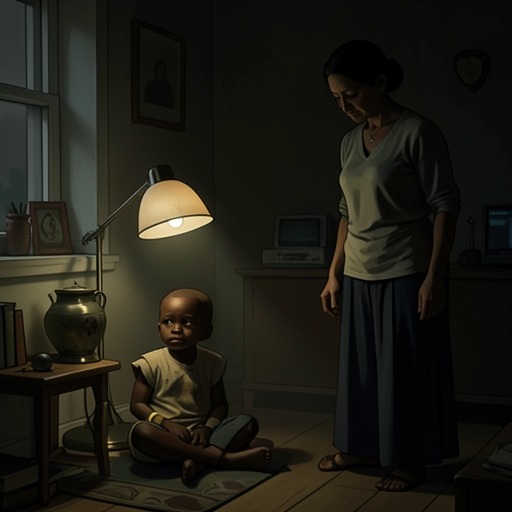
MatildaMatilda’s parental neglect is not a single failure but the continuing condition of her childhood: Mr. Wormwood and Mrs. Wormwood overlook her abilities, discourage her efforts to learn, and treat her wishes as bothersome. Their indifference is especially consequential because Matilda is exceptionally bright and eager for books. While her parents fail to recognize what she needs, she finds ways to pursue it herself, until another adult offers the care and encouragement her family has not provided.
Identity and Early Neglect
The story sets Matilda’s family against the familiar assumption that parents are inclined to admire their children. Its narrator instead describes the Wormwoods as parents who are not interested in their children, treating Matilda as little more than an irritation to be endured until she can be got rid of. Their attention to her contrasts with their attention to their son, Michiel Wurmhout, whom the narration describes as an ordinary boy; Matilda, by contrast, is brilliant and unusually sensitive. Yet her gifts do not overcome her parents’ disregard. The more striking her capacities, the more conspicuous their failure to notice them.
That failure begins early. At eighteen months, Matilda could speak clearly and knew more words than most adults, but rather than encourage her, her parents called her a noisy chatterbox and told her that little girls should keep quiet. At three, she taught herself to read from newspapers and magazines lying around the house. By four, she read so well and so quickly that she wanted books. The household offered almost no intellectual nourishment: its only book was Mrs. Wormwood’s cookbook, which Matilda read from beginning to end and learned by heart. Her parents did not respond to this precocious self-education with interest or pride.
Books, School, and Self-Reliance
When Matilda asked Mr. Wormwood to buy her a book, he questioned what she could want one for and redirected her toward the family’s large television. He called her spoiled for wanting to read. The exchange makes the neglect concrete: Matilda asks for a modest means of feeding an interest she has developed independently, and her father treats the request as unreasonable rather than as evidence of a child’s curiosity.
The next afternoon, Matilda went alone to the Village Library. She was left at home almost every afternoon: Michiel was at school, Mr. Wormwood was at work, and Mrs. Wormwood travelled twelve kilometres to play bingo, five afternoons a week. The librarian was surprised that such a young child had arrived without a parent, but allowed Matilda to stay and read. The contrast is sharp. The family’s absence creates the circumstances in which Matilda must find her own access to books; the library supplies the welcome that her home withholds.
Her parents’ neglect also delayed her formal education. Matilda was five and a half before she began school, because they had forgotten to enrol her and her education left them unmoved. At school, Miss Honey quickly recognized what the family had missed: Matilda’s striking intelligence. Matilda’s entry into a setting where an adult took her abilities seriously marks an important alternative to the indifference at home, not a change in her parents’ attitude.
Conflict over Values and Everyday Needs
Neglect extends beyond learning to the way Matilda’s parents respond when she expresses a moral judgment. After hearing Mr. Wormwood explain that he tampered with the mileage readings of cars before selling them, Matilda objected that he was cheating people who trusted him. Her father answered by telling her that she should not eat the food in the house if she disapproved of the money used to pay for it. Matilda called the money dirty and said she hated it. Mr. Wormwood shouted at her and insulted her; Mrs. Wormwood sided with him and told Matilda to be quiet so the adults could watch television.
The scene shows a family in which material provision is used to shut down a child’s independent judgment. Mr. Wormwood presents the food as grounds for Matilda’s obedience, while refusing to engage with the dishonesty she has identified. Her parents’ response does not correct or consider her objection; it rebukes her for speaking. Their neglect therefore includes disregard for her intellectual and moral agency, even when she demonstrates that she understands the adult conduct around her.
The television also organizes ordinary family life at Matilda’s expense. The Wormwoods eat ready-made meals in front of the screen, with their plates on their knees. Matilda asked to eat in the dining room so she could read, but Mr. Wormwood refused, insisting that dinner was a family occasion and nobody could leave before they were finished. Matilda pointed out that they were not at a table and never ate that way. The contradiction exposes the emptiness of his appeal to family togetherness: the rule keeps her in the room, but the shared activity is watching television, not attending to one another. Her simple request to read is denied in the name of a family ritual the household does not actually observe.
Consequences and Change
The neglect leaves Matilda to rely on her own initiative. She teaches herself to read, seeks out the Village Library without adult accompaniment, and enters school years later than most children. These actions do not mean that she lacks a need for care; rather, they show how often she must supply for herself what her parents fail to arrange. At school she makes friends, including Lavender, and is regarded by her classmates as a quiet, ordinary child as well as a clever one. The contrast between her unobtrusive manner and the clarity of her mind further underlines how little her family has bothered to discover about her.
The decisive change comes when Miss Honey offers to have Matilda live with her. Miss Honey tells Mr. Wormwood that she would care for Matilda and pay for everything, but makes clear that the idea came from Matilda and that she will take her only with his wholehearted agreement. Mrs. Wormwood responds that Matilda may go if she wants, adding that this will be one less person to care for. Mr. Wormwood, preoccupied with catching his plane, says that Matilda may stay if she wants to. The exchange gives Matilda’s wish a route to fulfillment, but it also confirms the parents’ detachment: neither tries to persuade her to remain or asks what she needs. Their consent permits her to leave the neglectful household and live with an adult who is prepared to care for her.
Narrative Significance
The narrative makes the neglect visible through a repeated contrast between Matilda’s initiative and her parents’ indifference. She reads because no one provides books; she finds a library because the adults are absent; she goes to school late because her parents do not enrol her. Her abilities are not hidden, but they are effectively unseen within her family. Their failure to recognize her is presented as a failure of attention and responsibility, not as evidence that she lacks talent or needs.
The ending changes Matilda’s circumstances through a rare moment in which her expressed preference matters. Miss Honey offers a home without charge, and Matilda’s parents let her go with little discussion. The outcome gives Matilda a more supportive household, while preserving the force of the contrast: what should have been an act of parental care is left to another adult to provide. Her self-reliance has helped her survive neglect, but the story’s resolution does not mistake that resilience for a substitute for being cared for.