Memory (motif)
MemoryMemory is both a practical problem and a human condition in Miles Vorkosigan’s story: he loses track of his own record, imagines the cost of retaining every experience, and confronts memory loss after cryo-revival. Simon Illyan’s engineered eidetic memory gives the contrast its sharpest form. Against the promise of a perfect archive, the narrative sets the pressure of being unable to forget and the vulnerability of a mind that cannot reliably remember.
Imperfect Records and Ordinary Forgetting
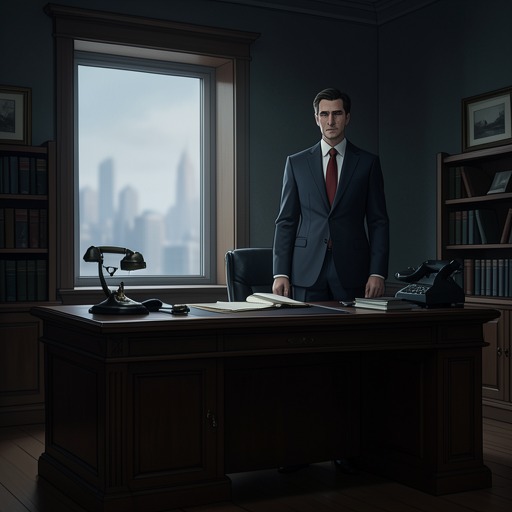
The chapter titled Memory first gives recollection a workaday measure. Miles sits down to compose what feels like his thousandth classified field report for Simon Illyan, then corrects himself: he has served on fewer than forty assignments. He cannot produce the true number without stopping to calculate it, and he explicitly distinguishes this lapse from lingering cryo-amnesia. The contrast matters. Forgetting is not presented only as a dramatic symptom or medical crisis; even a capable officer can lose his place in the chronology of his own career.
The report itself offers a counter-image to that faltering personal count. Miles is expected to provide a concise guide to appendices of raw data, and the accounting behind his recent operation includes costs, returns, salvage fees, and bounty claims. The paperwork can preserve particulars that Miles does not hold ready in his mind. Yet the record does not replace judgment or narrative: the summary must organize the data, while the underlying files remain available to be examined. Memory, in this setting, is already divided between a person’s recollection and the documents assembled to support an official account.
That division gives the motif an institutional dimension without making paperwork equivalent to lived experience. Miles’s inability to name his assignments offhand is a small disruption in the identity built around a long sequence of missions, but it does not erase those missions; they can be reconstructed. The scene places fallible recollection beside deliberate record-keeping and lets each expose the limits of the other. A person may remember poorly, while a file may retain details without supplying the human meaning of the events it records.
Illyan’s Perfect Recall
Miles’s joke that Simon Illyan might have forgotten him collapses against the history of Illyan’s memory chip. As a young Imperial Security lieutenant, Illyan was sent by Emperor Ezar to Illyrica for an experimental implant intended to make him a walking recording device. Its extraordinary promise came with a devastating risk: the technology was associated with a 90 percent incidence of iatrogenic schizophrenia among its wearers. Ezar accepted that danger for the hoped-for value of the other ten percent, placing the cost on a young officer rather than himself. The chip’s history therefore joins memory to power: the capacity to preserve information was treated as an instrument of rule, while the bodily and mental risk fell on the person made to carry it.
The device did not become a successful commercial technology, but its consequences remain embodied in Illyan. Miles imagines thirty-five years of recollections available with the sharpness of present experience, without the softening that ordinary forgetting brings. He pictures every past mistake replayed in perfect sound and color and sees why such total recall might resemble a punishment rather than a gift. The contrast is not simply between a good memory and a bad one. It is between a mind able to let experience recede and one unable to escape the full vividness of its record.
Illyan’s recall also shapes how other people behave around him. Miles knows that Illyan can repeat an ill-considered remark verbatim and reproduce its accompanying gestures. Memory consequently becomes social as well as private: what has been said can return in another person’s voice, complete with the evidence of how it was said. The possibility makes Miles cautious. A conversation with Illyan is not safely dissolved by time, because its words may remain available for retrieval long after the speaker would prefer to leave them behind.
The Past as Burden and Inheritance
The history of Illyan’s chip extends beyond the experiment that installed it. After Emperor Ezar’s death, Illyan fell into the orbit of Admiral Aral Vorkosigan and continued working in Security for Miles’s father over the following thirty years. In Miles’s brief account, a device first imposed by imperial policy becomes part of a career carried forward through successive political relationships. The past is not stored in isolation: Illyan’s memory accompanies him through decades of service, linking personal experience to the institutions and people around him.
Miles’s speculation about the burden of perfect recall is especially pointed because it comes from someone already wary of his own mind. He does not romanticize the chip or wish to possess it; he imagines that the repeated return of every error would be intolerable. His response sets a limit on the fantasy of perfect preservation. An archive may make the past instantly available, but availability is not the same as wisdom, and exact reproduction does not guarantee that a person can live comfortably with what is reproduced. The thought makes forgetting less a defect to be corrected than one of the conditions that allows experience to recede.
Memory After Cryo-Revival
That reflection becomes more concrete when Miles confesses to Ivan that, after his cryo-revival the previous year, he began having stress-triggered seizures. His surgeon had suggested that both the seizures and his memory loss might resolve; the episodes were rare and seemed to be diminishing. Miles nevertheless failed to tell his Imperial Security doctors when he returned. By placing memory loss beside the seizures, the confession presents recollection not as an abstract theme but as part of the uncertain aftermath of a bodily crisis.
The circumstances also distinguish Miles’s experience from Illyan’s. Illyan’s extraordinary recall is the lasting result of a deliberately installed device; Miles describes memory loss after cryo-revival and uncertainty about whether it will right itself. One man’s mind is burdened by an imposed abundance of retrievable experience, while the other has reason to worry about what may be missing. The juxtaposition does not make their conditions interchangeable. Instead, it lets the motif hold two opposing anxieties at once: that the past may return too completely, and that essential parts of it may no longer be accessible.
Taken together, the scenes make memory neither a flawless possession nor a dependable archive inside the self. Miles’s mission count can be checked, Illyan’s past can be replayed, and Miles’s post-revival memory loss remains subject to medical uncertainty. The recurring contrast gives the subject its force: records can preserve information, but the human capacity to remember is shaped by vulnerability, power, and the possibility of forgetting. The chapter’s title names more than recollection; it gathers the question of how a person continues to inhabit a past that may be blurred, preserved, or painfully vivid.