Miles Vorkosigan’s divided identity
MemoryMiles Vorkosigan’s divided identity is the struggle between Lord Vorkosigan and Admiral Naismith, two selves whose apparent separation becomes impossible to sustain when Lucas Haroche offers him a route back to Imperial Security and the Dendarii. The offer first revives the exhilarating prospect of returning to his old life; then the memory of what that life cost interrupts the fantasy. In the stillness that follows, Miles arrives at a harder conception of identity: not a role imposed by the past, but a self made through choice and responsibility for its consequences.
The Former Self and the Offer
Miles’s old identity is tied not only to military work but to a particular kind of achievement. Haroche has studied the reports of Miles’s Dendarii missions for Imperial Security and sees the partnership between Miles and Simon Illyan as extraordinary. He judges Illyan’s decision to discharge Miles a serious mistake, arguing that a written censure would have been sufficient. In Haroche’s view, Miles is the kind of officer willing to take risks others avoid in order to secure results others cannot obtain; the Dendarii have been a valuable resource to Imperial Security.
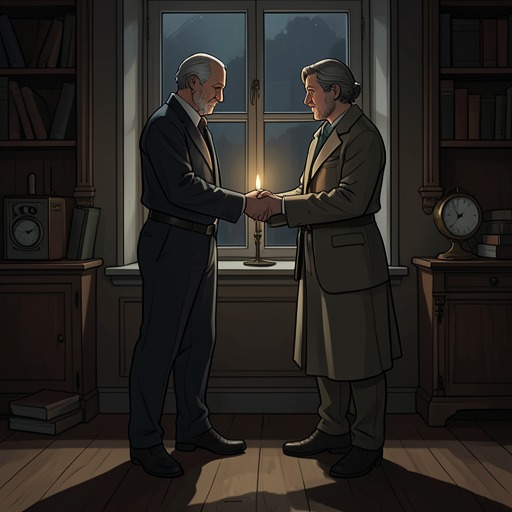
Haroche’s proposal makes that assessment personal. If Miles’s medical treatment succeeds, he would prefer to reinstate Miles rather than rely on Commodore Quinn, whom he regards as both unknown to him and not Barrayaran. He imagines Miles as a new partner who might work with him as effectively as he once worked with Illyan, perhaps even better. Haroche also says Miles was overdue for promotion to captain. The offer therefore promises more than restoration of a job: it appears to recognize Miles’s ability, repair the injustice he attributes to Illyan, and return him to the military world in which Naismith flourished.
Miles’s first response is an unguarded rush of joy. He struggles to speak, his hands shake, and his injured lip splits as he grins. He agrees in principle, while insisting that he must first close the case and return Gregor’s choke-chain. That practical qualification briefly makes the offer seem compatible with his present responsibilities: he can finish his current duty, then resume the life Haroche has offered. But the bodily force of his excitement reveals that Naismith is not merely an identity he has put away without regret.
Desire, Denial, and the Cost of Return
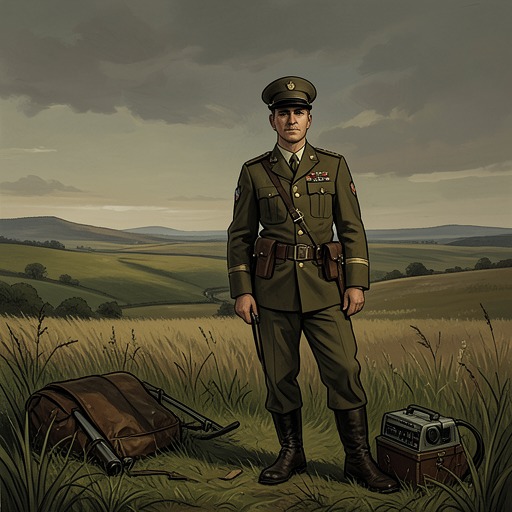
The offer changes when a memory breaks into Miles’s elation: a docking bay packed with Dendarii troopers chanting Naismith’s name. The scene is connected to a first victory, but the memory also brings the unspoken question of its cost. The sudden contrast turns the offer from simple vindication into a confrontation with the history attached to the identity Miles wants back. The past holds triumph and loss together; it cannot be resumed as though only the triumph mattered.
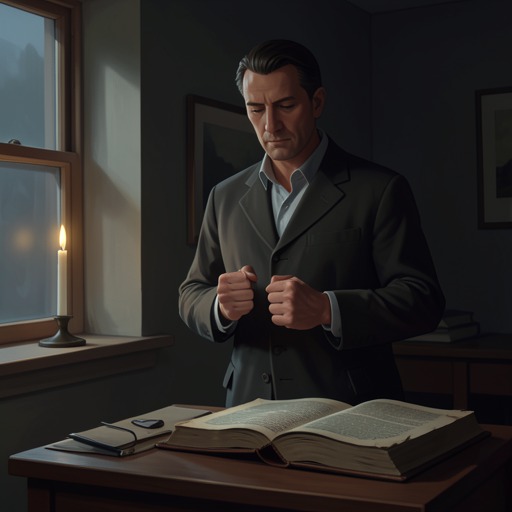
Afterward, alone behind a locked door, Miles shakes throughout his body. He recognizes that he had treated the apparent end of Naismith as something already overcome. He had told himself that Lord Vorkosigan had the upper hand and acted as if Naismith’s absence did not matter. That performance of indifference has not freed him from the old identity. Haroche’s offer exposes the desire beneath it: Miles does want the Dendarii back. The intensity of his response is therefore not evidence that his earlier attachment has vanished, but evidence that he has been denying how much it remains.
Haroche understands one side of the division with unnerving accuracy. He can anticipate Admiral Naismith saying yes and then trying to wriggle out of the bargain. But Haroche does not understand Lord Vorkosigan, and Miles recognizes that almost nobody does—not even Miles himself. He contrasts the boy once known by that name, confused, passionate, and devoted to the army, with a newer Lord Vorkosigan who has become someone different. Naismith did not simply disappear: in Miles’s account of his own development, the boy was left behind as Naismith struck out into a wider world. Yet the resulting Lord Vorkosigan is not a familiar, settled replacement. Miles scarcely dares guess what this newer self will become.
Choice Rather Than a Return to the Past
The struggle is sharpened by Haroche’s apparent ability to set the terms. Miles imagines him as a puppet-master, making Miles run in circles and turn against himself. Exhausted by the competing answers, Miles considers not playing the game at all. The question of identity then changes shape: instead of deciding which established role must win, he reaches a moment of stillness in which neither forward nor backward movement dictates the answer.
Miles’s realization is that he has been what he chose, even when the consequences were not what he wanted. His mother’s maxim gives that recognition a practical and ethical edge: choosing an action means choosing its consequences, and wanting a consequence requires taking the action that will produce it. Identity, in this moment, is not a clean division between an authentic Lord Vorkosigan and a discarded Admiral Naismith. It is bound to action, desire, and accountability. The freedom to choose does not mean freedom from what a choice brings.
The offer’s importance lies in the way it makes the old division visible and then refuses to settle it through a simple return. Miles still wants the Dendarii; his joy and his admission of that desire make the attachment undeniable. Yet the new Lord Vorkosigan cannot be reduced to the boy who wanted the army, nor can Naismith’s past be recovered without its cost. The quiet that follows is not a final prediction of which role Miles will inhabit. It is a pause in which he can understand himself as the person who chooses, and who must live with what those choices create.