Event 1
Zoave Twilight hostage-rescue mission
The [Zoave Twilight hostage-rescue mission](entity:event-recall-event-zoave-twilight-hostage-05d08e6d3b46) is a successful [Dendarii Free Mercenary Fleet](entity:organization-recall-organization-dendarii-free-me-2ca6905f806b) operation whose extraction is disrupted when Miles Vorkosigan suffers a seizure and his armor’s weapon system fires on the rescue party’s own hostage. The crew and captives are brought to safety, and the hijackers’ ship is taken, but the incident injures [Lieutenant Vorberg](entity:character-recall-character-lieutenant-vorberg-aa29d66a199f) and reveals that Miles’s post-cryogenic medical condition can endanger the people he is trying to protect.
## Objective and approach
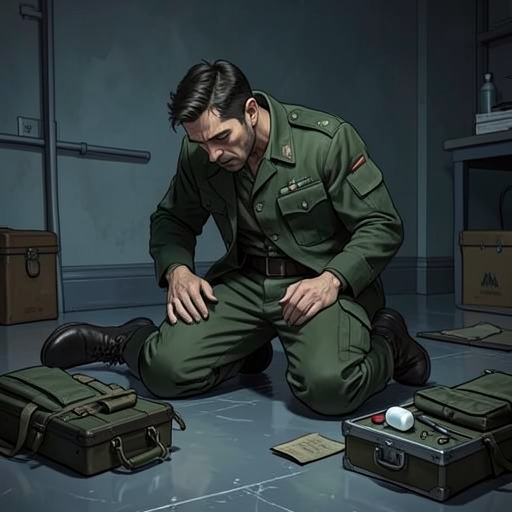
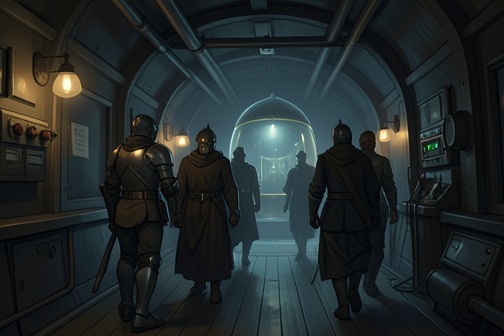
A patrol led by Miles and Captain [Elli Quinn](entity:character-recall-character-elli-quinn-704179920b12) infiltrates the hijackers’ ship to reach its brig, where they find Lieutenant Vorberg, a [Barrayaran Imperial Security](entity:organization-recall-organization-867eeddc49e0) courier officer who has been sedated. The medical technician checks that Vorberg is not subject to mechanical or chemical traps before the team begins its return through the ship’s dark corridors to a waiting Dendarii combat shuttle. The hijackers are occupied elsewhere and do not initially interfere with the extraction, making the rescue appear to be proceeding smoothly.
The mission has more than one stake. The Dendarii are recovering a hostage, but the hijacked vessel also contains its crew, and the attackers are suspected of belonging to the same group that had seized the Solera and murdered its passengers and crew the previous year. Miles sees a possible reward from [Vega Station](entity:location-recall-location-vega-station-4cdefbde023f) if the connection can be established. Because the Vegans are also offering a reward for proof of the hijackers’ deaths, he instructs Quinn to have the prisoners interrogated and the evidence recorded carefully. The reward system makes precise records operationally important: the fleet’s claims will depend on what it can substantiate, not merely on having won the encounter.
## The extraction and its reversal
The crisis begins when Miles suddenly falls during the return. His suit sends faulty telemetry, and its plasma arc locks on. Quinn later reports that Miles’s weapon strikes Vorberg, while the beam’s effect prevents the situation from becoming immediately fatal. Miles is no longer in control of his armor, and the other rescuers have to restrain his arm and get him disconnected. Quinn stuns him at the back of the neck when the team cannot safely stop the weapon otherwise; she fears she may have killed him.
Miles regains consciousness aboard the Dendarii combat shuttle, on a fold-down bunk near the emergency medical station. Disoriented and still trying to reconstruct what happened, he first checks whether he has been wounded and whether his armor and weapons are missing. He then notices another casualty across the aisle. When the medtech confirms that his squad is out, Miles immediately asks about the Barrayaran hostage. The reply establishes that Vorberg will live, though he needs further medical care and there is a chance a surgeon can restore what was lost in the incident.
Quinn gives Miles the operational account after removing her helmet and gloves. Green Squad has evacuated the hijacked ship’s crew, and the fleet has taken the enemy vessel and nineteen prisoners. Three of the enemy have been killed; six or eight others escaped in a lightly armed jump-pinnace. With the Ariel able to overtake them before they reach the nearest jump point, Miles leaves open whether to destroy the escapees or attempt their capture, but orders that they be called on to surrender once. He also directs Quinn to interrogate the prisoners and preserve the recordings, mindful of the possible Vega Station bounty. Despite equipment damage and the friendly-fire accident, the mission has recovered the hostages and secured the ship.
## Medical danger and command
The incident changes the meaning of the apparently orderly extraction. Miles identifies what happened as a seizure resembling epilepsy, without the neurological traces he associates with that condition, and suspects it may be an aftereffect of his cryogenic revival the previous year. Quinn’s account supplies the immediate chain of consequences: the seizure, faulty suit telemetry, the locked plasma arc, danger to the rescue team, and the need to disable Miles by force. The mission therefore makes his health a direct operational concern rather than a private matter. His command decisions continue after he wakes, but the injury to the person he had just rescued demonstrates the risk created when he loses control during a mission.
The episode also places Quinn in two roles at once. She is responsible for reporting the fleet’s status and carrying out Miles’s decisions, yet she has also had to act urgently to stop his armor from endangering the team. Her description is visibly difficult for her to give, and Miles’s questions move from the fleet’s condition to the consequences of his own loss of control. The exchange links command responsibility with personal accountability: the operation is judged by the safe return of its people, not only by possession of the enemy ship or the prospect of a reward.
## Records and unresolved questions
Afterward, the Peregrine and Ariel, with the rest of Admiral Naismith’s select battle group, orbit [Zoave Twilight](entity:location-recall-location-zoave-twilight-88d91255ef30). The fleet accountant settles the hijacked freighter’s insurance matters, submits salvage claims for captured ships, and files bounty claims with the Vega Station Embassy. Miles includes the costs and returns in his classified report to [Simon Illyan](entity:character-recall-character-simon-illyan-086bc032eda1), Chief of Barrayaran Imperial Security. This paperwork extends the mission’s consequences beyond the rescue itself: recovery, salvage, and reward claims all have to be documented for the governments and agencies involved.
The prisoners are handed over on the planet for the Vegan and Zoavan governments to divide between them. The Dendarii recordings of their interrogations are included in Miles’s report, while the versions supplied to the local governments are edited to remove most questions and answers specific to [Barrayar](entity:location-recall-location-barrayar-d02af764f924). The material contains extensive evidence about the hijackers’ crimes, but it does not settle why the courier was taken. Miles reports that no evidence shows Vorberg’s kidnapping to have been anything other than an accidental consequence of the hijacking. He nevertheless notes that the people who might have known more include members of the hijackers’ leadership who were killed, so the possibility cannot be closed on the basis of the surviving testimony.
Miles therefore points [Imperial Security](entity:organization-recall-organization-imperial-securit-1c61e3358102) toward another lead: the House Hargraves representatives who had been trying to arrange the courier’s sale or ransom for the hijackers. The mission resolves the immediate hostage crisis and produces prisoners, a captured ship, and records for official review, but it does not establish the full circumstances of the abduction. Its conclusion is consequently both operational and investigative: the rescued people are out, while the question of how the courier became a target remains open.
Event 2
Jackson's Whole Rescue and Miles's Cryogenic Revival
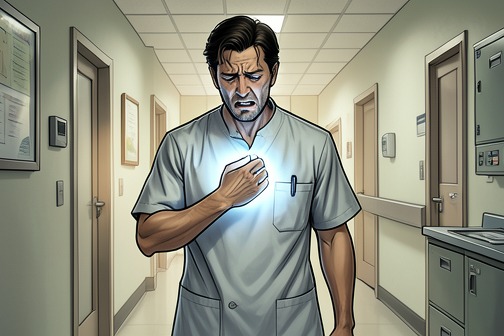
The [Jackson's Whole](entity:location-recall-location-jackson-s-whole-b4cc44bed3df) rescue and Miles's cryogenic revival unite a characteristic reversal in Miles Vorkosigan's work with a lasting personal cost. An assignment to terminate an experiment became a rescue; the effort to recover [Mark Vorkosigan](entity:character-recall-character-mark-vorkosigan-a2dddc5bbf85) ended with Miles's death and revival, leaving him to contend with a suspected cryonic injury and a three-month gap in his memory.
## From termination to rescue
Miles later recalled that the mission had not begun as a rescue: he had been hired to terminate the experiment. He nevertheless turned the assignment into an effort to save someone, a transformation that [Elli Quinn](entity:character-recall-character-elli-quinn-704179920b12) recognized as typical of him. In her view, rescue was not merely an operation but a way of giving others freedom, even as Miles described the emotional reward and adrenaline of pulling someone out of a desperate situation.
The rescue also shaped Miles and Elli's relationship. Elli said that she began to fall seriously in love with him when he came back for her. Their later conversation links that act of return to the mission's larger pattern: Miles could make rescue the outcome of a task that had originally called for something else.
## [Mark](entity:character-recall-character-mark-cfbb20016049) and the cost of the mission
The mission's cost became a source of conflict between Miles and Elli. She connected his decision to go after Mark with his death and the lasting damage she believed cryogenic revival had left in his head. Miles rejected her hostility toward his brother, while the argument exposed how differently the two of them understood the consequences of the rescue.
Elli's account identifies a direct chain between Miles's attempt to reach Mark, his death, and the neurological problems that followed revival. The evidence does not describe the circumstances of his death in detail, but establishes that cryogenic revival did not simply return him to his former condition: Miles later feared that something in his head remained wrong.
## Memory, aftermath, and the unresolved cost
The revival's consequences surface in Miles's own recollections as well as in his physical concerns. He acknowledged that his memory of his Jackson's Whole sojourn contained a blank lasting three months. The gap makes the episode more than a completed rescue: part of the experience remained inaccessible to him even as its consequences continued to shape his life.
Later, the mention of Mark brought the mission, cryogenic revival, and Miles's concealed health problems back to mind. He privately considered using leave to travel from [Sergyar](entity:location-recall-location-sergyar-96434a51c008) to [Escobar](entity:location-recall-location-escobar-6268892e34cf) and consult [Rowan Durona](entity:character-recall-character-rowan-durona-416fac37cbc8), the surgeon who had revived him, without creating records for [ImpSec](entity:organization-recall-organization-impsec-9890efe09d1c). This was only a contemplated plan, not a treatment he is shown receiving. Its secrecy underscores the unresolved aftermath: Miles hoped to address what was wrong while keeping both his condition and his search for help hidden.
Event 3
The Yarrow Plot
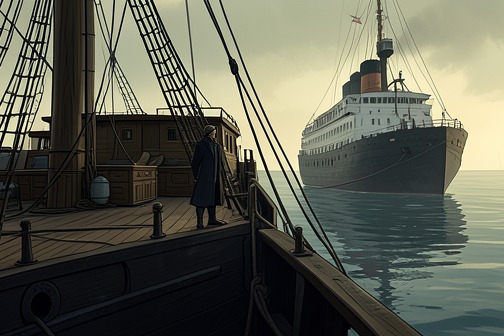
[The Yarrow Plot](entity:event-recall-event-yarrow-397aad81b49a) was a thwarted assassination scheme whose intended target was the [Imperial Residence](entity:location-recall-location-imperial-residence-248249a7eda7) and whose potential casualties extended far beyond the Emperor. Recounted by [Duv Galeni](entity:character-recall-character-duv-galeni-4b96e8260f78) as a case study in counterterrorism, it illustrates the kind of success that shaped [Lucas Haroche](entity:character-recall-character-lucas-haroche-07b1b2325121)’s career while remaining largely invisible outside [ImpSec](entity:organization-recall-organization-impsec-9890efe09d1c): the plot was stopped, but its prevention brought little public recognition, and the danger that prompted it was scarcely known beyond the agency.
## The Plan and Its Target
A hyperisolationist faction aligned with Count Vortrifrani planned to use an old jump-freighter, the Yarrow, as a suicide weapon. The conspirators meant to drop it directly onto the Imperial Residence. The vessel’s impact alone would have destroyed most of the building; explosives packed aboard were intended to add to the destruction, not to make an otherwise harmless craft dangerous. The planned attack therefore threatened the heart of imperial power as well as the people inside it.
The target’s location made the danger broader than the residence itself. Duv Galeni noted that a missed drop point could have killed thousands of people in [Vorbarr Sultana](entity:location-recall-location-vorbarr-sultana-325afb58e98e). [Ivan Vorpatril](entity:character-recall-character-ivan-vorpatril-2e03a5f0f162) responded that his mother’s flat was not far from the residence, making the citywide risk personal as well as political. Miles Vorkosigan, who had been off-world at the time, likewise understood the scale of the potential loss. The attack was intercepted before it occurred, but its intended trajectory left a stark uncertainty: how many people would have died if the freighter had missed its target?
## The Loose Thread and the Investigation
The conspirators’ explosives became the mistake that exposed them. They provided the loose thread that led Lucas Haroche’s team to the plotters; the planned strike was thus uncovered through a trace left by the attackers’ own preparation. Duv Galeni characterized the case as a textbook example of counterterrorism, and [Simon Illyan](entity:character-recall-character-simon-illyan-086bc032eda1) required new ImpSec analysts to study it. The account identifies the explosives as the investigative opening, without detailing the team’s subsequent methods or the precise sequence by which it traced the faction.
The thwarting of the plan had a political consequence beyond averting the attack. Count Vortrifrani distanced himself from the faction, but the episode broke up his support and left the Imperium less embarrassed by him afterward. The account does not describe his precise role in the conspiracy; it presents his alignment with the hyperisolationists and his subsequent distancing as significant political circumstances, not as a full account of his participation.
## Haroche’s Career and ImpSec’s Secrecy
The Yarrow case formed part of Lucas Haroche’s record in [Domestic Affairs](entity:organization-recall-organization-domestic-affairs-e271282d6bfc). Simon Illyan had credited him with personal responsibility for derailing at least four serious plots against the Emperor’s life while serving as a Domestic Affairs agent, apart from the Yarrow incident. That earlier achievement won Haroche his chiefship. In the later conversation, the plot’s successful prevention is also cited as an example of the kind of expertise the agency hoped Haroche might pass on to Miles Vorkosigan, who was being considered for a future assistant posting under him.
Inside ImpSec, the Yarrow Plot was famous enough to serve as required study material; outside the agency, it was practically unknown. Miles Vorkosigan explained the asymmetry as a feature of the work: successes remained secret and thankless, while failures became conspicuous and brought blame. The plot’s place in the conversation makes that contrast concrete. Its obscurity was not evidence that the danger had been slight; it was the consequence of a successful operation whose public visibility was limited precisely because the attack had been prevented.
## Significance of the Recalled Case
The Yarrow Plot is presented through a conversation about Haroche’s qualifications and the possible shape of Miles Vorkosigan’s next assignment, rather than through a dramatized account of the operation itself. Duv Galeni’s concise retelling supplies the essential stakes—the freighter, the target, the explosives, the investigative clue, and the threatened city—while the surrounding discussion shows what the case meant inside the agency. For ImpSec analysts, it was a model to learn from; for Haroche, it was part of a record of successful counterterrorism; for the public, it was nearly invisible.
That contrast also gives the episode its irony. Haroche’s success protected the Imperial Residence and potentially thousands of residents, yet its secrecy denied the operation the kind of public credit that accompanies a visible victory. The account does not turn that secrecy into a detailed institutional critique, but it does place the case within an agency culture where effective prevention can erase the very evidence of the danger. The Yarrow Plot’s lasting significance lies both in the attack that did not happen and in the quiet professional reputation built by stopping it.
Event 4
Miles Vorkosigan's Departure from ImpSec
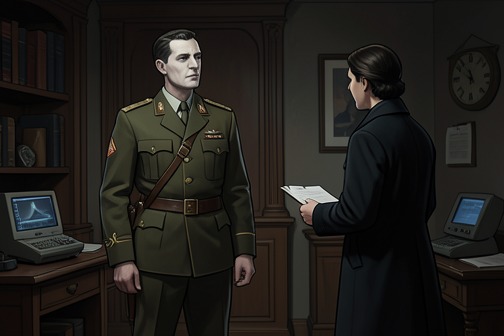
Miles Vorkosigan’s Departure from [ImpSec](entity:organization-recall-organization-impsec-9890efe09d1c) is the moment when a long record of service fails to shield Miles Vorkosigan from the consequences of a serious breach of trust. [Simon Illyan](entity:character-recall-character-simon-illyan-086bc032eda1) offers him a quiet medical discharge rather than a public scandal, but the proposed exit makes the end of Miles’s career at ImpSec concrete: he must formally resign and surrender the silver eyes associated with his service. His brief loss of consciousness interrupts that process without preventing it. Later, as Miles investigates [Illyan](entity:character-recall-character-illyan-b43bcbe8ecb7)’s collapse, he encounters evidence that gives the departure a wider resonance: leaving the agency does not end his concern for its people or its failures.
## Judgment and the Offer
Simon Illyan’s central charge is institutional as well as personal. He says Miles’s conduct betrayed the subordinates who depended on him and the superiors who trusted him, and that the harm to [Lieutenant Vorberg](entity:character-recall-character-lieutenant-vorberg-aa29d66a199f) made the betrayal demonstrable. The account frames the decision not as a dispute over Miles’s past achievements but as a judgment about whether those achievements can excuse this specific breach.
Miles answers by invoking nine years of service, more than thirty missions, and the lives he had risked on behalf of the service. He points to the missions that succeeded and insists that his record should still count. Illyan does not dismiss that record; he says it counts greatly, and presents it as part of the reason he is offering a medical discharge without prejudice if Miles resigns. The distinction is consequential: Miles’s service is acknowledged, but it cannot cancel the breach or preserve his post.
Illyan says he has considered the decision from every angle and has been thinking about it for weeks. He also reveals that he spent the morning discussing the matter with Miles’s father, [Aral Vorkosigan](entity:character-recall-character-aral-vorkosigan-7b2067199de2). Yet Aral does not know the decision has been made. Illyan leaves the task of informing him to Miles, describing it as one last report he does not want to make. Miles reads this as an appeal to his father’s influence; Illyan instead insists that the quiet mercy rests on Miles’s own record and that, without that record, even Aral could not have obtained it.
## The Meaning of Leaving
The proposed discharge is not simply an administrative convenience. Illyan presents it as a way to protect Miles and the Vorkosigan name from a public scandal, while also making clear that he will neither erase the incident nor grant Miles a clean continuation in ImpSec. The phrase without prejudice marks a limit to the punishment, not a reversal of the decision: Miles can leave without a public disgrace, but the relationship between officer and institution is ending.
The ceremony strips that separation down to its practical details. Illyan’s records are ready for Miles to sign out by palm-print and retinal scan. Miles’s uniforms do not come from military stores, so they need not be returned; keeping his insignia is traditional. The silver eyes, however, must be handed in. That last requirement changes the encounter from a discussion of status into a physical and administrative threshold. The objects Miles can keep distinguish what remains his from the service marker that ImpSec requires back.
## Interruption and Resignation
When Illyan asks for the silver eyes, Miles begins to reach toward his collar, then loses consciousness. He comes around on Illyan’s carpet, with a light-pen from the desk in his mouth. His collar has been opened, but the silver eyes remain in place. The episode lasts about four minutes. Its immediate consequence is to halt the handover, not to undo the decision: after a short interval, Miles returns to the records and completes the required palm-print, retinal scan, and formal resignation.
Illyan allows Miles time to compose himself and wash his face before opening the office door. Miles does so, then sits while Illyan administers the remaining steps. He is still shaking when he asks to leave, and acknowledges that the shaking will continue for a while. The exchange ends without reconciliation or a second argument over the judgment. Miles’s departure is enacted in a restrained sequence of signatures, scans, and permission to go, even as his condition makes clear how far the decision has unsettled him.
## What the Departure Does Not End
Later evidence places this separation beside the decline that Miles comes to fear for Illyan. In recounting the preceding days, a colleague describes four odd incidents in three days; one involved Illyan requesting a digest a second time after it had already been delivered. At a weekly briefing, Illyan snaps a data card, then gives instructions whose sentences are grammatically complete but do not cohere with one another. He appears not to recognize the confusion until the department heads react, and he resists the suggestion that he seek medical evaluation.
Miles later argues that Illyan’s condition could be profoundly isolating, comparing the possibility of losing oneself inside one’s own mind with his own experience of cryo-amnesia. He does not claim certainty about what is happening. Instead, he distinguishes possible mismanagement by [General Haroche](entity:character-recall-character-general-haroche-411c754dce7c) from the more troubling possibility of deliberate sabotage, and insists that even incompetence could cause serious harm. This concern gives the earlier departure a sharp contrast: Miles was forced out of Illyan’s organization, yet he remains alert to Illyan’s vulnerability and to the responsibilities surrounding his care.
His subsequent investigation also turns up a discrepancy in ImpSec’s records. A readout lists Miles as having visited the evidence room twelve weeks earlier, on the day he returned from his last mission with the [Dendarii Free Mercenary Fleet](entity:organization-recall-organization-dendarii-free-me-2ca6905f806b), although the recorded time falls when he believes he was walking home. The date and time make the entry suspicious to him; the record itself does not establish who altered it. Later, he directs attention to the return-air duct and asks for the top filter to be examined, as part of an inquiry into how the prokaryotes might pass through the ventilation system. These later discoveries do not change the terms of his resignation, but they show the plot carrying him back into ImpSec’s failures as an investigator rather than as one of its officers.
Event 5
Dagoola IV Rescue Operation
The [Dagoola IV Rescue Operation](entity:event-recall-event-dagoola-iv-e724774c7842) is invoked as a past achievement that helps explain [Illyan](entity:character-recall-character-illyan-b43bcbe8ecb7)’s exceptional regard for Miles Vorkosigan in his Naismith identity. In the conversation recalling it, Miles treats the rescue as evidence of Naismith’s excellence, while the passage’s nearly four-year distance from the operation complicates that praise: a celebrated success in the past cannot by itself establish what Miles has done lately.
## Reference in the Present
The operation is not depicted directly in this passage. Instead, Miles brings it up while responding to [Lucas Haroche](entity:character-recall-character-lucas-haroche-07b1b2325121)’s report that Illyan had regarded him as exceptionally valuable and had considered him a possible successor. Miles’s reply makes the Dagoola rescue the concrete achievement behind that reputation: Illyan’s esteem, he suggests, was understandable after the operation.
## Reputation and Distance
Miles calls Naismith the best, then measures that judgment against time. The rescue had occurred almost four years before the exchange, and Miles wonders whether an old triumph still justified Illyan’s current confidence in him. The recollection therefore presents Dagoola both as a benchmark of Naismith’s past success and as a source of pressure: admiration earned then does not settle the question of present merit.
## What the Passage Establishes
The passage establishes the operation’s importance to Miles’s reputation and to his understanding of Illyan’s confidence, but supplies no account of the rescue’s participants, tactics, or course. Its emphasis is not on how the operation unfolded, but on how its memory continues to shape the way Miles assesses his own standing.
Event 6
Miles Vorkosigan’s death and cryogenic revival
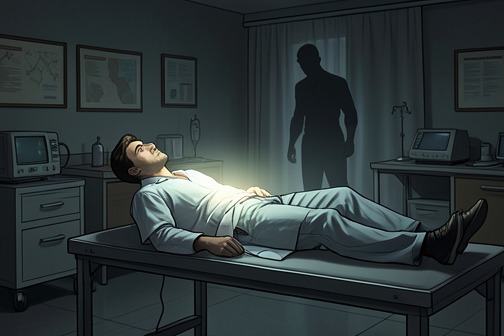
Miles Vorkosigan’s death by needle grenade and subsequent cryogenic revival are the wound at the center of his later struggle with fear, illness, and military identity: survival restores him to life, but not to the body or career he had before. The event leaves him with seizures, prolonged pain, and a knowledge of death that complicates his effort to prove he can keep returning to danger.
## The Fatal Injury and Revival
The injury happened the previous year, when a well-aimed needle grenade killed Miles. He later describes ending up in a cryo-chamber in the galactic backbeyond, where he was frozen until he could be revived. In recounting the incident to [Martin Kosti](entity:character-recall-character-martin-kosti-6f5f144932fb), he presents the revival as nearly successful, but explains that thawing left him with medical problems. His blunt account to [Harra Csurik](entity:character-recall-character-harra-csurik-066e8841bd72) likewise connects the grenade, the cryo-chamber, and the complications that followed, while withholding the classified details of how he came to be there.
The memory returns not as a clean medical sequence but as a violent image: Miles recalls an oblique view of his own chest bursting outward in a lumpy red spray. The image is inseparable from pain beyond measure. Revival did not erase the injury’s afterlife; the pain continued for weeks, and the experience fixed death and dying as sharply different realities in his mind. Dying hurt, he recognizes, while death itself had been nothing—but knowing the distinction does not make either one safe to seek.
## The Body Afterward
The revival’s consequences become visible in Miles’s impaired health. He tells Martin that seizures have made him unable to drive himself, and identifies them as an aftereffect of the acute death he suffered. The medical problems that began after thawing thus reach into ordinary independence as well as military service: even arranging his daily life requires accommodation for the possibility of another seizure.
His return to duty did not immediately end in failure. After [Lieutenant Vorberg](entity:character-recall-character-lieutenant-vorberg-aa29d66a199f) was injured, Miles found it difficult to suit up and go out with the squad again, but he says he had been managing until the seizure. This distinction matters to his own reckoning: the grenade had made returning hard, yet he had returned. The later seizure, and the choices that followed it, turned a survivable injury into a crisis about whether he could still serve.
## Fear, Career, and Discharge
Miles eventually links the injury to the chain that ended his military career. After the medical problem, he did something foolish, lied about it, was caught, and was discharged. He describes the loss as thirteen years of career effort swept away at once; by thirty, he had never expected to find himself a civilian. His account to Harra makes the change especially stark: what others admired in his achievements, he tells her, is now gone.
In private, he asks whether the whole sequence—from seizure through falsification and discharge—might have been an elaborate way of avoiding another needle-grenade launcher without admitting aloud that he wanted to quit. The question does not resolve into a simple confession of cowardice. Miles acknowledges that he is afraid, and argues that anyone would be after what he has experienced; he has already died and knows the cost of pain. The fear is real, but so is his record of returning after earlier injuries, including broken legs and arms that left fine white scars across his body.
## The Meaning of Survival
The death and revival unsettle Miles’s equation of courage with repeated exposure to danger. He wonders how many times a person must die, or how much pain he must consume, to prove he is not a coward. His memory of the grenade makes that question physical: the demand is no longer an ideal of military merit but a demand made on a scarred, seizure-prone body that has already endured death.
The event also marks a fracture between Miles’s civilian present and the distant, adventurous life associated with the Dendarii. He imagines having his head fixed and taking off again, but the possibility does not offer uncomplicated freedom; it raises the prospect of being only Naismith. The revived man is therefore left with more than the consequences of a near-failed medical rescue. He must decide what survival means when the body has returned, the old career has ended, and the identity built around going back into danger no longer fits without question.
Event 7
Miles's Dismissal for Falsifying Reports
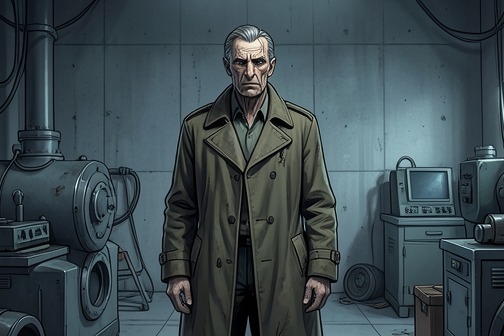
Miles Vorkosigan’s dismissal from [ImpSec](entity:organization-recall-organization-impsec-9890efe09d1c) severed him from the service and covert identity around which he had built his adult life. The decisive cause was not his post-cryo-revival seizures but his falsification of a report; the distinction left him medically vulnerable, professionally disgraced, and unable to return to the career he had tried to protect.
## Career and the concealed medical crisis
For roughly a decade, Miles had cultivated the cover identity of Admiral Naismith, leader of the [Dendarii Free Mercenary Fleet](entity:organization-recall-organization-dendarii-free-me-2ca6905f806b), while serving as one of ImpSec’s most creative agents in galactic affairs. The mercenary identity let him operate beyond the Barrayaran Empire’s ordinary political and geographic reach. He regarded this work not as a detachable assignment but as the hard-won form of a life’s ambition.
That career continued after Miles was revived from cryogenic stasis, despite a serious unresolved medical problem. Soon after his revival, he experienced several seizures, each involving convulsions that lasted two to five minutes and seemed to be triggered by extreme stress. His surgeon expected them possibly to resolve on their own, as his memory loss and shortness of breath had begun to do; when the seizures appeared to subside, Miles did not disclose them to his ImpSec doctors. In a later account, he admitted that they had occurred three or four—or perhaps five—times soon after he was brought back.
The concealment meant that his service did not know about a condition he himself described as a danger in his head. It also shaped the stakes of his subsequent choices: Miles feared losing the professional identity he had spent years constructing, yet his silence placed that identity alongside a growing pattern of self-deception. The seizures explain the pressure under which he was operating, but they were not the stated grounds for his eventual discharge.
## The dismissal and its stated cause
Miles later made the cause explicit: ImpSec had not removed him for having seizures; it had removed him for falsifying a report. He called the matter substantial rather than minor. The available account does not specify the report’s contents, so the significance of the act lies in the breach itself and in Miles’s acknowledgment that it was his responsibility.
The distinction also undercut the medical-discharge explanation he gave at the gate after leaving the service. When a guard addressed him as a lieutenant, Miles corrected him: he had mustered out altogether, ostensibly on medical grounds. The guard accepted the explanation without pressing him. That exchange shows how an account designed to spare embarrassment could stand in for the more painful truth, even as Miles privately recognized that the dismissal was disciplinary, not simply a consequence of illness.
## Consequences for career and identity
The dismissal cost Miles thirteen years of career effort, as he later described it, and turned the future he had imagined into civilian life. At nearly thirty, he had never expected to find himself a civilian. His grief was sharpened by the sense that he had sacrificed his integrity to preserve an identity that was due to be taken from him within a year anyway. That counterfactual did not undo the falsification; it clarified the bitter mismatch between what he had risked and what he could have gained.
[Gregor](entity:character-recall-character-gregor-a21e0b388746) had seen Miles as a member of his own generation who might be entrusted with real power and responsibility in the upper reaches of government. Miles’s removal therefore represented more than the loss of an operational post. It closed off a path toward public authority that Gregor had hoped to make possible, and left Miles confronting the consequences of having damaged the very trust on which such responsibility depended.
## No simple route back
When asked why he had not pursued treatment, Miles rejected the idea that a medical cure would restore his position. Even if doctors could guarantee that he would be fully fit the next day, he reasoned, that would not change the fact that ImpSec had dismissed him for falsifying a report. He believed [Simon Illyan](entity:character-recall-character-simon-illyan-086bc032eda1) would not take him back—not because of the seizures, but because principle made reinstatement impossible.
The event therefore marks both an institutional separation and a moral reckoning. Miles’s undisclosed illness had been real, and his fear of losing his vocation was understandable, but the dismissal turned the concealed crisis into a question of trust. His later willingness to describe the sequence plainly—to connect the seizures, the lie about them, the falsified report, and the discharge—begins a different kind of self-accounting, one no longer secured by the Admiral Naismith persona.
Event 8
The Raina Csurik Murder and Silvy Vale Trial
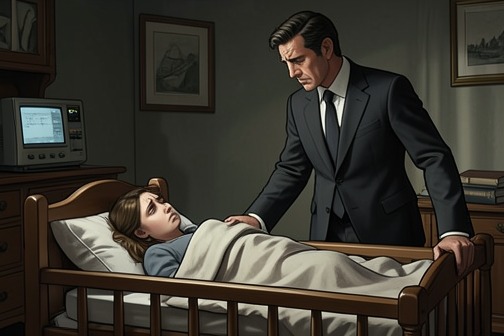
[The Raina Csurik Murder and Silvy Vale Trial](entity:event-recall-event-raina-csurik-silvy-vale-7a5891c975ab) was a murder case in which Miles Vorkosigan, newly graduated from the [Imperial Service Academy](entity:organization-recall-organization-imperial-service-7a7023782d9e), investigated and judged the killing of an infant in [Silvy Vale](entity:location-recall-location-ab18c13d4349). Its meaning extends beyond the court proceedings: Raina became the enduring measure by which Miles tested the purpose of his service, while the community’s later memorial to her took the form of a school built by her sister, [Harra Csurik](entity:character-recall-character-harra-csurik-066e8841bd72).
## Case and Assignment
When Miles was about the age of Harra’s younger brother, his father, the Count, assigned him as his Voice in a case before the Count’s Court. Miles was sent to Silvy Vale to investigate and judge a murder. He describes the killing as an infanticide committed in the old traditional manner: [Raina Csurik](entity:character-recall-character-raina-csurik-4bb6a0dd5bf2), a four-day-old girl, had been killed because she was born with what Miles calls a cat’s mouth, a physical difference that marked her for rejection.
The case was more complicated than Miles had expected. He says that he eventually identified the right suspect, but that recognition did not make the matter simple. The evidence does not specify the full course of his investigation, the court’s precise findings, or any sentence imposed. It does establish that the case came before Silvy Vale publicly, and that the person responsible was Raina’s mother. Years later, Harra tells Miles that her mother killed her daughter and was judged for it in front of the community. The judgment therefore joined a private family loss to a public reckoning, without making the loss itself reversible.
## Miles’s Measure of Service
Miles’s account of the case surfaces years afterward, while he is travelling with [Martin Kosti](entity:character-recall-character-martin-kosti-6f5f144932fb) toward Silvy Vale. Asked what there is to do there, Miles explains that he had once been sent to investigate a murder. He says he wants to talk to Raina, who would have been nearly ten if she had lived. The remark registers the continuing presence of a child he never knew as a living person, rather than a claim that he can literally speak with the dead.
Raina occupies a special place among the dead Miles has known. In his reflection, he sets aside the pomp of Imperial office, competition for promotion, military regulations, and the dark corners of service life. When the work ceased to feel like a game and lives and souls were at stake, Raina remained the symbol that made his service intelligible. He worries that, amid the disorder of his own life, he has lost touch with what she represented.
That worry is bound to Miles’s divided identity as Miles Vorkosigan and Admiral Naismith. He wonders whether he became so absorbed in playing Naismith and winning that he forgot what the game was for. The contrast is not simply between two names: Naismith stands for the extraordinary role Miles created and inhabited, while Raina recalls the human purpose that the role was meant to serve. Miles’s thought that Raina was a prisoner Naismith would never rescue makes the limit plain. This was not a rescue that could be accomplished by daring, strategy, or force; the child was already dead, and remembrance could not undo the crime.
## The Grave and the School
On his later visit, Miles arrives intending to conduct a memorial burning at Raina’s grave. He has brought a tripod, brazier, and aromatic wood in the lightflyer. The plan meets a physical obstacle: the reservoir has flooded the old site, and he assumes he would need a boat to reach it. He asks whether the community moved the graveyard.
Harra explains that, before the flooding, some families chose to move graves to a new place on the ridge overlooking the old site. Raina’s grave was not among them. Because the ground beside the creek was damp and her coffin had been only a makeshift crate, the family could not find her remains to move. Harra accepts that Raina has returned to the soil and says she does not mind; to her, that outcome feels right. The record does not turn the missing grave into a recovered relic. Its absence is part of the memorial’s meaning.
Harra instead identifies the school as Raina’s best memorial. Each day she teaches there, she says, is like making an offering, but one that makes rather than destroys. The contrast gives remembrance a practical form: Raina cannot be restored, but the loss is carried forward in work that serves living children. Miles had come prepared for a ritual of burning; Harra offers him a continuing act of creation.
## Judgment, Shame, and Continuance
Later, Harra reminds Miles that her mother killed her daughter and was judged before all Silvy Vale. She invokes her own knowledge of public shame and waste, connecting the case not only to Raina’s death but also to the lasting exposure and pain borne by the family. Her account does not erase the wrong or pretend that remembrance makes it easier. It places Miles’s grief beside the experience of those who continued to live with the event in the community where it happened.
Harra’s counsel to Miles is to go on: there is no trick that makes continuance easy. In the context of Raina’s murder, the advice does not promise repair or a satisfying resolution. It names what remains possible after judgment, after the grave has disappeared, and after the dead cannot be rescued. The event endures in Miles’s self-questioning and in Harra’s school, linking an early test of his authority as the Count’s Voice to a later understanding that service is answerable to real lives, not merely to the successful playing of a role.
Event 9
The Imperial Dinner That Brought Gregor and Laisa Together
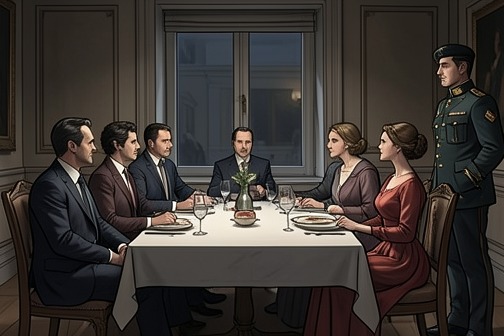
[The Imperial Dinner That Brought Gregor and Laisa Together](entity:event-recall-event-gregor-laisa-391faef63ec5) was a social occasion whose consequences reached beyond its immediate purpose: Miles Vorkosigan arranged the invitation to help [Duv Galeni](entity:character-recall-character-duv-galeni-4b96e8260f78) court [Laisa Toscane](entity:character-recall-character-laisa-toscane-7aa2559c793c), while [Gregor](entity:character-recall-character-gregor-a21e0b388746) later treated the dinner invitation as the act that had changed Barrayaran history. The event links a private gesture of assistance to a much larger imperial consequence.
## Purpose and Participants
Miles explained that he had invited [Duv Galeni and Laisa Toscane](entity:relation-recall-relation-duv-galeni-and-laisa-b55bc8f6a98a) to the Imperial State dinner because Galeni was courting her, and he wanted to help him. The invitation therefore began as practical matchmaking rather than an effort to shape imperial affairs. At the time, Miles understood the dinner chiefly through Galeni’s hopes, not through the historical significance Gregor would later assign to it.
## Consequences Beyond Its Purpose
When Gregor later congratulated Miles, he credited him with changing Barrayaran history through a dinner invitation. His remark recast the occasion: an invitation made to assist Galeni had also become associated with the events bringing Gregor and [Laisa](entity:character-recall-character-laisa-9f47ab736a53) together. Miles responded with a helpless shrug and hoped that what followed could avoid making further history; Gregor agreed that he wanted domestic dullness. Their exchange recognizes the dinner’s unexpectedly large consequences while expressing a shared wish for an ordinary outcome.
Event 10
Gregor and Laisa's Engagement
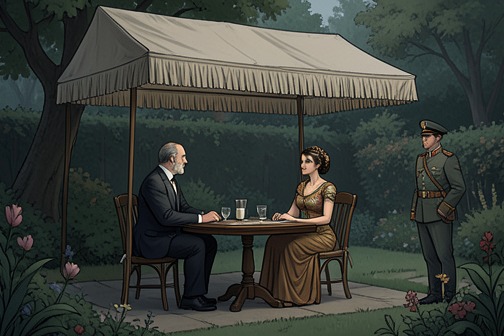
[Gregor](entity:character-recall-character-gregor-a21e0b388746) and [Laisa Toscane](entity:character-recall-character-laisa-toscane-7aa2559c793c)’s engagement is at once a love match and an attempt to make imperial unity visible across the boundary between [Barrayar](entity:location-recall-location-barrayar-d02af764f924) and [Komarr](entity:location-recall-location-komarr-238ac4bc1e8d). Their mutual attraction leads to an accepted proposal, but the marriage also carries political stakes: Gregor hopes it can help heal relations with Komarr, while fearing the dangers that may follow for him and those close to him. A carefully staged luncheon, a white mare offered as a gift, and the elaborate plans for two weddings give the courtship public and ceremonial form without erasing its personal warmth.
## The Courtship Takes Shape
The engagement begins to emerge during a luncheon in the South Garden at the [Imperial Residence](entity:location-recall-location-imperial-residence-248249a7eda7). Gregor has arranged a table for four beneath a fringed awning, with the city’s noise muted by the garden’s trees and shrubs. Miles Vorkosigan arrives uncertain of the purpose of the gathering. The answer becomes clear when [Alys Vorpatril](entity:character-recall-character-alys-vorpatril-33b89fce0a0a) appears with [Laisa](entity:character-recall-character-laisa-9f47ab736a53), whose Komarran trousers and jacket mark a contrast with Alys’s formal Vor clothing. Laisa says she has visited the Residence several times, including for a meeting where she presented her Trade Group’s views. She is not simply being introduced to imperial life; she already has a professional presence there.
At lunch, Gregor and Laisa turn from Komarran affairs to comparing their families and childhoods. Both are only children, and the subject engages them so completely that Miles feels he has entered an ongoing conversation. Gregor works to draw Laisa out, while she insists on an exchange rather than simply answering questions. Their ease is visible in the balance of attention between them, and Gregor speaks with an openness Miles has not heard from him in a long time.
Gregor’s small surprise gives the developing courtship a distinctly Vor emblem. He has learned that Laisa has never seen a horse except in vids, so he arranges for a liveried servant to bring out a little white mare. Its polished black hooves, silver mane, and scarlet ribbons make the gift a deliberate display, not an incidental ride. The horse stands for a tradition Laisa has not grown up with; Gregor offers it as an invitation to encounter that tradition. Laisa is delighted by the animal but admits that she does not know how to ride, keeping the moment affectionate rather than turning it into a test of assimilation.
## Proposal and Political Stakes
The courtship has a public consequence when Gregor later tells Miles and [Ivan Vorpatril](entity:character-recall-character-ivan-vorpatril-2e03a5f0f162) that he has asked Laisa to marry him and she has accepted. Both Gregor and Laisa appear bright with mutual infatuation. Gregor, however, seems surprised by how readily Laisa agreed, a note of vulnerability beneath the announcement. He asks Miles to stand on the wedding circle as his Second, placing his friend inside the formal structure of the marriage as well as sharing the news with him.
The match is politically charged because Laisa is Komarran and Gregor is the Emperor. Miles immediately sees that a Komarran empress could unsettle conservative Vor lords as well as Komarran revolutionaries who regard Barrayaran rule with hostility. Gregor recognizes that the Centrist Coalition might support the union, or could be persuaded to do so. The engagement therefore offers a possible alliance across political and cultural divisions, but does not make those divisions disappear.
Gregor explains that he hopes the marriage may serve as a symbol of imperial unity. Miles is less certain that Komarrans will read it that way: the underground could instead treat the match as another sign that Komarr has been subordinated to Barrayar. The tension between these interpretations is central to the engagement’s public meaning. The same marriage can represent inclusion to the imperial center and renewed domination to those who distrust it.
The political burden is personal for Gregor as well. He admits that he is terrified, not of being rejected, but of what may happen later. He fears that the demands and dangers of his position could cost him his life and harm those closest to him. Marriage thus offers companionship and a hopeful political symbol without providing protection from the risks of sovereignty. When Miles asks whether he has considered the ramifications, Gregor says he has thought about little else for a week.
## Ceremonies, Alliances, and Aftermath
Alys Vorpatril becomes a crucial intermediary in planning the match. Gregor expects her to inform [Simon Illyan](entity:character-recall-character-simon-illyan-086bc032eda1) if the relationship seems promising, and Miles calls her the best ally and go-between Gregor could have. Alys is also to travel to Komarr as Gregor’s Voice to Laisa’s parents, carrying the proposal through the expected formal channels. Her role links the personal agreement between Gregor and Laisa to the diplomatic and familial procedures surrounding an imperial marriage.
The timetable reflects the competing demands of private impatience and public ceremony. Gregor wanted an immediate betrothal, but Alys advises delaying its announcement until after her return from Komarr. The formal betrothal is to follow a month after her return, while the wedding is planned for nearly a year later; Gregor and Alys are still disputing the timing. Alys argues that the Vor ladies need time to prepare their dress, a social requirement Gregor had not understood. She also proposes two weddings, one in Barrayar and one on Komarr. Gregor calls this a double ordeal, then makes clear that it is worth undergoing for Laisa.
The engagement’s hope of reconciliation resurfaces when political suspicion later gathers around [Duv Galeni](entity:character-recall-character-duv-galeni-4b96e8260f78) during the investigation into [Simon Illyan’s poisoning](entity:event-recall-event-simon-illyan-s-poisonin-db5353106ed6). Gregor says he had hoped his marriage might help heal relations with Komarr and contribute to a truly unified empire. Miles answers that the union can still help, especially if Galeni also marries a Barrayaran. The exchange connects imperial policy to relationships beyond the throne: a single marriage cannot settle political antagonisms, but marriages across the divide may create personal and familial ties that complicate them.
That possibility acquires a concrete counterpart in Galeni’s relationship with [Delia Koudelka](entity:character-recall-character-delia-koudelka-977439054e0a). By the Imperial wedding, Galeni has decided not to resign his commission, and he appears with Delia beside him at a gathering of her family. Miles has heard through Gregor that Galeni is being seriously considered to lead [Komarran Affairs](entity:organization-recall-organization-komarran-affairs-0c5c8774e7f5). The scene presents the marriage project not as a completed solution to distrust, but as one part of a wider pattern of personal connections and political participation. Gregor and Laisa’s engagement matters because it makes unity imaginable and ceremonial; the surrounding tensions show how much work remains for that symbol to mean more than itself.
Event 11
Simon Illyan’s mental and memory-function collapse

[Simon Illyan’s mental and memory-function collapse](entity:event-recall-event-simon-illyan-ace286f84b2f) turns a run of minor administrative mistakes into a crisis witnessed across [ImpSec](entity:organization-recall-organization-impsec-9890efe09d1c). Its force lies in that progression: first, misplaced records and faulty dates; then, speech that is grammatically intact but incoherent, and a mind caught in an old war. The disturbance is especially alarming because [Illyan](entity:character-recall-character-illyan-b43bcbe8ecb7)’s neural augmentation has operated longer than any other human being’s, leaving doctors without a meaningful comparison for what its failure might do.
## Signs Before the Crisis
[Duv Galeni](entity:character-recall-character-duv-galeni-4b96e8260f78) describes four odd incidents over three days, distinguishing what he personally observed from what he can only infer. In the first, Illyan asked for a digest Galeni was preparing. Galeni completed and sent it upstairs, but two hours later Illyan requested it again. The office log and secretary confirmed delivery; Illyan then found the code card on his desk, apologized, and the matter seemed small enough to dismiss.
The next two incidents also began as paperwork errors. One was a memo from Illyan’s office bearing the wrong date, which Galeni had corrected through the secretary without concern. The more troubling memo carried a wrong date, went to Galeni’s predecessor—who had been gone for five months—and requested a report on a joint Komarran-Barrayaran trade fleet that had returned to home orbit six months earlier. When Galeni called to clarify the request, Illyan denied making it. Galeni sent the memo back; Illyan went quiet and ended the call. The obsolete fleet information and Illyan’s denial made the mistake harder to treat as routine.
The fourth incident was the weekly briefing with the five [Komarran Affairs](entity:organization-recall-organization-komarran-affairs-0c5c8774e7f5) analysts and [Guy Allegre](entity:character-recall-character-guy-allegre-099b85265234). Illyan, normally given to long pauses followed by incisive remarks, paused more often, spoke in jumps that bewildered his listeners, and dismissed the meeting before it was half finished. Galeni’s account thus establishes a pattern without pretending that the early signs explained its cause: repetition, disordered attention, and a growing break between Illyan’s words and the task before him.
## The Public Breakdown
At the all-departments briefing that afternoon, the familiar meeting began almost normally. Department heads delivered their weekly précis reports and identified red-flag matters for other departments to monitor. Illyan seemed restless, fidgeting with objects on the table until he snapped a data card in half and muttered an apology. When he stood to give his usual list of assignments, the remarks no longer connected. Each sentence was grammatically correct, Galeni recalls, yet the whole was incoherent—as though Illyan had mistaken not the day but the twenty-day period in which he stood.
At first Illyan did not appear to recognize the failure. Only after he noticed the stunned faces around the table did he falter and run down. [Lucas Haroche](entity:character-recall-character-lucas-haroche-07b1b2325121) then stood and urged him to seek immediate medical evaluation. Illyan denied being sick, ordered Haroche to sit, and shifted visibly between rage and bewilderment while shaking. When Haroche called for a medic, Illyan countermanded him, insisting he could not leave in the middle of a crisis. But the crisis he believed himself to be facing was the Cetagandan invasion of Vervain, ten years earlier.
Haroche tried to lead him out by the arm. Illyan fought back, and Haroche called urgently for medical help. The struggle was serious enough that two other men also needed medics by the time the medic arrived. Illyan was heavily sedated and tied down in the [ImpSec HQ](entity:location-recall-location-impsec-hq-a54b12958ea4) clinic. The briefing ended there, replaced by a building-wide suppressed uproar and Haroche’s order that those present say nothing. A breakdown that might have remained a private medical emergency had become a witnessed institutional crisis.
## Investigation and the Memory Chip
The first day’s evaluation ruled out stroke, but that did not settle the diagnosis. Medical staff were still checking for other neurological and psychological problems, while acknowledging evidence of deterioration or damage to Illyan’s chip. The discovery raised questions the available evidence could not yet answer: what kind of damage had occurred, when it began, and how it had happened. The cause remained unresolved at this stage.
The uncertainty was not simply a delay in applying an established test. Illyan had used this particular neural augmentation longer than any other human being. With thirty-five years of accumulated artificial memory and no comparable case, he was the baseline rather than a patient measured against one. The medical team had no standard by which to determine what that duration of artificial memory might do to a personality. Miles Vorkosigan doubts that the symptoms can be explained as an iatrogenic psychosis after so many years without similar trouble, but the absence of precedent also prevents an easy conclusion. The possibility that the chip’s long service and its newly observed damage are connected remains a source of alarm, not a confirmed explanation.
## Significance of the Event
The collapse makes an extraordinary neurological failure legible through ordinary administrative objects: a digest requested twice, a code card left on a desk, a pair of wrong dates, a memo addressed to a departed predecessor, and finally a data card snapped during a meeting. Each error can initially be contained as clerical confusion. Their recurrence, followed by the return of a crisis from ten years earlier, changes their meaning. What first appears to be a succession of correctable mistakes becomes evidence that Illyan’s command of present circumstances is failing.
The public setting sharpens the reversal. Illyan’s usual authority depends on his ability to interpret information and direct the people around him; here, his assignments cease to cohere, and his insistence that he cannot abandon a crisis rests on a war no longer underway. Yet the account does not reduce him to a diagnosis: Galeni reports what he saw, including Illyan’s bewilderment and resistance, while the medical explanation remains incomplete. The event therefore leaves both a personal emergency and an institutional question unresolved: how to understand the failure of a system whose duration has exceeded all human precedent.
Event 12
Miles appointed acting Imperial Auditor to investigate the Illyan affair
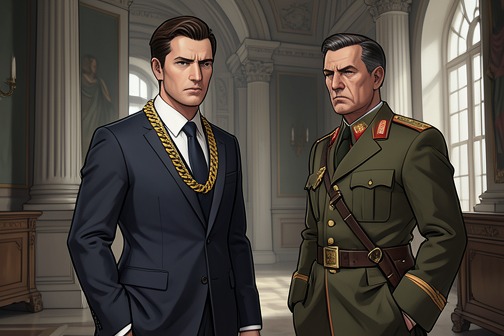
Miles Vorkosigan’s appointment as acting [Imperial Auditor](entity:concept-recall-concept-imperial-auditor-7786846b56fc) turns his concern for [Simon Illyan](entity:character-recall-character-simon-illyan-086bc032eda1) into an investigation with authority to penetrate [ImpSec](entity:organization-recall-organization-impsec-9890efe09d1c)’s chain of command. The appointment answers Miles’s insistence that he must see the raw evidence for himself, but it also gives him a defined public duty: to investigate [Illyan](entity:character-recall-character-illyan-b43bcbe8ecb7)’s breakdown as an independent observer, under limits set by [Gregor](entity:character-recall-character-gregor-a21e0b388746).
## Causes and Background
Miles’s request grows from repeated attempts to reach Illyan and his fear that the chief is being left alone inside a crisis of memory and identity. [Lucas Haroche](entity:character-recall-character-lucas-haroche-07b1b2325121) has blocked him twice and threatened to have him stunned if he persisted. Miles believes Haroche may be mishandling the situation through nervousness and inexperience; he also cannot dismiss deliberate sabotage. He does not claim to know which explanation is true. The uncertainty itself is what makes access to the evidence urgent.
Miles’s own experience of cryo-amnesia gives that concern a personal dimension. He recalls how isolating it was to lose himself inside his own mind and says that no one came for him until [Mark](entity:character-recall-character-mark-cfbb20016049) forced his way through. That memory does not prove what is happening to Illyan, but it helps explain why Miles refuses to treat the matter as a routine internal problem. His appeal to Gregor is also carefully distinguished from an ex-subordinate’s request: he invokes a Vor obligation as his father’s son, one that bypasses ImpSec’s military hierarchy.
## The Request for Oversight
Miles asks for more than permission to visit Illyan. He wants to review every scrap of raw evidence connected with the case, medical or otherwise, and to exercise oversight. Calling Gregor repeatedly for support would not provide the standing he needs; Lucas Haroche, Miles expects, will resist informal intervention. Instead, Miles asks Gregor to assign him an Imperial Auditor, an office whose legal authority would require ImpSec to hand over material it might otherwise withhold.
Miles understands the practical force of that office: an Auditor can requisition anything, and the institution must comply. The authority is not merely a personal favor from the Emperor; it is a formal means of making a resistant agency answer. Miles admits that he does not yet know what the investigation will uncover. He can only say that the case has a wrong shape, and that its explanation may prove trivial or serious. His request is therefore for the means to investigate, not for confirmation of a theory he already holds.
## Gregor’s Appointment and Its Limits
Gregor sees that Miles is not really seeking an Auditor to supervise him. He predicts that Miles would soon return asking for a second Auditor to keep the first under control. What Miles wants, Gregor concludes, is an Auditor-shaped shield that lets him conduct his own investigation. Gregor explains that an Auditor serves as the Emperor’s eyes and ears: a listener and independent probe able to go where the Emperor cannot. Miles’s independence, rather than conventional obedience to the hierarchy, is the reason Gregor chooses him.
Gregor appoints Miles acting Imperial Auditor to evaluate Illyan’s breakdown. The assignment comes with the usual broad limits associated with a Ninth Auditor’s powers: Miles’s actions must remain at least dimly related to the matter he has been assigned, and he cannot order executions. If he directs arrests, Gregor expects them to rest on enough evidence to support successful prosecution. He also insists on traditional decorum and due care. The appointment thus grants unusual reach without making Miles’s authority unlimited.
Miles accepts the charge. Gregor’s response to the prospect that Lucas Haroche might dismiss the appointment as a scam is firm: Haroche would be dangerously mistaken. The exchange makes the office’s political force plain. Gregor is not simply endorsing Miles’s suspicions; he is deliberately creating a legitimate route around the barriers that have prevented Miles from examining the case.
## Authority Put to Work
The appointment is marked by both its symbols and its practical instruments. Gregor sends his majordomo to the Residence vault for an Auditor’s chain of office and the electronic seal that carries the office’s actual authority. Miles remarks that an Auditor’s first visit is traditionally unannounced, anticipating the investigative advantage of arriving without warning. The chain signifies the role; the seal enables its demands to be enforced.
The subsequent inquiry includes work that Miles recognizes ImpSec can perform more efficiently than he can. When Lucas Haroche proposes tracing the laboratory and timing behind the suspected biological material, including possible sources connected to Jackson’s Whole or [Escobar](entity:location-recall-location-escobar-6268892e34cf), Miles approves the request. He also accepts a review of Illyan’s movements over a period of weeks. A real Auditor would normally have staff to delegate such tasks; lacking that staff, Miles expects to check the reports himself. His new authority therefore does not remove the labor of investigation. It gives him access and leverage while leaving him responsible for judging what the resulting records mean.
Later disclosures show how much the investigation intersects with Haroche’s own interests. Haroche has obtained Miles’s neurological medical reports and raises the possibility of a future tied to Miles’s seizure treatment. In a later confrontation, Miles reveals that Haroche offered him a return to the Dendarii on better terms than before, including a captaincy. These episodes extend the conflict beyond access to Illyan’s case: the investigation brings Miles into contact with private medical information and an offer that could pull him back toward his former military life.
## Significance
The appointment changes Miles’s position from a former subordinate demanding access into an investigator empowered to require it. Its central tension is built into Gregor’s choice: Miles is useful precisely because he does not approach the case as a predictable instrument of the existing hierarchy, yet his powers remain bounded by the assignment and by standards of evidence and conduct. Gregor supplies formal authority; Miles supplies the independent scrutiny that authority is meant to make possible.
The decision does not settle whether Illyan’s breakdown results from incompetence, sabotage, or another cause. Instead, it establishes the conditions under which those possibilities can be examined. That distinction preserves the event’s investigative purpose: Miles receives not a verdict, but the right and responsibility to find out what happened.
Event 13
Miles Vorkosigan’s appointment as Imperial Auditor
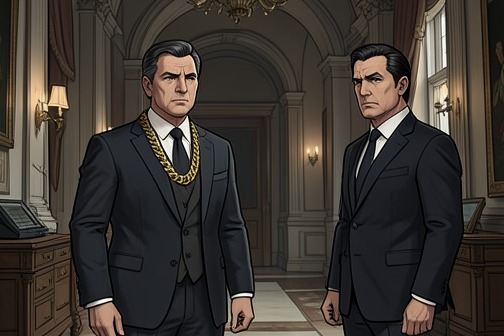
[Miles Vorkosigan’s appointment as Imperial Auditor](entity:event-recall-event-miles-vorkosigan-s-appo-de27fc346819) turns a personal investigation into an officially empowered audit of [ImpSec](entity:organization-recall-organization-impsec-9890efe09d1c)’s handling of [Simon Illyan](entity:character-recall-character-simon-illyan-086bc032eda1)’s breakdown. Marked by a heavy gold chain and made effective through a direct demand for cooperation, the appointment also brings [Ivan Vorpatril](entity:character-recall-character-ivan-vorpatril-2e03a5f0f162) into the inquiry as Miles’s chosen assistant.
## Appointment and Authority
[Gregor](entity:character-recall-character-gregor-a21e0b388746) confirms that the appointment is real and explains its purpose: he is dissatisfied with the progress of the current response and wants an audit. An [Imperial Auditor](entity:concept-recall-concept-imperial-auditor-7786846b56fc) may request what he pleases; Miles’s first request is an assistant. The office is therefore presented not merely as a title but as an instrument for initiating an examination and assembling help for it.
The new office is made visible by the chain around Miles’s neck. Its thick links carry square enamel plaques chased with the Vorbarra arms and logos, and an electronic seal hangs from a gold clasp engraved with Gregor’s arms. Miles judges the chain to weigh about a kilo. Its conspicuous weight makes the appointment a physical burden as well as a public mark of authority.
## The Audit and Its Assistant
When Ivan is summoned to Gregor’s office, he mistakes the urgent call to Imperial Headquarters for a possible emergency at the [Imperial Residence](entity:location-recall-location-imperial-residence-248249a7eda7) or a crisis involving his mother. Instead, he discovers Miles wearing the Auditor’s chain. Ivan reacts with disbelief and treats the appointment as a joke, while Miles answers that Ivan must address him as Lord Auditor for the duration.
Gregor identifies the immediate purpose of the appointment: Miles is to audit ImpSec’s handling of Simon Illyan’s breakdown. Miles asks Ivan to serve as his assistant, but frames the request in terms of the danger and responsibility the work may involve. He does not know what load he will ask Ivan to carry, he says, but it may amount to high explosives; what he needs is someone he can rely on absolutely. Ivan jokes about being treated as a pack animal, yet the request establishes trust as the practical basis of their partnership in the inquiry.
## Recognition and Consequences
Miles’s authority is tested in his encounter with [Lucas Haroche](entity:character-recall-character-lucas-haroche-07b1b2325121). He states that counterfeiting an Imperial Auditor’s credentials carries the death penalty; after a pause, Haroche addresses him as Lord Auditor. Miles then formally invokes Gregor’s request and requires Haroche’s full cooperation in examining ImpSec’s handling of the situation. The demand makes clear that the audit concerns the institution’s response, not merely Simon Illyan’s condition.
Haroche agrees to continue the discussion in his office, and Miles dismisses his two Vorbarra outriders before leading the way inside. The appointment thus moves swiftly from insignia to procedure: Miles’s status is recognized, his assistant is secured, and the official examination begins. Its decisive significance lies in giving Miles the standing to investigate the very organization whose handling of Simon Illyan’s breakdown is in question.
Event 14
Simon Illyan’s neural-chip sabotage
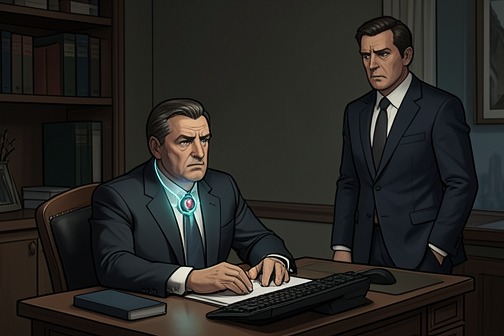
[Simon Illyan’s neural-chip sabotage](entity:event-recall-event-simon-illyan-s-neural-c-d6e9b34b0f96) turns a failure of memory into evidence of a carefully constructed political attack. A bioengineered organism consumed the protein matrix of [Illyan](entity:character-recall-character-illyan-b43bcbe8ecb7)’s eidetic implant, flooding his mind with involuntary recollections and placing him in a medical crisis. Its design connected the attack to Komarran terrorists, while the timing of the larger plot linked the disruption of [ImpSec](entity:organization-recall-organization-impsec-9890efe09d1c) to an attempted assassination of [Count Vorkosigan](entity:character-recall-character-count-vorkosigan-65c6e709533a).
## Background and Political Design
The attack was not an accidental malfunction or a general assault on neural technology. Miles Vorkosigan later read that the chip-eating organism had been made to order for Komarran terrorists by a House Minor in Jackson’s Whole, an organization better known for tailored drugs. [Simon Illyan](entity:character-recall-character-simon-illyan-086bc032eda1) had been its intended target from the beginning. The organism’s highly specific capacity to attack chip proteins made the sabotage a means of disabling one person through the technology on which his memory depended.
The operation belonged to a wider political design. The disruption of ImpSec had been timed to coincide with the assassination of Count Vorkosigan, who was then prime minister. The two targets and events were therefore connected in the conspiracy’s timing: the assault on Illyan’s memory coincided with an attempt against the head of government. The evidence identifies that coordination without reducing the sabotage to a merely incidental side effect of the assassination plot; Illyan himself was the intended target.
## The Failure and Its Consequences
The implant’s failure presented as a repeated invasion of Illyan’s consciousness. About every five minutes, uncontrolled data dumps filled his mind with sharp memories from random points in his past. Miles described the effect as hideous. The crisis was not located in Illyan’s brain, but in the chip itself, where the implanted system was sending memories into his mind without control.
At the point of Miles’s assessment, the cause remained unknown and the malfunction could not be repaired. The available choices were stark: leaving the chip in place would destroy Illyan, while removing it would destroy the data still stored on it. Removal therefore appeared necessary, but Illyan was in no condition to consent to the operation. The attack made the very device associated with the preservation of memory the source of an immediate threat, while turning any attempt to save its remaining information into a danger to its owner.
The crisis also carried institutional consequences. [Gregor](entity:character-recall-character-gregor-a21e0b388746) had been considering whether to confirm [General Haroche](entity:character-recall-character-general-haroche-411c754dce7c) in his position or appoint someone else if Illyan failed to recover. He saw Miles’s work as a test for Haroche on more than one level. Thus the sabotage’s effects reached beyond the patient: Illyan’s incapacity placed pressure on ImpSec’s leadership and made the investigation part of a decision about who would direct the organization.
## Discovery and Reconstruction
The artificial origin of the damage was publicly stated at a meeting attended by Miles, Haroche, Illyan, and [Admiral Avakli](entity:character-recall-character-admiral-avakli-ec1b27a10595). Avakli announced that the damage to Illyan’s eidetic neural implant had been artificially created. Haroche acknowledged that he had feared such a finding, though he had hoped for a simpler explanation. Avakli then handed the explanation to Dr. Weddell, who had assembled the chain of causality.
Weddell presented a magnified image of the immediate culprit: a bright green, topologically complex shape, with the color digitally enhanced and the magnification several million times. He identified it as a bioengineered apoptotic prokaryote, while making clear that this was his reconstruction of the organism. The gap between the image’s imposing visual appearance and its minute scale helped make the threat legible: the agent was not a conventional weapon, but a microscopic engineered mechanism whose effects could reach into Illyan’s mind.
## The Organism and the Evidence Trail
Weddell explained that the prokaryote barely qualified as a life-form, but performed two life-functions. It produced a proteolytic enzyme that broke down the protein matrix in the eidetic chip and in several related neuroenhancement applications. It attacked that material and nothing else. After absorbing the resulting nutrients, it reproduced by binary fission; in a field of chip proteins, the population would multiply geometrically until reaching a programmed point of self-destruction.
That self-destruction made the forensic evidence precarious. By the time the chip was obtained for analysis, almost all the organisms had already destroyed themselves, leaving fragments for Weddell to reconstruct. He judged that another week would have left nothing to analyze. The biological mechanism was therefore designed not only to damage the chip but also to erase much of the trace that could explain how the damage occurred.
The earlier ImpSec investigation, conducted five years before Miles’s review, had traced the organism to the building where it was made and followed the Komarran payment to the Jacksonian biochemistry team’s bank accounts. Miles expected the new search to find the same information, either after reconstructing the tedious first investigation or by locating the data already present in ImpSec’s files. He estimated that this would take three to eight weeks. The sabotage thus exposed both a conspiracy and an institutional problem: the information had once been found, yet the organization now faced the prospect of rediscovering its own investigative record.
Event 15
Removal of Simon Illyan’s neural chip
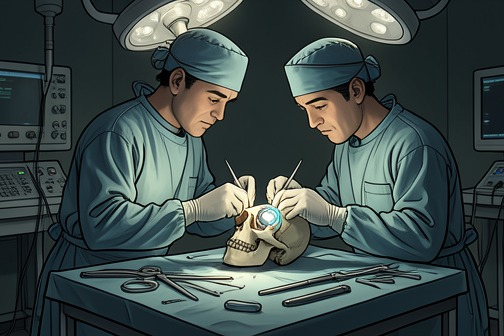
The removal of [Simon Illyan](entity:character-recall-character-simon-illyan-086bc032eda1)’s neural chip is the decisive medical intervention in the crisis surrounding the breakdown of his memory system: it ends the chip’s role in his life, but does not immediately restore the cognitive capacities that depended on it. Miles Vorkosigan secures the expertise and authority needed for the operation, while [Gregor](entity:character-recall-character-gregor-a21e0b388746) accepts that removing the chip means relinquishing access to the accumulated record it contains. The surgery is completed quickly; its aftermath is more uncertain, leaving [Illyan](entity:character-recall-character-illyan-b43bcbe8ecb7) physically well but significantly impaired in short-term memory.
## Background and Decision
The choice to remove the chip comes after Miles has explained the different kinds of information stored within it. The archive includes outdated material, current information that is also backed up elsewhere, and a vast body of personal records accumulated across Illyan’s adult life. Routine details and recorded entertainment greatly outweigh the handful of secrets that might be of exceptional value. The chip is therefore not merely a failing medical device: it is also a unique repository of Illyan’s experience, some of it private and some potentially consequential to others.
That distinction gives the decision both practical and personal weight. Miles asks whether anything on the chip should be saved before it is removed. Gregor cannot identify material to preserve; he says that Miles’s father might be the only other person able to answer, but has not shared such secrets with him. The possibility of hidden information remains, yet it does not become a reason to delay. Miles, acting as [Imperial Auditor](entity:concept-recall-concept-imperial-auditor-7786846b56fc), advises removal, and Gregor gives his consent. His decision treats the past as something that cannot be retained at any cost, even when the archive may hold knowledge unavailable elsewhere.
Miles then directs [Dr. Ruibal](entity:character-recall-character-dr-ruibal-f7d278feaa4f) to assemble what is needed for the operation, especially the most capable surgeon available, whether within [ImpSec](entity:organization-recall-organization-impsec-9890efe09d1c) or outside it. He asks that the preparations be completed within two hours. The urgency is clear in the short timetable, but the plan is not presented as an improvised procedure: Miles specifically emphasizes obtaining the best surgical skill, and the operation is prepared under Ruibal’s medical direction.
## The Operation
As Gregor’s appointed observer, Miles follows the medical procession into the surgery near the laboratories and patient rooms. His position as Imperial Auditor gives him access to the procedure, including its monitoring equipment; a technician provides sterile clothing and a stool from which he can see the monitors and the surgical field. The scene places official oversight beside clinical work. Miles is not the surgeon, but he remains present as the person who advised the decision and is responsible for observing what follows.
The removal itself takes barely fifteen minutes once the delicate work is underway. The surgeon disconnects the chip’s biological supply and neural connections, then lifts it from its position and places it in a dish of solution held by [Admiral Avakli](entity:character-recall-character-admiral-avakli-ec1b27a10595). Avakli and a technician take the chip toward the laboratory, but Miles declines to follow them. His attention stays with Illyan and the immediate medical consequences rather than with the removed object or the secrets it may contain. The chip is no longer functioning as part of Illyan’s body; what remains to be learned is how its absence will affect him.
## Awakening and Assessment
After the operation, Dr. Ruibal authorizes the anesthetic antagonist and asks the team to wake Illyan. Illyan opens his eyes, looks from face to face, and addresses Miles by name. He asks where he is and what Miles is doing there. The moment initially resembles the repeated openings of their recent conversations, making the prospect of a simple return to normal uncertain. But Illyan’s gaze remains steady, and Miles explains that they are in surgery at [ImpSec HQ](entity:location-recall-location-impsec-hq-a54b12958ea4) and that the irreparably failed eidetic chip has been removed.
Ruibal asks Illyan for the last thing he can remember, beginning the assessment of what the procedure has and has not changed. The evidence does not present the operation as an immediate cure. Illyan is physically well and his motor reflexes are normal, but his short-term memory is severely impaired. His performance on cognitive tasks involving short-term memory falls far below his previous, exceptional baseline. Removing the damaged chip has therefore resolved the immediate problem of an irreparable device without restoring the former level of memory function.
## Recovery and Significance
Ruibal cannot yet say whether the impairment will be permanent, whether Illyan’s brain will retrain itself over time, or whether further medical intervention will be needed. He recommends several weeks of rest and varied activity, with a later reassessment; Illyan may take medical leave, keep a log of any further problems, and receive daily examinations. Miles considers this plan reasonable. The outcome is thus deliberately provisional: the surgery is over, but Illyan’s recovery remains open, and even his doctors do not know what treatment might eventually be required.
The event’s central reversal is that a procedure meant to remove a failing instrument also removes the archive that had made Illyan’s memory extraordinary. The chip’s contents had included both redundant records and personal or secret material, but the immediate aftermath is measured not by what the archive might have revealed. It is measured by Illyan’s diminished short-term memory and the uncertainty of his rehabilitation. Gregor’s consent and Miles’s recommendation make the operation possible; the medical team can complete it, but cannot promise that Illyan will regain his former capacities. In that separation between successful surgery and unresolved recovery, the event distinguishes removing the source of the crisis from repairing every consequence it has left behind.
Event 16
Discovery of the evidence-room records tampering
The discovery of the evidence-room records tampering turns an ordinary security check into a break in the investigation of [Simon Illyan](entity:character-recall-character-simon-illyan-086bc032eda1)’s damaged neurochip. While examining a record that falsely places him inside the [ImpSec](entity:organization-recall-organization-impsec-9890efe09d1c) evidence room, Miles Vorkosigan finds a second, manipulated log and then an overlooked biological sample whose history connects it to [Ser Galen](entity:character-recall-character-ser-galen-a6b98401cada)’s Komarran network. The finding gives the investigation a concrete trail, but not yet a complete account of who altered the records or why.
## The Access Check Becomes an Investigation
Miles begins by asking the duty sergeant to sit back while he takes over the desk and is given a tour. The sergeant’s access panel turns red: [General Haroche](entity:character-recall-character-general-haroche-411c754dce7c)’s order still lists Miles as not cleared. Miles recognizes the restriction as outdated, from a few weeks earlier, and tells the sergeant to seek authorization from Haroche’s office if necessary. The secretary sends approval with an apology once the problem is understood. This initial obstruction is a stale order, not the later falsification, but it places Miles at a desk where the system’s records are available to inspect.
The projected readout lists dates and times for Miles’s visits over nearly a decade, along with codes for items carried in and out. Its breadth makes the anomalous entry legible against a long routine history. Among the older transactions, Miles recognizes a safely lobotomized zvegan smart bomb and Cetagandan genetic samples, which he suspects are now under further investigation by Dr. Weddell. Then he notices a visit attributed to himself twelve weeks earlier. The record is not a vague mismatch: it assigns him to the evidence room on the day he returned from his last Dendarii mission.
## Two Records, One False Timeline
The date matters because it was also the day Simon Illyan was away. The evidence-room system places Miles’s visit just after he reported to and left [Illyan](entity:character-recall-character-illyan-b43bcbe8ecb7)’s office, at a time when Miles recalls that he was walking home. The entry-desk log upstairs has been altered as well, extending his recorded departure from the building by half an hour. By contrast, the security records at [Vorkosigan House](entity:location-recall-location-vorkosigan-house-e7b1a7ac7943) preserve the actual time of his arrival there. Those accounts leave only a short interval in which the supposed visit could fit—and Miles knows he walked home rather than taking a groundcar.
The records therefore do not simply disagree: the upstairs log has been adjusted to support the evidence-room entry, while a separate record at Vorkosigan House preserves the conflicting timeline. Miles recognizes that someone has made his movements appear to match a visit that did not occur as recorded. His response to [Ivan Vorpatril](entity:character-recall-character-ivan-vorpatril-2e03a5f0f162) is that the ImpSec internal security system is lying to him. He also warns, in his own assessment, that the discrepancy might be either a crucial lead or a trap. The discovery establishes deliberate-looking coordination between records, but the evidence presented here does not identify who made the changes.
## The Item Hidden in the Inventory
Miles’s attention shifts from the false visit to the evidence room’s contents. In the room’s inventory, buried among tens of thousands of items, he finds the record of a bioengineered apoptotic prokaryote. It is not a virus; as Miles explains to Ivan, it is a microorganism that consumes particular proteins, including proteins in neurochips. This identifies the item as the kind of agent that could damage Illyan’s neurochip and gives a physical object to the investigation that had previously centered on Illyan’s condition and the compromised records.
The inventory locates it precisely in Bin Twenty-Seven, Shelf Nine. The sample had remained there for nearly five years, since an officer from [Komarran Affairs](entity:organization-recall-organization-komarran-affairs-0c5c8774e7f5) delivered it to the evidence room. It had been picked up by Imperial Counterintelligence in [Vorbarr Sultana](entity:location-recall-location-vorbarr-sultana-325afb58e98e) during an arrest sweep of Komarran terrorist cells associated with Ser Galen. Galen, by then dead, had been killed on [Earth](entity:location-recall-location-earth-a6b883af9147) while attempting his final plot against the [Barrayaran Imperium](entity:organization-recall-organization-barrayaran-imper-895704e3d89d) and in support of Komarran independence. The evidence thus connects the biological agent’s documented custody to an older counterintelligence operation; Miles calls the evidence-room inventory the place it came from last, carefully distinguishing its last recorded location from its original creation or use.
## A Lead, Not a Complete Answer
The discovery changes the scale of the inquiry. A false record has made it appear that Miles entered the room on the day Illyan was away, and a related log has been adjusted to sustain that appearance. In the same room, an old sample with a plausible capacity to damage a neurochip appears in the inventory. Together, the records and the sample connect the current investigation to both the security system’s integrity and a prior case involving Komarran terrorist cells.
Miles does not treat the connection as proof of every suspected link. Ivan asks whether [Mark](entity:character-recall-character-mark-cfbb20016049), Miles’s clone brother, could be involved. Miles corrects Ivan’s use of the word clone to brother and says he does not see how Mark could be responsible, since Mark has been on [Beta Colony](entity:location-recall-location-e11de0275164) for almost half a year and Miles’s Betan grandmother can confirm it. That exchange shows the lead immediately raising a possible personal connection without establishing one. What the discovery does establish is narrower and consequential: a neurochip-targeting prokaryote was held in ImpSec’s evidence room, its custody traced to the Ser Galen-related arrest sweep, and records now falsely associate Miles with the room on a critical day. The trail is concrete; responsibility for the tampering remains unresolved.
Event 17
Ser Galen’s Komarran conspiracy

[Ser Galen’s Komarran conspiracy](entity:event-recall-event-ser-galen-s-komarran-co-f62f7c81fe71) sought to weaken the [Barrayaran Imperium](entity:organization-recall-organization-barrayaran-imper-895704e3d89d) and free [Komarr](entity:location-recall-location-komarr-238ac4bc1e8d) through coordinated political violence and sabotage. Its hidden biological component—a microorganism engineered to destroy neurochip proteins—was intended to disable [Simon Illyan](entity:character-recall-character-simon-illyan-086bc032eda1), and its timing was linked to a planned assassination of Prime Minister [Aral Vorkosigan](entity:character-recall-character-aral-vorkosigan-7b2067199de2). The plot’s history became newly legible when Miles Vorkosigan found its long-stored evidence in an [ImpSec](entity:organization-recall-organization-impsec-9890efe09d1c) inventory.
## Background and Objectives
The conspiracy was associated with Komarran terrorist cells tied to the late [Ser Galen](entity:character-recall-character-ser-galen-a6b98401cada), who was killed on [Earth](entity:location-recall-location-earth-a6b883af9147) while attempting to launch a final plot against the Barrayaran Imperium. That broader campaign aimed to free Komarr. It also produced [Mark](entity:character-recall-character-mark-cfbb20016049), Miles Vorkosigan’s clone-brother, whom Ser Galen had created as part of his plans. The evidence does not establish that Mark participated in the later biological attack: Miles noted that Mark had been on [Beta Colony](entity:location-recall-location-e11de0275164) for nearly half a year and arranged for his whereabouts to be checked.
## The Biological Operation
The organism was a bioengineered apoptotic prokaryote designed to consume neurochip proteins. It had been made to order for the Komarran terrorists by a House Minor in Jackson’s Whole, a house better known for producing tailored drugs. Simon Illyan had been its intended target from the beginning. The disruption of ImpSec was timed to coincide with an attempt to assassinate then–Prime Minister Aral Vorkosigan, linking the attack on [Illyan](entity:character-recall-character-illyan-b43bcbe8ecb7)’s memory-related technology to a larger political operation.
## Evidence and Discovery
The prokaryote’s physical trail had entered the ImpSec Evidence Room nearly five years earlier. An officer from [Komarran Affairs](entity:organization-recall-organization-komarran-affairs-0c5c8774e7f5) delivered it after Imperial Counterintelligence recovered it in [Vorbarr Sultana](entity:location-recall-location-vorbarr-sultana-325afb58e98e) during an arrest sweep targeting terrorist cells associated with Ser Galen. It was filed in Bin Twenty-Seven, Shelf Nine, among tens of thousands of other items, where it remained unnoticed. When Miles encountered the inventory entry, the innocuous record connected the biological sabotage to the older Komarran conspiracy.
An ImpSec investigation five years earlier had already traced the organism to the building where it was produced and connected the Komarran payment to the Jacksonian biochemistry team’s bank accounts. Miles expected the newly initiated search to recover the same information, either after reconstructing the earlier investigation or once staff overcame their collective amnesia and found the material in existing files. He estimated that this would take between three and eight weeks. The rediscovery thus exposed both the conspiracy’s operational links and the institutional failure that had allowed its evidence to lie in plain sight.
Event 18
The War of Vordarian’s Pretendership
[The War of Vordarian’s Pretendership](entity:event-recall-event-the-war-of-vordarian-s-8ca0aa918fd8) is a past conflict revealed through the recollections of its survivors and the consequences that remain in their lives. Rather than narrating a continuous campaign, the novel offers distinct points of memory: the death identified as the opening shot, [Simon Illyan](entity:character-recall-character-simon-illyan-086bc032eda1)’s fragmentary recollection of the surprise attack, and [Alys Vorpatril](entity:character-recall-character-alys-vorpatril-33b89fce0a0a)’s account of escape through Vordarian’s lines. The war becomes legible as both political rupture and personal history, with its surviving traces shaping later loyalties, grief, and public service.
## Background and Outbreak
The available account places Vordarian’s forces in the capital and describes them taking most of the city’s inhabitants by surprise. Simon Illyan remembers being in the capital when the attack began, but his recollection does not supply a complete sequence of events or a broader account of the competing claims to power. The war’s political context is captured most clearly by its name: Vordarian’s bid for the throne is remembered as a pretenders’ conflict, one that divided [Barrayar](entity:location-recall-location-barrayar-d02af764f924) and forced people to navigate lines held by his forces.
A later recollection identifies the death of [Captain Negri](entity:character-recall-character-captain-negri-bf663f9a4581) at the lake house as the opening shot of the war. The site is still recognizable to [Illyan](entity:character-recall-character-illyan-b43bcbe8ecb7) decades afterward. During a quiet visit with Miles Vorkosigan, he looks across the lawn and connects the place with Negri’s death, making the landscape a marker of the conflict’s beginning. The episode gives the war a specific point of entry into memory without supplying further details about the circumstances of the death or the fighting that followed.
## Flight and Personal Loss
The war’s consequences also appear in the story of Alys Vorpatril and her family. Illyan, whose memory is impaired, offers her condolences for the murder of her husband, Lord Vorpatril, and asks whether she saved the child. Alys confirms that she did, explaining that Lieutenant [Drou Koudelka](entity:character-recall-character-drou-koudelka-0fbc90e73313) brought them through Vordarian’s lines. Her answer preserves a concrete account of escape amid the conflict: a military officer helped Alys and the child get past the forces holding those lines.
The exchange takes place about thirty years after the events Illyan is recalling, and his confusion makes the distance between past and present unusually visible. He speaks as if the danger and rescue were still immediate, while Alys gently orients him to the passage of time. His recollection also mixes separate details: he says he had been trying to get Admiral Kanzian out, although Kanzian had died of old age five years earlier. The scene therefore presents the war not as a settled, impersonal chapter of history but as a past that can return in disordered fragments for a witness whose memory no longer reliably keeps events in sequence.
## The War’s Institutional Afterlife
Illyan’s account of his early career gives the war a connection to the continuing work of state security. He recalls that one of his first assignments, after being promoted to Chief of [ImpSec](entity:organization-recall-organization-impsec-9890efe09d1c), was to investigate the murder of his predecessor. Captain Negri’s first job had likewise involved a predecessor’s murder; Illyan adds that Negri had helped engineer that earlier killing. The parallel places the war’s opening death within a longer institutional history marked by succession, investigation, and political violence, though it does not establish that the predecessor’s murder was part of the war itself.
The conflict also remains present in Barrayar’s personal and political obligations. Alys wore widow’s gray through much of Miles’s childhood after her husband was killed during the war, only later giving it up; at an Imperial dinner she appears instead in dark blue velvet trimmed with gold. That change in dress does not erase the loss, but it shows how a private bereavement has become part of her public life. Elsewhere, Miles argues that Vor status remains a fact of the political order even when military merit is presented as its opposite. His discussion is not a direct account of the war, but it clarifies the social structure within which wartime loyalties and later duties continue to matter.
## Memory and Narrative Significance
The war is reconstructed through differences between what its witnesses remember and what they can no longer recall. Illyan can summon the vivid fear he felt when news of the surprise attack reached him, along with an image of a subordinate arriving and a journey by groundcar, but he cannot retrieve the subordinate’s name or the larger facts he considers more important. His memory preserves an emotional impression where a complete historical record might be expected. In the later conversation with Alys, even that limited store of recollection slips across decades and joins events that do not belong to the same moment.
These fragments make the war significant as a continuing human and institutional inheritance rather than as a fully recounted military narrative. Negri’s death fixes a remembered opening; Alys’s escape records a personal survival; Lord Vorpatril’s death leaves a long-lived mark on his widow; and Illyan’s recollections reveal both his service during the crisis and the fragility of his later memory. The evidence does not provide a comprehensive chronology or outcome of the fighting. Instead, it shows how the conflict remains present in places, family histories, and the duties of people who carried its consequences into the next generation.
Event 19
The poisoning attempt on Aral and Cordelia Vorkosigan

[The poisoning attempt on Aral and Cordelia Vorkosigan](entity:event-recall-event-the-poisoning-attempt-o-b84b184d5c15) was an attack on the then-new Imperial Regent and his pregnant wife, carried out when Evon Vorhalas fired a gas grenade through their bedroom window. Recalled more than thirty years later, the incident connects a moment of danger in the Vorkosigan family’s private home to the durable security measures and material traces it left behind.
## The Attack and Its Recollection
The attack is not shown as it happens; it enters the narrative through a conversation between [Miles Vorkosigan and Simon Illyan](entity:relation-recall-relation-miles-vorkosigan-and-ba5dbfadb978) in [Illyan](entity:character-recall-character-illyan-b43bcbe8ecb7)’s blank-walled patient room. Miles mentions that he had always missed the windows while confined there. Illyan responds by recalling the night a gas grenade came through the bedroom window of Miles’s parents. His memory falters into the sense of a dream, making the event present as both a remembered family crisis and a recollection whose clarity is uncertain.
## The House and Its Evidence
The attack had a concrete architectural consequence: afterward, all the windows in [Vorkosigan House](entity:location-recall-location-vorkosigan-house-e7b1a7ac7943) were fitted with force screens. More than three decades later, Miles points to those protections as assurance that the danger would not recur in the same way. The altered windows make the family home a lasting record of the incident, even as Miles describes it as quiet in the present.
Physical remnants survived separately in the [ImpSec Evidence Rooms](entity:location-recall-location-impsec-evidence-room-da5671d46dce), housed in the chambers of an old prison block. Among the stored objects were a corroded metal crossbow and emptied soltoxin gas canisters associated with the poisoning attempt. Miles regarded these as the last physical remains of the attack apart from himself. Their preservation among confiscated weapons and other investigative materials turns the evidence room into an institutional counterpart to the force-screened house: one contains the objects, the other bears the security response.
## Significance
The attack links private vulnerability to public power: its targets were a family in their bedroom, but Aral’s position as Imperial Regent gave the attempt political as well as personal stakes. Its long afterlife is conveyed through specific survivals rather than a reenactment—the protected windows, the archived objects, and Illyan’s memory of the night. In the later conversation, that memory also exposes the distance between an event’s historical reality and its imperfect persistence in recollection.
Event 20
Diagnosis of Miles Vorkosigan’s post-cryorevival seizures
The diagnosis of Miles Vorkosigan’s post-cryorevival seizures turns a frightening, poorly understood recurrence into a specific biochemical mechanism—and, without promising a cure, a possible way to manage it. The breakthrough comes not from the separate team still testing hypotheses, but from two Imperial Military medical specialists who reproduce an attack in the laboratory and trace it to abnormal neurotransmitter storage and release. Their findings replace uncertainty with a practical, if experimental, choice: Miles may be able to trigger an attack deliberately before it overtakes him.
## Establishing the cause
For six days, Miles waits for a definitive medical explanation while [Admiral Avakli](entity:character-recall-character-admiral-avakli-ec1b27a10595)’s team makes steady progress by eliminating possibilities. Avakli is careful not to claim more than the evidence warrants, and Miles does not press him for a premature answer. The harm already done cannot be undone, and a rushed conclusion could be dangerous in either direction. The decisive result instead comes from an Imperial Military cryonicist and neurologist working together on Miles’s case: they manage to induce one of his seizures in their laboratory.
The experiment reproduces an experience Miles knows too well. He emerges from colored, confetti-like visions and blackness still on the examination table, his head held in a scanner nearly half the size of the room and his body connected to monitoring equipment. Three technicians are on hand, apparently to keep him from spasming off the table or to keep the monitors correctly adjusted. The doctors are absorbed in the readings, excitedly pointing them out to each other while Miles groans; he has to dress and wait in [Dr. Chenko](entity:character-recall-character-dr-chenko-08ccc35582f5)’s office before Chenko addresses him directly. The scene makes the difference between undergoing a seizure and observing one plain: for Miles it is a familiar, disruptive ordeal, while for the clinicians it is finally an event they can measure.
## The biochemical cycle
Dr. Chenko presents the explanation through data disks, holovid models, and graphs. After cryonic revival, Miles’s brain began producing unusually high levels of neurotransmitters. These collect over time in neural reservoirs until they become abnormally engorged. Stress or excitement, among other forms of heavy brain activity, can then trigger a sudden cascade release. The reservoir does not empty gradually; the release is sharp enough to interrupt normal neural function temporarily.
This sequence accounts for the attacks’ characteristic stages. The release shuts down ordinary neural activity and helps explain the hallucinations Miles has reported. After a minute or two, the reservoirs have emptied to normal or below-normal levels, followed by the few minutes of unconsciousness. Equilibrium then begins to return, and Miles regains consciousness in a fatigued state. The cycle can begin again as the reservoirs refill. What had presented as a seizure disorder is thus described as an entirely biochemical form of epilepsy, rather than a phase-electrical one. Chenko calls the mechanism idiosyncratic, fascinating, and unique; the novelty is medically significant, but it is also why the team cannot simply apply a familiar treatment.
## Treatment without a simple cure
The diagnosis does not reveal a straightforward way to stop the attacks. Chenko rules out a purely medical approach such as drugs to slow neurotransmitter production. The apparent overproduction may involve dozens or hundreds of chemicals, perhaps all of them, making it impractical to suppress them collectively. More importantly, closer examination suggests that production is not the main fault: the molecular release mechanism of the reservoirs is the more likely source of the malfunction. Even if medication reduced the frequency of attacks, Chenko cautions, it would not eliminate them.
Surgery is not an obvious alternative either. The cause is spread through large areas of Miles’s brain, rather than concentrated in one readily treatable site. Its concentration in the frontal lobes, rather than the brain stem, is fortunate in one limited sense: the seizures do not kill him outright. But that distinction offers no easy repair. The problem is diffuse, and the available response must work with the recurring cycle rather than remove a single lesion.
The proposed intervention is therefore a control system. The team believes it can miniaturize the neural stimulators used to trigger Miles’s laboratory seizure and install an array beneath his skull, together with feedback sensors that detect when the neurotransmitter reservoirs are becoming dangerously overloaded. Miles could then use the stimulator to bring on an attack at a chosen time and place, in effect releasing the buildup safely instead of waiting for an uncontrolled seizure. If the attacks were scheduled, Chenko expects them to be milder and shorter. Driving or flying might remain possible if the levels could be properly monitored and maintained, although he makes clear that this depends on the system working.
## Miles’s decision and the diagnosis’s limits
The proposed device offers management, not certainty. Chenko cannot say whether anyone will discover a better treatment or whether Miles will have the condition for the rest of his life; his experience of it is unique. Miles sits silently before agreeing to try the implant approach and see what happens. His brief smile at [Gregor](entity:character-recall-character-gregor-a21e0b388746)’s habitual turn of phrase gives the decision a private, familiar note, but the medical facts remain unresolved: the intervention is still a proposal, and no successful outcome has yet been established.
The diagnosis matters because it changes the problem Miles faces without making it disappear. The attacks now have a causal account, a recognizable progression, and a possible means of control. At the same time, that account rules out the most reassuring versions of treatment: neither a simple drug nor a clear surgical fix is available. The possibility of choosing when an episode occurs would give Miles some control over its timing and setting, but it would require him to live with a system whose effectiveness is not yet known. The event therefore marks a turn from investigation toward an experiment in living with the condition, not a declaration that the danger has passed.
Event 21
Simon Illyan’s poisoning
[Simon Illyan’s poisoning](entity:event-recall-event-simon-illyan-s-poisonin-db5353106ed6) was a deliberate act of institutional sabotage by [Lucas Haroche](entity:character-recall-character-lucas-haroche-07b1b2325121), who exploited his authority and access inside [ImpSec](entity:organization-recall-organization-impsec-9890efe09d1c) to remove and administer [Komarran bioengineered prokaryotes](entity:creature-recall-creature-komarran-bioengineer-2d1bac43bc68). Its eventual exposure depended on a small but decisive discrepancy in an evidence-room inventory: two capsules were missing from a container that appeared secure. Laboratory analysis connected the remaining material to the same batch used against [Simon Illyan](entity:character-recall-character-simon-illyan-086bc032eda1), and Lucas Haroche’s confession disclosed how ambition had turned that overlooked evidence into a weapon.
## Discovery in the Evidence Rooms
The investigation found a small sealed biocontainer on a shelf in the [ImpSec Evidence Rooms](entity:location-recall-location-impsec-evidence-room-da5671d46dce). Its numeric lock was rudimentary, and the access code was written in the inventory description; the lock had not been forced. The box itself was therefore not proof of a break-in. Its contents, however, did not match the record. A shockproof gel lining held six parallel slots: three contained small brown capsules and three were empty. The inventory stated that one of the original six had been removed for examination five years earlier and destroyed, leaving five. Only three remained, accounting for two further missing units.
The distinction between the container and its contents mattered. The exterior forensics examination found old fingerprints and smudges but no recent traces, and the circuit intended to sound an alarm if the container was removed had never been activated. That circuit monitored the box, not the individual capsules. The inspection thus exposed a weakness in the chain of custody without showing that the container had been forced or carried away: someone with legitimate access could remove capsules while leaving the monitored object in place. The two missing units corresponded to the two capsules Lucas Haroche later admitted taking.
Miles Vorkosigan ordered the container sent to Forensics with [Ivan Vorpatril](entity:character-recall-character-ivan-vorpatril-2e03a5f0f162) accompanying it, and directed [Vaughn Weddell](entity:character-recall-character-vaughn-weddell-e9465451b13c) to analyze one capsule under tightly restricted access. The remaining two were to be returned to a replacement box under Miles Vorkosigan’s Auditor’s seal. These precautions reflected both the significance of the discrepancy and the risk that evidence might again be mishandled. Vaughn Weddell identified the sample as the same prokaryote used against Simon Illyan—and, more specifically, as material from the same batch.
## How the Capsules Delivered the Agent
Simon Illyan reported no memory of swallowing a small brown capsule during the preceding four months. Vaughn Weddell’s examination showed why that recollection did not describe the actual method: the capsules were neither permeable nor soluble and had not been designed to be swallowed. They were designed to be broken open, releasing their contents into the air. The delivery system carried the otherwise unmanageably tiny prokaryotes inside hollow, sporelike particles, which could float until they encountered a wet surface such as a mucous membrane or the bronchia; there, the particles dissolved and released their load.
This finding connected the physical evidence to the way Simon Illyan had been poisoned. A person could release the contents near him without making him ingest a capsule, while the capsules themselves could be removed from the evidence container without triggering its removal alarm. The account establishes the intended airborne route and the identity of the material, but does not specify the precise place or moment of either administration. The uncertainty in Simon Illyan’s memory could not resolve that gap; the laboratory comparison and Lucas Haroche’s later account did.
## Access, Motive, and the First Dose
Lucas Haroche told [Gregor](entity:character-recall-character-gregor-a21e0b388746) that he had known about the Komarran bioengineered prokaryotes from the beginning. Diamant of [Komarran Affairs](entity:organization-recall-organization-komarran-affairs-0c5c8774e7f5) had informed him while their offices coordinated a sweep of [Ser Galen](entity:character-recall-character-ser-galen-a6b98401cada)’s saboteurs, sharing personnel and assistance during the crisis. Lucas Haroche had also been present when the capsules were stored in the ImpSec Evidence Rooms. He said that he thought little of them for years, and recalled that Simon Illyan had once praised his work on the Yarrow case.
The change came after Miles Vorkosigan’s professional crisis. Lucas Haroche described the moment Miles Vorkosigan emerged from Simon Illyan’s office as the point when he reconsidered the capsules. That afternoon, while going to the Evidence Rooms on another matter, Lucas Haroche opened the box and pocketed two. He said that removing the capsules had been easy because the alarm was attached to the box rather than its contents, and because his authorized status meant he was not searched. He knew he would eventually have to address the monitoring system, but his confession does not establish that he did so.
His stated motive was advancement. Lucas Haroche believed Simon Illyan might remain in office for another five or ten years, and feared that younger candidates would overtake him if he waited. He considered Simon Illyan tired and stale, and wanted his own opportunity to serve the Imperium while he was still at his peak. The poisoning was therefore tied to a calculated desire to clear a path to power, even though Lucas Haroche later tried to characterize part of his conduct as impulsive.
## Repeated Administration and Confession
Lucas Haroche said that he administered the first capsule three or four days after taking them. Simon Illyan regularly visited his office to check facts and seek his opinion, providing the occasions on which Lucas Haroche could expose him to the material. When nothing seemed to happen for about a week, Lucas Haroche used the second capsule. He admitted that he had not anticipated how slowly the symptoms would appear or how severe they would become, and said he had thought the attack would not kill Simon Illyan.
The two-stage dosing is central to the account: the first exposure did not produce an effect Lucas Haroche recognized, so he repeated the attack before the first dose’s consequences were apparent to him. His explanation does not lessen his responsibility. The second administration was an additional deliberate act, made after several days had passed, and it deepened the harm he had already set in motion. At the same time, the evidence distinguishes his stated objective from murder: Lucas Haroche said he wanted to disable or displace Simon Illyan, not kill him, while conceding that the effects had been more severe than he expected.
The confession came under Gregor’s instruction that Lucas Haroche recount what he had done and why, beginning at the beginning and leaving out defenses. Lucas Haroche’s account linked his access to the evidence, his knowledge of the delivery system, his career ambition, and the decision to dose Simon Illyan twice. The physical inventory and laboratory identification corroborated crucial details, including the missing capsules and the match to the same batch. Together, the material evidence and confession established the poisoning not as an unexplained medical failure but as a concealed abuse of official access.
Event 22
Duv Galeni’s arrest and exoneration
[Duv Galeni’s arrest and exoneration](entity:event-recall-event-duv-galeni-s-arrest-and-19a60bf53dec) turns a public accusation of treason into evidence of [General Haroche](entity:character-recall-character-general-haroche-411c754dce7c)’s effort to protect himself: Galeni is seized at [Gregor](entity:character-recall-character-gregor-a21e0b388746)’s reception, but Miles Vorkosigan refuses a merely expedient release and works to expose the real culprit. The arrest threatens not only Galeni’s liberty but also his reputation and standing within [ImpSec](entity:organization-recall-organization-impsec-9890efe09d1c); its later reversal reveals how deliberately those stakes were manipulated.
## The arrest at the reception
During a fast-paced mirror dance with [Laisa Toscane](entity:character-recall-character-laisa-toscane-7aa2559c793c), Miles spots Galeni in the reception room, where an ImpSec colonel and two enlisted guards have confronted him. [Delia Koudelka](entity:character-recall-character-delia-koudelka-977439054e0a) stands nearby, visibly alarmed. Galeni’s rigid posture and contained rage make clear that the exchange is close to becoming physical. The colonel gestures urgently and puts a hand on Galeni’s sleeve; Galeni shakes him off, while one guard loosens the stunner in his holster. The confrontation has begun in the middle of a celebration, before a roomful of witnesses.
Miles steps away from [Laisa](entity:character-recall-character-laisa-9f47ab736a53) and asks quietly what is wrong, trying to lower the volume as attention turns toward the group. The colonel tells him that General Haroche has ordered Galeni’s arrest. No charge has been specified, and the colonel is required to remove him immediately from the [Imperial Residence](entity:location-recall-location-imperial-residence-248249a7eda7). Haroche is not there yet; he is following on. The absence of an explanation leaves the order especially alarming, while its setting makes the arrest impossible to treat as a private or inconspicuous matter.
Miles advises Galeni to go quietly while he looks into the order. Galeni’s baffled suspicion and frustration register the cost of complying, but Miles sees that resistance could get him stunned or manhandled in front of the reception guests. After Galeni asks [Ivan Vorpatril](entity:character-recall-character-ivan-vorpatril-2e03a5f0f162) to ensure Delia gets home safely, the guards escort him out without touching him. Once they turn a corridor corner, however, they push him against a wall and begin frisking and binding him. Miles intervenes just before Galeni swings on them, telling the officers that this is unnecessary and insisting that Galeni will accompany them as a fellow officer. Galeni unclenches his fists and straightens his tunic rather than fighting.
Only when Miles presses the colonel for the real charge does the officer disclose it: treason. Galeni reacts furiously, and Miles immediately rejects the accusation while using a hand on Galeni’s sleeve to restrain any more violent response. He tells Galeni that he will come to see him after speaking with Haroche. In the moment, Miles can prevent a physical escalation, but not the arrest itself.
## Why Miles does not simply secure his release
The eventual explanation makes the public scene look less like clumsiness than choreography. Miles later recognizes that having Galeni arrested at the Imperial Residence, in front of so many people, was meant to destroy his reputation. In that light, a quick release or an acquittal based only on insufficient evidence would not necessarily undo the suspicion left behind. Miles concludes that he has to identify the real culprit, rather than merely exercise his authority to free Galeni.
The delay is consequential. When Galeni finally leaves detention, he is still wearing the dress greens from Gregor’s reception, now rumpled; he is unshaven, red-eyed, pale from lack of sleep, and still visibly tense. Delia is at his side as he completes his exit documentation under the supervision of General Allegre and the duty officer. Miles arrives with [Simon Illyan](entity:character-recall-character-simon-illyan-086bc032eda1) and Ivan looking on. Galeni angrily confronts Miles, saying he had expected him to follow through and that he intends to quit ImpSec as soon as he is out. His fury has been sharpened by the uncertainty of waiting without knowing what Miles was doing.
Miles apologizes and explains that a seizure interrupted him, after which he had to sort through Haroche’s misdirection in the comconsole report and fetch [Vaughn Weddell](entity:character-recall-character-vaughn-weddell-e9465451b13c) from his laboratory at the Imperial Science Institute. He had not dared to contact anyone by comconsole from [Vorkosigan House](entity:location-recall-location-vorkosigan-house-e7b1a7ac7943), so he had to go in person. The work took the day: Miles says he had to assemble evidence sufficient to clear Galeni, not simply issue an order that could be dismissed as favoritism. [Illyan](entity:character-recall-character-illyan-b43bcbe8ecb7) observes that only five days have passed since the sabotage was discovered, while Miles wryly notes that producing his Auditor’s report will take longer than solving the case.
## Haroche exposed and Galeni cleared
Miles identifies Haroche as the culprit and says that he wanted a promotion. General Allegre confirms the accusation, and Galeni turns to him in astonishment. Miles explains the sequence as he understands it: once the bioengineered prokaryotes were discovered, Haroche could no longer count on his sabotage passing undetected. He then needed a scapegoat, not necessarily a perfect one, but one who could create enough confusion to halt the search for someone else. Haroche disliked Miles, judged Galeni to fit the profile, and found a way to bring both men down at once.
That account changes the meaning of the treason charge. Galeni was not simply caught up in a mistaken investigation: Haroche’s plan used the public arrest to stain his reputation while turning him into a plausible suspect in the sabotage. The attempt to implicate Miles at the same time joined the two men’s immediate danger, even as it made Galeni’s arrest part of a broader effort to obstruct the search for the actual perpetrator. The exposed motive is professional advancement, pursued through deception and the deliberate use of suspicion against colleagues.
Miles also acknowledges the personal cost of keeping Galeni uninformed. He had asked Delia to leave Galeni in the dark because, while the outcome was uncertain, he did not want to make promises he might not be able to keep. When Galeni understands that Haroche was responsible, he tells Miles to forget what he said; General Allegre still anxiously asks whether that includes Galeni’s threat to resign his commission. The exchange does not erase the indignity or the hours of fear, but it marks the shift from suspected traitor to a man whose arrest has been explained as a frame-up.
## The event’s reversal
The arrest and exoneration hinge on a distinction between immediate authority and demonstrated innocence. Miles can interrupt the guards’ rough handling and advise Galeni to cooperate, but he does not treat his position as enough to make the accusation disappear. By waiting until he can identify Haroche, he seeks a clearance that can withstand the suspicion the public arrest was designed to create. The same choice prolongs Galeni’s detention and leaves him to endure the consequences before Miles can explain the case.
The episode also makes the manner of arrest part of the evidence of intent. At first, the reception’s visibility looks like an inexplicable failure of discretion; in retrospect, Miles recognizes it as a means of damaging Galeni in the eyes of others. The conclusion therefore reverses the public image created at the beginning: the officer marched away under a treason charge is not the saboteur, but a deliberately chosen scapegoat. His release follows the identification of Haroche, not a quiet withdrawal of suspicion, and exposes how the investigation itself had been turned into an instrument of concealment.
Event 23
Lucas Haroche’s exposure and arrest
[General Haroche](entity:character-recall-character-general-haroche-411c754dce7c)’s exposure and arrest turn an invisible biological attack into visible evidence. Miles Vorkosigan builds a witnessed test around air filters, catches Haroche trying to remove a second filter, and orders his arrest for treason. The subsequent questioning establishes that Haroche had known about the Komarran prokaryotes for years, stole capsules from the Evidence Rooms, and used them against [Simon Illyan](entity:character-recall-character-simon-illyan-086bc032eda1) before trying to make [Duv Galeni](entity:character-recall-character-duv-galeni-4b96e8260f78) a disposable suspect.
## The Test and Its Evidence
Miles approaches the demonstration as both a scientific test and a safeguard against further harm. He hopes that keeping Haroche occupied and surrounded will prevent a last-minute attempt to arrange Galeni’s apparent suicide. Rather than confront Haroche at once, Miles brings along the head of Janitorial, a Forensics technician, and a group of witnesses. He explains enough to secure the department head’s cooperation, then leads the group through [ImpSec headquarters](entity:location-recall-location-impsec-headquarters-a9dc1fe43d4f) to the Evidence Rooms.
In [Weapons Room IV](entity:location-recall-location-weapons-room-iv-ca146f1e2b69), Miles retrieves the familiar bio-sealed box from Shelf 9. His Auditor’s seal remains unbroken, and two brittle brown capsules are still inside. He snaps one capsule and waves it overhead. The fine tan powder disperses into the room; the demonstration puts the suspected delivery material into the air while the gathered witnesses watch. At Miles’s request, [Vaughn Weddell](entity:character-recall-character-vaughn-weddell-e9465451b13c) allows ten minutes for it to circulate before proceeding.
Weddell’s test makes the otherwise invisible vector detectable. He fills an atomizer with a specially prepared chelation solution and sprays it onto the filter at the return-air vent. When he illuminates the surface with an ultraviolet hand-light, a red fluorescence appears. Weddell confirms that vector encapsulations have been caught in the filter. Miles calls this result the baseline and directs the Forensics technician to document, bag, label, and seal the filter. The sequence matters: the first sample establishes what the test detects before the party applies it elsewhere.
## Haroche Caught in the Act
Miles next takes the witnesses to Duv Galeni’s small office in [Komarran Affairs](entity:organization-recall-organization-komarran-affairs-0c5c8774e7f5), then onward to Haroche’s former office. Haroche shows no obvious reaction to the group’s arrival. At the old office, a Janitorial colonel goes directly to the low wall grille, followed by the Forensics technician. Miles identifies the air filters as the object of the inquiry and notes that Haroche has never served in space, where attention to filtration would be more familiar.
The decisive discovery comes after Haroche has left. Told that Haroche had been carrying a flimsy-folder, Miles leads the group back to the [Domestic Affairs](entity:organization-recall-organization-domestic-affairs-e271282d6bfc) outer office. The door to Haroche’s former inner office is locked; Miles overrides it with his Auditor’s seal. Inside, Haroche is crouched beside the desk, levering the vent grille out of the wall. An opened folder on the floor contains another fiber filter. His attempt to remove or switch the material is interrupted by the very people who can test and preserve it.
The group repeats the procedure. The colonel removes the grille, Weddell sprays the filter, and the team waits. Red fluorescence again appears under the black light, converting a trace that could not be seen unaided into a result that can be witnessed and documented. The repeated test links Haroche’s attempted removal to the same vector found in the earlier sample. The investigation’s method has anticipated the countermeasure: instead of relying on Haroche’s explanation, Miles has assembled people and procedures capable of checking the physical evidence.
## Arrest and Charge
With the second filter showing the same fluorescence, Miles turns to [Guy Allegre](entity:character-recall-character-guy-allegre-099b85265234) and informs him that he is acting chief of [ImpSec](entity:organization-recall-organization-impsec-9890efe09d1c), pending [Gregor](entity:character-recall-character-gregor-a21e0b388746)’s approval. Miles makes Allegre’s first duty the arrest of his predecessor. He initially hesitates over the exact charge, weighing sabotage, treason, and other descriptions, but settles on the capital charge of treason. The word visibly unsettles several people in the room.
Haroche denies that he committed treason. Miles leaves open the possibility of cooperation and a lesser charge: assault on a superior officer, to be handled by a Service court-martial, with imprisonment and dishonorable discharge as possible consequences. That offer does not undo the arrest or diminish the gravity of the accusation. It distinguishes the immediate charge from the eventual judgment and makes cooperation a possible path toward a different disposition. The scene ends with Haroche in custody and the matter moving from a covert investigation into an open examination of what he did and why.
## Haroche’s Account
Gregor orders Haroche to recount his actions and reasons from beginning to end, asking for the facts rather than defenses. Haroche says that he learned of the Komarran prokaryotes at the beginning, while coordinating with Diamant of Komarran Affairs during the effort to sweep up [Ser Galen](entity:character-recall-character-ser-galen-a6b98401cada)’s saboteur group. He was present when Diamant stored the capsules in the Evidence Rooms, but says he thought little of them for years. He later recalls being praised by Simon Illyan for his work on the Yarrow case, a memory [Illyan](entity:character-recall-character-illyan-b43bcbe8ecb7) does not share.
Haroche connects his later decision to his professional ambition. After Miles damaged his prospects through his own mistake, Haroche believed he had regained a chance to rise while Illyan was growing tired and discussing retirement. Haroche says he wanted to serve the Imperium and Gregor, but also wanted that opportunity while he was still at his peak. The prokaryote powder, once a forgotten item in storage, became a means to force the change in leadership he desired.
Haroche admits that he took two capsules from the box after Miles emerged from Illyan’s office visibly distressed. He says the box, rather than its contents, carried the screamer tag, and that his authority gave him an ordinary-looking reason to remove items without being searched. A few days later, he administered the prokaryotes to Illyan, who regularly came to his office to check facts and ask his opinion. His account ties the attack to access, prior knowledge, and an opportunity created by his position within ImpSec.
## Framing Galeni and the Investigation’s Reversal
Haroche also describes the pressure that followed. Miles would not stop investigating, and Haroche says that he first expected to make the case stick to Miles. When that failed, he turned to Galeni, whom he regarded as a more disposable target and a potential embarrassment because of his connection to the Empress-to-be. Haroche accelerated the plan against Galeni, intending to present him as a ready-made suspect, even as Miles continued pursuing the capsules and the evidence-room trail.
The reversal is particularly sharp because Haroche describes Miles’s persistence as the force that disrupted his timetable. Miles found the capsules within three days, much sooner than Haroche expected, and stayed close enough to keep pressing the investigation. Haroche says he tried to draw him toward Jackson’s Whole and later offered him bait, but Miles returned with Weddell and the filters while Haroche was elsewhere in the building. At this point in the questioning, Gregor asks what bait Haroche means; the evidence here does not yet disclose the answer. The arrest thus exposes both the original attack on Illyan and the effort to redirect suspicion toward Galeni, while leaving that final element of Haroche’s account unresolved.
Event 24
Miles Vorkosigan’s refusal of Haroche’s bribe
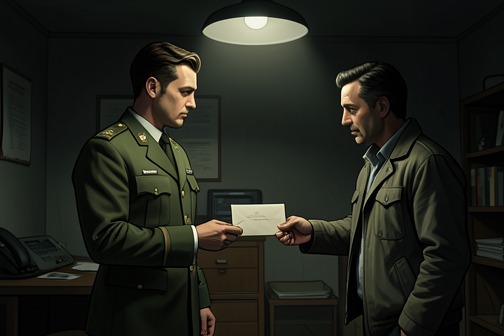
Miles Vorkosigan’s refusal of [Lucas Haroche](entity:character-recall-character-lucas-haroche-07b1b2325121)’s offer tests whether the prospect of recovering his former military life can outweigh his responsibility as acting [Imperial Auditor](entity:concept-recall-concept-imperial-auditor-7786846b56fc). Haroche presents reinstatement, a return to work with the Dendarii, and promotion to captain as an attractive future; Miles sees that accepting would compromise the investigation and leave [Duv Galeni](entity:character-recall-character-duv-galeni-4b96e8260f78) exposed. His decision turns an apparent career opportunity into a test of judgment, loyalty, and the price he is willing to pay for what he wants.
## The Offer and Its Leverage
Haroche has studied Miles’s [ImpSec](entity:organization-recall-organization-impsec-9890efe09d1c) mission reports and obtained his ImpMil neurologist’s medical reports on his seizure disorder. He regards the proposed controlled-seizure device as practically useful, even though Miles clarifies that it would control symptoms rather than cure the condition. Haroche uses the possibility of successful treatment to frame reinstatement as realistic, and he contrasts Miles’s record with [Simon Illyan](entity:character-recall-character-simon-illyan-086bc032eda1)’s decision to discharge him. In Haroche’s view, [Illyan](entity:character-recall-character-illyan-b43bcbe8ecb7) overreacted: a written censure would have sufficed, and Miles’s willingness to take exceptional risks had made him valuable to ImpSec.
The offer is specific enough to strike directly at Miles’s losses. Haroche says he would prefer to reinstate him if the medical treatment succeeds, restore him to work on terms like those he had with Simon Illyan, and promote him to captain. Haroche also praises their potential partnership, even suggesting that it could be better than the one he had with Illyan. Miles is overwhelmed by the prospect. The image of Dendarii troops acclaiming his Admiral Naismith identity returns to him, making clear how powerful the pull of that former life remains.
## The Conflict with the Investigation
The offer arrives while Miles is investigating Simon Illyan’s breakdown as an acting Imperial Auditor appointed by [Gregor](entity:character-recall-character-gregor-a21e0b388746). Gregor has described the Auditor as an independent listener and investigator, with authority limited by the matter assigned; in this case, Miles’s inquiry concerns Illyan’s breakdown. Haroche’s proposal therefore carries more than the ordinary risk of changing jobs. Miles recognizes that closing the case and accepting reinstatement would leave Haroche to run ImpSec without the scrutiny Miles has been assigned to provide. His Auditor’s authority does not extend to ordering ImpSec to rehire him, so the promised return depends on Haroche’s discretion.
The immediate cost of refusing, however, is not abstract. Haroche has proposed dropping the treason charge against Galeni in favor of assault on a superior officer, with a year in prison and dishonorable discharge, and has suggested that Miles might secure a pardon. Miles rejects the idea that a pardon could substitute for acquittal: it would leave Galeni’s career and political prospects damaged. The possibility that Galeni might actually be guilty troubles Miles, as does the possibility that friendship is distorting his judgment. He weighs that uncertainty against what he knows of Galeni’s character and the evidence Haroche has presented, refusing to treat either personal loyalty or official accusation as sufficient proof by itself.
## Temptation and Recognition
Miles does not identify the offer as a bribe without hesitation. He is stunned by it, first responding with unguarded excitement and a willingness to return after he has closed the case. Then the terms take on another meaning: Haroche’s offer would reward Miles for ending his scrutiny and leave Haroche free to direct ImpSec. Miles understands that a return to the Dendarii is not being offered independently of the Galeni case. The prospect of getting both his old work and justice by pretending to accept crosses his mind, but he also recognizes the danger of allowing Haroche to believe that he has secured Miles’s allegiance.
His uncertainty is not simply whether Haroche’s promise is sincere. Miles considers whether Haroche might deal straight with him, but sees that even a genuine offer would require him to decide what kind of service he is willing to perform. The bargain presses on the difference between Admiral Naismith, whose return to the Dendarii is the immediate prize, and Lord Vorkosigan, the role Miles is still learning to inhabit. He cannot resolve that division by returning automatically to the identity he most longs to recover. The offer makes the choice between those lives concrete, while the Auditor’s investigation supplies its ethical measure.
## Refusal and Its Consequences
When the question of Haroche’s inducement is raised before Gregor, Simon Illyan, and [Ivan Vorpatril](entity:character-recall-character-ivan-vorpatril-2e03a5f0f162), Miles discloses what Haroche offered: a return to work for him on the old terms, with an even better arrangement and a captaincy. Asked why he did not accept, Miles answers that doing so would mean giving up Galeni and allowing Haroche to run ImpSec for years. He fears that Haroche might use his reports to manipulate Gregor, first indirectly and then more openly, under the claim that he was acting for the Emperor and the Imperium’s good. Haroche denies that he would have served Gregor badly, but Miles’s decision rests on what he believes the arrangement would enable, not on a promise that Haroche would misuse it.
Gregor observes that attempting to bribe an Imperial Auditor is a capital charge. Miles asks him not to pursue that charge, noting that Haroche is already ruined. Gregor accepts Miles’s request and addresses him as his Lord Auditor, then asks what stopped him. Miles says, “[The one thing you can't trade for your heart's desire is your heart](entity:expression-recall-expression-the-one-thing-you-49192a8f2f06).” The answer gives the refusal its lasting significance: Miles does not deny how much he wants the Dendarii, or pretend that the offer leaves him untouched. He chooses not to trade the integrity of the investigation, or Galeni’s prospects, for that desire. The subsequent work of completing the Auditor’s report—rechecking evidence, consulting departments, recording depositions, and gathering further medical testimony—continues the same commitment in less dramatic form. His refusal is not only a moment of resistance to Haroche’s inducement; it governs how carefully Miles carries out the responsibility that made the inducement a conflict in the first place.
Event 25
Miles Vorkosigan’s appointment as the eighth Imperial Auditor
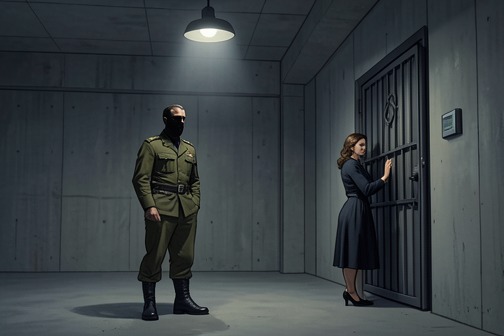
[Miles Vorkosigan’s appointment as the eighth Imperial Auditor](entity:event-recall-event-miles-vorkosigan-s-appo-b2025d605cd9) transforms an urgent demand to investigate [Simon Illyan](entity:character-recall-character-simon-illyan-086bc032eda1)’s breakdown into a permanent place among the Imperium’s most senior officials. The change is more than a promotion: Miles moves from seeking authority to examine one case to accepting an office whose work is defined by problems that routine institutions cannot resolve. His appointment follows his exposure of [General Haroche](entity:character-recall-character-general-haroche-411c754dce7c), and brings together military expertise, personal loyalty, and the formal authority of the crown.
## From access to authority
Miles’s route to the Auditors begins with his insistence on seeing [Illyan](entity:character-recall-character-illyan-b43bcbe8ecb7). After Haroche blocks him from visiting, Miles argues that his claim is not merely that of Illyan’s former subordinate: he is also his father’s son, with a Vor obligation that, as Miles puts it, passes around [ImpSec](entity:organization-recall-organization-impsec-9890efe09d1c)’s hierarchy. His concern is sharpened by his own experience of losing access to himself during cryo-amnesia. He recognizes how isolating such a collapse can be and argues that even if Haroche’s conduct arises from nerves and inexperience rather than deliberate sabotage, it still requires correction.
Miles soon asks for more than permission to visit. He wants oversight and access to every item of raw evidence, medical and otherwise, and concludes that informal support from [Gregor](entity:character-recall-character-gregor-a21e0b388746) will not suffice. Gregor appoints him acting [Imperial Auditor](entity:concept-recall-concept-imperial-auditor-7786846b56fc), assigning him to evaluate Illyan’s breakdown. The temporary mandate carries broad authority but also boundaries: Miles’s actions must remain at least dimly connected to the assigned event, he cannot order executions, and any arrests should rest on evidence sufficient for prosecution. Gregor also expects traditional decorum and due care. The appointment thus gives Miles independence without making his powers unlimited.
The choice of Miles rests partly on the perspective he brings. Gregor describes an Auditor as an independent observer who can go where the Emperor cannot and report from an angle not controlled by ordinary chains of command. Miles’s experience inside ImpSec, along with his personal knowledge of Illyan’s condition, makes him suited to test the institution’s account rather than simply repeat it. His authority is therefore both personal and official: Gregor trusts his judgment, but gives that judgment force through a defined imperial office.
## The investigation and its stakes
The inquiry places Miles between institutional loyalties that do not always align. He recognizes the tensions between military claims to merit and the hereditary Vor order, but maintains that both he and Haroche are sworn to uphold the existing system. He also portrays Illyan not as a merely obedient servant but as someone who had come to feel invested in the Imperium he helped maintain. That view informs the stakes of the investigation: a failure inside ImpSec threatens not only an individual but the reliability of an institution charged with protecting the state.
As the inquiry develops, Miles directs ImpSec work toward the source of the biological agent and the route by which it reached [Barrayar](entity:location-recall-location-barrayar-d02af764f924). Haroche proposes alerting Galactic Affairs to investigate possible sources beyond Jackson’s Whole, including [Escobar](entity:location-recall-location-escobar-6268892e34cf), and suggests reviewing Illyan’s movements during a period of roughly sixteen to five weeks before the relevant events. Miles approves the legwork, recognizing that ImpSec can conduct such searches more efficiently than he can alone, while retaining responsibility for checking the reports. The division illustrates the practical demands of the office: an Auditor may direct a broad investigation, but still depends on specialized staff and must scrutinize the information they return.
The provisional office also tests Miles’s independence from Haroche. Haroche obtains Miles’s neurological reports and raises the possibility of a controlled-seizure device, showing that the investigation has reached into the Auditor’s private medical circumstances. Later, Haroche offers him a return to the [Dendarii Free Mercenary Fleet](entity:organization-recall-organization-dendarii-free-me-2ca6905f806b) on terms comparable to his former service under Illyan, with a captaincy added. Miles discloses the offer rather than allowing it to shape his decisions in secret. The contrast matters: an official appointment gives him power, but does not remove the personal and professional inducements that could compromise its use.
## Returning the chain and seal
After Haroche’s arrest on the capital charge of treason, Miles prepares to return his acting Auditor’s chain and seal to Gregor along with his report. He makes the return ceremonial rather than treating the insignia as objects to be handed over casually. Wearing his brown-and-silver House uniform, he considers attaching his military decorations, perhaps for the last time. He intends to ask Gregor for a personal favor and hopes the decorations will speak to his service without requiring him to plead for himself.
Gregor reads the report in person. He scans it quickly, returns to selected passages for closer examination, and handles the gold chain bearing the Vorbarra arms before telling Miles that appointing him had been a fortunate decision. Miles attributes his usefulness to chance and the expertise he happened to possess; Gregor counters that the appointment had been intentional. Their exchange makes clear that the report has not simply closed a case: it has given Gregor and the senior Auditors grounds to consider Miles for a lasting role.
## The permanent eighth seat
The distinction between acting and permanent service is explicit. The position of ninth Auditor is traditionally left open for acting Auditors with specialized expertise, who are called upon when the Imperium needs them and released when their assignment is complete. Miles has just occupied that temporary place. Gregor now offers him the eighth Auditor’s seat, a permanent post, while noting that Auditors may resign, be dismissed or impeached, or leave office through death. The offer is therefore a commitment, not a continuation of the temporary assignment under another name.
The other Auditors’ judgment helps make the decision institutional rather than merely personal. Four are present as a quorum of sorts, with Vorlaisner absent but kept informed. [Lord Vorhovis](entity:character-recall-character-lord-vorhovis-feb621cf82fe) speaks for the group’s approval. He notes that Miles would be the youngest Imperial Auditor in post-[Time of Isolation](entity:time-recall-time-time-of-isolation-4a09cc9e3f98) history, but also points to his ten years of distinctive ImpSec training and unusually wide experience beyond Barrayar. General Vorparadijs may object, as he objected when Vorhovis himself was appointed at fifty-eight, but Vorhovis treats that disapproval as no reason to withhold the office.
Gregor is candid about what membership will entail. As the most junior Auditor, Miles will probably receive the worst assignments; the work may be unrelated from one task to the next, unpredictable, and a matter of sinking or swimming. Auditors are sent in when routine solutions have failed or when rules have not been devised, and their investigations may concern disturbing or bizarre matters. The case against Haroche has also shown that such work can involve crises critical to the Imperium’s future. The permanent appointment accordingly promises neither regularity nor safety, but a continuing responsibility to confront what ordinary procedures cannot settle.
Before accepting, Miles asks for something he had intended to request as his personal favor: retroactive retirement from the [Imperial Service](entity:organization-recall-organization-imperial-service-c425efb30a61) as a captain rather than a lieutenant. He does not seek the additional half-pay; he wants the title, which he believes should reflect earned service rather than a favor begged after the fact. Gregor grants the captaincy and has the records updated. Only then does Miles accept the eighth Auditor’s office. The order of these decisions preserves a distinction important to him: he accepts the new role, but also claims recognition for the military career he has already completed.
## Significance
Miles’s appointment joins personal trust to formal imperial power. Gregor values his independent judgment, while the collective approval of the Auditors establishes that he is being admitted to an office rather than merely retained as the Emperor’s favored investigator. The role’s limits and traditions matter as much as its reach: Miles is authorized to pursue a crisis, expected to exercise restraint, and required to work from evidence rather than personal certainty.
The ending also recasts the case against Haroche as the beginning of a new career. Miles returns the temporary chain and seal with his report, but Gregor offers a place that does not expire with the investigation. The captaincy settles an old question about how Miles’s service will be remembered; the Auditor’s appointment opens a different, less predictable future. His authority now comes not only from his history with ImpSec or his relationship with Gregor, but from an office designed to act when existing rules and routines prove inadequate.
Event 26
Gregor and Laisa’s betrothal ceremony
[Gregor](entity:character-recall-character-gregor-a21e0b388746) and [Laisa Toscane](entity:character-recall-character-laisa-toscane-7aa2559c793c)’s betrothal ceremony transforms their accepted marriage plans into a public Imperial ritual, at once a family celebration and a carefully managed statement about [Barrayar](entity:location-recall-location-barrayar-d02af764f924) and [Komarr](entity:location-recall-location-komarr-238ac4bc1e8d). Its winter setting, formal exchanges, and modified traditions show how the couple’s union is being fitted to inherited ceremony without being wholly governed by it.
## Political Stakes and the Betrothal’s Timing
The ceremony follows a marriage proposal that Gregor and [Laisa](entity:character-recall-character-laisa-9f47ab736a53) have accepted, but the public arrangements take time. Gregor wants the betrothal ceremony immediately; Lady [Alys Vorpatril](entity:character-recall-character-alys-vorpatril-33b89fce0a0a) insists that its announcement wait until after her return from Komarr, where she is to serve as Gregor’s Voice to Laisa’s parents and oversee the proper forms. Their compromise puts the formal betrothal after that return, while the wedding remains planned for nearly a year later. Lady Alys also argues that the Vor ladies need time to prepare their dress, a practical concern that Miles Vorkosigan suggests may help bring the conservative Old Vor faction around to Gregor’s plans.
The timing carries political weight because Laisa is Komarran. Miles recognizes that her possible future as Empress could alarm both conservative Vor lords and radical Komarrans, even as the Centrist Coalition might be persuaded to support the match. Gregor, for his part, sees the marriage as a possible symbol of Imperial unity. He later voices the hope that it might help heal relations with Komarr; Miles answers that the marriage of [Duv Galeni](entity:character-recall-character-duv-galeni-4b96e8260f78) and [Delia Koudelka](entity:character-recall-character-delia-koudelka-977439054e0a) could reinforce the same cross-planetary connection. The ceremony therefore places a personal commitment within a wider, unsettled argument about belonging and Imperial rule.
Gregor and Lady Alys also consider holding two weddings, one in Barrayar and one on Komarr. Gregor calls the prospect a double ordeal, but says it would be worth it. The distinction matters: the betrothal takes place at the Imperial court, while the plans already anticipate that the marriage will need to address both sides of the couple’s political and family worlds.
## [Winterfair](entity:time-recall-time-winterfair-ccc98b59ed98) in a Blizzard
Lady Alys, urged on by Gregor, schedules the Emperor’s formal betrothal ceremony as the first social event of the hectic Winterfair season. The day before it, [Vorbarr Sultana](entity:location-recall-location-vorbarr-sultana-325afb58e98e) and three surrounding Districts are struck by the worst Winterfair blizzard in four decades. Commercial shuttleports close, activity at the military port is sharply reduced, and the arriving Viceroy of [Sergyar](entity:location-recall-location-sergyar-96434a51c008) is stranded in orbit. Snow drives horizontally past the windows of [Vorkosigan House](entity:location-recall-location-vorkosigan-house-e7b1a7ac7943) and piles up to second-story height in some parts of the capital.
The weather alters the preparations as well as the city’s movement. Miles abandons his plan to fly himself to the [Imperial Residence](entity:location-recall-location-imperial-residence-248249a7eda7) and instead joins the [Countess Vorkosigan](entity:character-recall-character-countess-vorkosigan-1e797db5befc) and her retinue in groundcars. His attempt to get everyone out early is interrupted when he discovers that Zap the Cat has made a nest among his boots and clothing and given birth to six kittens. He salvages his best boots and House uniform, sending them to Armsman [Pym](entity:character-recall-character-pym-de13bd7f4c67) for hurried cleaning; the Countess, delighted by the new kittens, stays to admire them. The morning’s domestic disorder helps explain why Lady Alys’s party reaches its appointment with tradition an hour late.
The ceremony takes place in the largest ballroom because it draws a huge crowd and is the first social event of Winterfair. With the city effectively snowbound, the gathering does not end with the formal proceedings: the party continues for hours. The blizzard thus frames the event as both an Imperial spectacle and a community held together indoors by circumstance.
## The Ceremony and Its Participants
The two parties face one another in lines like small armies. Laisa stands with her parents and a Komarran woman-friend serving as her Second; Gregor is flanked by his foster parents, [Count Vorkosigan](entity:character-recall-character-count-vorkosigan-65c6e709533a) and Countess Vorkosigan, and by Miles Vorkosigan as his Second. Lady Alys Vorpatril acts as go-between. Laisa wears a Komarran jacket and trousers in Winterfair red, a compromise that makes her Komarran dress legible within Barrayaran ceremony without erasing either side.
The role of Second retains the language of an older and more dangerous custom, but not its former legal burden. Once, a Second could be obliged to marry the surviving fiancé if a fatal accident occurred between betrothal and wedding. By the time of Gregor and Laisa’s ceremony, Seconds are instead responsible for carrying ceremonial gifts between the parties. The ritual preserves the form of an exchange while shedding that particular coercive consequence.
The gifts make the exchange tangible. Laisa’s parents offer money in elaborate wrappers; Gregor’s side brings food, including colored groats tied with silver tinsel, maple mead, and wine. A silver-gilt bridle arrives without a horse, leaving its symbolism unclear to Miles. Laisa’s mother also offers a small, blunt-edged, scalpel-like knife as a pledge of her daughter’s genetic cleanliness, but that gift has quietly been removed from the ceremony. The assortment mixes legible tokens of provision and status with older customs whose meanings are more awkward or obscure.
## The Admonishments and the Pledges
As Gregor’s Second, Miles reads the [Admonishments to the Bride](entity:rule-recall-rule-admonishments-to-the-bri-9200860b895b) from a parchment scroll. He delivers the traditional text in a clear voice and with a straight face, approaching it as if it were a briefing to the Dendarii. The performance gives the ceremony a moment of dry formality, but the text itself has been discreetly revised.
Most notably, its comments on the Duty to Bear an Heir no longer imply that Laisa must bear a child in her own body. The alteration acknowledges the physical dangers of pregnancy without turning the ceremony into an open dispute over tradition. Miles notices that the wording has been subtly changed; Laisa’s mother, less comfortable with the remaining admonitions, seeks reassurance from Countess Vorkosigan, who responds with discreet gestures encouraging her not to take them too seriously. The revisions allow the old ritual to proceed while making room for a different understanding of the bride’s obligations.
There are no reciprocal Admonishments to the Groom, an imbalance Miles associates with [Elli Quinn](entity:character-recall-character-elli-quinn-704179920b12)’s likely criticism. After the reading, the fiancés join hands—not directly, but each by taking one of Lady Alys’s hands—and exchange promissory pledges at this carefully chaperoned distance. The ceremony’s gestures make their commitment public, even as its arrangement keeps the couple within prescribed forms.
## Aftermath and Significance
Once the pledges are exchanged, the ceremony gives way to a long party. Gregor first claims his father’s attention, while Miles moves among the guests. He sees the Koudelka family and Duv Galeni in serious conversation with his prospective father-in-law, the Commodore, with Delia beside Galeni. Galeni has decided not to resign his commission, to Miles’s relief, and is being considered for leadership of [Komarran Affairs](entity:organization-recall-organization-komarran-affairs-0c5c8774e7f5). His presence with Delia’s family offers a visible counterpoint to the damage still lingering from [Lucas Haroche](entity:character-recall-character-lucas-haroche-07b1b2325121)’s calculatedly clumsy arrest of him at Vorkosigan House weeks earlier. Marriage, here too, brings a Komarran into Barrayaran family and political networks.
The betrothal does not settle the strains it symbolizes. Gregor hopes that his marriage can contribute to reconciliation, but the political reactions Miles anticipates make clear that a ceremony cannot by itself resolve resentment or make Imperial unity uncontested. Its importance lies instead in making the intended union public: Komarran dress appears in Winterfair red, revised language enters an old text, and two family parties exchange pledges under Imperial auspices. The event affirms a future shared across political boundaries without pretending those boundaries have disappeared.
Event 27
Miles Vorkosigan’s seizure-control implant procedure
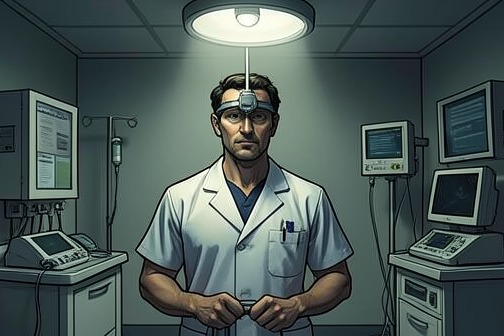
[Miles Vorkosigan’s seizure-control implant procedure](entity:event-recall-event-miles-vorkosigan-s-seiz-1bf8ca3a4e69) marks a change from enduring seizures as unpredictable episodes to managing them with an experimental device he can activate himself. The treatment does not promise to eliminate the seizures: its first test deliberately triggers one. Its significance lies instead in the measured reduction of symptoms and in the new, demanding routine through which Miles is asked to monitor and control them.
## An offer made under suspicion
The procedure begins with a call from [Dr. Chenko](entity:character-recall-character-dr-chenko-08ccc35582f5) at the [Imperial Military Hospital](entity:location-recall-location-imperial-military-ho-6e485bae2bca)’s veterans clinic. The microengineering work has taken longer than expected, but Chenko reports that his team has developed a device small enough to insert beneath Miles’s skull. The design is intended to trigger seizures safely; if the initial test succeeds, the team will complete its calibrations and schedule an operation to install it.
The offer arrives while Miles is waiting for a systems analysis report from [Lucas Haroche](entity:character-recall-character-lucas-haroche-07b1b2325121)’s team. He suspects that once the report comes in, events may move quickly, and he knows a clever man trained by [ImpSec](entity:organization-recall-organization-impsec-9890efe09d1c) has made him a target. Against that background, the proposed brain implant does not feel like a straightforward medical advance. Miles wonders whether the experimental device contains protein circuits and what became of the missing capsule. He is chilled by the thought of people he does not know well installing equipment he does not understand in his brain, and declines to commit to an appointment the next day.
That hesitation is not a rejection of treatment. It reflects the convergence of a personal medical risk with an unresolved security threat: Miles cannot assess the proposed device independently, and the investigation has given him reason to worry about concealed biological interference. When Chenko asks whether he has had more episodes since the seizure induced in the laboratory, Miles says he has not. The implant therefore remains an option under consideration rather than an immediate response to a newly reported seizure.
## Surgery under observation
Miles eventually proceeds. The operation to install the device’s internal portion proves shorter and less frightening than he expected. Chenko, increasingly familiar with Miles’s suspicious outlook, allows him to remain awake and watch the procedure on a monitor positioned above his head-clamp. The arrangement gives Miles a view of what is being done rather than requiring him to submit without observation. Chenko lets him go home the following morning.
Two afternoons later, Miles returns to Chenko’s neurology laboratory for a smoke-test. The test is a controlled trial of the installed system, not merely a check that the implant is present: Miles is to activate it and observe the resulting seizure. Chenko asks whether he wants to perform the activation himself. Miles agrees, adding that he might have to do so in practice. Chenko cautions that he should not make a habit of testing it alone and recommends having someone nearby, especially at first.
## The first activation
Chenko gives Miles a new mouth guard and an activation unit small enough to fit neatly in his palm. Lying back on the examination table, Miles checks the settings once more, presses the unit against his right temple, and switches it on. The test brings colored confetti, then darkness. When he opens his eyes, he spits out the mouth guard and moves his jaw. Chenko retrieves the guard and keeps a hand on Miles’s chest to stop him sitting up while the team completes its measurements. The activation unit is on a nearby monitor; Miles wonders whether he caught it as it came down, but the scene does not establish that he did.
Even after the test, Miles checks a security concern: he wants the activation signals encoded so the device cannot be set off accidentally by a security scan. Chenko reassures him that the signals are encoded. He also says that trauma severe enough to damage the internal unit would leave Miles with a much graver problem than the device itself. The exchange shows that Miles’s mistrust has not disappeared with implantation; it now takes the form of practical questions about accidental activation and the implant’s vulnerability.
## Results and the new routine
Chenko’s measurements show a qualified but concrete improvement. On this run, Miles’s convulsive symptoms last barely half as long as during his uncontrolled seizures, and his body movements are suppressed. Chenko expects the hangoverlike effects Miles has reported to be reduced as well, but asks him to observe how he feels over the next day-cycle and report his own impressions. The first test thus supplies clinical measurements and leaves part of the assessment to Miles’s experience afterward.
The device also imposes a recurring practice. Chenko tells Miles to make its use part of his daily routine, like brushing his teeth: he should check the activation unit’s neurotransmitter-level readout at the same time each evening, preferably before bed, and discharge the levels once they pass one-half but before they exceed three-quarters. Miles accepts the instructions and immediately asks whether he can fly. Chenko says he can do so the next day; Miles presses for an explanation of why he cannot fly that day. The exchange gives the treatment a practical consequence beyond the laboratory: even after a successful test, the device requires monitoring, and Miles’s return to an activity he wants to resume is delayed.
## Significance
The episode turns a proposed intervention into a working, though still experimental, management system. Miles’s initial fear is grounded in uncertainty about the device and in the unresolved possibility of sabotage; his later participation does not erase that context. Instead, the operation and test make him an informed witness and active operator: he watches the implantation, checks the settings, triggers the test, and questions how activation is protected. The improvement is substantial but limited to what the first run demonstrates—a seizure of roughly half the uncontrolled duration, with reduced movement—not a cure. Its lasting consequence is a daily regimen that asks Miles to watch his own readings and act within prescribed thresholds.
Event 28
Miles Vorkosigan takes office as Imperial Auditor
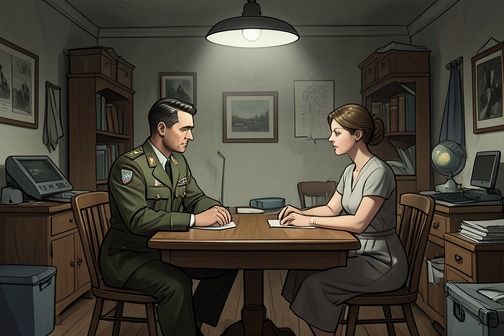
Miles Vorkosigan’s assumption of the [Imperial Auditor](entity:concept-recall-concept-imperial-auditor-7786846b56fc)’s office joins a constitutional-sounding title to a personal turning point: after explaining the appointment to [Elli Quinn](entity:character-recall-character-elli-quinn-704179920b12), he returns to [Barrayar](entity:location-recall-location-barrayar-d02af764f924) and settles into a life shaped by both public responsibility and ordinary household company.
## Explaining the appointment
At a hostel suite on [Komarr](entity:location-recall-location-komarr-238ac4bc1e8d), Miles tells Elli Quinn that to explain his new job he must recount how he acquired it and why [Illyan](entity:character-recall-character-illyan-b43bcbe8ecb7) is no longer Chief of [ImpSec](entity:organization-recall-organization-impsec-9890efe09d1c). He begins with Illyan’s breakdown, doubles back to explain [Laisa](entity:character-recall-character-laisa-9f47ab736a53) and [Duv Galeni](entity:character-recall-character-duv-galeni-4b96e8260f78), then grows animated as he describes bringing down Haroche. He also recounts his seizure treatment and [Gregor](entity:character-recall-character-gregor-a21e0b388746)’s offer. These are the events and facts; the harder task, Miles recognizes, is explaining his inner journey to someone who is not Barrayaran.
The meal interrupts Elli Quinn’s immediate response. After a few bites, she observes that Imperial Auditor sounds like an accountant’s job and does not seem to suit Miles. He answers that he has taken the oath, then tries out imperfect comparisons: Imperial Agent, Special Prosecutor, Special Envoy, Inspector General. The office, he explains, can be any of these and none of them; it is whatever Gregor needs it to be. Its open-endedness, rather than a fixed job description, is precisely what appeals to him.
Elli Quinn points out that Miles had never named the office as an ambition. He had not imagined it as a possibility, he says, and argues that the position should go to someone willing to serve but not too ambitious to do so. In his account, the work calls for dispassion, even toward the office itself. The appointment therefore arrives not as the fulfillment of a long-declared career plan but as a responsibility Miles discovers he can inhabit.
## Return to [Vorkosigan House](entity:location-recall-location-vorkosigan-house-e7b1a7ac7943)
Miles’s journey from Komarr to Barrayar is uneventful. He reaches Vorkosigan House on a quiet late-winter evening and finds it warm, lit, and ready for him. He decides that the next day he will invite Duv Galeni, [Delia Koudelka](entity:character-recall-character-delia-koudelka-977439054e0a), and the rest of the Koudelkas to dinner—not from obligation, but by choice.
That night, instead, he eats in the kitchen with his Armsman and Ma Kosti. The cook is somewhat scandalized, either because he has stepped outside his expected role or because he has intruded on hers. Miles answers with a string of jokes until she laughs, then swats him with a towel as if he were one of her boys. [Pym](entity:character-recall-character-pym-de13bd7f4c67) is amused by the exchange. [Martin Kosti](entity:character-recall-character-martin-kosti-6f5f144932fb) also comes in at the end of his guard shift, receives a proper meal, and joins in playing with the kittens that live—or repeatedly escape—from a padded box by the stove. The household catches Miles up on Martin’s basic training and its accompanying complaints and boasts.
## The bottle in the cellar
After supper, Miles goes to his wine cellar and ceremoniously chooses his grandfather’s oldest and rarest bottle. When he opens it, he discovers that the wine has turned. He considers drinking it anyway for the symbolism, then decisively pours it down the bathroom sink in his new suite and fetches a more recent bottle that he knows to be good.
The ending places a small, concrete choice beside the formal oath: Miles does not preserve a failed gesture merely because it carries inherited significance. He chooses what is actually good over what is merely old and rare, closing his return with an act that is domestic rather than official.
Event 29
Elli Quinn appointed admiral of the Dendarii Free Mercenary Fleet
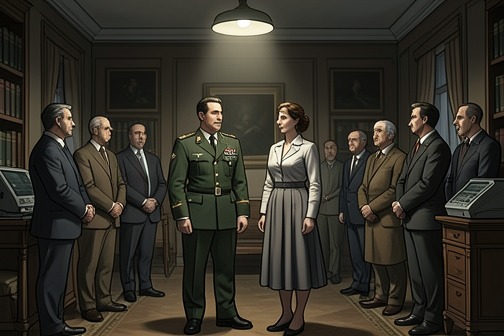
[Elli Quinn](entity:character-recall-character-elli-quinn-704179920b12)’s appointment as admiral of the [Dendarii Free Mercenary Fleet](entity:organization-recall-organization-dendarii-free-me-2ca6905f806b) is presented as both an imminent offer of command and a turning point in her working relationship with Miles Vorkosigan. He tells her that the offer will come the next day, jointly from [Guy Allegre](entity:character-recall-character-guy-allegre-099b85265234), [ImpSec](entity:organization-recall-organization-impsec-9890efe09d1c), and himself. The promotion recognizes Quinn’s existing ability, but its suddenness unsettles her: she wants a share of command, just not so soon or under these circumstances.
## The Offer and Its Terms
Miles introduces the appointment while trying to speak with Quinn about their relationship and the choices ahead. She objects when he brings up the fleet’s new contract, insisting that he is changing the subject. He answers that he cannot get to the question of them without giving her full disclosure about what is coming: Allegre, ImpSec, and Miles, or [Barrayar](entity:location-recall-location-barrayar-d02af764f924) as he puts it, intend to offer her the admiralcy the following day.
The proposed role carries a defined professional arrangement. Quinn will continue working for Allegre in the same capacity Miles worked for [Simon Illyan](entity:character-recall-character-simon-illyan-086bc032eda1). The offer therefore is not simply a title or a promotion within the fleet: it places her in a role analogous to Miles’s former work for [Illyan](entity:character-recall-character-illyan-b43bcbe8ecb7), while keeping her working relationship with Allegre in view. In telling her before the offer is formally made, Miles gives Quinn advance knowledge of the decision and makes the career news part of an unusually personal conversation.
## Quinn’s Response and Readiness
Quinn’s eyes widen and then fall as she takes in the news. She tells Miles that she cannot do his job and is not ready. Her response registers the distance between being offered authority and feeling prepared to exercise it; the opportunity does not instantly resolve her doubts about taking it on.
Miles counters with his assessment of her actual experience: she has already been doing the job, and in his view is more than ready. Quinn smiles at the familiar forward-driving passion in his voice, which has repeatedly pushed the people around him toward results beyond what reason would predict. Her reaction combines affection and recognition with reservation. She admits that she wanted a share of command, but emphasizes that she had not wanted it so soon or in this way. Miles’s answer—that the time is now, and that it is her time as well as his—makes the offer feel like a decision arriving at a moment neither can simply defer.
## Command, Risk, and Recognition
The appointment changes the future each of them imagines in military terms. Miles tells Quinn that, as admiral, she belongs in a comfortable chair in a tactics room and should not take squads out repeatedly. He allows for the possibility of the occasional rescue mission, but argues that frequent field deployments would be inappropriate for a senior staff officer and too dangerous. Quinn calls him a hypocrite, pointedly recalling the gap between his advice and his own habits. He prudently declines to argue.
His caution does not erase the contradiction: Miles is promoting Quinn into a position of command while trying to protect her from the risks he has himself accepted. The exchange leaves that tension exposed rather than resolved. Their ensuing closeness is accompanied by sadness and a letting-go of tension, giving the professional change a personal weight beyond the offer itself.
Later, when Quinn asks whether he expects to like his new job as much as she will like hers, Miles says he is beginning to suspect he will. He explains that he has recently learned how damaging it can be to leave competent subordinates unpromoted for too long, and nearly slips into describing Quinn’s future staff as his own. That near-slip and his stated lesson connect her appointment to his departure from the work he once held: recognizing her readiness means allowing her to occupy a role he can no longer treat as an extension of himself. The scene presents Quinn’s promotion as earned, overdue in principle, and startlingly immediate in practice.
Event 30
Miles and Elli choose separate paths
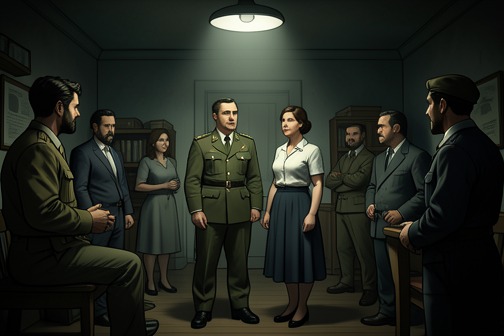
[Miles Vorkosigan and Elli Quinn](entity:relation-recall-relation-miles-vorkosigan-and-c0378ca75f29) choose separate paths when they recognize that staying together would require one of them to abandon an essential part of who they are. Miles asks Elli to build a life with him on [Barrayar](entity:location-recall-location-barrayar-d02af764f924), but she cannot accept the role of Lady Vorkosigan in exchange for their closeness. He, in turn, cannot preserve their relationship by suspending the life and identity he has chosen. Their parting is painful, but it becomes an act of honesty: each is asked to choose as a whole person, not as a selectively edited version of themselves.
## The Future Miles Offers
The conversation turns from Miles’s newly stated career ambition to the consequences of his choice for their relationship. Elli has not imagined this particular ambition in him before, and she asks what it means for them. If he is not returning to the Dendarii, she may never see him again. The controlled way she raises the possibility does not make the stakes smaller; it gives the question a precise edge. The decision about work has become a decision about where, and with whom, their lives can continue.
Miles has wanted to speak to her personally before the next day’s business overtakes them. He proposes that she come to Barrayar and become Lady Vorkosigan, so that they could be together. The offer is intimate, but it also carries an assumption that Elli makes explicit: living beside Lord Vorkosigan would not necessarily mean living with Miles as she knows him. She distinguishes the public identity he would occupy from the person she loves, and refuses to treat marriage as a simple route around that difference.
Miles does not answer by promising that the conflict will disappear. He acknowledges that he is constrained, and asks her to choose whether she can come with him even if she would be unhappy. His appeal is neither a picture of easy adjustment nor a claim that Barrayar will become welcoming by itself. He suggests that Elli might make the place less dreadful, but the possibility does not cancel the cost she sees in the proposed life. Their exchange keeps the choice concrete: not love in the abstract, but a home and a social role that Elli does not want to inhabit.
## A Choice Between Whole Selves
Elli says that she cannot be what Miles wants from her, cannot be his Lady Vorkosigan. Miles answers that he can give her everything he has, but cannot offer a lesser or selectively divided version of himself. He has spent years trying to extinguish Lord Vorkosigan, yet has not succeeded even for her. The admission recasts the offer: he is not asking her to join a life from which his Barrayaran identity can be removed. That identity is part of the person and future he brings to the relationship.
Elli names the corresponding cost for herself. In her view, accepting his proposal would mean Admiral Quinn being annihilated and Lady Vorkosigan rising in her place. She is unwilling to describe that transformation as a minor compromise or a costume she could take off later. Her request that they leave together presses toward a different answer: rather than her entering his chosen life, Miles could leave it with her. His refusal shows that the impasse is not simply a failure to find a compromise. Each proposal asks one of them to move away from a life that the other cannot honestly promise to relinquish.
The exchange also clarifies what Miles means by asking her to choose herself. When Elli identifies herself as Admiral Quinn, he says he had understood that already. He presses her to decide now, and accepts her objection that he, not she, is forcing the choice. He does not deny the pressure he has created. Instead, he says he can continue with her or continue without her, but cannot freeze in place for her. The language of preservation marks the danger in their attempted bargain: keeping the relationship unchanged would not be the same as keeping either person alive to their own future.
## Parting Without Erasure
After the choice is spoken, the conversation does not turn into a claim that either person has stopped loving the other. Elli recognizes the part of Miles that wants her to be free, while questioning whether freedom is something she can exercise whenever she chooses. Her answer leaves room for difficulty without retracting her decision. They look at each other at length, as if trying to retain the image of the other, and she wishes him well in finding his Lady Vorkosigan. Miles shares the hope, while admitting that he dreads the search; Elli calls him lazy. Their final exchange preserves their familiar affection even as it confirms that affection cannot settle the practical question.
They spend one last night together, framed as both farewell and a final attempt to please one another enough to change the outcome. Miles recognizes that changing their minds would not suffice: they would have to change their whole selves. That realization gives the intimacy its melancholy shape without turning it into a reconciliation. The relationship reaches an ending in shared care, but not in agreement about where to live or which identity to surrender. The evidence establishes this parting and its emotional terms; it does not establish what either of them will choose in every later circumstance.
## Significance of the Separation
The scene refuses the consoling idea that love automatically resolves conflicts of vocation, home, and identity. Miles will not make his future conditional on preserving the relationship, and Elli will not exchange her identity as Admiral Quinn for the status of Lady Vorkosigan. Their decision is painful precisely because neither reduces the other to an obstacle or a villain. Each understands what the other is asking, and each sees why the other cannot simply comply.
The separation also makes choice more demanding than a declaration of independence. Miles tells Elli to choose who she is, but the decision is shaped by a real cost: a shared life with him is not available without the Barrayaran future he insists on inhabiting. Elli's freedom is therefore neither taken from her nor effortless. Likewise, Miles's resolve is not a claim that he can avoid grief. He accepts that he may have to continue without her, and rejects immobility as the price of keeping her. The ending leaves both characters with loss, but not with a demand to pretend that one person's selfhood can be traded for the other's desire.