Mickey Barnes–Cat Chen relationship
Mickey7Mickey Barnes–Cat Chen relationship is defined in the surviving scenes by a sharp reversal: Cat first accepts the colony’s claim that Mickey can be replaced, but later questions Hieronymus Marshall’s order to kill him and makes peace with him after the immediate danger passes. Their exchange turns on what service to the colony requires—and on the difference between acting for the colony and carrying out a command without regard to its consequences.
The Colony’s Claim on Mickey
When the colony is moving to a war footing, Mickey’s status as its only Expendable becomes an argument over whether he is indispensable. Mickey8 insists that the remaining colonists need every body and cannot afford to lose their only Expendable. Marshall counters that Cat Chen has volunteered to take Mickey’s berth if necessary. The exchange makes Cat’s decision consequential: in that moment, she is not merely offering an opinion about Mickey but accepting the possibility of taking over his dangerous role.
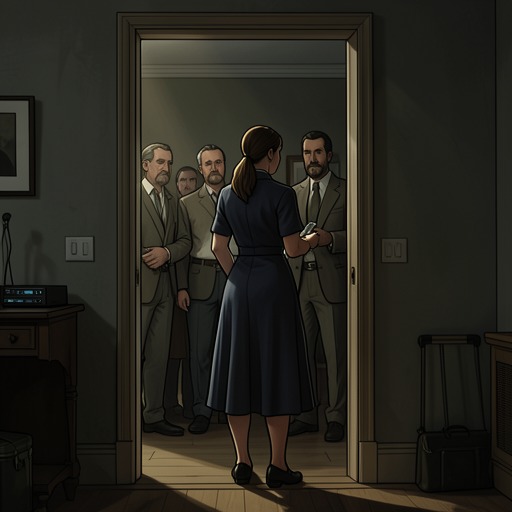
Mickey turns toward Cat and sees her looking at the floor while the other security personnel keep their hands near their burners. When he addresses her, she says she is sorry and frames the choice as being for the good of the colony, not as something personal against him. The distinction does not spare him the hurt. Mickey connects her position to a conversation they had the other night, when she had questioned whether he thought himself immortal. He treats the present decision as her answer: the colony can, in fact, choose to risk his life.
Cat meets his eyes, and the anguish in her face drains some of his anger. She says she did not mean for everything to happen as it has. Mickey rejects the distinction between intention and consequence, telling her that she made it happen. Her tear and unfinished apology leave the disagreement unresolved rather than making it disappear. Nasha cuts off Cat’s attempt to continue, but the emotional break between Mickey and Cat has already been spoken aloud: Cat’s appeal to duty cannot undo what Mickey sees as her responsibility.
Cat Between Orders and Consequences
The relationship is tested again when Marshall orders a security officer to kill Mickey. Mickey recognizes Cat by her armor as she stands beside Marshall. The order is not abstract: Marshall points at Mickey and demands his death, while Lucas warns that Mickey is carrying a bubble bomb. Cat is therefore present at the moment when their earlier disagreement about Mickey’s expendability becomes an immediate question of whether he will live.
Mickey explains that he had to tell the creepers what they possessed, because otherwise they might have tried to dismantle the weapon. Marshall dismisses that concern, saying an explosion would have resolved the problem. Cat supplies the concrete danger his reasoning ignores: if the creepers had taken the weapon apart, she would have expected them to do it underneath the dome. Her intervention does not erase her earlier support for replacing Mickey, nor does she openly repudiate Marshall’s authority. It does, however, put her judgment against his at a crucial point. She identifies a consequence that makes killing Mickey—and disregarding what he knows—dangerous to the colony itself.
Marshall insists that Mickey has betrayed the colony and the Union by conspiring with the enemy during wartime. Mickey answers that genocide is also a grave crime and disputes the premise that the humans and creepers are at war. In the larger argument, Cat’s warning gives practical force to Mickey’s claim that the colony needs diplomacy rather than an execution. Mickey says that he is its only diplomat; Marshall stares at him in silence before leaving. The evidence does not show Cat openly joining Mickey’s argument, but it does show her challenging the reasoning that would have left him dead and the weapon’s danger unaddressed.
Reconciliation After the Standoff
Once the outer door cycles shut behind Marshall, Mickey asks whether they are all right. Cat looks to Lucas, who turns toward the nearest pylon; as they watch, its burner goes dark and sinks back onto its bearings. The pause matters: the immediate threat recedes before Cat approaches Mickey. She offers her hand, and Mickey stows the trigger cord and takes it, drawing her into a hug.
Cat apologizes again, this time with tears audible in her voice. Mickey accepts the apology and tells her that she did what she had to do. His answer does not contradict his earlier accusation that she helped bring the crisis about. Instead, it allows the two truths to remain together: he holds her responsible for her part, and he recognizes the pressure under which she acted. Their embrace lasts long enough for Cat to remark that hugging in armor is strange. The armor that marked her as a member of the force around Marshall cannot prevent this brief, awkward gesture of restored closeness.
What Their Relationship Reveals
The scenes do not establish the full history of Mickey and Cat’s relationship, but they show its movement under pressure. Cat first treats Mickey as a replaceable role-holder in the colony’s emergency plans; later, she recognizes that Marshall’s proposed solution could compound the danger. Mickey, for his part, moves from a direct accusation to accepting her hand and her apology. Their reconciliation is neither a denial of betrayal nor a declaration that the conflict has been settled forever. It is a conditional repair made after the execution order has failed and the burner has gone dark.
That shift gives their relationship a particular importance in the crisis. Cat’s position is expressed through concrete choices—volunteering for Mickey’s berth, warning about the weapon’s possible use beneath the dome, and approaching him after Marshall leaves—while Mickey’s response moves from naming her responsibility to forgiving her. The final hug does not resolve the colony’s larger danger. It shows, more narrowly, that the two can recognize each other again after a disagreement over duty has brought their trust close to breaking.