ghost chaser
Mickey7Ghost chaser is a shipboard label for people fascinated by an Expendable, and the term exposes how Mickey Barnes’s unusual survival status can turn him into an object of taboo and fetishized attention. Its first explanation comes from Nasha, who distinguishes her own attraction to Mickey from the interest she has heard among Natalists aboard the Drakkar.
Meaning and first use
Nasha introduces the expression in the privacy of Mickey’s rack, during an intimate conversation. Mickey has not heard it before. When he asks what it means, Nasha points to the Natalists aboard the ship and explains that some do not want him to keep to himself: to them, someone who has gone through the tank is forbidden fruit. She links their attention specifically to the period since the collision and Mickey’s passage through the tank, making his return from death—not simply his presence among the crew—the focus of their fascination. Nasha says she is not a ghost chaser, distinguishing her relationship with him from the desire she has heard other Natalists express.
Fetishization and social distance
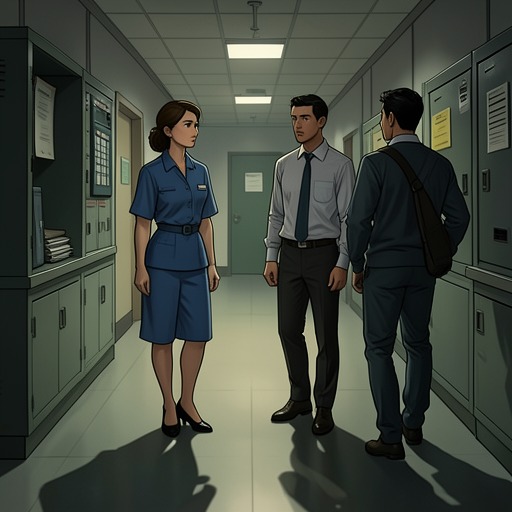
The expression returns in a later exchange with Cat Chen, where its implications become less flirtatious and more defensive. After Cat objects that Mickey treats the people around him as anonymous, Mickey raises both hands in surrender and insists that his reserve is not directed at her. He explains that he rarely socializes, in part because many people regard him as an abomination and others approach him to indulge what he calls a “weird fetish fantasy.” Cat recognizes the pattern as ghost chasing, giving the term a place beyond Nasha’s earlier account of Natalist interest.
In this conversation, the label names more than curiosity about a person who has survived the tank: it marks attention that reduces Mickey to the condition that makes him socially exceptional. His response is to keep to himself, a choice that offers protection from fetishizing attention but also helps produce the isolation Cat challenges. The exchange does not establish that Cat herself is a ghost chaser; Mickey begins to ask whether she is one, and her sharp reply rejects the assumption before the conversation can settle into that category.
Social meaning and recurrence
The phrase captures a contradiction in how Mickey Barnes is treated: the same condition that makes him an object of condemnation can also make him an object of desire. Nasha’s account places ghost chasing among Natalists who regard him as forbidden fruit, while Mickey’s later explanation distinguishes people who call him an abomination from those who approach him to indulge a fetish. The word therefore describes attention that does not overcome his social isolation so much as give it another form. Its return in a conversation with Cat Chen also shifts the term from intimate disclosure to a point of friction: what Nasha had used to distinguish her feelings becomes language for Mickey’s reason to withdraw from others.
The language of return
The expression’s force lies in its suggestion that Mickey is not merely unusual but has crossed a boundary and come back. His passage through the tank makes that boundary visible to other people: for the Natalists Nasha has overheard, it lends him the allure of forbidden fruit; for Mickey, it attracts approaches that treat his condition as a fetish. The word “ghost” thus frames the same survival that distinguishes him from the crew as a source of both fascination and estrangement.
The phrase also changes register as it recurs. In the rack, Nasha uses it to separate her own intimacy with Mickey from the interest she has heard about; in the later exchange with Cat Chen, it becomes shorthand for the attention that helps explain his self-imposed distance. The shift does not resolve who counts as a ghost chaser so much as expose the difficulty of telling genuine interest from fascination with Mickey’s exceptional status.