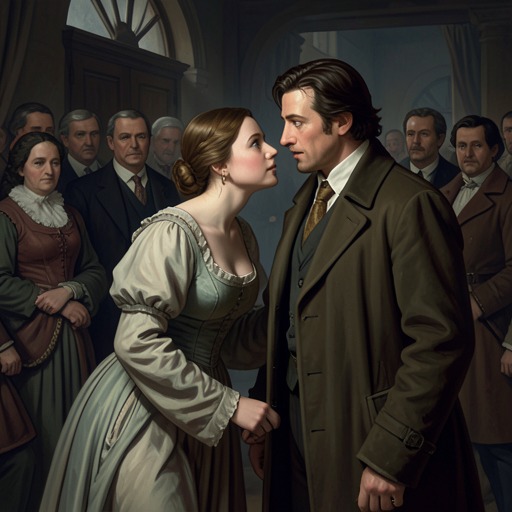
Tertius Lydgate–Rosamond Vincy relationship
MiddlemarchTertius Lydgate–Rosamond Vincy relationship is a marriage whose early promise of mutual devotion gives way to a painful mismatch between idealized expectations and economic reality. Lydgate expects admiration and domestic support for his medical vocation; Rosamond expects a household and social life that match her sense of what marriage should provide. As their spending exceeds their means, Lydgate tries to reduce expenses, while Rosamond resists changes she sees as degrading and painful. Their growing secrecy and conflict damage trust, though Lydgate remains deeply attached and keeps trying to preserve their love.
Expectations Before and At Marriage
Lydgate’s idea of marriage is shaped by a conventional model in which a young wife is chosen for her beauty, rank, virtue, and supposed capacity to learn from her husband. He imagines that such a wife will recognize his intellectual power and help him with his scholarly work, sparing him the need for a hired secretary. In this account, marriage promises domestic comfort and an affirming audience for his ambitions, while the question of whether he can make his wife happy scarcely enters his expectations.
Rosamond, in turn, is not shown as questioning the marriage on economic grounds when Fred’s prospects are disappointing. She insists that Fred’s idleness has nothing to do with her own marriage and turns instead to household work, considering Mary Garth’s fine sewing useful for the cambric frilling she wants made. That small domestic preference anticipates the importance of household standards in her later disagreements with Lydgate.
Their courtship gives each of them reason to believe that their private ideal has been found. Lydgate kisses Rosamond and imagines a wife who will revere his serious work, keep the home and accounts in order, and add romance to ordinary life. He regards marriage as an aid to his vocation rather than an obstruction. Acting on that confidence, he buys an expensive dinner service when he sees one that seems exactly right for their future home. The purchase embodies an early assumption that furnishing a household properly is a necessary, one-time expense, not a warning of the pressures to come.
Household Expectations Become Debt
The marriage’s material strain arises from expenditures that neither spouse adequately questions at the outset. Setting up house costs Lydgate several hundred pounds beyond his available capital; after a year, household expenses, horses, and other costs approach a thousand pounds, while income from the medical practice falls short of what he expected. Rosamond believes good housekeeping means ordering the best of everything, and Lydgate’s own maxim that things should be done properly makes him reluctant to economize. The expenses are not just a financial backdrop: they expose how their shared standard of respectability has been built on assumptions that their income cannot sustain.
Debt alters Lydgate’s view of himself. He had once scorned men who lowered themselves to obtain small sums; now he faces pressing demands for payment on purchases he sees, too late, as unnecessary. The experience narrows his attention from medical work and effective action to money worries. He fears the shame of being known as a debtor and resents the prospect of asking others for help.
As Christmas approaches, Lydgate tries to bring Rosamond into a plan for reducing their expenses. He proposes dismissing two servants and keeping only one horse, arguing that they began too expensively and that he is responsible for bringing her into a less comfortable way of living. He appeals to their love as a reason they might manage together until circumstances improve. Rosamond, however, views a poorer household as a threat to his professional position. The disagreement is therefore about more than particular economies: Lydgate sees restraint as necessary to their solvency, while Rosamond sees visible sacrifice as a loss of status and security.
Conflict, Secrecy, and Damaged Trust
Lydgate’s effort to discuss economy turns into a conflict over authority and confidence. When Rosamond leaves a discussion without agreeing to his plans, he later fears that raising practical questions with her will provoke another outburst. He has already had to relinquish his ideal of a devoted, docile wife, yet he does not stop loving her. His fear is not merely that she will never love him as he hoped, but that he himself will cease to love her; he therefore tries to excuse her and blame circumstances, including his own part in their difficulties.
Their disagreement intensifies when Rosamond secretly tells Borthrop Trumbull not to continue inquiries about letting their house in Lowick Gate, countermanding Lydgate’s instructions. Lydgate learns this on New Year’s Day, after having been affectionate with her at breakfast. The sudden contrast between their familiar tenderness and her concealed action leaves him bewildered and hurt. He objects not simply to her having a view on a matter that affects her, but to her acting behind his back and treating his decision as something to be silently overturned.
Rosamond answers that the house concerns her as much as it concerns him and that she remembers his reasons for leaving it. She nevertheless regards advertising it as degrading and believes he should try every other means first. When Lydgate appeals for openness, pointing out that she has appeared to agree and then disobeyed him, Rosamond focuses on the severity of his words. She says she cannot make promises in response to his accusations, recalls his descriptions of her as meddling and ignorant, and says that marriage has brought hardship into her life. Her tears are real, but she does not acknowledge the deceit that has prevented potential renters from learning about the house. The disagreement is thus shaped by competing accounts of injury: Lydgate sees secrecy as a breach of trust, while Rosamond sees his anger and their reduced circumstances as the immediate wrongs requiring recognition.
Affection Under Pressure
Even during their quarrels, Lydgate tries to restore intimacy. He regrets the prospect of a life without affection and speaks of their happiness as inseparable, insisting that concealment divides them because he cannot wish to make life hard for her. Rosamond softens when he does, saying that she sought to prevent unnecessary misery and feared disgrace among the people they know, as well as a diminished way of living. She also says she wishes she had died with their baby. Lydgate draws her close but cannot offer a reliable way to spare her the hardships she fears. His tenderness persists, though he privately recognizes that he has a life of professional activity beyond the home while she has fewer such outlets.
The same pattern of tenderness interrupted by anger continues when Lydgate discovers the consequences of his financial situation at home. He finds Rosamond pale and silent in her bedroom, sits beside her, asks her forgiveness for the misery, and pleads that they love one another. Her tears begin to return, and he breaks down beside her. But even when Rosamond says she will stay until he asks her to leave, his ironic remark about his own possible death unsettles the reconciliation. The narrator presents his outbursts as a serious obstacle: Rosamond experiences them as unjustified severity, and they risk making his continuing affection unwelcome.
Their relationship is therefore marked not by a simple disappearance of feeling but by affection made difficult to sustain. Lydgate still seeks closeness and attempts to excuse Rosamond; Rosamond can respond to his tenderness without sharing the understanding he seeks. Household debt, conflicting ideas of respectability, and secret resistance turn ordinary decisions about servants, horses, and a house into tests of trust. The marriage’s defining change is the widening distance between Lydgate’s hope for reciprocal confidence and Rosamond’s determination to avert a life she considers humiliating.