Oracle Bone
MulanThe Oracle Bone is the blackened remnant of the Jade Rabbit’s self-sacrifice and the means by which the White Fox pursues a prophecy about the Family of Flower and the Son of Heaven. Passed from an ancient bonfire into a jeweled casket, it becomes both a target of supernatural ambition and the evidence that finally lets the Scholar recognize the danger surrounding him.
Origin and Recovery
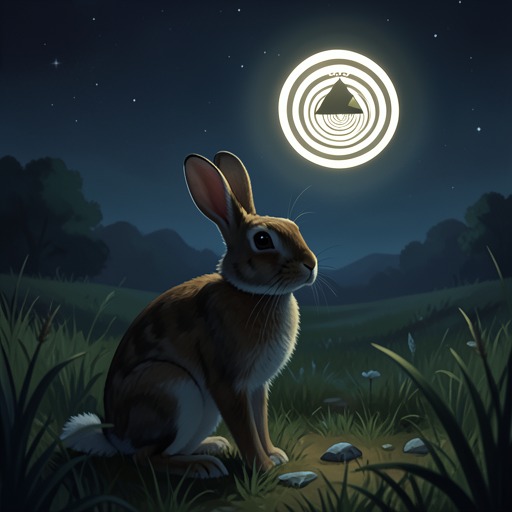
The bone’s history begins on the seventh-month full-moon night, a sacred occasion decreed by the Jade Emperor. Spirits and beings from Heaven could roam on Earth, while mortal creatures were expected to prepare generous feasts; anyone in need was to be fed, and refusing them would dishonor a family and its ancestors. Because the Jade Rabbit ate only grass, he feared that his own food would not be a worthy offering. He went from animal to person, bartering and wheedling for a varied feast, gathering provisions from chestnuts to a pot of milk.
When a beggar arrived, the Jade Rabbit had nothing left to give him. The White Fox had emphasized that lack, but the Jade Rabbit answered by offering himself and leapt into the fire. He experienced pain, darkness, and death, yet that was not the end of his story. The Oracle Bone is the material trace left behind at the place of that sacrifice: centuries later, the White Fox could still smell the burning flesh and particles of ash there.
The White Fox found the site after many years of traveling among mortals in different guises and leaving the Red Fox behind to protect her escapes. Roots and tubers resisted her claws as she dug, but she persisted until she unearthed an ancient, cracked, crumbling bone. She handled it as if it were a phoenix feather. The discovery mattered not simply because the object survived, but because it gave her something she wanted translated and brought the Red Fox into the next stage of her vendetta.
The Casket and the Scholar
The bone reappears on a verdant island, where the White Fox presents herself as a noblewoman. Her attendant brings it to the Scholar in a small gold casket, elaborately made and encrusted with jewels. Inside is the blackened bone. The contrast between its damaged, ancient surface and its splendid container makes the object seem at once like a relic and a possession to be displayed; the casket’s luxury also masks the peril of the request.
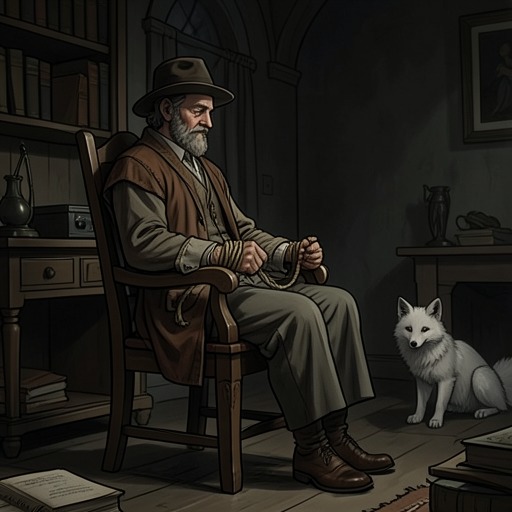
The noblewoman asks the Scholar to transcribe and translate the bone. He recognizes that it is extraordinarily old and agrees to help, while she frames her demand as a question but speaks as though it were an order. The request confines the Scholar to the work. As he translates, he becomes old and frail, unable to remember the season or year and unable to think beyond his desk and the room. The bone’s handling is therefore bound to a larger deception: while the Scholar labors over the inscription, the woman who brought it remains young and unchanged.
The Prophecy and the Disguise
The inscription is incomplete, but the portion the Scholar translates speaks of a bud in the Family of Flower, a flower that will shield the Son of Heaven. His wife immediately identifies the Son of Heaven with the Emperor and reasons that the bud is a child who will cease to be a child in the tenth month of the Year of the Rabbit and save the ruler. The prophecy thus gives the bone significance beyond its age: it connects a family, a future moment, and the fate of the sovereign.
The Scholar’s attention shifts from the prophecy to the person urging him to continue translating it. Looking at his own wrinkled fingers and silvering beard, he notices that he cannot remember how much time has passed; looking at his wife, he sees her unlined face, black hair, and smooth hands. Her interest in the bone and her unchanged appearance turn the work of decipherment into a means of recognizing that his life beside her has been shaped by concealment. The object does not itself explain the deception, but the effort to read it sharpens the contrast that exposes it.
When the Scholar confronts her, he pushes her away and sees a white fox tail emerge from beneath her robe. He realizes that the woman is a fox spirit, not his wife. His discovery connects the casket’s refined presentation to the White Fox’s shifting guises: the noblewoman who commissioned the translation and the apparently loving wife are parts of the same deception.
Destruction and Narrative Significance
In outrage, the Scholar crushes the crumbling bone in his hand and throws its dust at the woman. The gesture is an attempt to reject both the object and the relationship built around it; he declares that he wants nothing to do with either. Yet destroying the bone does not free him. As he leaves, his feet grow heavy and turn to stone, and the petrification advances up his legs until his lips are too hard and cold for him to call out. His last awareness is of the green-blue sea around the island he has never left and of his longing to see his real wife.
The Oracle Bone consequently links three very different forms of loss: the Jade Rabbit’s willing death to feed a stranger, the White Fox’s recovery and use of the remains, and the Scholar’s belated discovery of the false life enclosing him. It carries a prophecy that reaches toward the Emperor’s protection, but within the Scholar’s episode it also makes concealed time and borrowed identity legible. Its smallness and fragility do not prevent it from redirecting lives: recovered from ash, enclosed in gold, translated into an incomplete prediction, and finally reduced to dust, it moves the story from an old act of generosity to a new revelation of betrayal.